Artwork
Queen Henrietta Maria
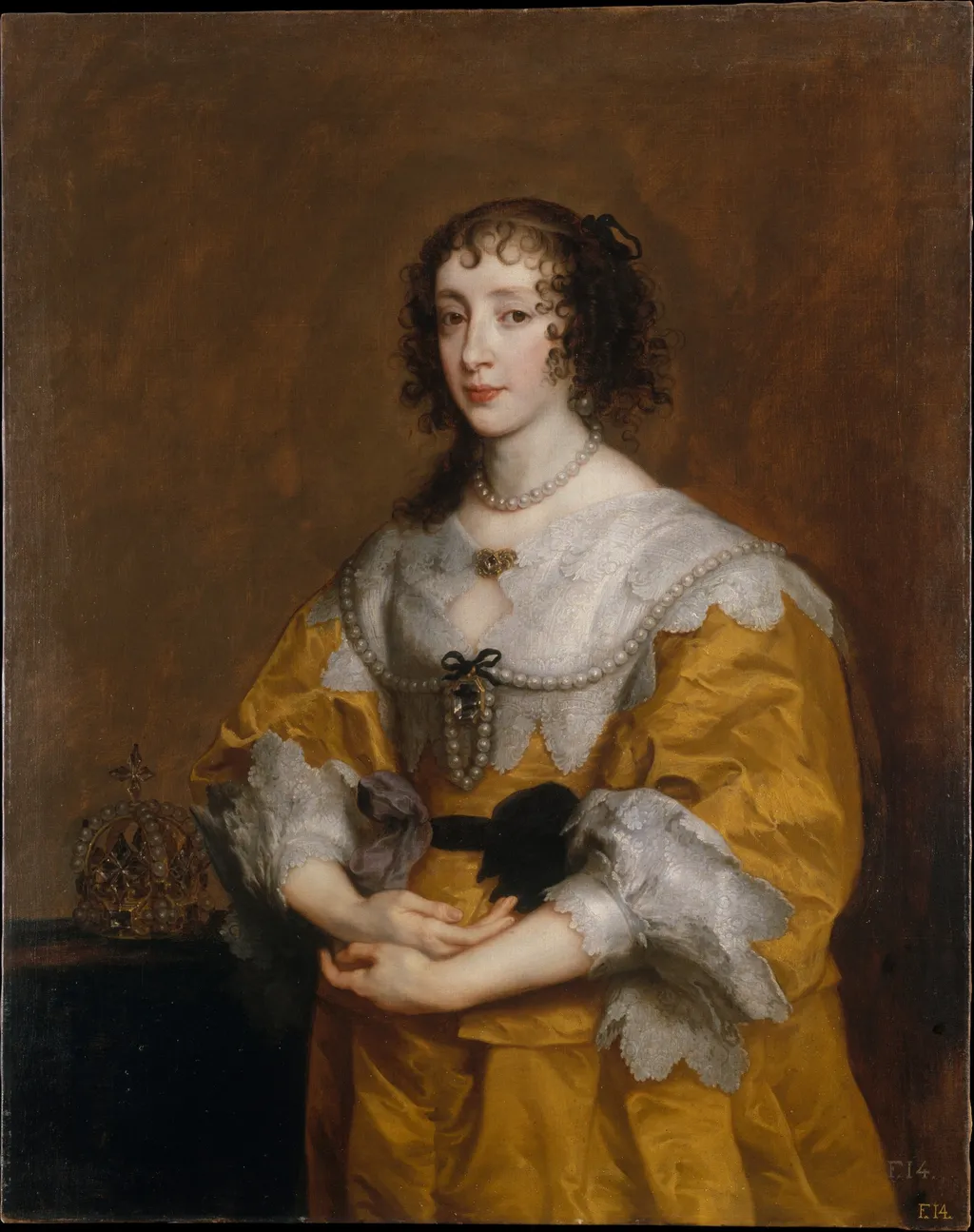
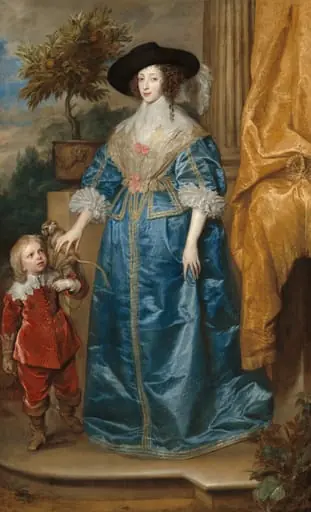
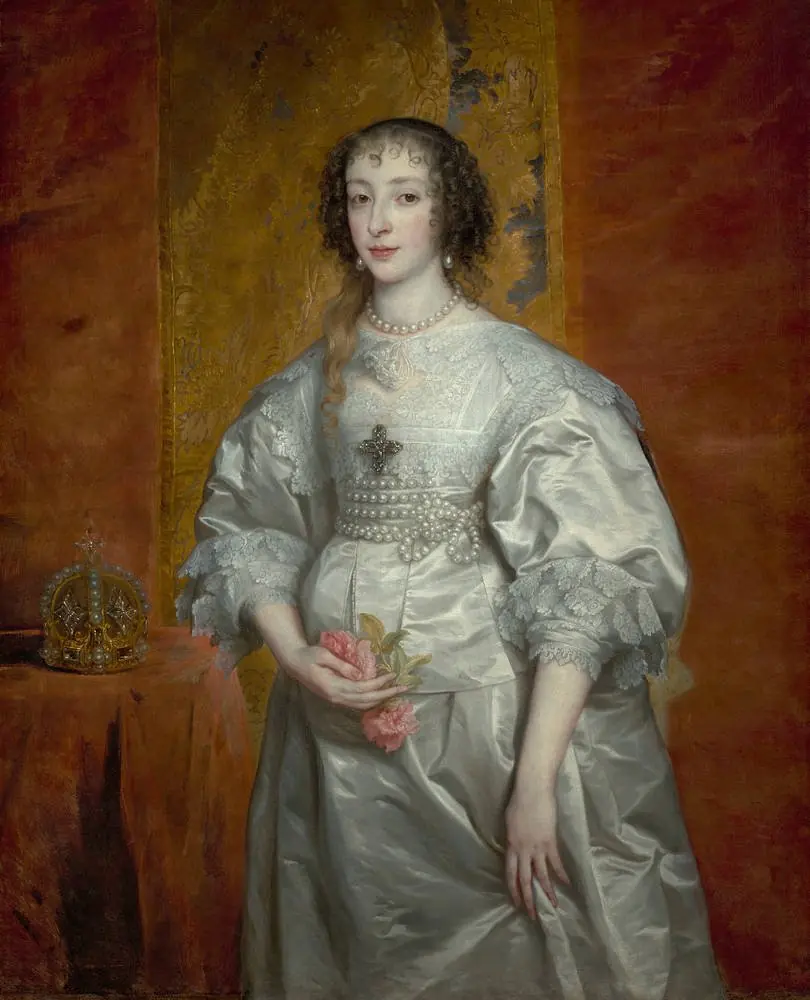
Queen Henrietta Maria is an oil painting by the Flemish Baroque painting artist Anthony van Dyck. It dates from 1636 and is held in the collection of the Metropolitan Museum of Art.
About this work
Subject & Meaning
No additional allegorical elements are described in the sources; the work's meaning rests on its straightforward depiction of the queen's likeness and rank.
Henrietta Maria of France is shown as a queen in a half-length portrait, her identity signaled by the title and the crown she wears. The painting presents her as a regal woman, emphasizing her status as consort of Charles I through the royal insignia. The composition focuses on her face and attire, with the crown serving as the primary symbol of her sovereign role.
No additional allegorical elements are described in the sources; the work's meaning rests on its straightforward depiction of the queen's likeness and rank.
Technique & Style
Created in 1636, the portrait of Queen Henrietta Maria by Anthony van Dyck is executed in oil paint on a canvas support. The work measures 105.5 centimetres in height and 84.2 centimetres in width. As a formal portrait, the piece depicts the queen wearing a crown, adhering to the conventions of royal representation established by the artist during this period.
The medium of oil on canvas allows for the detailed rendering of the subject's regalia and facial features, characteristic of Van Dyck's portraiture style in the mid-1630s.
History & Provenance
Created in 1636, this oil-on-canvas portrait depicts Henrietta Maria of France and is attributed to Anthony van Dyck. The work measures 105.5 by 84.2 centimetres. Historical records indicate that the painting was once owned by Francesco Barberini. It is currently held in the collection of the Metropolitan Museum of Art.
Overview
Painted in 1636 by Anthony van Dyck, this portrait depicts Queen Henrietta Maria, the consort of King Charles I of England. The work captures the Queen in a three-quarter view, dressed in a vibrant yellow satin gown that contrasts with the dark, neutral background. She wears an elaborate white lace collar and cuffs, accessorized with a pearl necklace and a jeweled brooch.
Her dark, curly hair is styled simply, framing her face. In her left hand, she holds a small black dog, a traditional symbol of loyalty and fidelity in royal portraiture, while her right hand rests gently against her chest. Van Dyck, the court painter to Charles I, utilized his characteristic elegant and fluid brushwork to render the textures of the silk and lace, emphasizing the Queen's aristocratic bearing.
This painting is a significant example of the artist's ability to blend Flemish Baroque techniques with the specific demands of the English court, establishing a visual language of royal authority and refinement that defined the Stuart monarchy's image during the 1630s.
Own this work as a print
Artist & collection
Artist
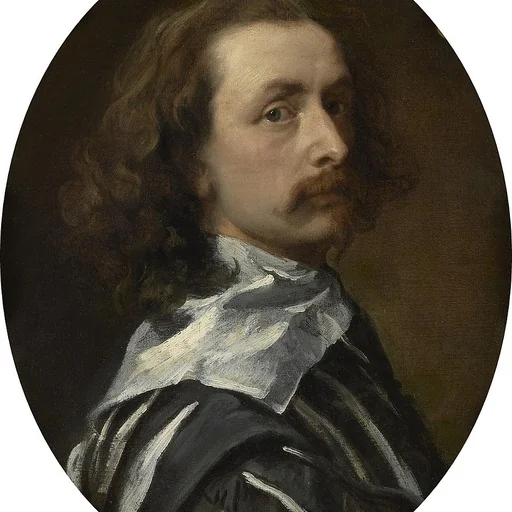
Sir Anthony van Dyck (; Dutch: Antoon van Dijck; 22 March 1599 – 9 December 1641) was a Flemish Baroque artist, who became the leading court painter in England after success in the Spanish Netherlands and Italy.