Artwork
Saint Francis of Assisi in Ecstasy
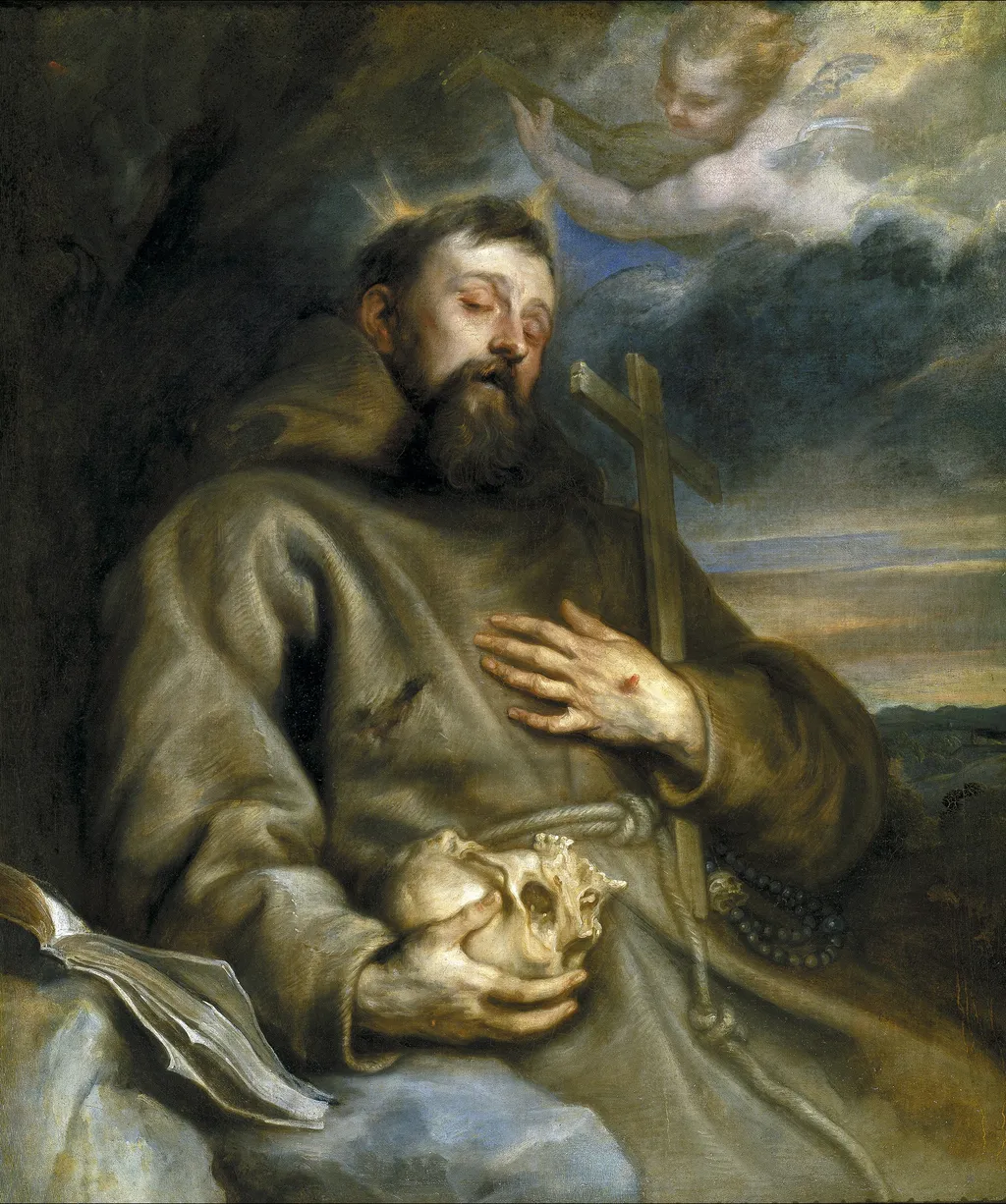
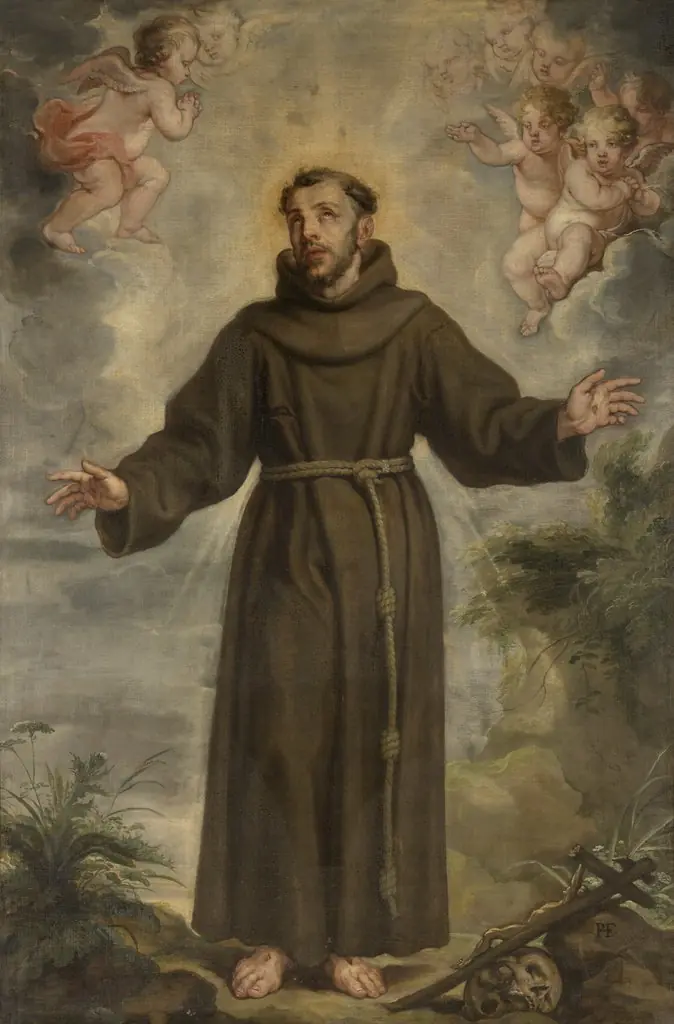
Saint Francis of Assisi in Ecstasy is an oil painting by the Flemish Baroque painting artist Anthony van Dyck. It dates from 1627 and is held in the collection of the Museo del Prado.
About this work
Subject & Meaning
These objects serve as traditional symbols of mortality, scripture, and the Passion of Christ, respectively, framing the saint's mystical experience.
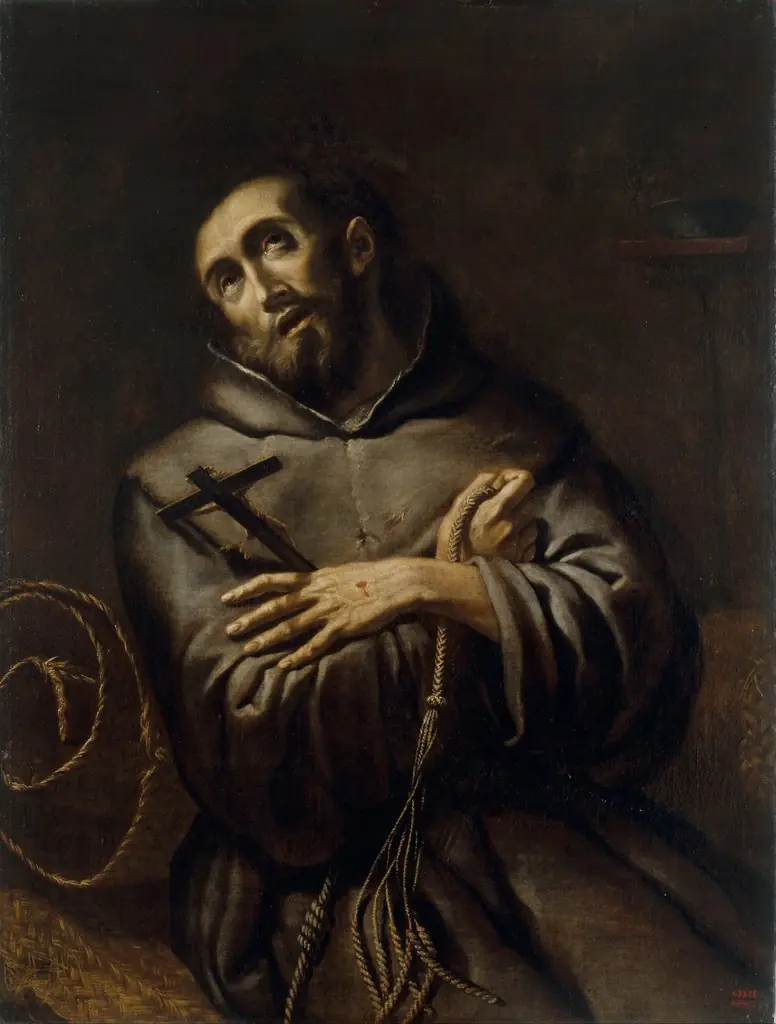
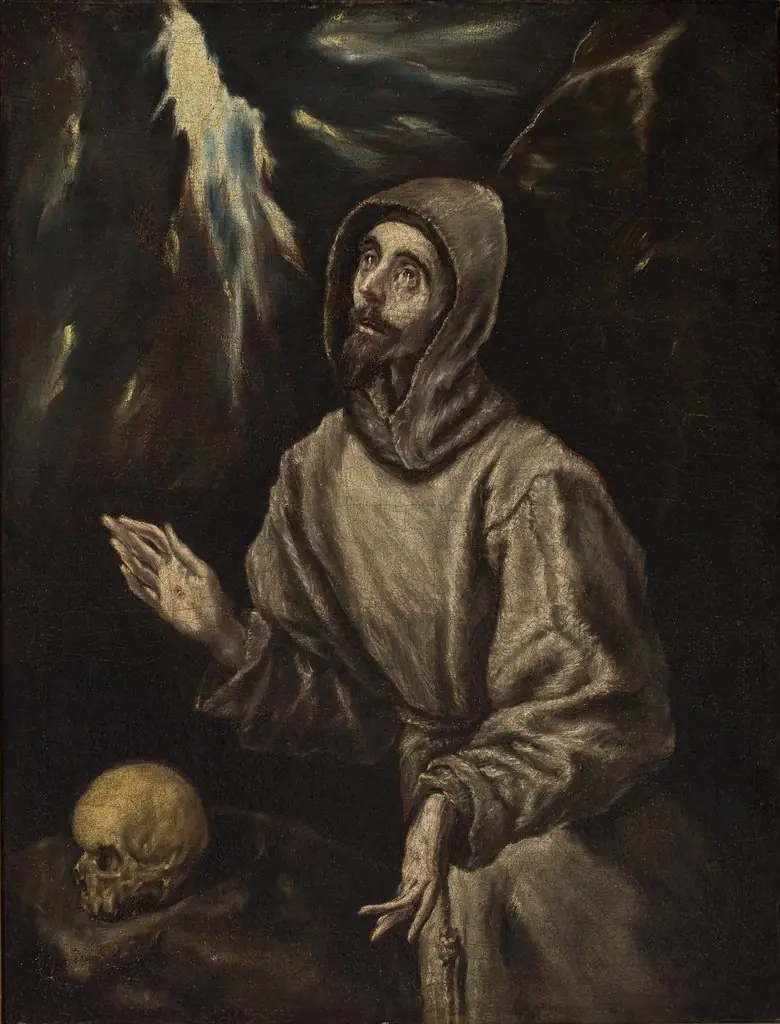
The painting depicts Saint Francis of Assisi as its main subject, capturing the saint in a state of religious ecstasy. As a work of religious art, the composition integrates specific iconographic elements to convey spiritual themes: a skull, a book, and a crucifix are present within the scene. These objects serve as traditional symbols of mortality, scripture, and the Passion of Christ, respectively, framing the saint's mystical experience.
The work represents the intense devotion and contemplative life associated with Francis of Assisi, emphasizing his connection to divine suffering and the transient nature of earthly existence.
Technique & Style
Executed in oil on canvas in 1627, the work measures 123 cm in height and 105.5 cm in width. Van Dyck employs a restrained yet luminous palette, with delicate glazes that model the saint’s ecstatic expression and the soft fall of light across the landscape. The handling is fluid, particularly in the drapery and foliage, where visible brushwork conveys texture without sacrificing clarity.
Compositionally, the painting arranges Francis centrally, his upward gaze and outstretched arms framed by a low horizon and expansive sky, while still-life elements, a skull and a book, rest beside him, grounding the visionary moment in tangible detail.
History & Provenance
Anthony van Dyck created the oil painting Saint Francis of Assisi in Ecstasy in 1627. The work depicts the saint alongside a skull, a book, and a crucifix. By the 18th century, the painting entered the Spanish royal collection, where it was owned successively by Philip V, Elisabeth Farnese, Charles III, and Ferdinand VII.
The artwork is currently held by the Museo del Prado, though it has also been associated with the Royal Palace of Aranjuez and the Royal Palace of La Granja de San Ildefonso.
The painting is held in the Museo del Prado in Madrid, where it is catalogued under inventory number P00968. It entered the collection through the Spanish royal lineage, having been owned by Ferdinand VII, Charles III, Elisabeth Farnese and Philip V before accession. The work has been part of several exhibitions at the Prado, including the 1995 retrospective "Van Dyck in the Spanish Court" and the 2007 display of Flemish masters.
Its exhibition history also includes a 2011 loan to the Kunsthistorisches Museum in Vienna for the exhibition "Baroque Painting in Europe".
Context
Anthony van Dyck painted Saint Francis of Assisi in Ecstasy in 1627, an oil on canvas work now held in the Museo del Prado. The painting entered the Spanish royal collection through successive monarchs, including Ferdinand VII, Charles III, and Philip V, reflecting its high status in 17th-century religious art. Its depiction of the saint with a skull, book, and crucifix aligns with Counter-Reformation themes of martyrdom and spiritual vision, situating it within van Dyck's broader religious oeuvre and the devotional practices of the Spanish court.
Scholarship emphasizes its role in shaping Baroque representations of saintly ecstasy, particularly through its dramatic chiaroscuro and intimate scale, which contrast with contemporary monumental altarpieces. The work's provenance and iconography have been extensively documented in Prado catalogues, underscoring its significance in both artistic and historical contexts.
Overview
Created in 1627 by the Flemish Baroque artist Anthony van Dyck, this oil painting portrays Saint Francis of Assisi in a moment of spiritual contemplation. The saint is seated, eyes closed, surrounded by a turbulent sky, while a celestial figure hovers above, directing his attention toward the symbols of mortality and devotion that lie in the saint’s hands.
Own this work as a print
Artist & collection
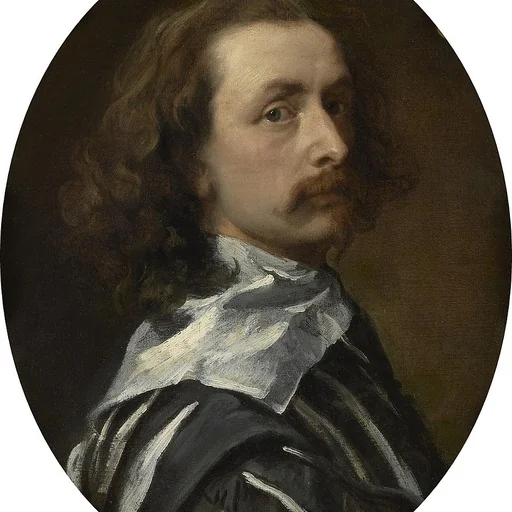
Artist
Sir Anthony van Dyck (; Dutch: Antoon van Dijck; 22 March 1599 – 9 December 1641) was a Flemish Baroque artist, who became the leading court painter in England after success in the Spanish Netherlands and Italy.