Artwork
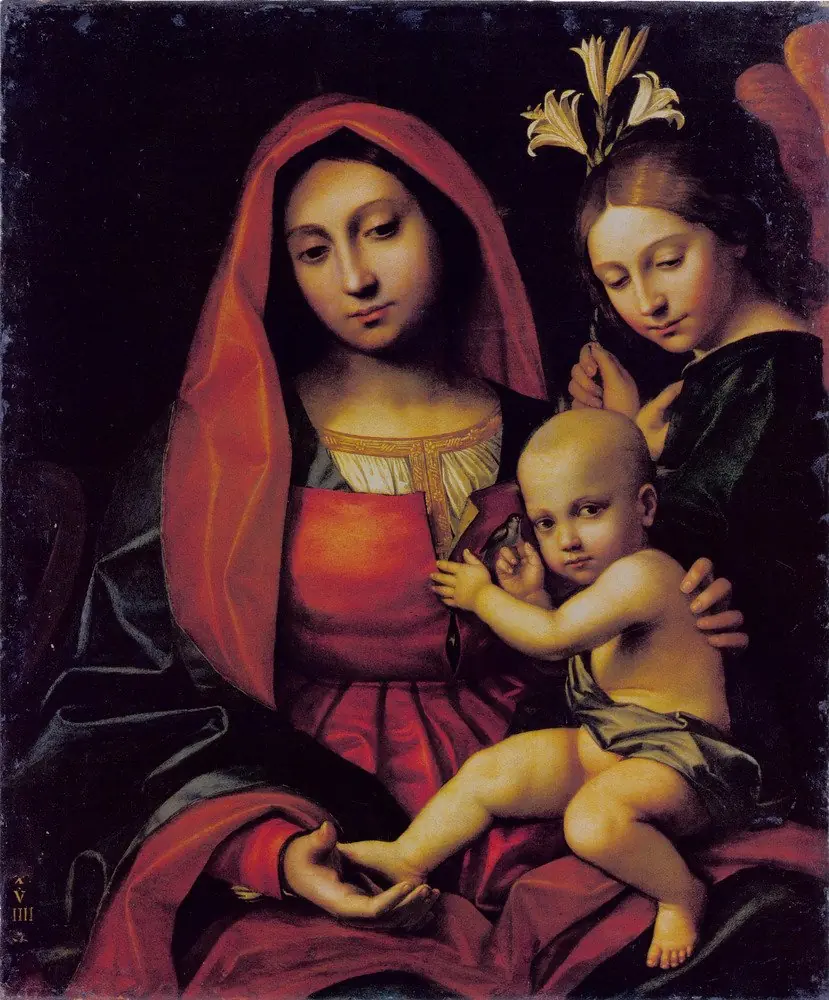
Madonna with child and two angel musicians
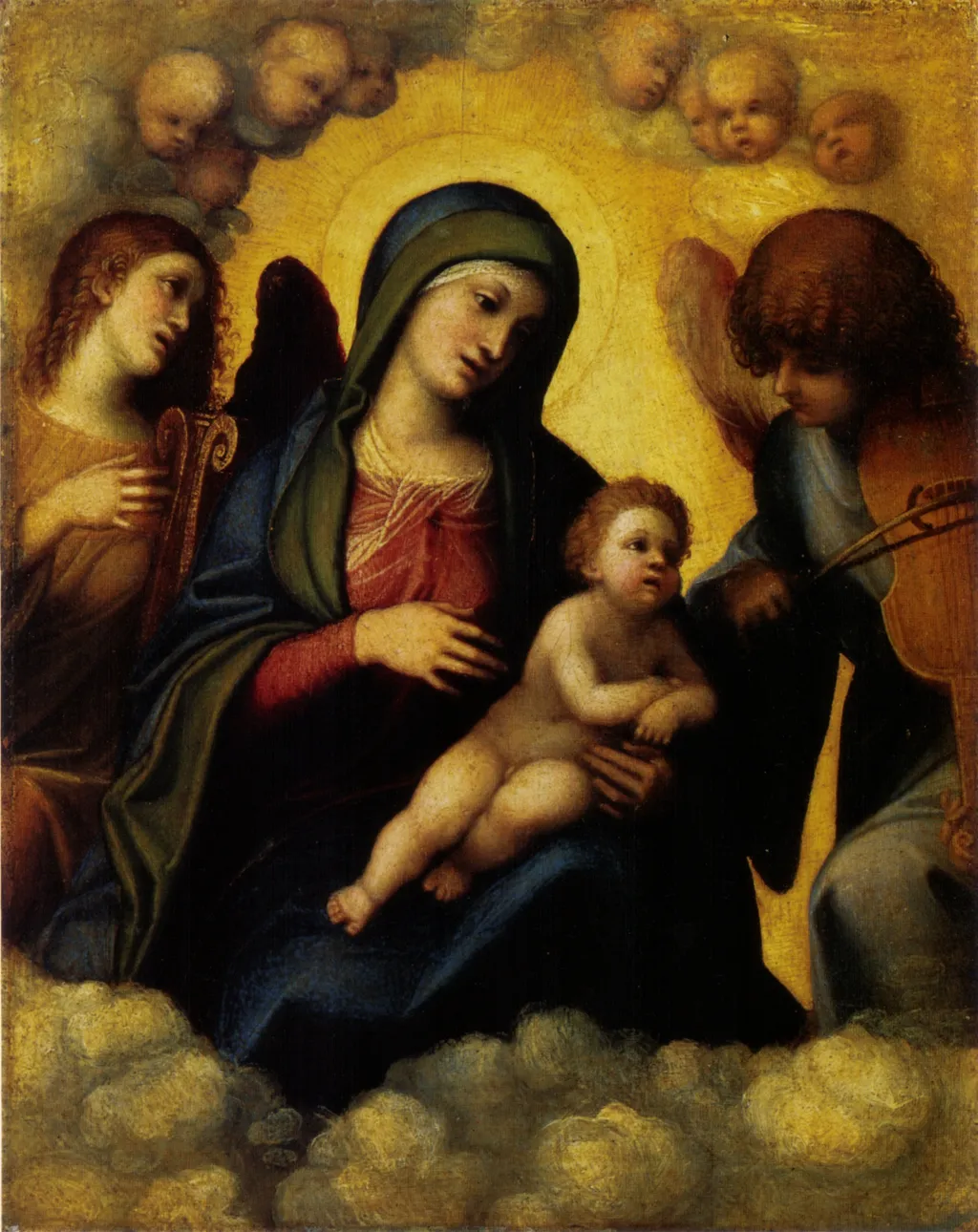
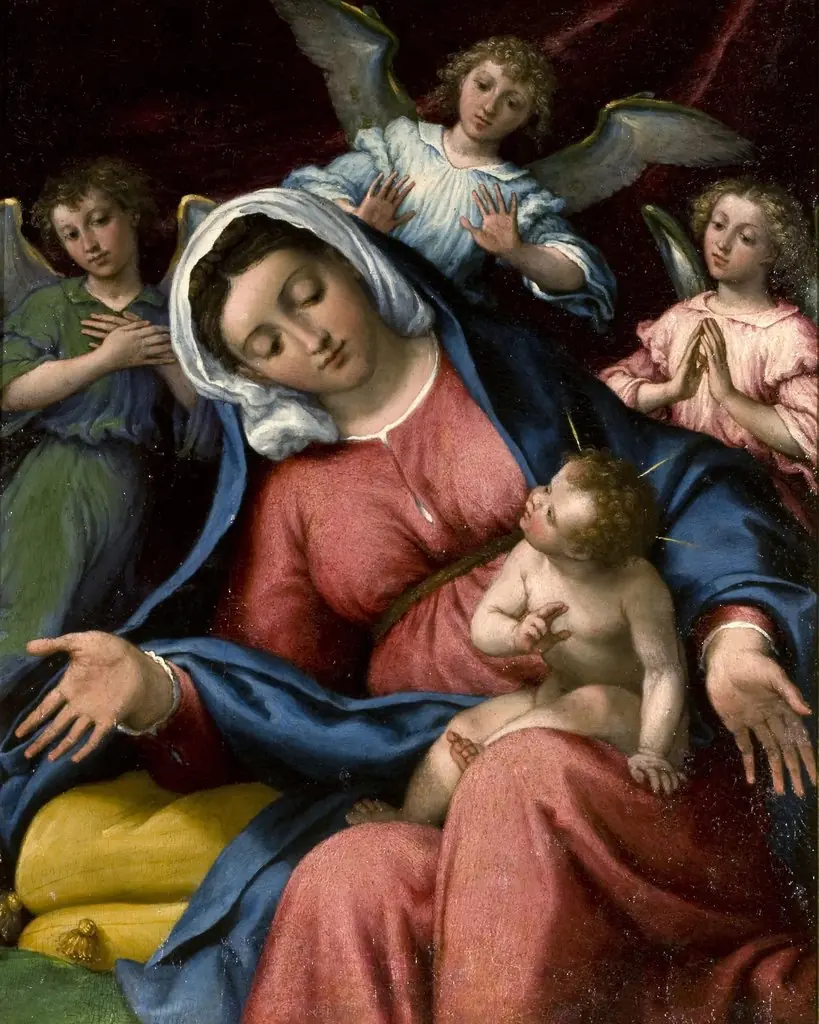
Madonna with child and two angel musicians is an oil painting by the High Renaissance artist Antonio da Correggio. It dates from 1515 and is held in the collection of the Uffizi Gallery.
About this work
Art experts argue whether it belongs in 1514 or 1515, but either way this little picture feels fresh and full of life.
Antonio da Correggio painted this small oil panel around 1515. It shows the Madonna holding the Christ Child while two angels play music beside them. The scene feels gentle and calm, like a quiet family moment.
You can find it today at the Uffizi Gallery in Florence. Art experts argue whether it belongs in 1514 or 1515, but either way this little picture feels fresh and full of life.
Look for the angel on the left holding a viola da gamba next.
Overview
The Madonna with Child and Two Angel Musicians is a small oil-on-panel painting by the Italian Renaissance master Antonio da Correggio, dated to approximately 1515-1516. Measuring only 20 by 16 centimeters, this intimate devotional work depicts the Virgin Mary seated with the Christ Child on her lap, flanked by two winged musician angels, all set against a celestial background of golden clouds and disembodied cherub heads. The painting is held in the collection of the Uffizi Gallery in Florence, where it has been since at least 1798. Though modest in scale, the panel exemplifies Correggio's early mastery of luminous color, soft atmospheric modeling, and pyramidal composition, qualities that prompted Giovanni Morelli's pivotal reattribution from Titian to the young Correggio and that have sustained its reputation as a key early work by one of the most innovative painters of the High Renaissance.
Subject & Meaning
The iconography centers on the Madonna and Child as the focal sacred pair, with Mary clad in a blue mantle and green head covering, her head encircled by a radiant golden halo that merges with the luminous background. The nude Christ Child twists dynamically toward the right, looking upward, while Mary's right hand rests across her chest and her left hand supports the infant. Two winged angels frame the central pair: the left angel has long hair and plays a stringed instrument, while the right angel, with curly hair, plays a violin-like instrument, specifically identified as a viola. The angels are turned inward, their attention directed toward the Madonna and Child, creating a devotional focus. Above the group, six disembodied cherub heads emerge from golden clouds, varying in size and angle, some looking down, others outward. The setting is entirely celestial, with no landscape or architectural elements, the figures seated upon billowing clouds that fill the lower portion of the composition. The Christ Child's reaching gesture toward the right-hand angel and the angel's bending pose, his face cast in shadow, introduce a note of intimate interaction that transcends the traditional hieratic Madonna and Child formula. The overall meaning combines conventional Marian devotion with a new, gentler humanity, the music-making angels suggesting the harmony of heaven and the Incarnation as a source of divine song.
Technique & Style
The painting is executed in oil on panel, a medium that allowed Correggio the smooth, blended transitions visible throughout the work. The visible technique shows fine craquelure across the surface, with smooth, blended brushwork in the flesh tones and more textured handling in the clouds and garments. A slightly yellowed varnish layer unifies the surface tonally. Light falls softly from above, modeling the figures' rounded forms and creating gentle shadows in the drapery folds. The overall finish is polished, with transitions between tones kept subtle and atmospheric. The palette is dominated by warm golds, deep blues, rich reds, and earthy browns. The composition is organized in a stable pyramidal structure, with the two musician angels framing the central mother and child pair. Notable is the sensitive treatment of light, with details rendered in backlighting, such as the sleeve of the right-hand angel and the wing of the left-hand angel, which is covered by Mary's shadow. This sophisticated handling of illumination, together with the soft color application, has led some scholars to see in the panel more technical maturity than its small format and seemingly simple, almost naive compositional scheme might initially suggest.
History & Provenance
The early provenance of the panel is partially obscured. On the back of the painting is a sixteenth-century monogram from the grand-ducal gallery in Florence, bearing the identification number 2523, though this number does not appear in any contemporary lists of the gallery's holdings. The work cannot be clearly traced in seventeenth-century inventories, but it probably belonged to the group of works that Anna Maria Luisa de' Medici took to Düsseldorf in 1691 upon her marriage to John William, Elector Palatine. Following John William's death in 1717, these works were returned to Florence. The first official mention of the painting places it in the inventory of the Gallerie fiorentine in 1798, in the Sala dei Maestri Italiani, where it remained until the mid-twentieth century. Previously attributed to Titian, the work was reattributed to the young Correggio by the connoisseur Giovanni Morelli, an attribution subsequently accepted by most critics, who cited the minute technical execution and clear, shining colors as supporting evidence. The painting's popularity from the eighteenth century onward is documented by numerous requests for copies. It is now in the Uffizi Gallery, Florence.
Context
The dating of the panel has been debated in the scholarly literature. Some sources place it around 1514-1515, while the more common dating is 1515-1516. The tendency to assign it to Correggio's very first years of activity may have been influenced by the small format and seemingly simple, almost naive compositional structure. However, other considerations, including the variety of handling, the sophisticated management of illumination, and the soft application of color, have suggested to some scholars a date of around 1514-1515, implying greater technical maturity than the earliest phase of Correggio's career. The attribution history reflects broader currents in nineteenth-century art history: the shift from Titian to Correggio exemplifies the period's developing ability to distinguish the hands of individual masters within the stylistically cohesive world of the Venetian and Emilian Renaissance. Morelli's reattribution, based on close technical and stylistic analysis, became the dominant scholarly position and helped establish critical parameters for understanding Correggio's early development. The panel's arcaizing structure, with its seated Madonna and flanking angels against a gold background, consciously evokes earlier devotional models, yet the realistic treatment of the figures and the innovative lighting effects point toward the fully mature Correggio who would transform the dome decorations of Parma.
Legacy
The Madonna with Child and Two Angel Musicians occupies a significant place in Correggio's oeuvre as a touchstone for understanding his early development and the emergence of his distinctive style. Its reattribution from Titian to Correggio by Giovanni Morelli represents a notable episode in the history of connoisseurship, demonstrating how close technical analysis could overturn long-standing attributions. The painting's popularity from the eighteenth century onward, evidenced by the many copies commissioned, attests to its enduring appeal among collectors and its function as a model for devotional imagery. Within Correggio's broader legacy, the panel anticipates the soft, atmospheric modeling, the pyramidal groupings, and the gentle humanization of sacred subjects that would characterize his mature masterpieces. Its residence in the Uffizi, one of the world's most visited museums, ensures its continued visibility and influence on both scholarly and public understanding of early sixteenth-century Italian painting. The work remains a standard reference point in discussions of Correggio's formation and of the intersection between Venetian colorism and Emilian draftsmanship in the Renaissance.
Own this work as a print
Artist & collection
Artist
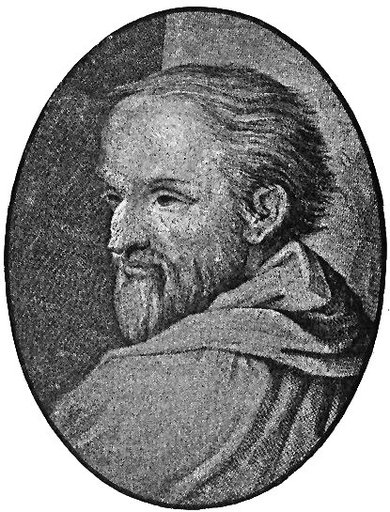
Antonio Allegri da Correggio, usually known as just Correggio, was an Italian Renaissance painter who was the foremost painter of the Parma school of the High Renaissance, who was responsible for some of the most…