Artwork
Sistine Madonna
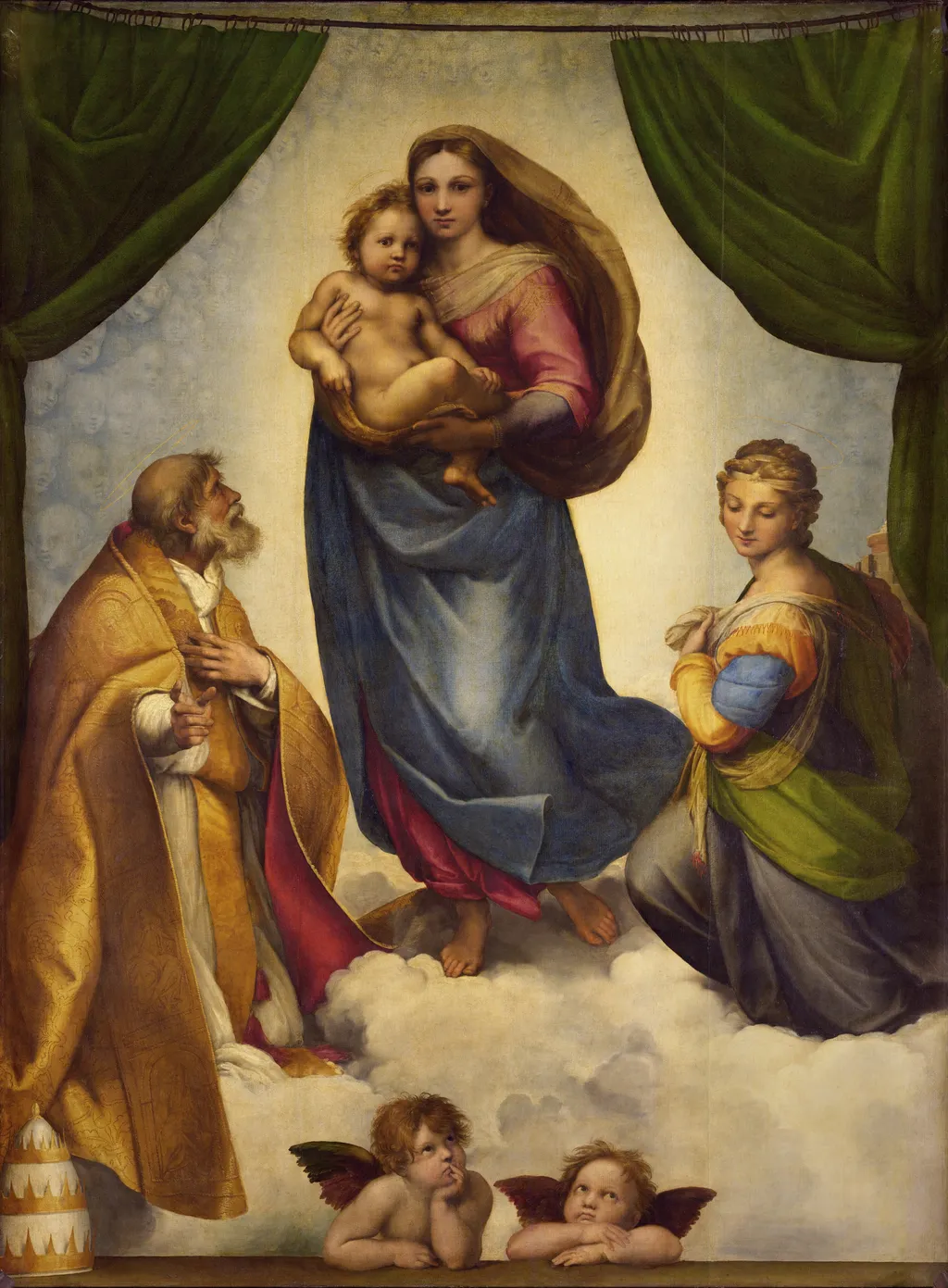
Sistine Madonna is an oil painting by the High Renaissance artist Raphael. It dates from 1512 and is held in the collection of the Staatliche Kunstsammlungen Dresden.
About this work
Subject & Meaning
The Sistine Madonna presents the Virgin Mary in a red and blue mantle holding the Christ Child, flanked by Saint Sixtus II on the left and Saint Barbara on the right, all arranged in a triangular composition beneath a parted celestial drapery. Sixtus, bearing the facial features of Pope Julius II, directs the viewer’s gaze toward the sacred pair while pointing to a papal tiara at his feet, evoking the della Rovere family’s patronage and commemorating Julius’s late uncle, Sixtus IV. Barbara kneels in sumptuous robes, her lowered gaze guiding the eye downward to the two winged putti at the lower edge, whose casual poses and upward glances create a visual circuit back to the central figures.
Raphael’s visionary treatment frames the scene as an epiphany: the foreground clouds dissolve into a multitude of angelic faces, while the drawn-back curtains imply a revelatory threshold between divine and earthly realms. The Madonna’s serene yet weighty advance, feet barely touching the sacred ground, underscores the incarnation’s gravity, and the Christ Child’s somber expression foreshadows his future sacrifice. Interpreted as both a sacra conversazione and a theophany, the painting synthesizes Renaissance ideals of harmony and piety, mediating between liturgical context and transcendent encounter.
Technique & Style
The scene is framed by heavy, retracted curtains in the upper corners, creating the illusion of a divine vision or theophany opening before the viewer.
The Sistine Madonna is an oil painting on canvas, executed by Raphael between 1512 and 1514. Technical analysis identifies the use of period-typical pigments, including malachite mixed with orpiment for the green drapery, natural ultramarine blended with lead white for the Virgin's blue robe, and a combination of lead-tin-yellow, vermilion, and lead white for Saint Barbara's yellow sleeve. The composition features a pyramidal arrangement of figures emerging from a cloud bank, which upon closer inspection reveals the heads of numerous obscured putti rather than simple atmospheric vapor. The scene is framed by heavy, retracted curtains in the upper corners, creating the illusion of a divine vision or theophany opening before the viewer. The work measures approximately 265 cm by 196 cm. While the painting survived World War II storage in a Saxon tunnel without major restoration, it received new framing and glazing in 2012 to mark its 500th anniversary.
History & Provenance
The Sistine Madonna was commissioned by Pope Julius II for the high altar of the Benedictine monastery church of San Sisto in Piacenza and completed around 1513-1514. Its placement honored Saint Sixtus II and Saint Barbara, whose relics were kept in the church, and commemorated the Della Rovere family’s ties to Sixtus IV, uncle of Julius II. In 1754, Augustus III of Poland purchased the painting for his Dresden collection after protracted negotiations sanctioned by Pope Benedict XIV and the Duke of Parma, paying a then-unprecedented sum of 110,000-120,000 francs. It remained in Dresden’s Gemäldegalerie Alte Meister except during World War II, when it was evacuated to a railway tunnel in Saxon Switzerland and later seized by Soviet forces in 1945. The painting was displayed in Moscow’s Pushkin Museum until 1955, when it was returned to Dresden following Stalin’s death as part of a restitution agreement. The Sistine Madonna is currently held by the Staatliche Kunstsammlungen Dresden in Germany, specifically within the Gemäldegalerie Alte Meister. The work was acquired by Augustus III of Poland in January 1754 and arrived in Dresden on March 1, 1754, where it remained until the end of World War II. During the war, the painting was evacuated to a railway tunnel in Saxon Switzerland before being seized by Soviet forces in 1945. It was subsequently transported to Moscow and displayed at the Pushkin Museum of Fine Arts for a decade. The artwork was returned to Dresden in 1955 following the death of Joseph Stalin. In 2012, the museum hosted a special exhibition titled "Raffaels Kultbild wird 500" to commemorate the painting's 500th anniversary. On August 23, 2022, the work was the target of a protest by activists from the group Letzte Generation who attached themselves to the frame, though the painting itself sustained no damage.
Context
The Sistine Madonna has been central to scholarly debate over its role in the High Renaissance and its influence on German and Russian art discourse. Giorgio Vasari hailed it as 'a truly rare and extraordinary work' shortly after its creation, and its iconography, particularly the two cherubic figures at the base, became emblematic of Renaissance sacred art, inspiring widespread reproduction on postcards, stamps, and merchandise. The painting's relocation to Dresden in 1754, purchased by Augustus III of Poland for 110,000-120,000 francs, established it as a cultural touchstone; Johann Joachim Winckelmann later positioned it at the center of debates about Classical versus Christian artistic ideals in his 1764 *Geschichte der Kunst des Alterthums*. During World War II, it was evacuated to a Saxon Switzerland tunnel but seized by Soviet forces in 1945, exhibited in the Pushkin Museum until 1955, and controversially returned to Dresden after Stalin's death. Its enduring legacy is reflected in its symbolic use by 19th-century German Romanticism, with figures like Goethe, Wagner, and Nietzsche engaging with its themes, and even modern political actions, such as the 2022 climate protest where activists attached themselves to its frame without damaging the artwork.
Legacy
The Sistine Madonna has exerted profound influence on German and Russian art and culture since its relocation to Dresden in 1754. Giorgio Vasari praised it as "a truly rare and extraordinary work," and its reputation grew exponentially in Germany after Augustus III of Poland acquired it for 110,000-120,000 francs, a record price for decades. Johann Joachim Winckelmann featured it in his influential Geschichte der Kunst des Alterthums (1764), sparking debate about its Classical and Christian elements. The painting became an icon of 19th-century German Romanticism, inspiring Goethe, Wagner, and Nietzsche, and was hailed as "supreme among the world's paintings." Dostoyevsky called it "the greatest revelation of the human spirit." The two putti at the bottom became independently iconic, reproduced ubiquitously on stamps, postcards, and merchandise. After World War II, Soviet seizure and ten-year exhibition in Moscow's Pushkin Museum further elevated its global status before its 1955 return to Dresden.
Own this work as a print
Artist & collection
Artist
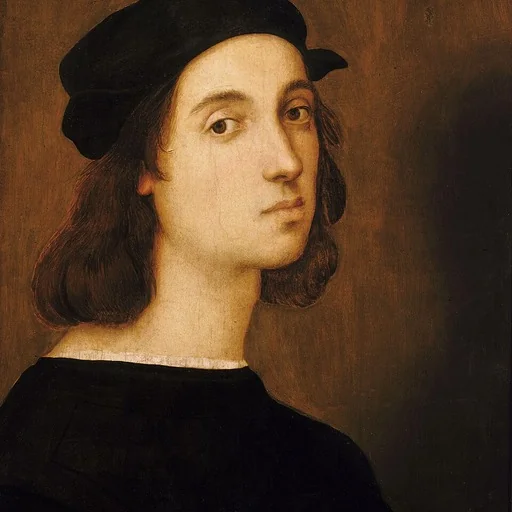
Raphael was born Raffaello Sanzio in Urbino on April 6, 1483, the son of Giovanni Santi, a painter and poet attached to the ducal court.

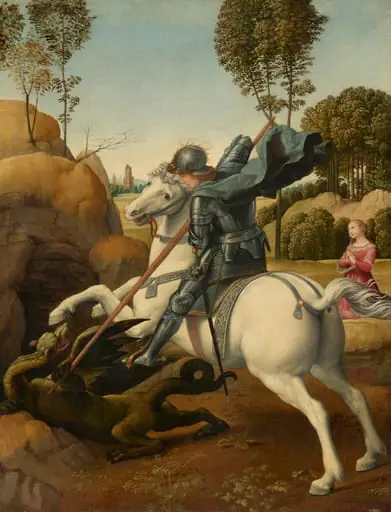
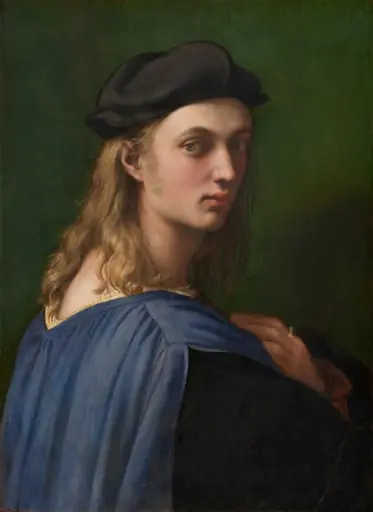
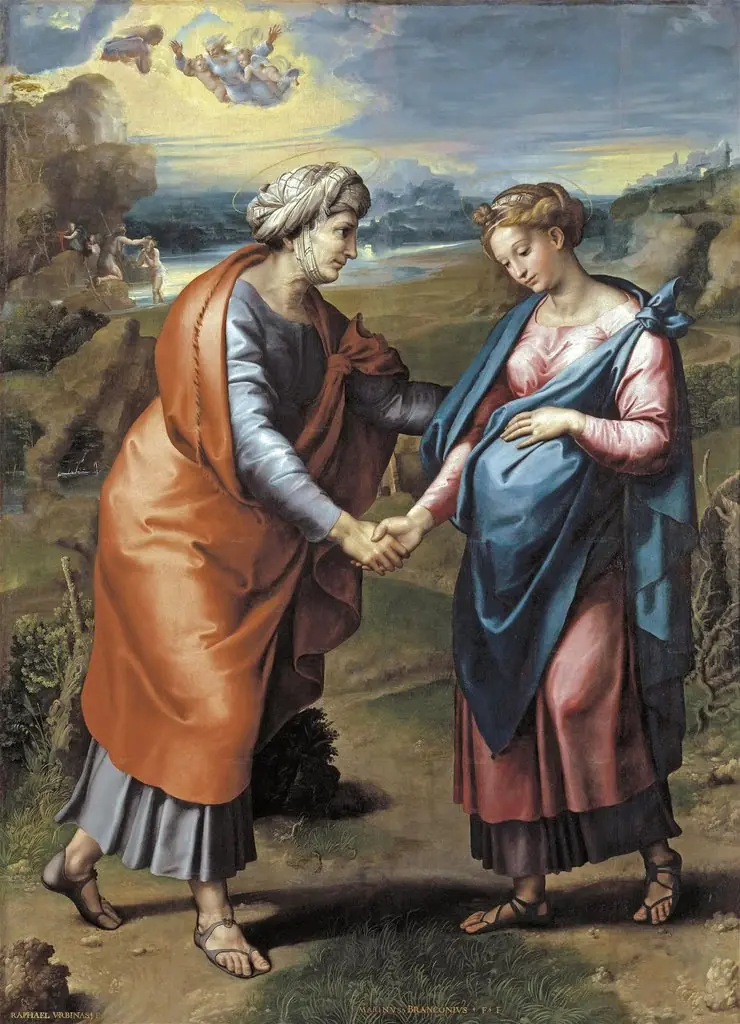
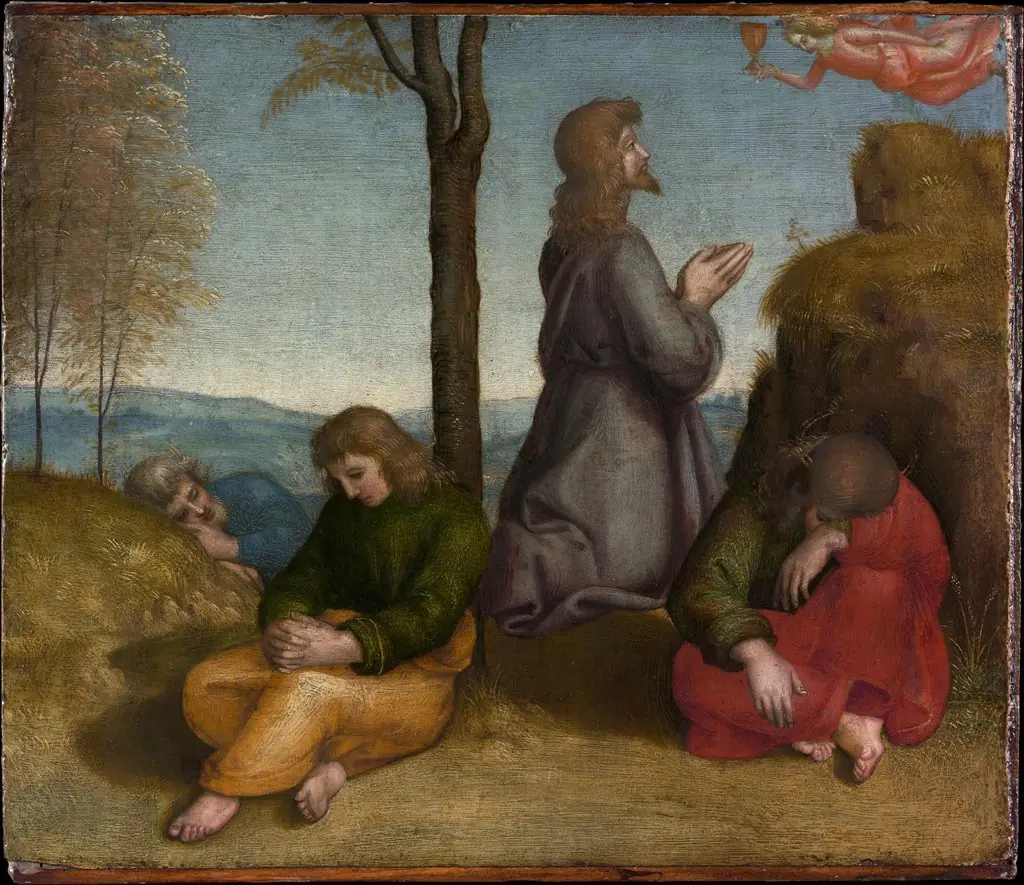
- Madonna with the Fish
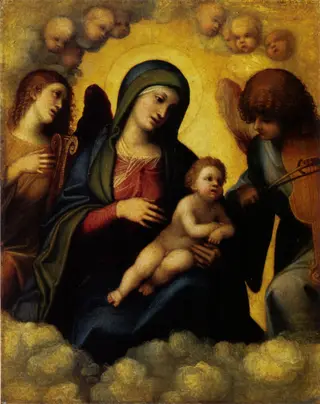 Madonna with child and two angel musicians
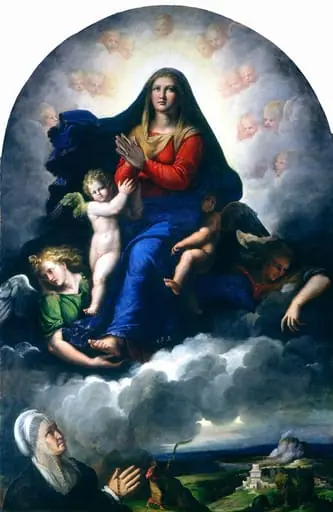 The Apparition of the Virgin
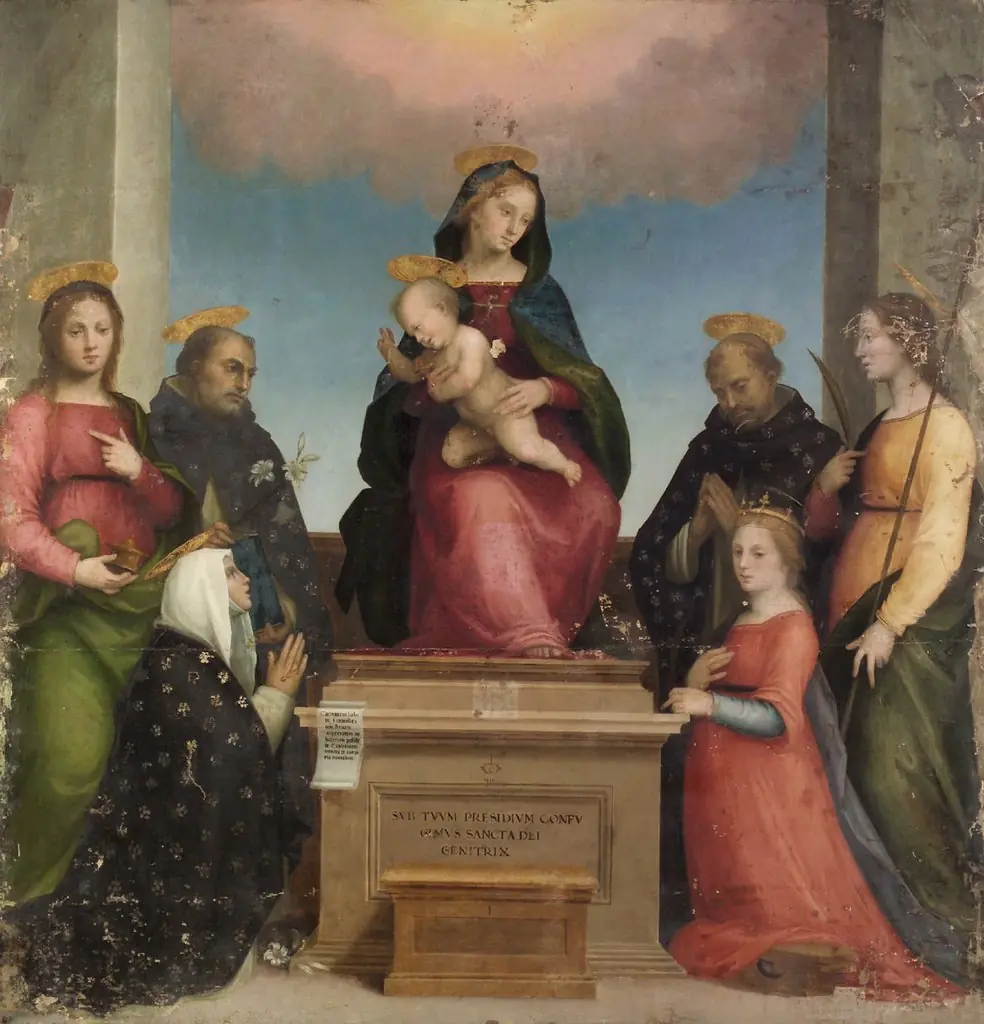 Maria mit Kind und den Hll. Katharina von Siena, Katharina von Alexandrien, Maria Magdalena, Dominikus, Petrus Martyr und einer Märtyrerin
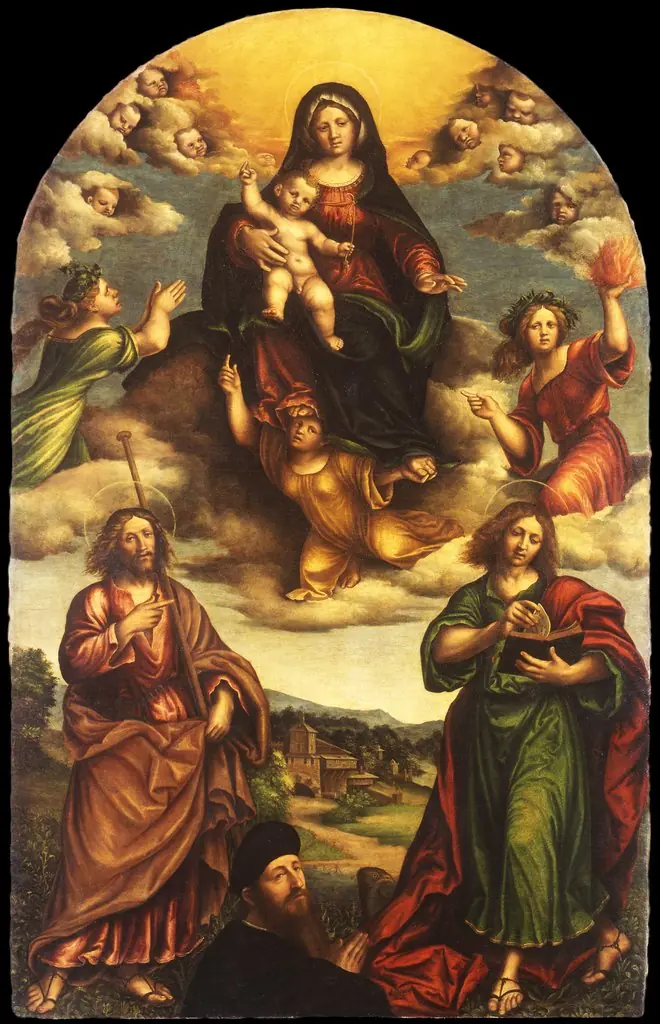 The Virgin with Blessing Child and Saints
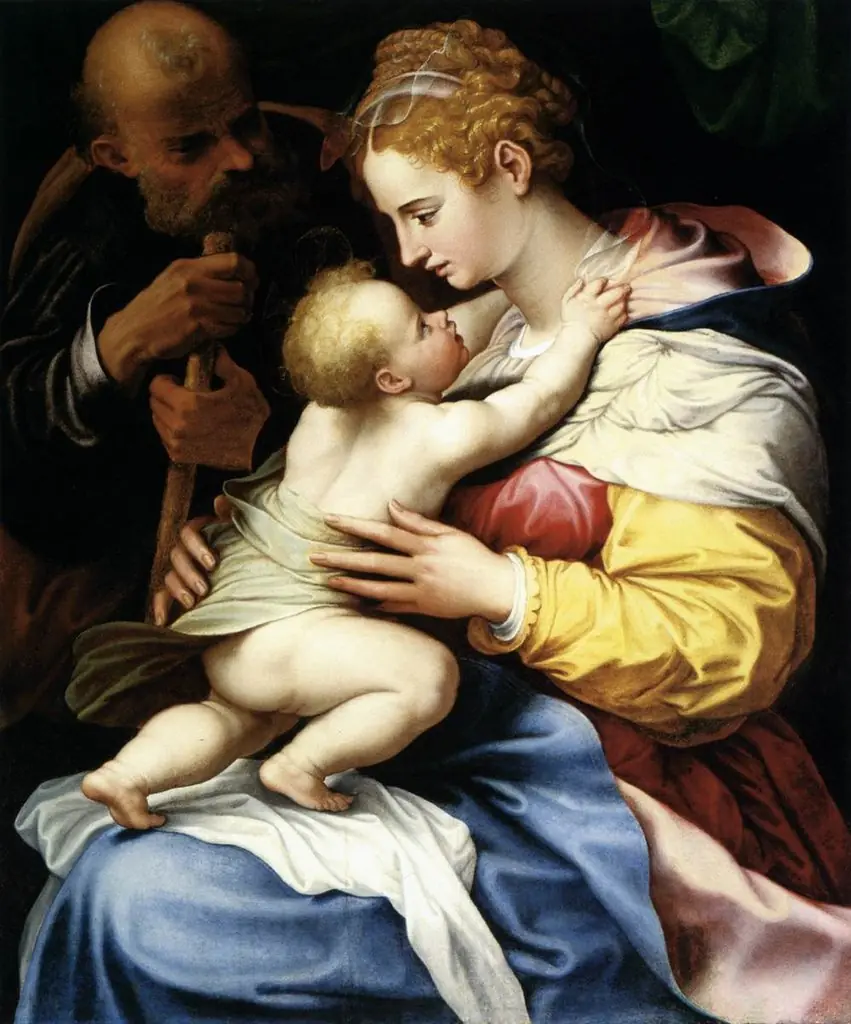 The Holy Family
 Madonna and Child with Saints and Angels
 Madonna of the Harpies
 The Mystical Marriage of Saint Catherine
 Assumption of the Virgin
 Madonna and Child Enthroned with Saints
 Incarnation of Jesus by Piero di Cosimo