Artwork
Allegory of enthroned injustice
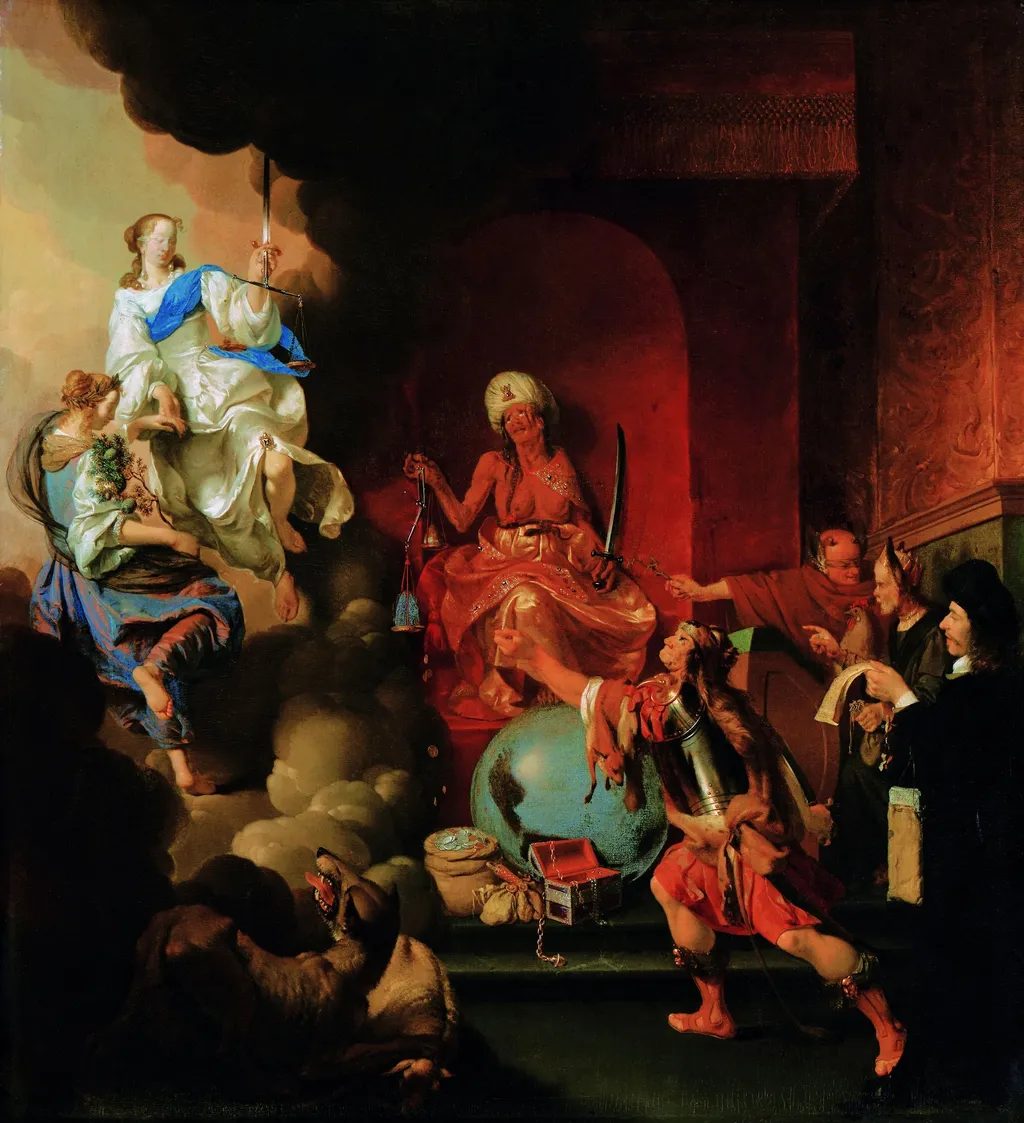
Allegory of enthroned injustice is an oil painting by the Dutch Golden Age artist Ary de Vois. It dates from 1650 and is held in the collection of the National Museum in Warsaw.
About this work
Overview
The composition centers on a seated figure in regal attire, elevated on a throne-like seat, while a spectral woman hovers above, holding balanced scales.
Painted around 1650 by Ary de Vois, this oil-on-canvas work presents a symbolic depiction of corrupted authority. It is part of the collection at the National Museum in Warsaw. The composition centers on a seated figure in regal attire, elevated on a throne-like seat, while a spectral woman hovers above, holding balanced scales.
The scene is dense with figures in elaborate dress, suggesting a courtly setting charged with tension and moral ambiguity.
Subject & Meaning
The painting critiques the perversion of justice through allegory. The enthroned figure, adorned in red and a turban, embodies unchecked power rather than lawful rule. Above, the floating woman with scales evokes idealized justice, yet her detachment implies its absence on earth.
The globe at the kneeling man’s feet suggests global dominion, while the anxious expressions of surrounding figures signal the consequences of institutional betrayal.
Technique & Style
De Vois employs rich, saturated hues, crimson, ultramarine, and gold, to heighten the theatricality of the scene. Strong contrasts of light and shadow, characteristic of chiaroscuro, deepen the sense of drama and moral unease. Figures are rendered with precise detail, particularly in fabric and facial expression, reinforcing the narrative’s emotional weight.
The floating figure is rendered with softer edges, distinguishing her as an ethereal presence amid the grounded chaos.
History & Provenance
The painting entered the National Museum in Warsaw’s collection in the 19th century, though its earlier ownership remains undocumented. It was likely commissioned by a Dutch or Flemish patron during the mid-1600s, a period when allegorical paintings critiquing governance were common among elite collectors. Its survival through wars and political upheavals underscores its enduring presence in institutional memory.
Context
Created during the Dutch Golden Age, the work reflects broader European concerns about corruption in legal and political systems. While many contemporaries celebrated civic virtue, this painting offers a counter-narrative, aligning with a tradition of moralizing allegory seen in the works of artists like Rembrandt and Rubens. The inclusion of exotic attire hints at global trade and colonial power dynamics shaping contemporary anxieties.
Legacy
Though not widely exhibited outside Poland, the painting remains a significant example of 17th-century Dutch allegorical painting that challenges idealized notions of justice. Its visual language influenced later satirical works in European art. Scholars continue to reference it in studies of power, representation, and the visual rhetoric of authority during the early modern period.
Own this work as a print
Artist & collection

- De Fem Sanser
 Ein Engel verheisst der Frau des Manoah einen Sohn
 Allegory of Tuscany
 Juno and Luna
 Saint Jame's Vision of the Virgin of the Pillar
 Untitled
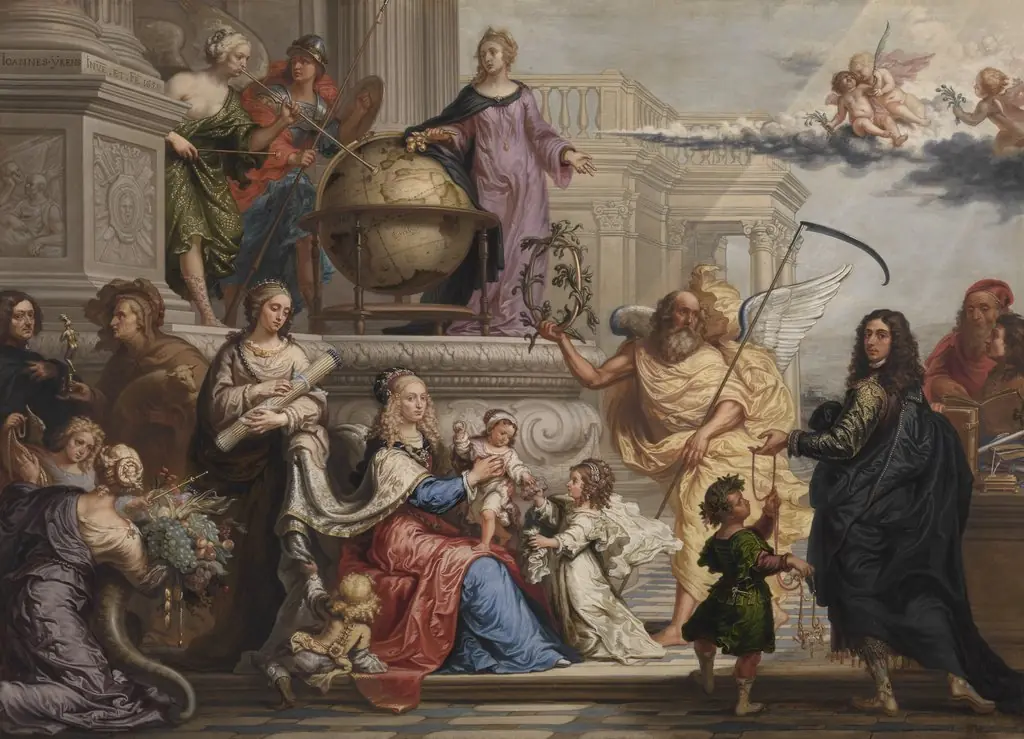 Allegorical Adoration of the Birth of a Prince
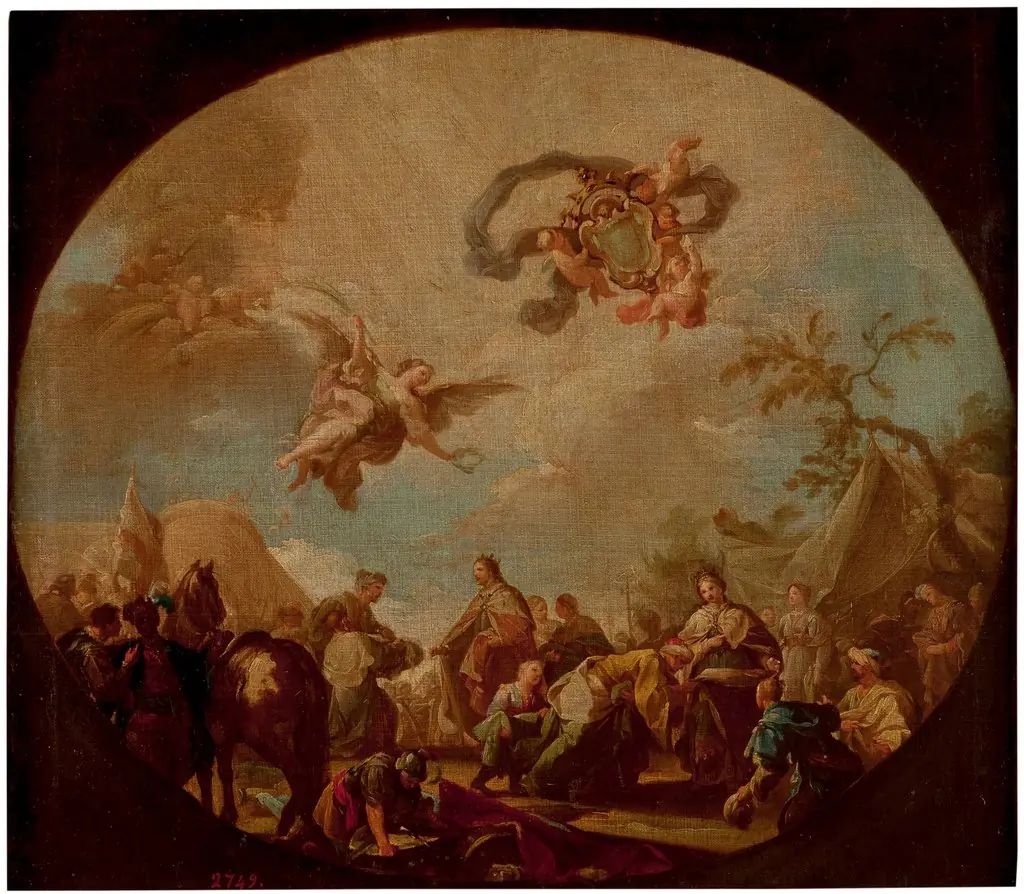 La Rendición de Granada
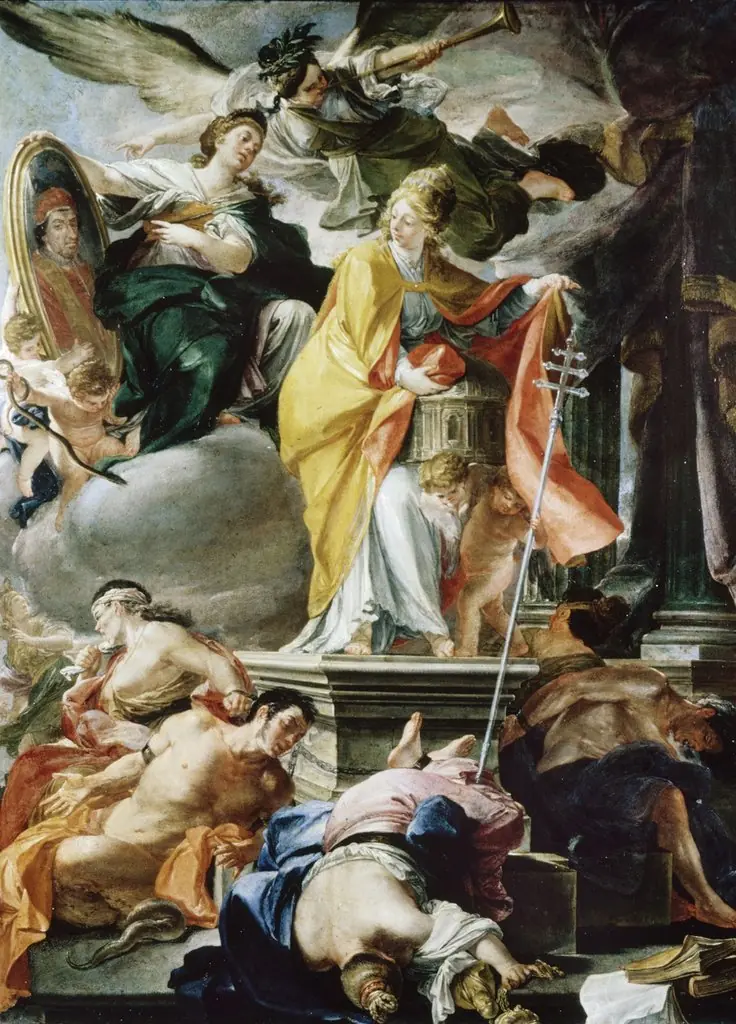 Allegory of the Papacy of Clement XI
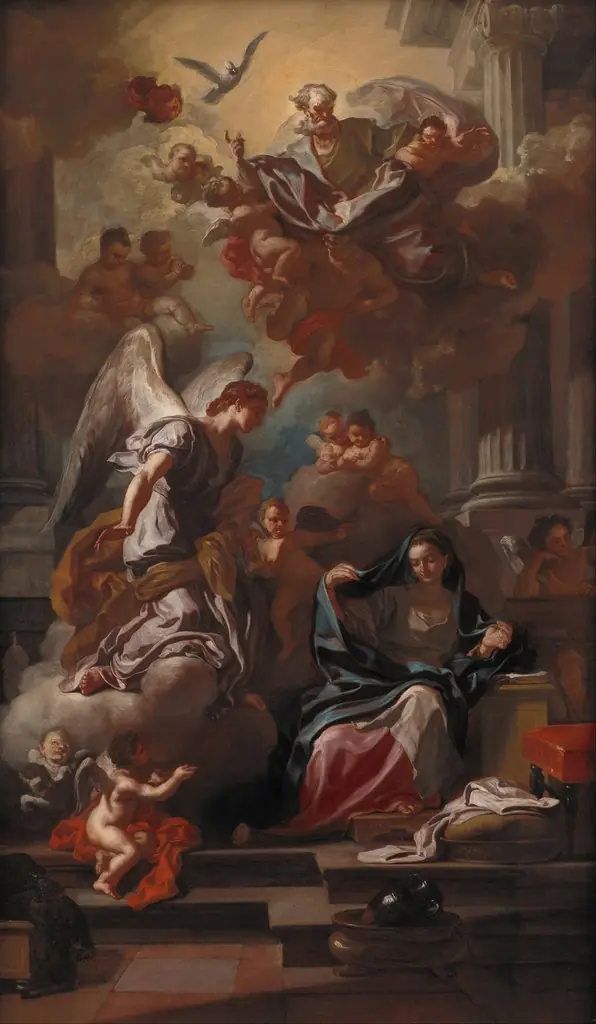 The Annunciation
 Allegory of the Consequences of the Peace of Utrecht
 Mystic marriage of Saint Catherine