Artwork
Christ Giving the Keys to St. Peter
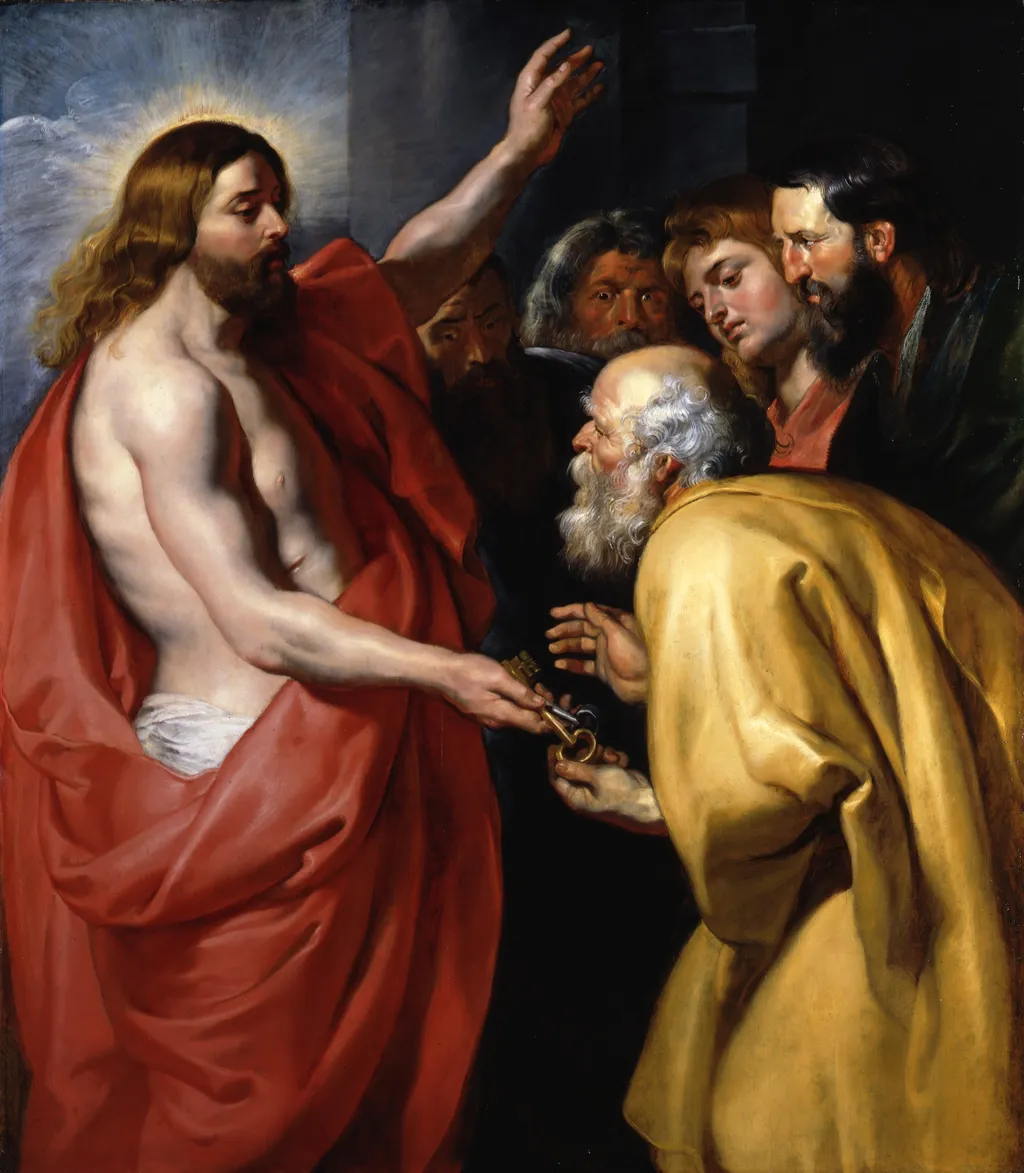
Christ Giving the Keys to St. Peter is an oil painting by the Flemish Baroque painting artist Peter Paul Rubens. It dates from 1612 and is held in the collection of the Gemäldegalerie Berlin.
About this work
Subject & Meaning
The composition centers on this act, with Christ elevated and Peter kneeling, emphasizing the divine mandate and hierarchical transmission of power.
The painting represents the Gospel episode in Matthew 16:19, where Jesus transfers the Keys of Heaven to Saint Peter, symbolizing the establishment of papal authority within the Church. Rubens depicts Christ handing two large keys to Peter, underscoring the scriptural promise that whatever is bound or loosed on earth will be bound or loosed in heaven. The composition centers on this act, with Christ elevated and Peter kneeling, emphasizing the divine mandate and hierarchical transmission of power.
In Catholic iconography, the Keys of Heaven conventionally denote papal primacy, and Rubens’s rendering aligns with this tradition by visualizing the moment as both a literal and theological transfer of authority.
Technique & Style
This Baroque work is executed in oil paint on an oak panel. The Berlin version, recognized by modern scholarship as the original due to its high quality and wooden support, measures 182.6 cm in height and 159 cm in width. Historical records indicate confusion with a potentially smaller canvas version once owned by R. W. Bacon, which reportedly bore a later inscription; however, the extant Berlin panel lacks such markings.
Stylistically, the composition illustrates the biblical moment from the Gospel of Matthew where Christ transfers ecclesiastical authority to Saint Peter through the symbolic handing over of the keys to Heaven. The painting functions as an epitaph image, adhering to the convention of depicting the name saint of the deceased, in this case, Peter Bruegel the Elder.
History & Provenance
Christ Giving the Keys to Saint Peter was created between 1612 and 1614 for a commission by the Kapellekerk in Brussels, intended as an epitaph for Peter Bruegel the Elder and likely arranged by David Teniers the Younger; the work entered the collection of Marcell Nemes and later passed through several owners including Gerrit Braamcamp, van Lankeren, Lord Northwick, William Leonard Grant, Potemkin, R. W. Bacon, and Marcel von Nemes before being seized from Dresdner Bank and assigned to the Gemäldegalerie in Berlin in 1936; after World War II it remained the only Rubens painting on Museum Island until 1997, when it moved to the Neubau of the Gemäldegalerie and rejoined the Rubens collection; the painting is executed in oil on panel, measuring 182.6 cm by 159 cm, and its provenance reflects a complex chain of ownership from its probable 1612–1614 creation to its modern display history
The work is held in the Gemäldegalerie, Berlin, with the accession number 399.
It entered the collection in 1936 after being seized from Dresdner Bank holdings and assigned to the museum. Previously, it was shown in the Bode Museum from 1945 until 1997, then moved to the Neubau in the Gemäldegalerie in 1998.
Exhibitions include its integration into the Berlin Rubens collection at the Neubau in 1998.
Context
The painting has been understood as a visual articulation of papal primacy, with the key symbolising ecclesiastical authority conferred by Christ. Critical discourse has emphasized its theological nuance within Counter‑Reformation visual culture, linking the depicted moment to Matthew 16:19 and to contemporary debates on papal jurisdiction. Scholarship situates the work within Rubens’s broader synthesis of Baroque dynamism and Counter‑Reformation didacticism, noting its function as an epitaph for Pieter Bruegel the Elder commissioned likely through David Teniers the Younger.
The provenance reflects a complex series of transactions from a 1765 sale to Gerrit Braamcamp, through multiple private collections, to its acquisition by the Staatliche Museen zu Berlin in 1936, where it now resides in the Gemäldegalerie. Its iconographic centrality and material execution on oak panel have made it a reference point for studies of Rubens’s workshop practice and of 17th‑century religious patronage.
Overview
Completed in 1614, this oil painting by Peter Paul Rubens portrays the biblical moment when Christ entrusts the keys of the kingdom to Saint Peter. The work is part of the collection of the Gemäldegalerie in Berlin and exemplifies Rubens’s mature Baroque approach to narrative composition.
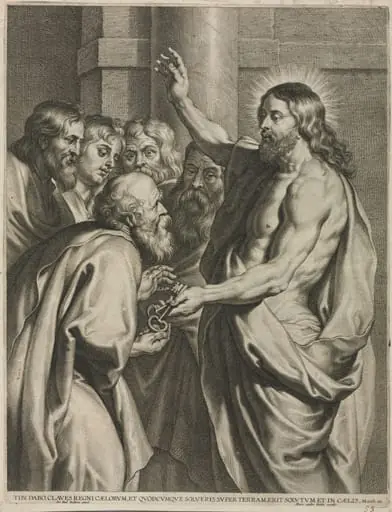
Own this work as a print
Artist & collection
Artist
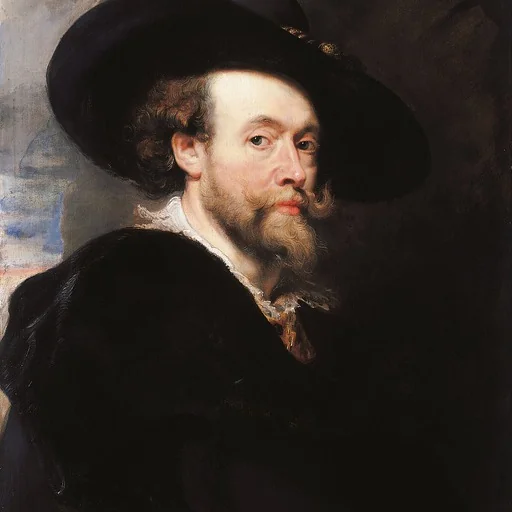
Sir Peter Paul Rubens ( ROO-bənz; Dutch:; 28 June 1577 – 30 May 1640) was a Flemish artist and diplomat.

 Appearance of Christ to his Disciples
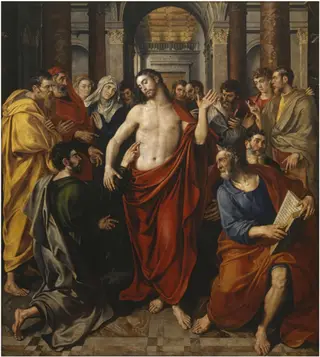 Incredulity of Saint Thomas
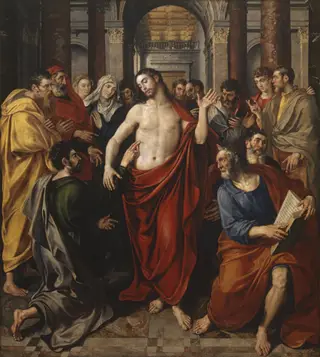 Altarpiece of the Guild of the Fur Workers
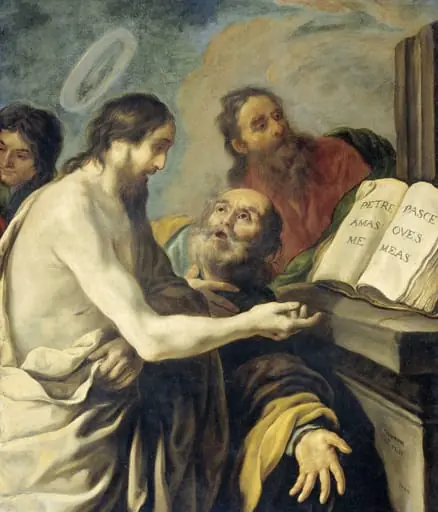 Christ Instructs Peter to Feed My Sheep
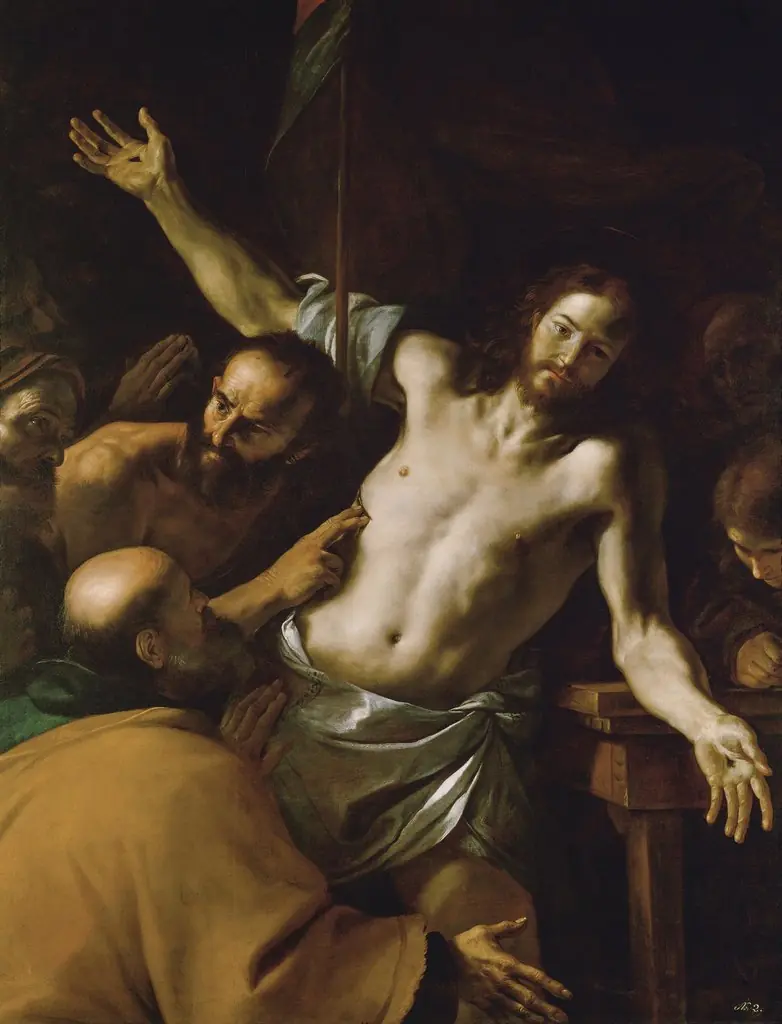 Doubting Thomas
 Untitled
 The Incredulity of Thomas
 The incredulity of St Thomas
 Christ Instructs Peter to Feed My Sheep
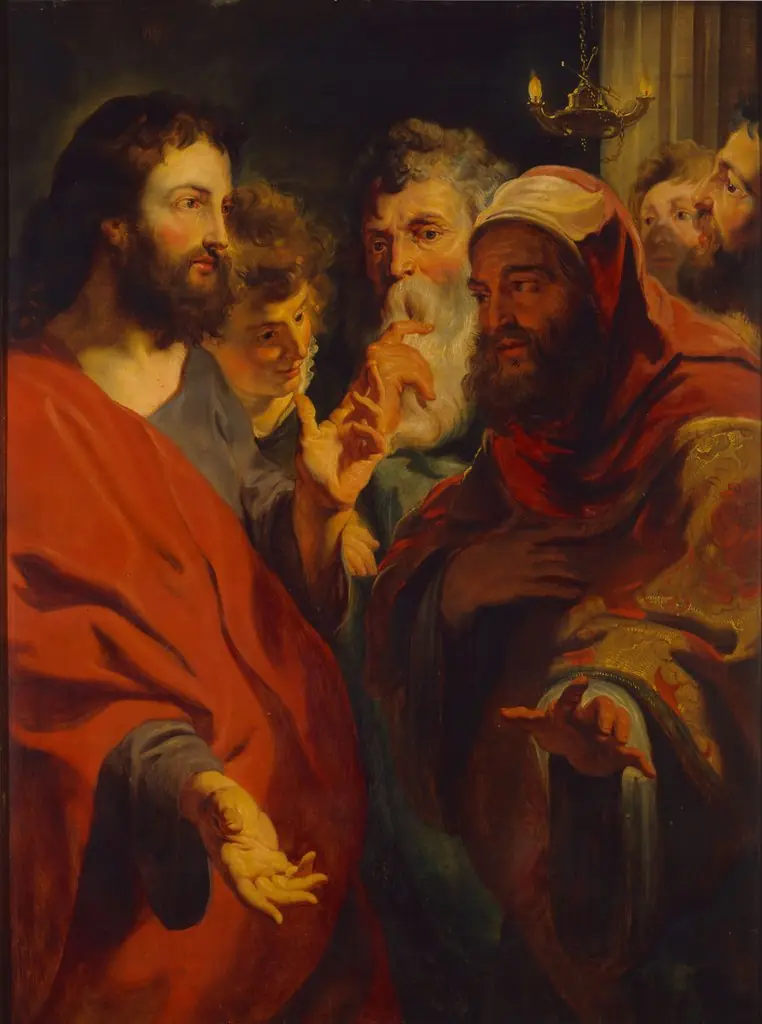 Christ instructing Nicodemus
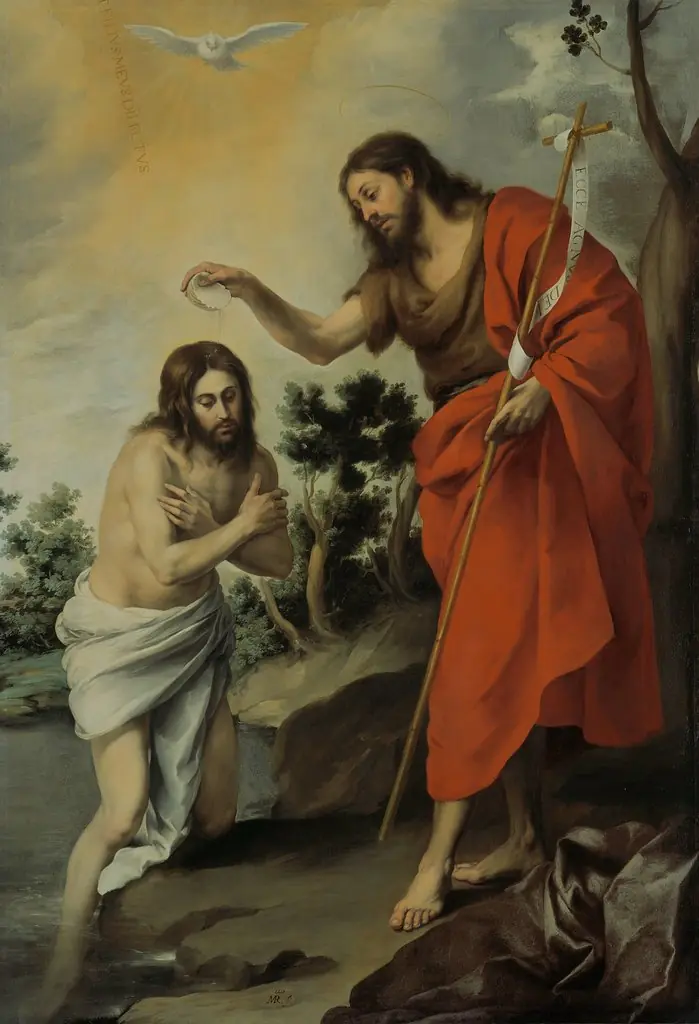 The Baptism of Christ
- Christ Giving the Keys to Peter