Artwork
The Fruit Seller
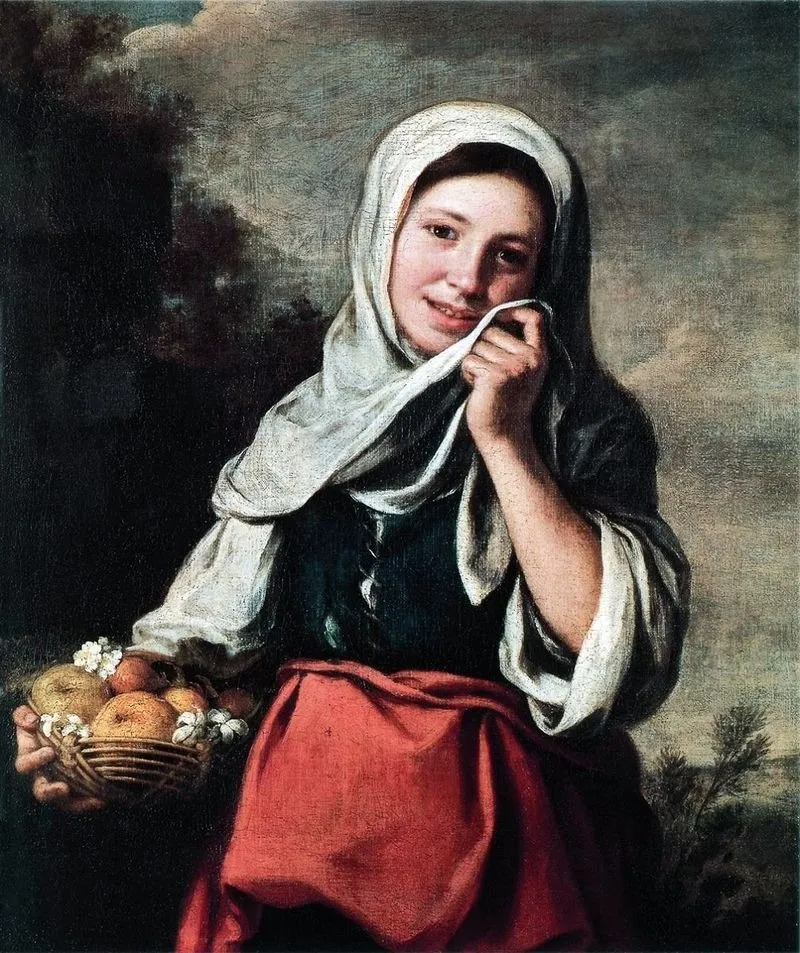
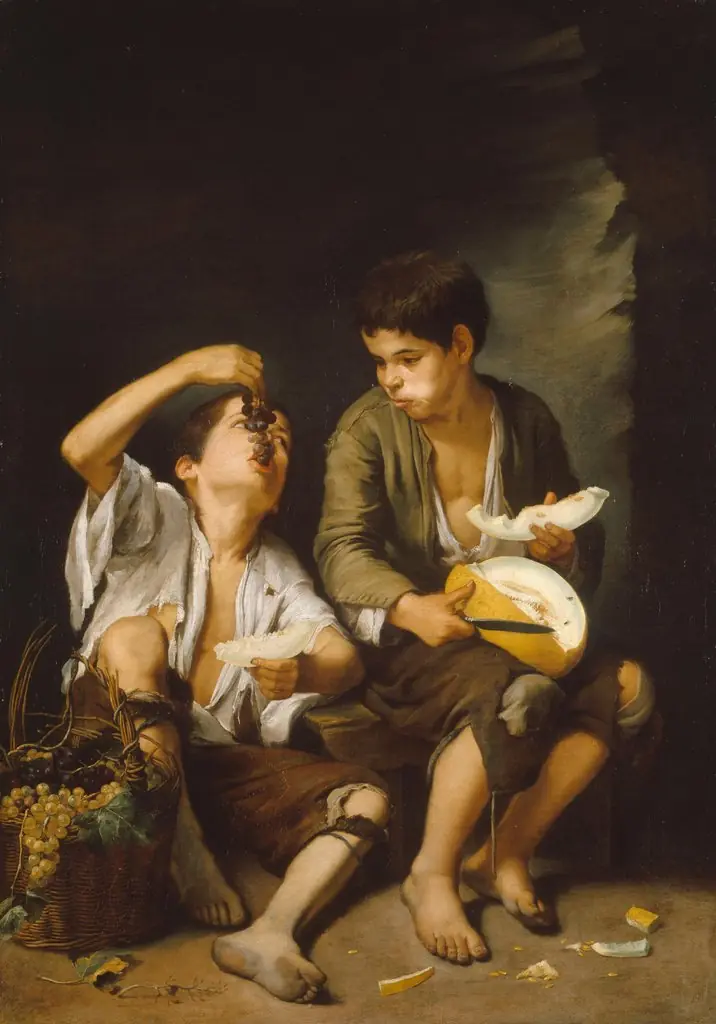
The Fruit Seller is an oil painting by the Early Baroque Italian artist Bartolomé Esteban Murillo. It dates from 1655 and is held in the collection of the Pushkin Museum of Fine Arts.
About this work
Subject & Meaning
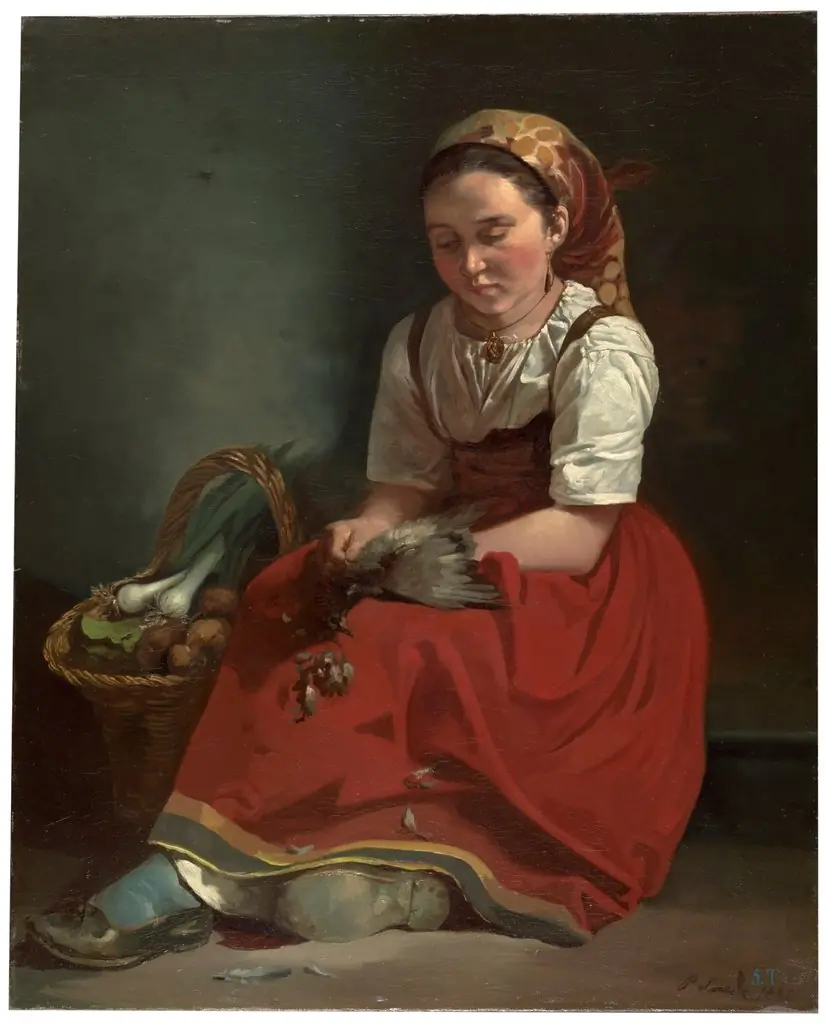
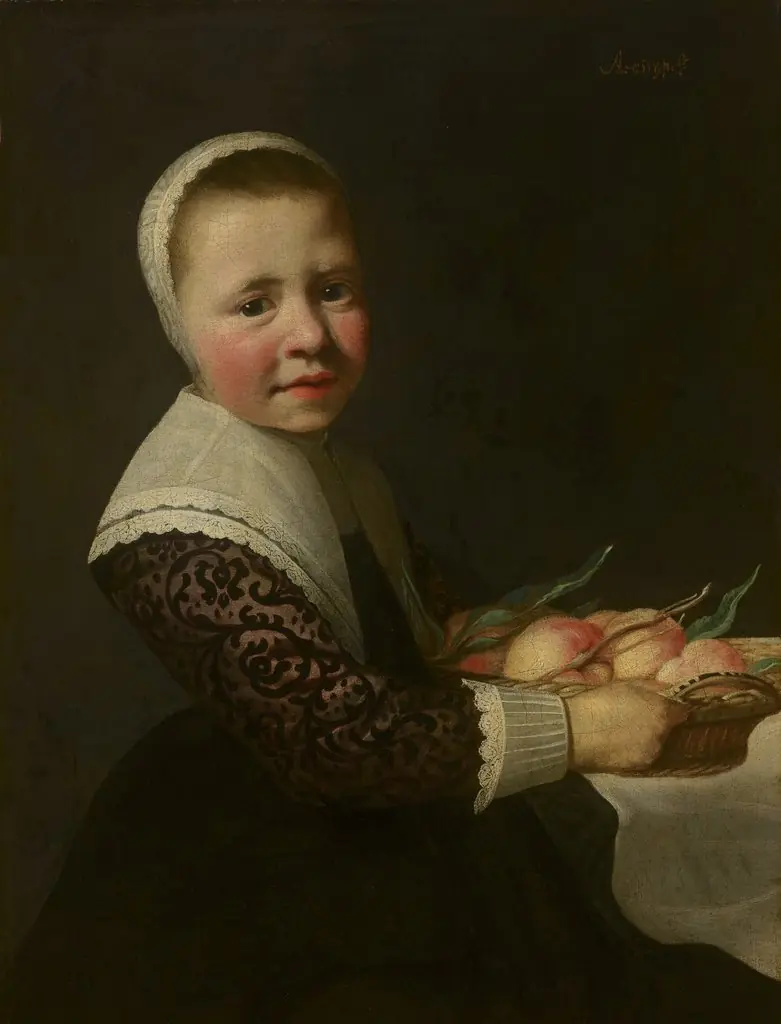
Painted in 1655, this oil work by Bartolomé Esteban Murillo presents a portrait of a woman accompanied by a basket of fruit.
Painted in 1655, this oil work by Bartolomé Esteban Murillo presents a portrait of a woman accompanied by a basket of fruit. The composition focuses on these specific elements, depicting the figure alongside her produce without additional narrative context provided in the available records. While the piece is classified as a portrait, the inclusion of the fruit basket serves as the primary iconographic attribute, defining the subject's role as a seller.
The work's meaning is rooted in this direct representation of daily life and commerce, characteristic of the genre scenes Murillo explored during this period, though specific symbolic interpretations beyond the literal depiction of a vendor are not detailed in the source material.
Technique & Style
Created in 1655, The Fruit Seller is an oil painting executed on a canvas support. The work measures 76 cm in height and 61 cm in width. As a portrait genre piece, it depicts a woman accompanied by a basket of fruit. The painting is attributed to Bartolomé Esteban Murillo.
History & Provenance
The work was painted in 1655 by Bartolomé Esteban Murillo, as documented in internal records and corroborated by the Pushkin Museum’s holdings and a Wikidata entry.
The painting’s early documented owner was Étienne François, duc de Choiseul, a French statesman and collector. By the late 18th century it had entered the French aristocratic market and was recorded in his collection. It later passed into the Cabinet de Monseigneur le duc de Choiseul before entering Russian collections.
By the 20th century it was held in the Hermitage Museum and subsequently transferred to the Pushkin Museum of Fine Arts, where it remains.
The painting is held in the collection of the Pushkin Museum of Fine Arts. Historical records indicate the work was previously owned by Étienne François, duc de Choiseul, and was part of the Cabinet de Monseigneur le duc de Choiseul. The piece has also been associated with the Hermitage Museum in its provenance history. No specific inventory numbers or detailed exhibition timelines are provided in the available sources.
Context
The Fruit Seller is a 1655 oil painting by Bartolomé Esteban Murillo depicting a woman with a basket of fruit. It belongs to the portrait genre and was originally owned by Étienne François, duc de Choiseul, before entering the collection of the Pushkin Museum of Fine Arts. The work has been discussed in scholarship as an example of Murillo's early genre portraits, reflecting his focus on everyday figures within a devotional context.
Its provenance and stylistic analysis place it within Murillo's broader output during his formative years in Seville, contributing to understanding of 17th-century Spanish portraiture.
Overview
Created in 1655 by the Spanish Baroque artist Bartolomé Esteban Murillo, this oil painting presents a solitary figure engaged in a modest domestic activity. The work resides in the State Hermitage Museum, where it exemplifies Murillo’s early forays into genre scenes that document everyday life in seventeenth‑century Spain.
Artist & collection
Artist
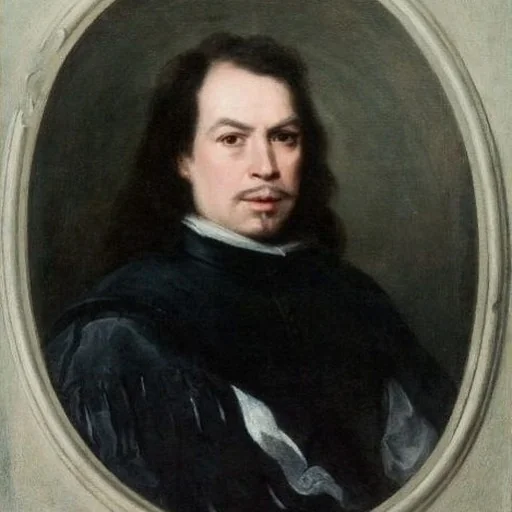
Bartolomé Esteban Murillo ( mure-IL-oh, m(y)uu-REE-oh, Spanish:; late December 1617, baptised 1 January 1618 – 3 April 1682) was a Spanish Baroque painter.