Artwork
Belisarius and the Boy
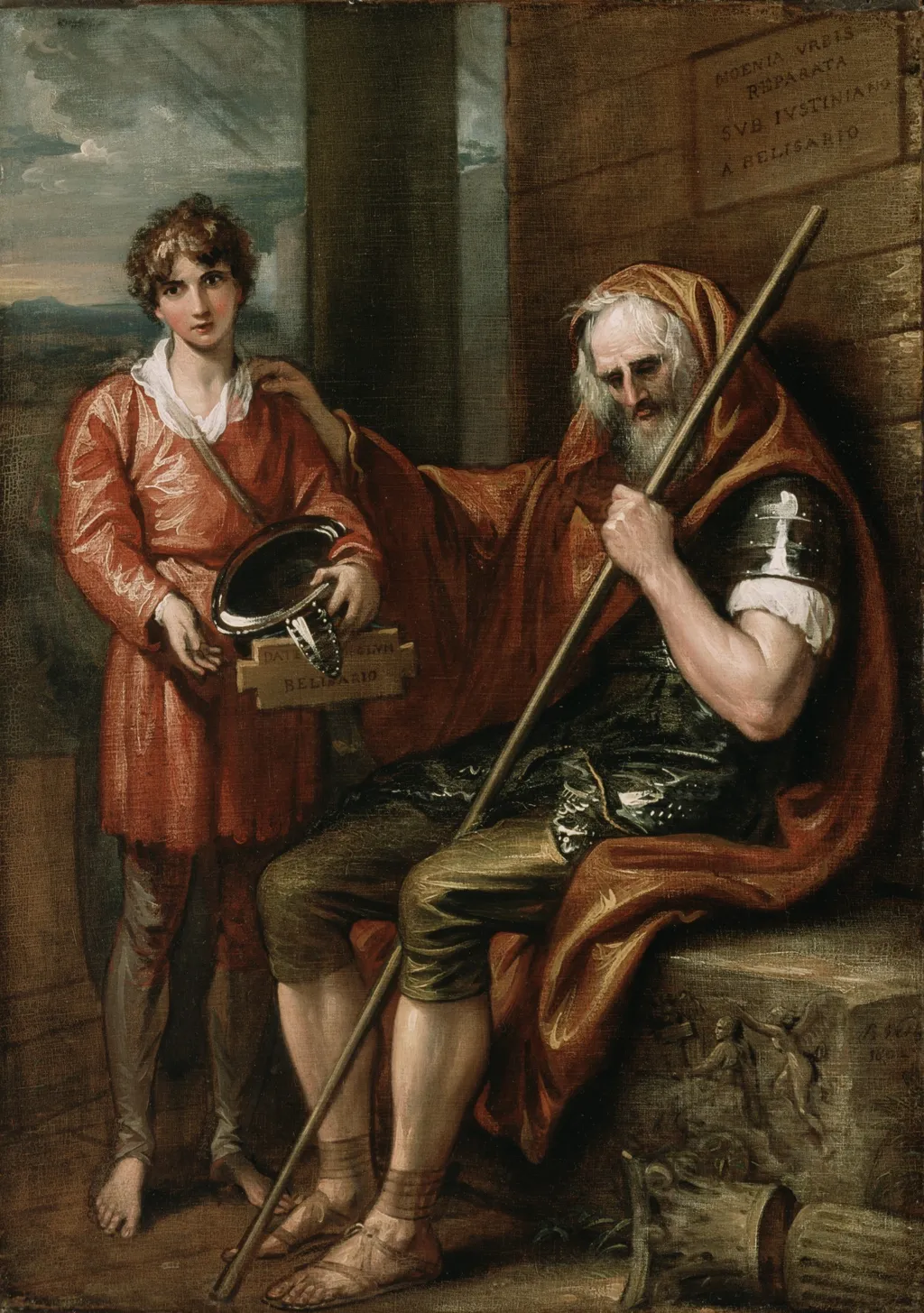
Belisarius and the Boy is an oil painting by the Neoclassicist artist Benjamin West. It dates from 1802 and is held in the collection of the Detroit Institute of Arts.
About this work
Overview
West, who rose to prominence without formal training, was a leading figure in British historical painting and held key positions at the Royal Academy.
Painted in 1802 by Benjamin West, an American artist who made his career in London, this oil-on-canvas work portrays the Byzantine general Belisarius in his final years. West, who rose to prominence without formal training, was a leading figure in British historical painting and held key positions at the Royal Academy. The painting is now part of the Detroit Institute of Arts collection, reflecting its enduring presence in institutional collections of 19th-century narrative art.
Subject & Meaning
The scene depicts the deposed general Belisarius, once a celebrated Roman commander, reduced to beggary and aided by a young boy who offers him alms. The boy holds a helmet and a donation box, symbols of lost glory and humble charity. West’s choice of this moment emphasizes themes of fallen greatness and moral resilience, drawing from historical accounts of Belisarius’s later life rather than myth or legend.
Technique & Style
West employs chiaroscuro to model the figures with quiet intensity, using light to isolate them against a muted, atmospheric background. The drapery of the cloak and the texture of the stone bench are rendered with restrained detail, avoiding theatricality. The composition is balanced and static, characteristic of neoclassical ideals, where emotional gravity is conveyed through posture and gesture rather than dramatic action.
History & Provenance
Completed in 1802, the painting was created during West’s tenure as historical painter to King George III. It entered the Detroit Institute of Arts collection in the early 20th century, likely through acquisition from a private British collector. Its journey from London studio to American museum reflects broader patterns of transatlantic art collecting in the decades following the Napoleonic Wars.
Context
West painted this work amid a European revival of interest in classical antiquity and moral narratives from Roman and Byzantine history. The depiction of a once-mighty leader in disgrace resonated with contemporary audiences grappling with themes of political decline and civic virtue. Unlike many neoclassical works celebrating triumph, this painting focuses on dignity in defeat, aligning with Enlightenment-era moral philosophy.
Legacy
Though less widely known than West’s earlier historical scenes, this painting exemplifies his late style, calm, introspective, and focused on human endurance. It contributed to the broader 19th-century trend of portraying historical figures in moments of vulnerability, influencing later artists who sought to humanize the past beyond heroic idealization.
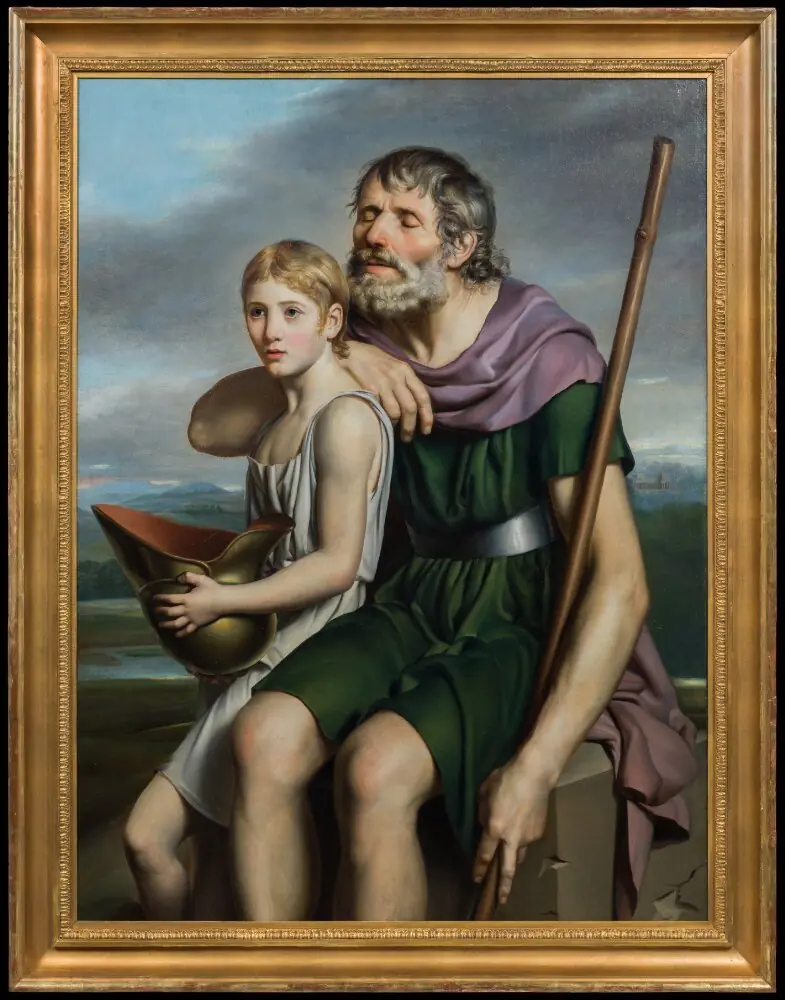
Own this work as a print
Artist & collection

Artist
Benjamin West (October 10, 1738 – March 11, 1820) was an American-born British painter who specialised in history painting, creating such works as The Death of Nelson, The Death of General Wolfe, the Treaty of Paris,…

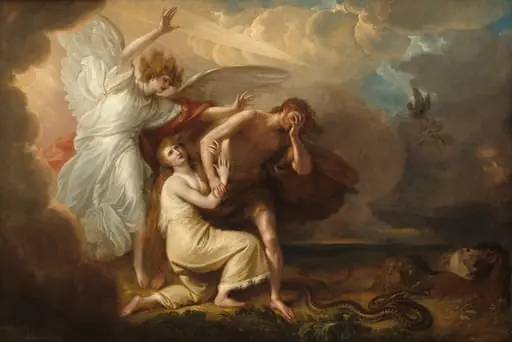 The Expulsion of Adam and Eve from Paradise
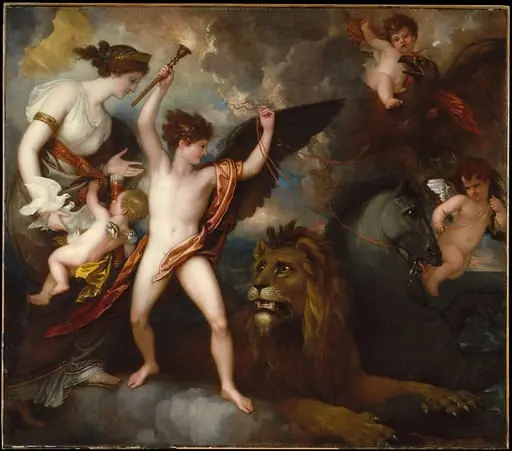 Omnia Vincit Amor, or The Power of Love in the Three Elements
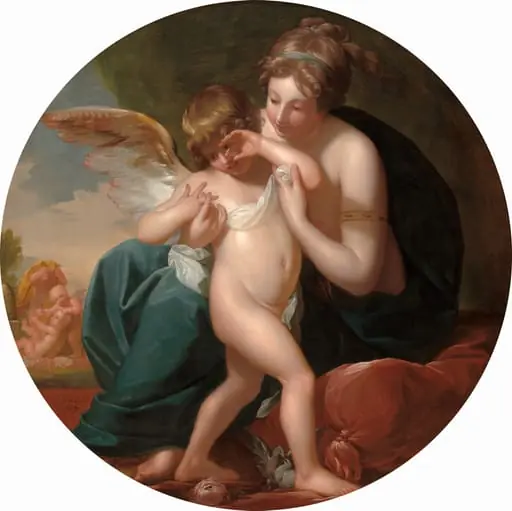 Cupid, Stung by a Bee, Is Cherished by his Mother
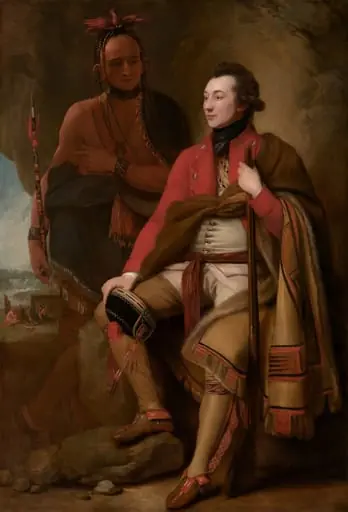 Colonel Guy Johnson and Karonghyontye (Captain David Hill)
 Mary Bethel Boude (Mrs. Samuel Boude)
 Dr. Samuel Boude
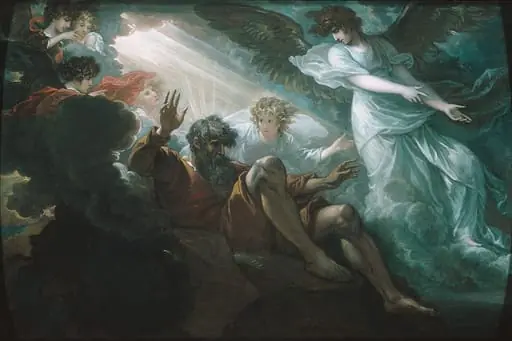 Moses Shown the Promised Land
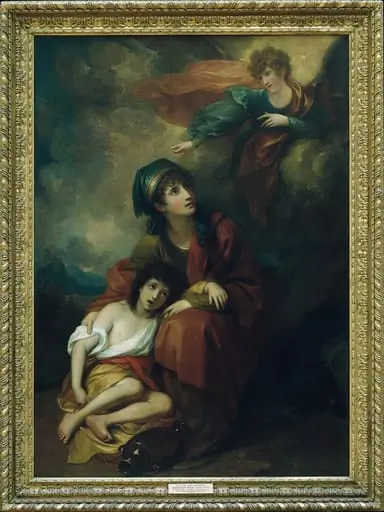 Hagar and Ishmael
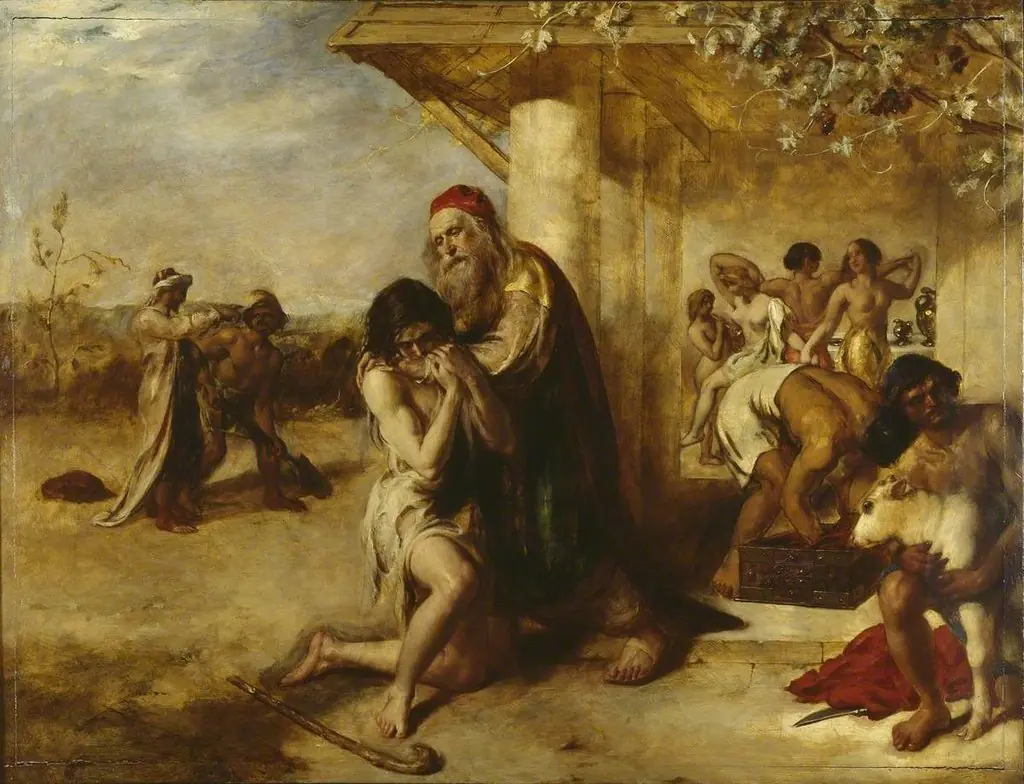 The Repentant Prodigal's Return to his Father
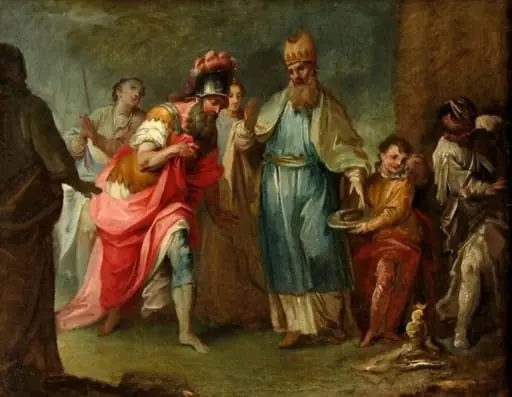 Saul uns rege de către Samuel
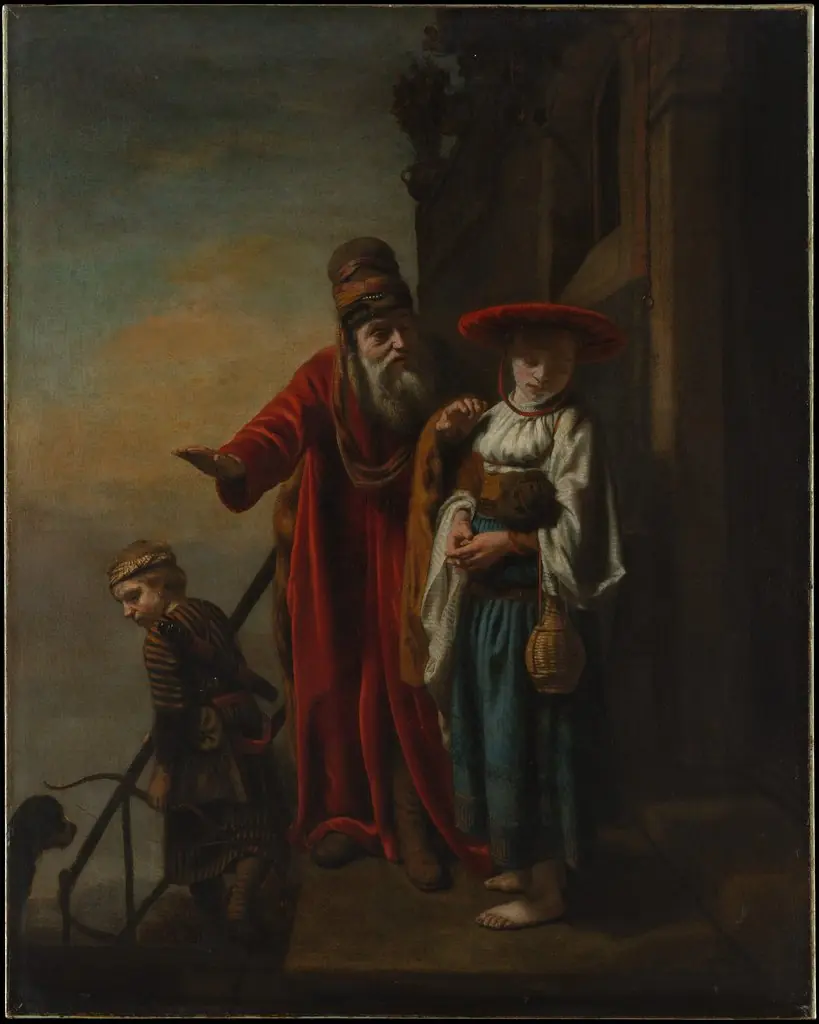 Abraham Dismissing Hagar and Ishmael
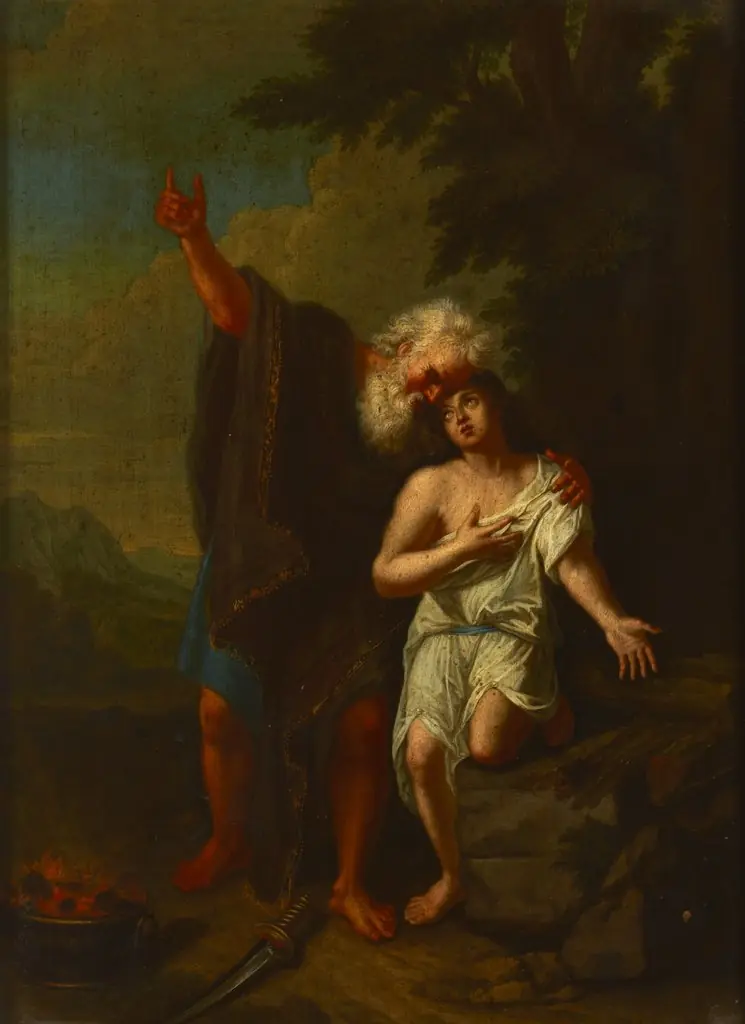 The Sacrifice of Abraham
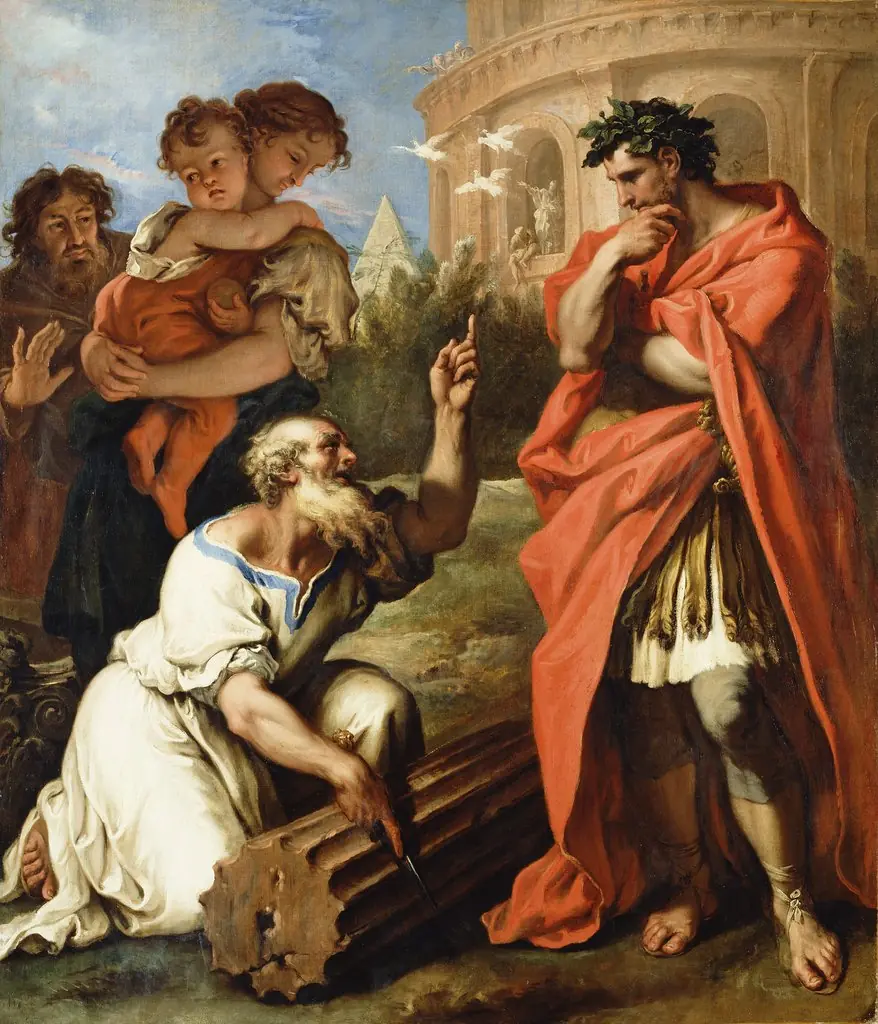 Tarquin the Elder Consulting Attius Navius
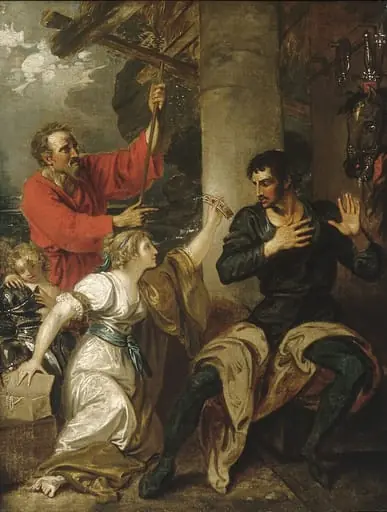 The Damsel and Orlando
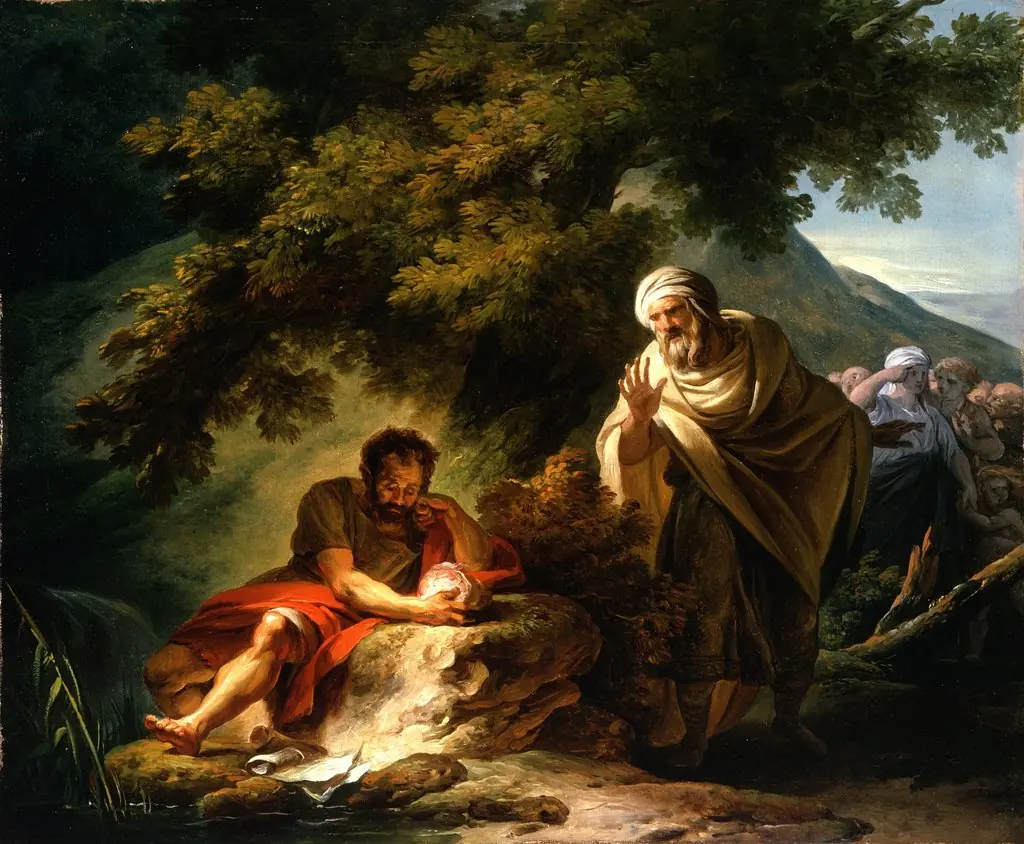 Democritus among the Abderitans
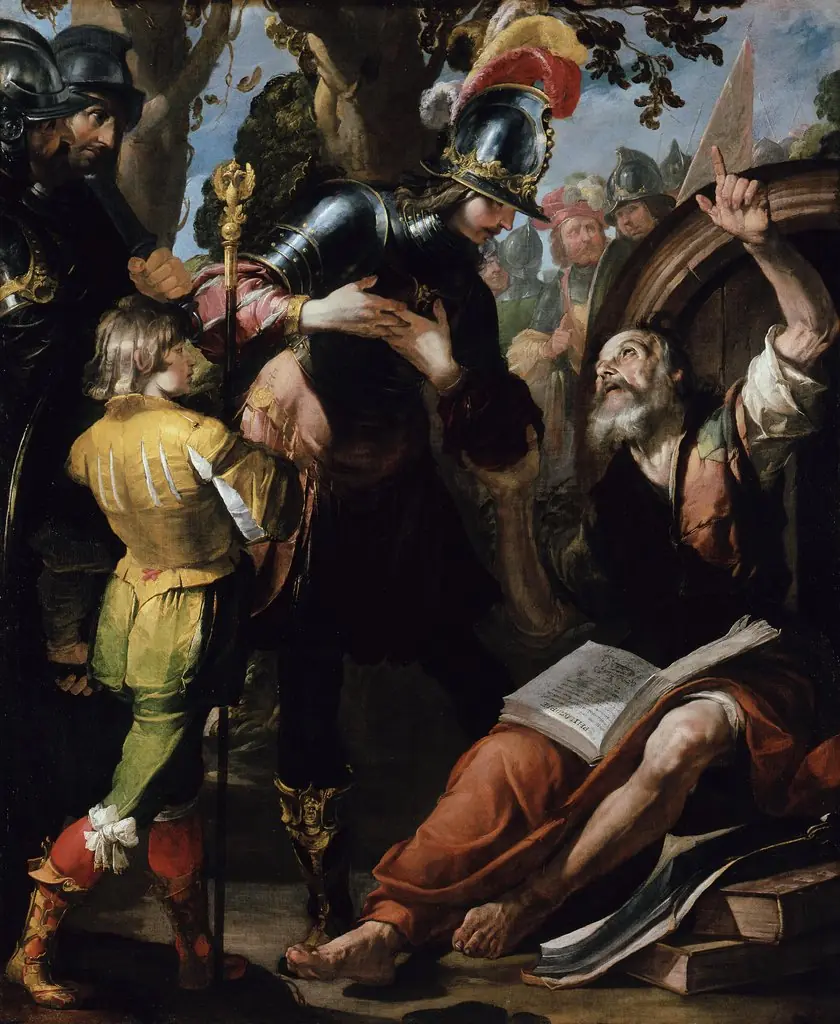 Alexander and Diogenes
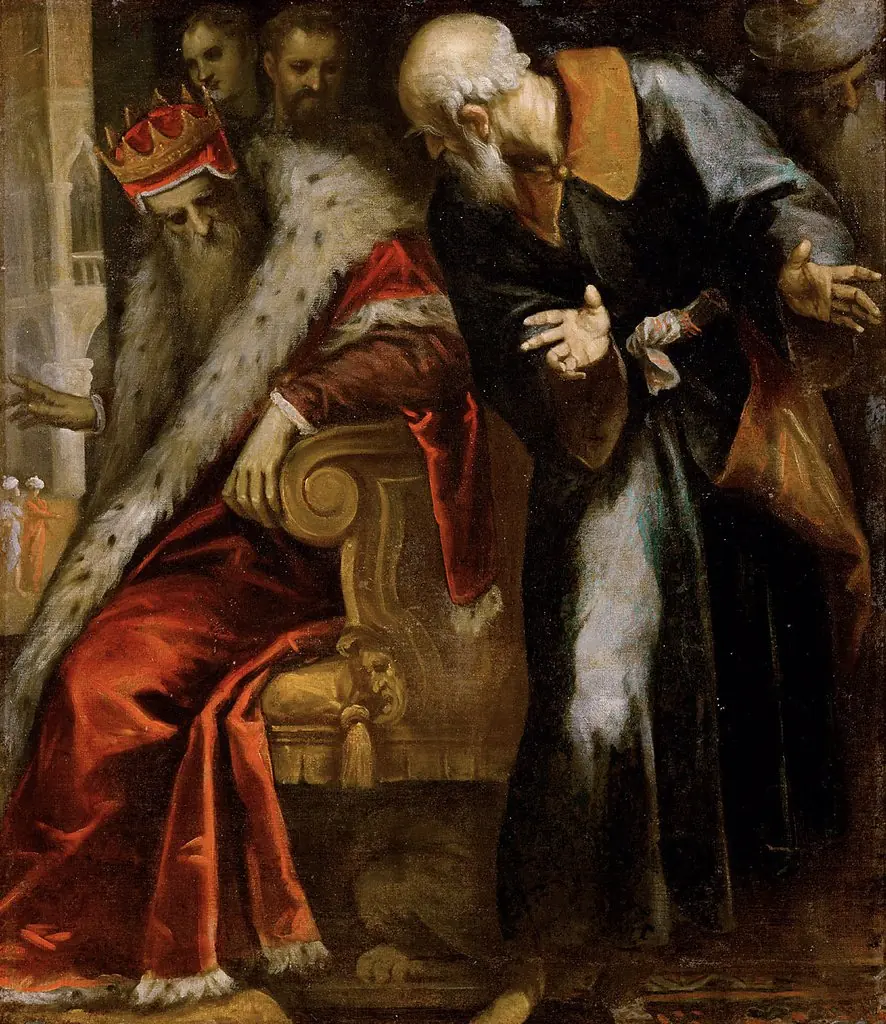 The prophet Nathan admonishes King David
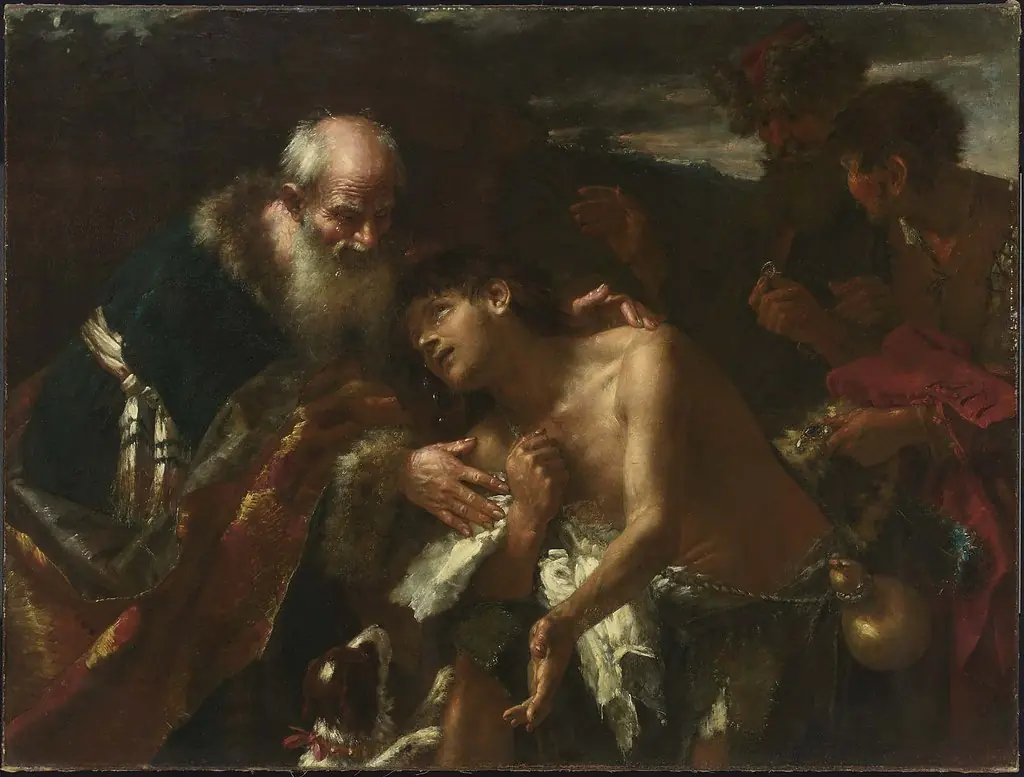 The Return of the Prodigal Son