Artwork
Pygmalion and Galatea
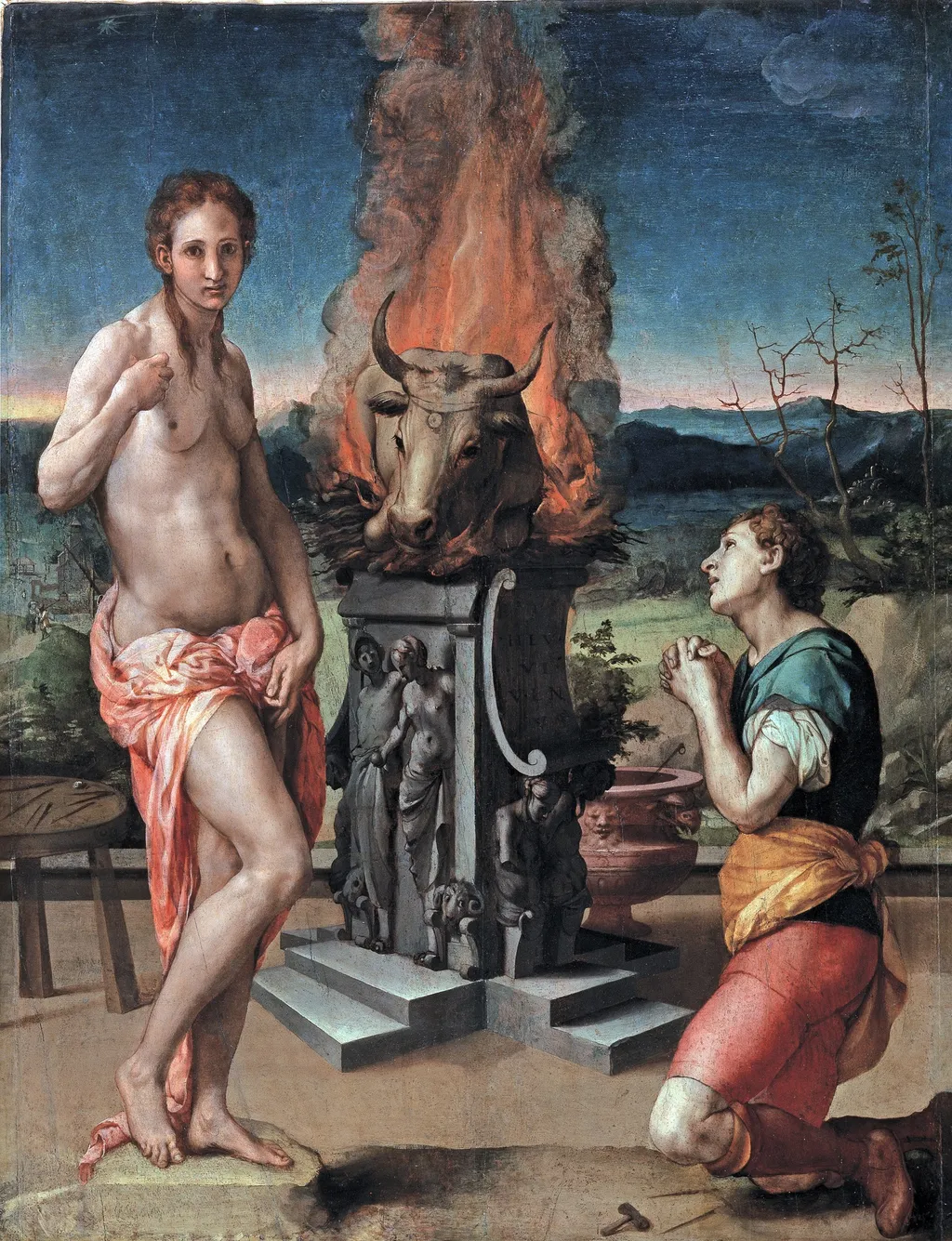
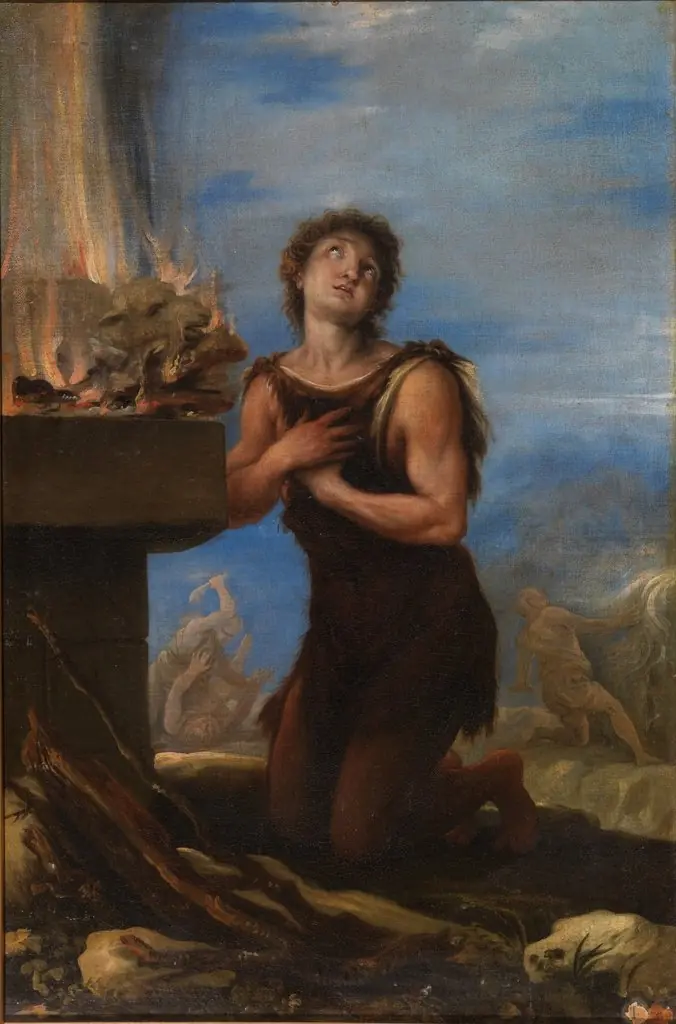
Pygmalion and Galatea is an oil painting by the Early Baroque Italian artist Bronzino. It dates from 1529 and is held in the collection of the Uffizi Gallery.
About this work
Overview
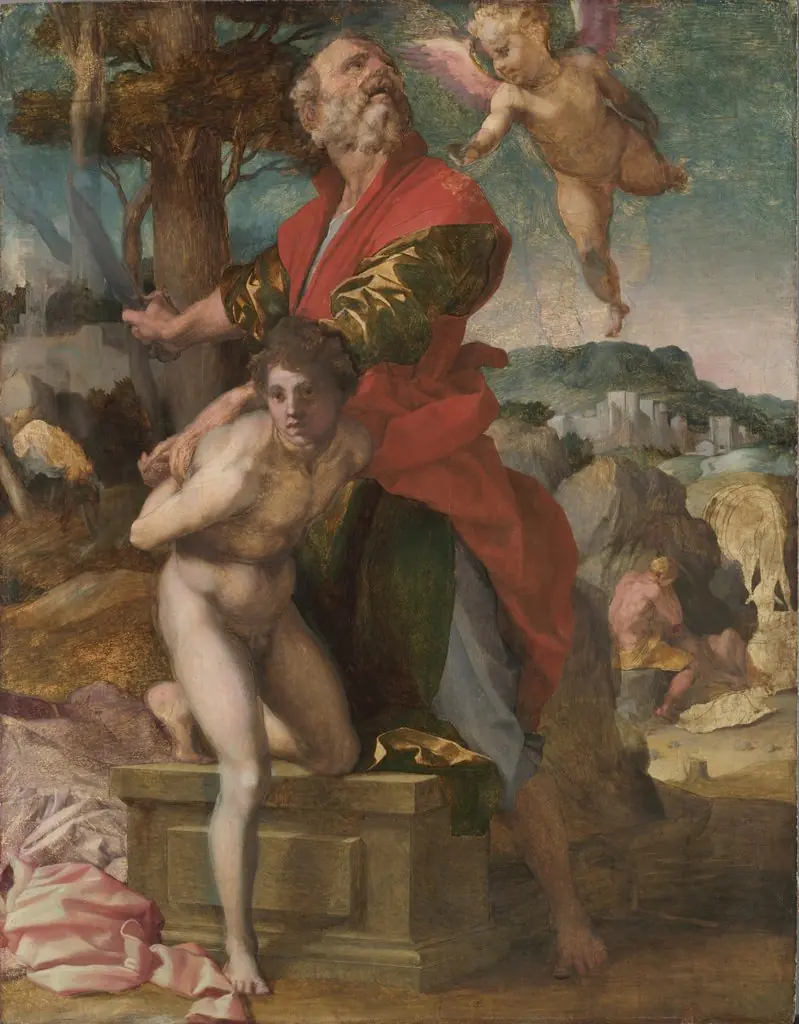
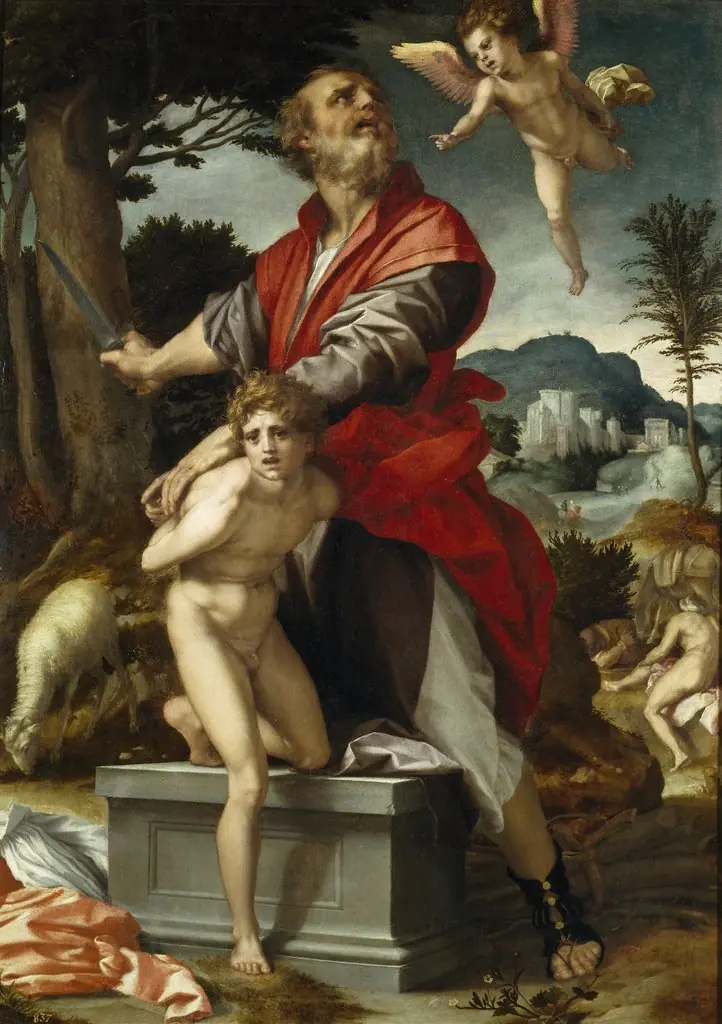
Painted in 1529, this oil work by Agnolo Bronzino illustrates the myth of Pygmalion and Galatea, a story from Ovid’s Metamorphoses.
Painted in 1529, this oil work by Agnolo Bronzino illustrates the myth of Pygmalion and Galatea, a story from Ovid’s Metamorphoses. Executed in the Florentine Mannerist style, it reflects the artist’s role as court painter to the Medici. The composition centers on a moment of transformation, capturing the sculptor’s awe as his creation begins to stir. It resides today in the Uffizi Gallery, Florence.
Subject & Meaning
The scene portrays Pygmalion, the sculptor, kneeling in reverence before Galatea, his ivory statue now animated. The bull’s head on the pedestal, crowned with flame, alludes to divine intervention, likely Venus, who granted life to the statue. The quiet tension between motion and stillness suggests the fragility of creation, emphasizing the boundary between art and life, mortal desire and divine power.
Technique & Style
Bronzino employs precise draftsmanship and controlled chiaroscuro to model the figures with cool, sculptural clarity. The nude form of Galatea is rendered with smooth, polished surfaces, contrasting with the textured drapery and landscape. The palette is restrained, greens, reds, and pale flesh tones, enhancing the painting’s stillness. Background elements are simplified, directing focus to the central encounter.
History & Provenance
Commissioned during Bronzino’s tenure at the Medici court, the painting likely served as an allegory for artistic idealism or the power of love. It entered the Uffizi’s collection in the 16th century and has remained there since. No significant alterations or reattributions are recorded; its provenance is well-documented through Medici inventories.
Context
In mid-16th century Florence, mythological subjects were favored by elite patrons as expressions of humanist learning. Bronzino’s treatment diverges from earlier Renaissance naturalism, favoring elongated forms and emotional restraint characteristic of Mannerism. The painting reflects courtly tastes for refined, intellectual themes, blending classical narrative with contemporary aesthetic ideals.
Legacy
Though less widely known than Bronzino’s portraits, this work exemplifies his ability to merge myth with psychological subtlety. Its influence is seen in later Mannerist treatments of myth, particularly in the emphasis on stillness and symbolic detail. It remains a key example of how Florentine artists reinterpreted classical stories through a lens of controlled elegance and intellectual distance.
Own this work as a print
Artist & collection
Artist
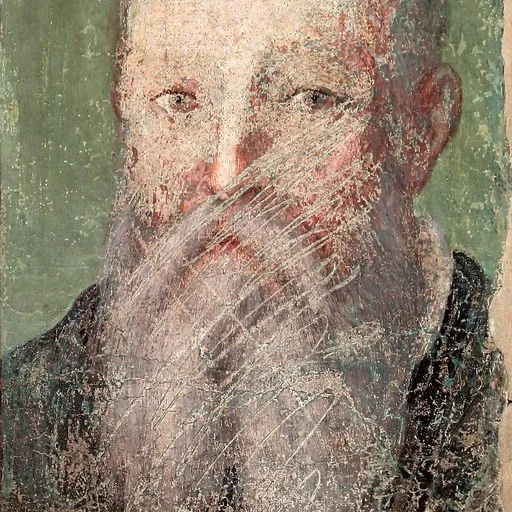
Agnolo di Cosimo (Italian:; 17 November 1503 – 23 November 1572), usually known as Bronzino (Italian: Il Bronzino ) or Agnolo Bronzino, was an Italian Mannerist painter from Florence.