Artwork
Saint Luke as a painter, before Christ on the Cross
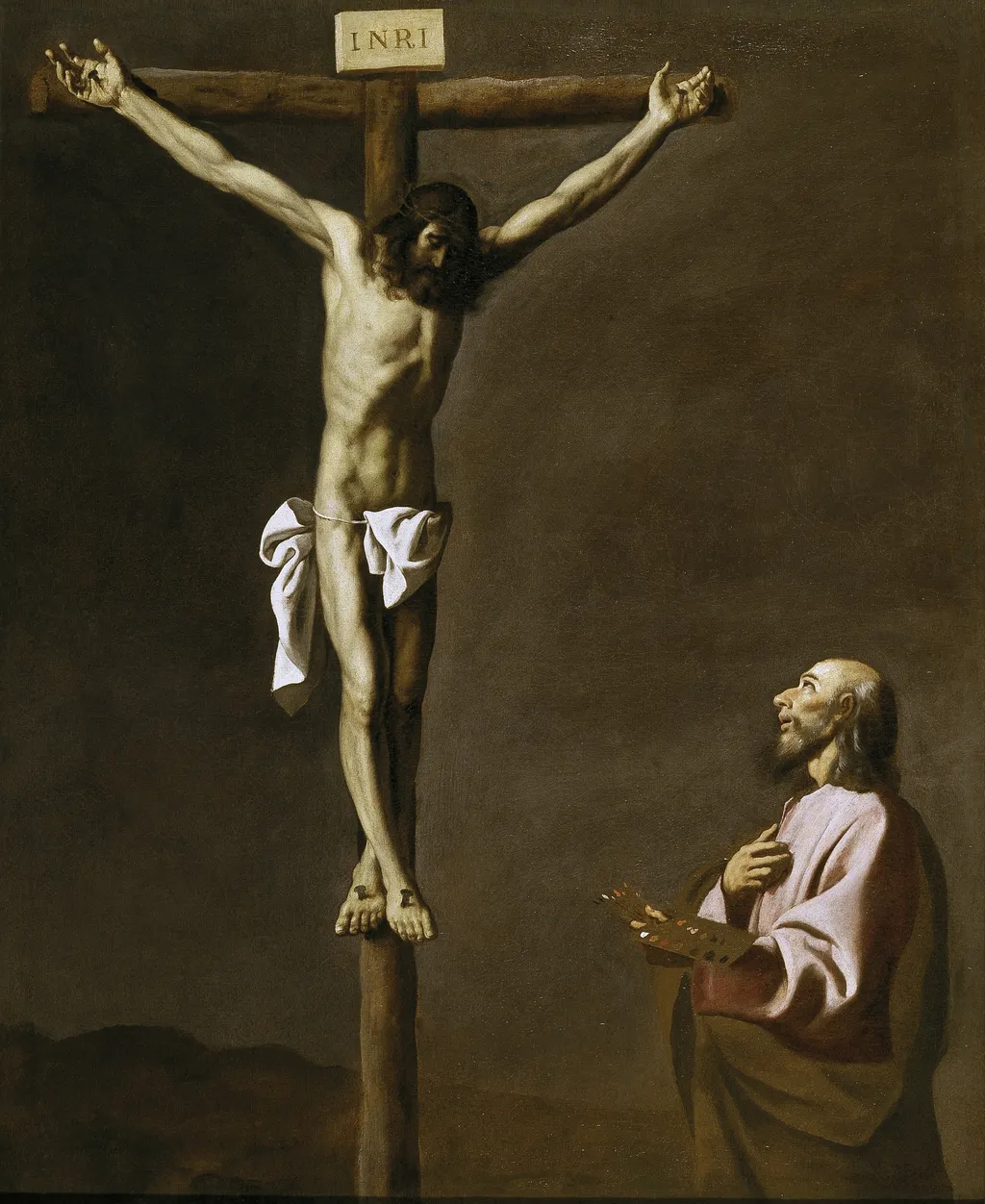
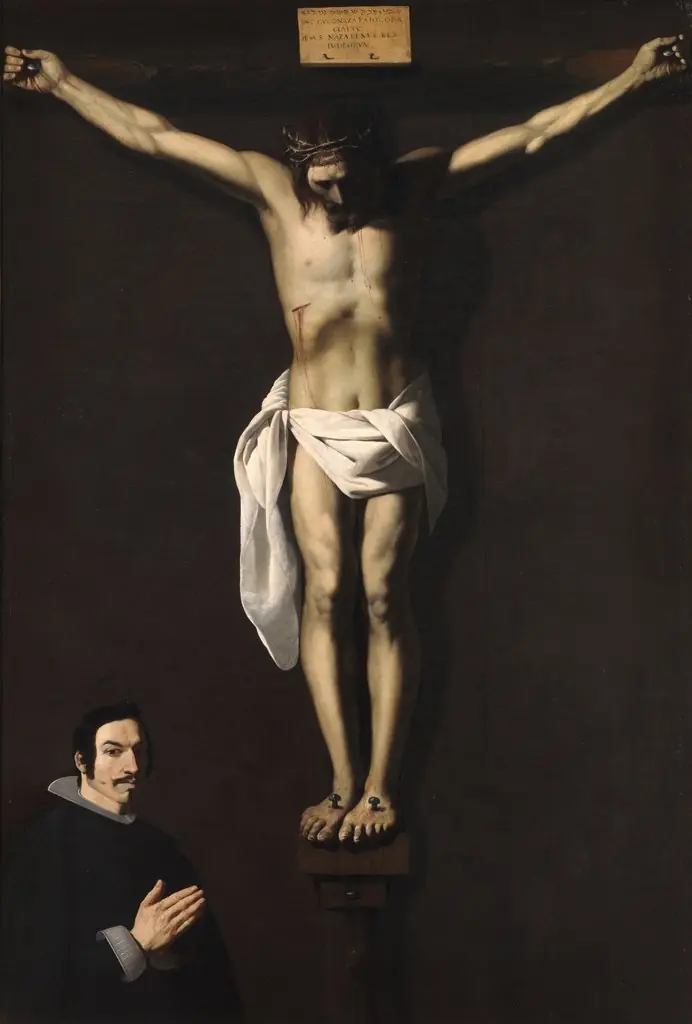
Saint Luke as a painter, before Christ on the Cross is an oil painting by the Early Baroque Italian artist Francisco de Zurbarán. It dates from 1630 and is held in the collection of the Museo del Prado.
About this work
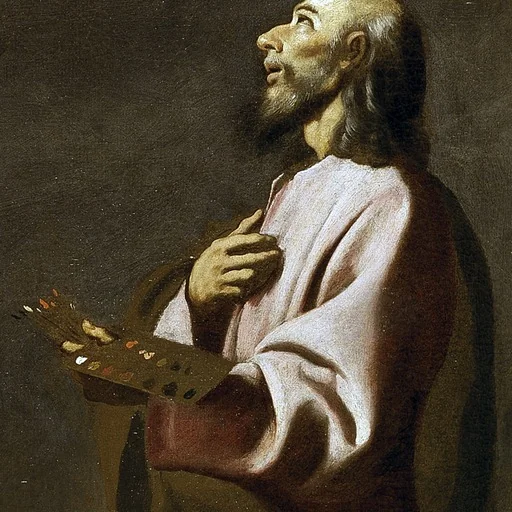
Zurbarán painted Saint Luke as a painter before Christ on the cross. The saint holds a palette while Jesus hangs above. This may be Zurbarán’s self-portrait of the act of art-making.
The Prado now keeps this oil on canvas. It dates to around 1650. The scene mixes devotion with the tools of the trade.
Look up Francisco de Zurbarán next.
Subject & Meaning
Zurbarán is thought to have used his own features as the model for the evangelist, effectively inserting himself into the scene as his own patron saint.
The painting depicts Saint Luke the Evangelist, shown as a painter, standing before the crucified Christ. Luke is portrayed holding a palette and paintbrush, his gaze directed toward God, while the figure of Christ hangs on the cross beside him. According to tradition, Luke is considered the patron saint of painters because he is credited with having painted the portrait of the Virgin Mary, even though he practiced medicine in Syria during his lifetime.
Zurbarán is thought to have used his own features as the model for the evangelist, effectively inserting himself into the scene as his own patron saint.
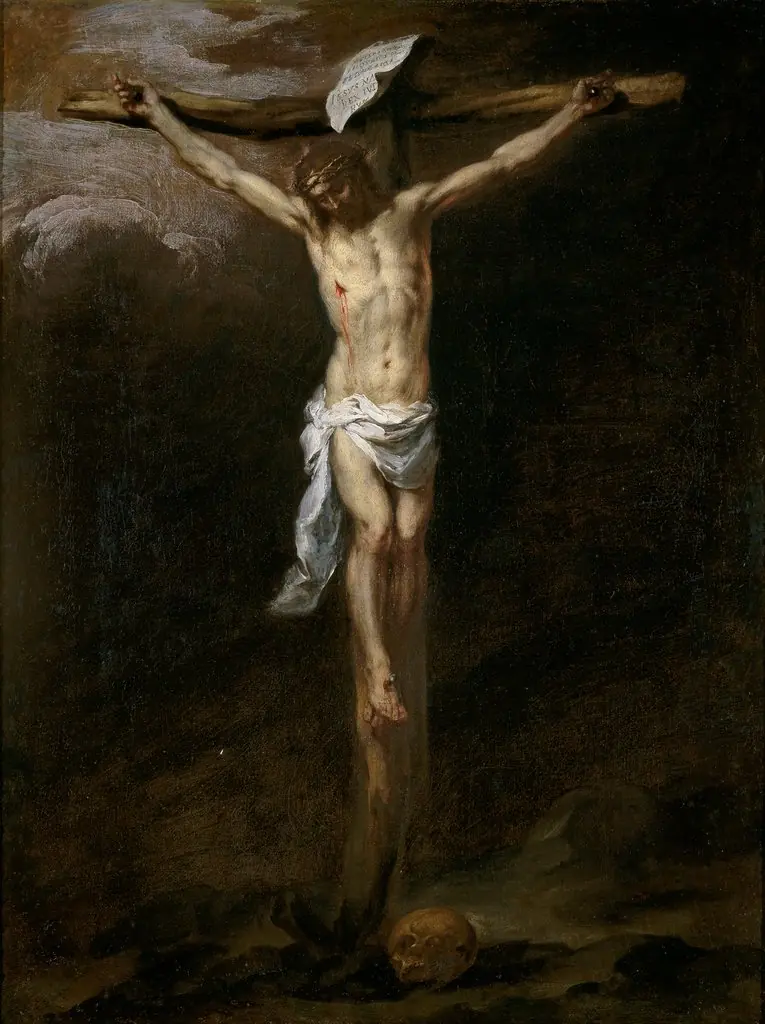
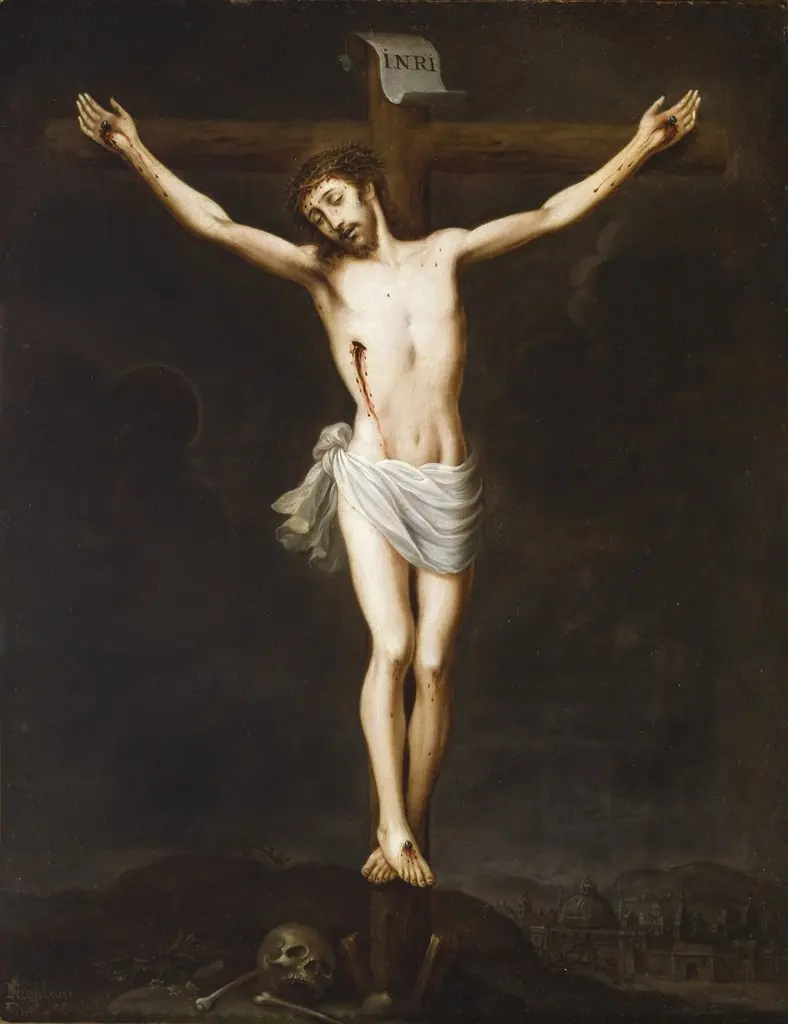
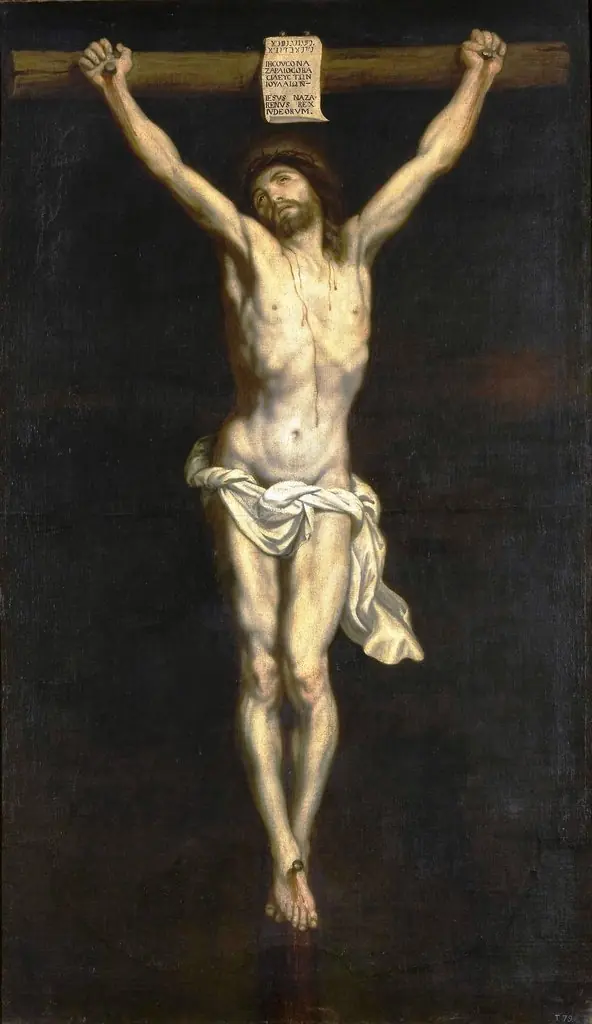
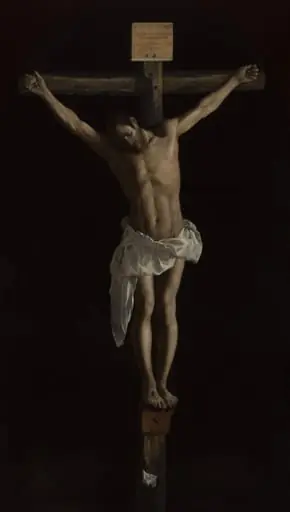
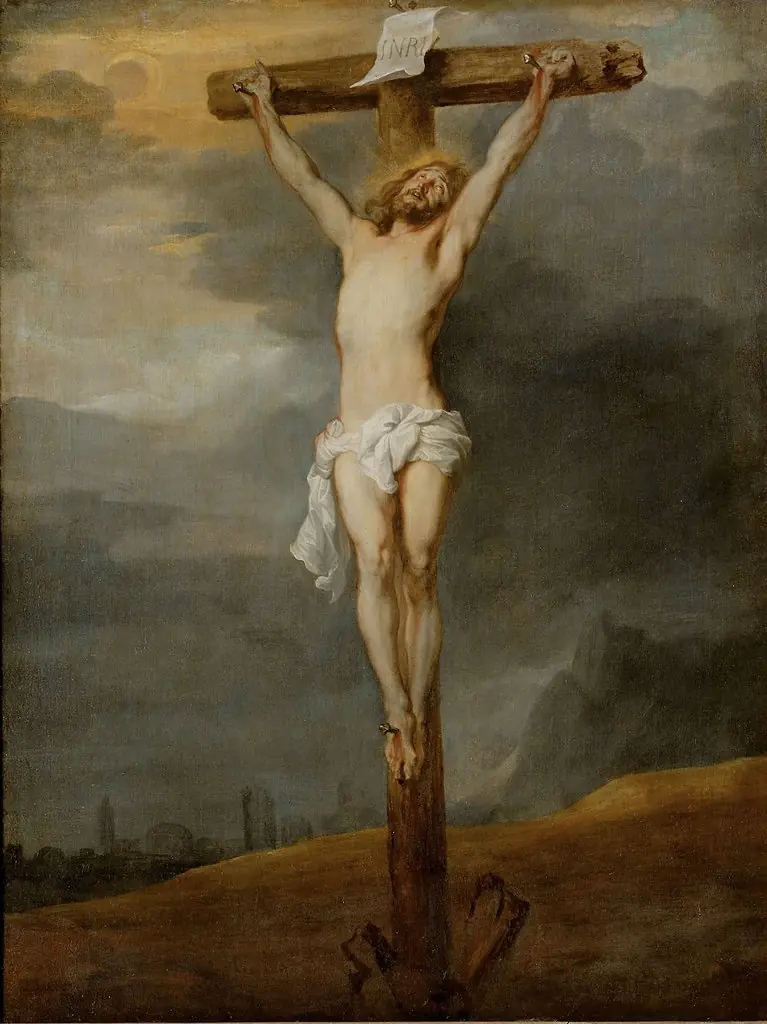
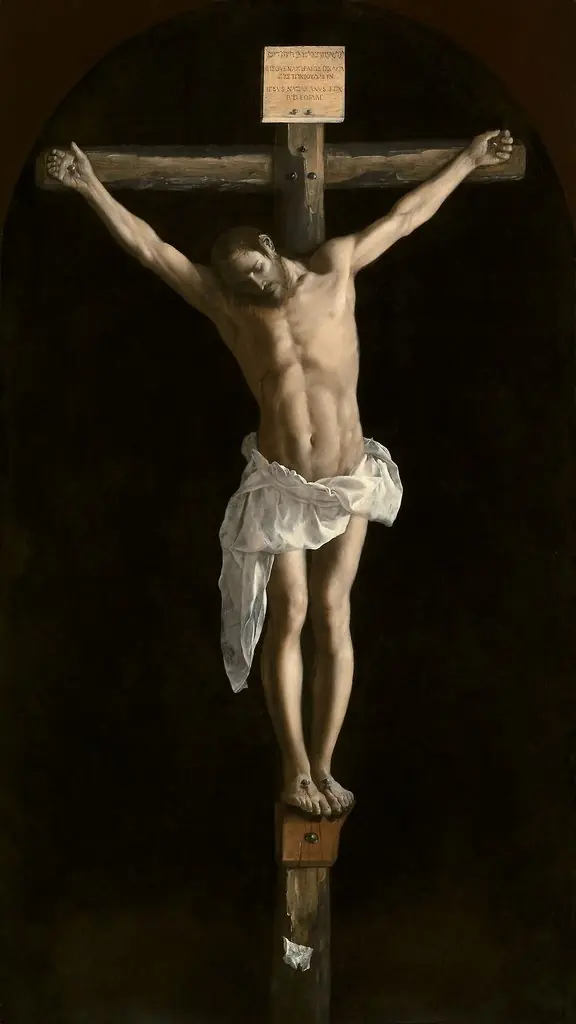
The composition deliberately departs from the iconographic rules set by Francisco Pacheco and followed in Velázquez's and Zurbarán's earlier Crucifixions: Christ is shown with four nails but without the suppedaneum (foot support), and his feet are crossed, giving the body greater foreshortening and movement. The naturalistic, tenebrist treatment, strong light from the left producing sharp contrasts of light and shadow, lends the scene striking realism, with the marked ribs and ribcage of Christ enhancing the sense of veracity.
Technique & Style
Executed in oil on canvas, the work measures 105 cm in height by 84 cm in width. The painting adheres to the principles of tenebrist naturalism, utilizing strong lighting from the left to create pronounced contrasts between illuminated areas and deep shadows. The artist employs a highly realistic approach, particularly in the depiction of Christ's anatomy, where the ribs and thoracic cage are clearly defined to enhance the scene's veracity, despite a degree of idealization in the figure's overall form.
The composition features dark tones and delicate rendering of fabric folds, which are characteristic traits of the artist's style. Stylistically, the work breaks from certain established iconographic norms by omitting the footrest while retaining four nails, thereby granting the crucified figure a greater sense of foreshortening and movement.
History & Provenance
Francisco de Zurbarán executed this oil on canvas painting, titled Saint Luke as a Painter, before Christ on the Cross, circa 1650. While one internal record suggests a date of 1630, broader scholarly consensus places the work's inception around 1650. The canvas measures 105 cm in height by 84 cm in width.
It is currently held in the collection of the Museo del Prado in Madrid. Art historical analysis suggests that the figure of Saint Luke serves as a self-portrait of the artist, depicting him with a palette and gazing toward the crucified Christ. The work breaks with traditional iconographic rules established by Francisco Pacheco regarding the depiction of the Crucifixion, specifically in the positioning of the feet and the omission of the footrest.
The painting is held in the collection of the Museo del Prado in Madrid, Spain. Also known by titles such as 'Saint Luke Painting the Crucifixion' or 'The Crucified Christ with a Painter,' the work measures 105 cm in height and 84 cm in width. While one internal record dates the piece to 1630, broader cataloging and encyclopedia entries generally attribute its execution to circa 1650.
The canvas depicts Saint Luke, likely a self-portrait of Zurbarán, holding a palette before the crucified Christ. Despite references to online gallery listings and external bibliographic records, the provided sources do not contain specific details regarding the work's inventory number, accession history, or a chronological list of past exhibitions.
Overview
Executed around 1650, this oil on canvas by Francisco de Zurbarán depicts the crucifixion of Christ observed by Saint Luke, who is shown holding a painter’s palette. The work resides in the Prado Museum in Madrid and combines a devotional scene with explicit references to the artist’s own practice.
Context
During the Spanish Baroque, religious subjects were often intertwined with contemporary concerns. By portraying Saint Luke as an active painter, Zurbarán reflects the Counter‑Reformation emphasis on the didactic role of art, positioning the painter as a mediator between the sacred event and the viewer.
Own this work as a print
Artist & collection
Artist
Francisco de Zurbarán was a Spanish Baroque painter. He is known primarily for his religious paintings depicting monks, nuns, and martyrs, and for his still-lifes. Zurbarán gained the nickname "Spanish Caravaggio",…