Artwork
Ball-Play Dance - Choctaw
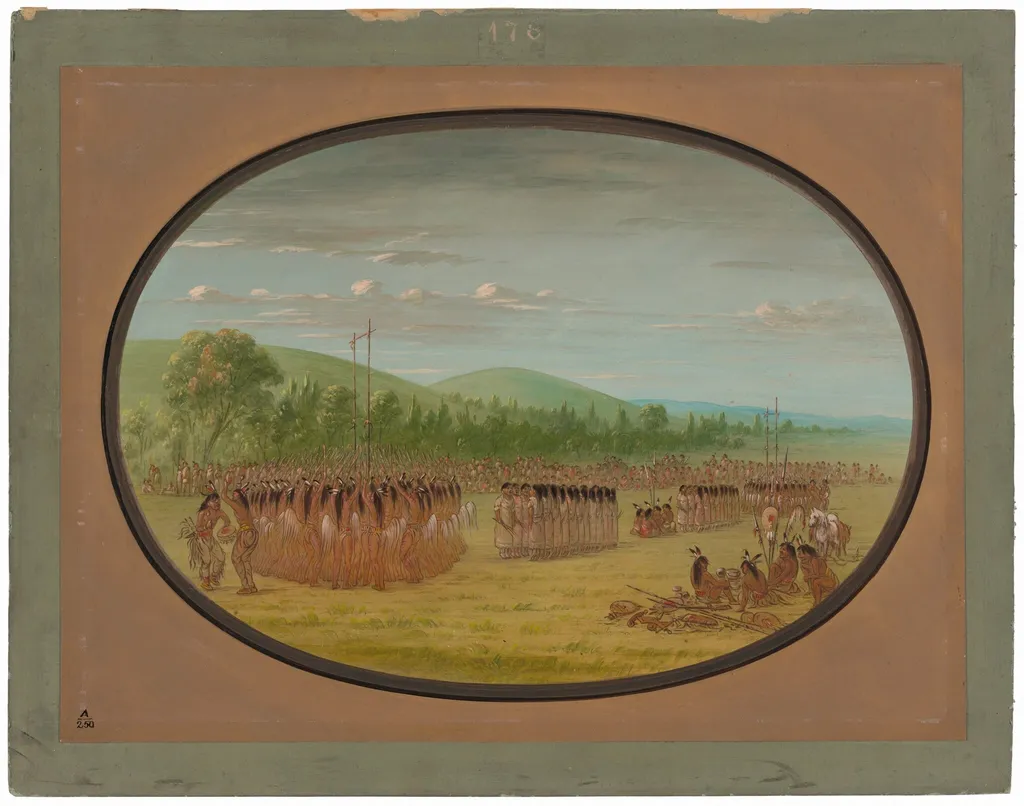
Ball-Play Dance - Choctaw is an oil painting by the Impressionist artist George Catlin. It dates from 1865 and is held in the collection of the National Gallery of Art.
About this work
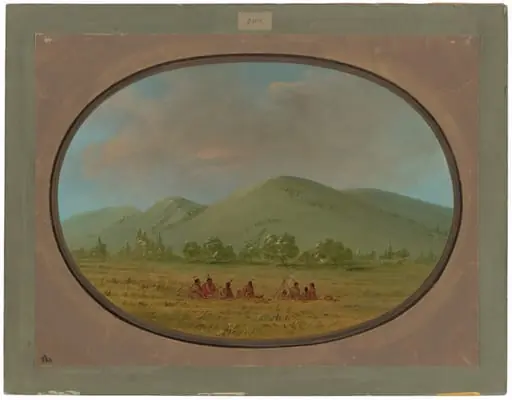
George Catlin painted a Choctaw ball-play dance in 1861. Bright colors show players on a green field under tall trees. Women and children watch from the edge.
The scene feels frozen in time. Catlin spent years with Native groups. He wanted to record their lives before change came.
This is like watching real people, not costumes. See it yourself at the National Gallery of Art, Washington.
Technique & Style
Its composition centers on a tree, rendered with the loose brushwork and vivid coloration characteristic of George Catlin's documentary style.
The work is an oil painting executed on card that is mounted on paperboard, a support typical of mid-19th century American genre scenes. Its composition centers on a tree, rendered with the loose brushwork and vivid coloration characteristic of George Catlin's documentary style. The painting measures 47.3 centimeters in height and 63.5 centimeters in width, reflecting the modest scale often employed for intimate narrative works. These formal qualities contribute to a stylistic emphasis on atmospheric detail and narrative immediacy.
The handling of light and texture underscores Catlin's interest in capturing the kinetic energy of Choctaw ceremonial movement, while the medium's surface treatment preserves the delicate tonal transitions of the original scene.
History & Provenance
The painting Ball-Play Dance - Choctaw was created by George Catlin in 1865, executed in oil on card mounted on paperboard, and measures 47.3 cm in height by 63.5 cm in width. Following the artist's death in 1872, the work passed by descent to his daughters, Clara Gregory Catlin, Louise Catlin Kinney, and Elizabeth Wing Catlin. In 1912 the American Museum of Natural History purchased the piece from Elizabeth Wing Catlin, and in 1959 the museum sold it through Kennedy Galleries in New York to the collector Paul Mellon of Upperville, Virginia.
Mellon subsequently gifted the work to the National Gallery of Art in Washington, D.C., in 1965, where it remains part of the collection. Exhibition history is not specified in the provided sources.
Legacy
Ball-Play Dance - Choctaw has been recognized for shaping early visual representations of Native American ceremonial life and influencing later ethnographic art practices. Its inclusion in major collections and exhibitions has reinforced its status as a key work in George Catlin's oeuvre and in the development of 19th-century American painting. The painting's journey through notable collections, including the National Gallery of Art, has contributed to its scholarly reputation and enduring legacy in art history.
Overview
George Catlin’s oil painting, titled “Ball‑Play Dance – Choctaw,” portrays a lively communal game among Choctaw participants. Executed on card that has been mounted to paperboard, the work measures a modest size typical of Catlin’s field sketches. The composition is anchored by a prominent tree, under which figures engage in the activity while onlookers observe from the periphery.
Subject & Meaning
The scene captures a traditional Choctaw ball‑play, a ceremonial sport that combined athletic competition with ritual significance. Men and boys are shown in motion, their bright garments contrasting with the green ground, while women and children stand nearby, indicating the event’s communal nature. The painting serves as a visual record of cultural practices that were beginning to be altered by external pressures in the mid‑19th century.
Context
Catlin’s career shifted from law to art after he recognized the need to preserve the customs of Native peoples confronting rapid settlement and policy changes. His field sketches and finished works, including this Choctaw ball‑play, were intended as ethnographic records as much as artistic productions, reflecting a broader 19th‑century American interest in documenting indigenous cultures before they were transformed.
Own this work as a print
Artist & collection

Artist
George Catlin ( KAT-lin; July 26, 1796 – December 23, 1872) was an American lawyer, painter, author, and traveler, who specialized in portraits of Native Americans in the American frontier.

 Bulls Fighting
 Expedition Encamped on a Texas Prairie. April 1686
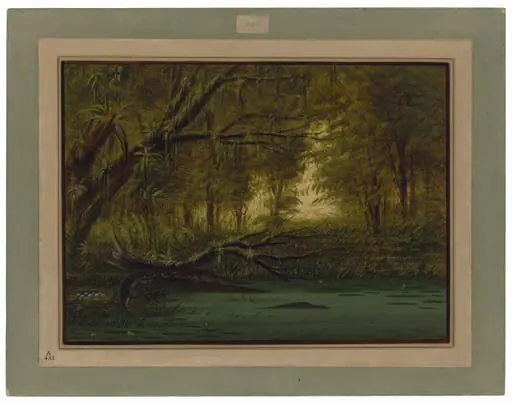 An Alligator's Nest
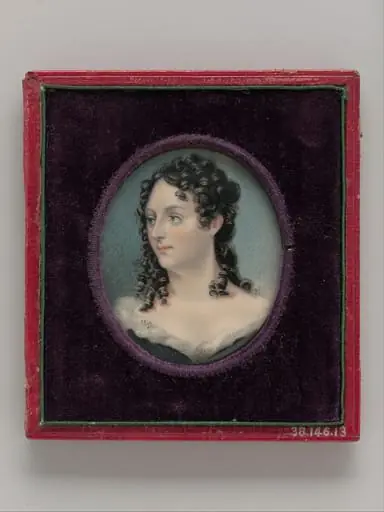 Mrs. George Catlin (Clara Bartlet Gregory)
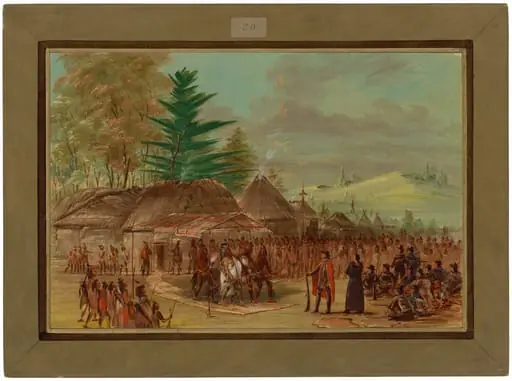 Chief of the Taensa Indians Receiving La Salle. March 20, 1682
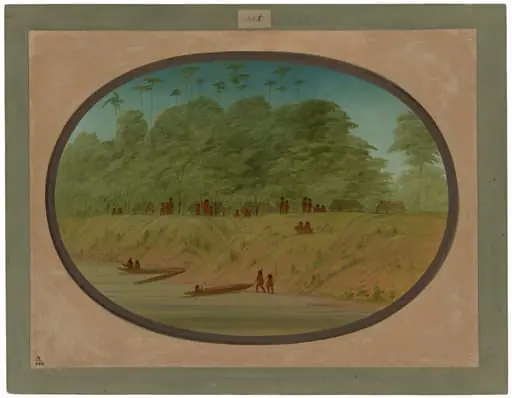 A Small Village - Payaguas Indians
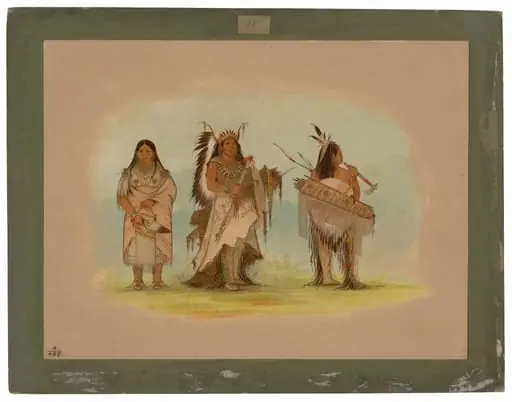 Omaha Chief, His Wife, and a Warrior
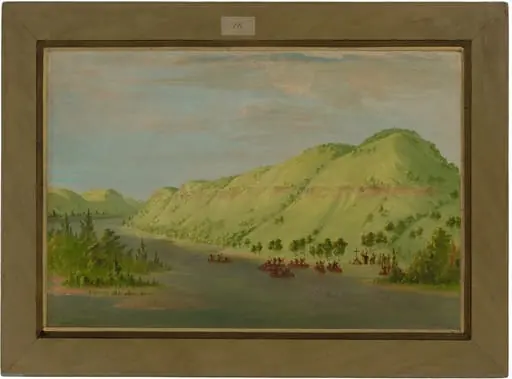 Father Hennepin Leaving the Mississippi to Join La Salle. May 8, 1680
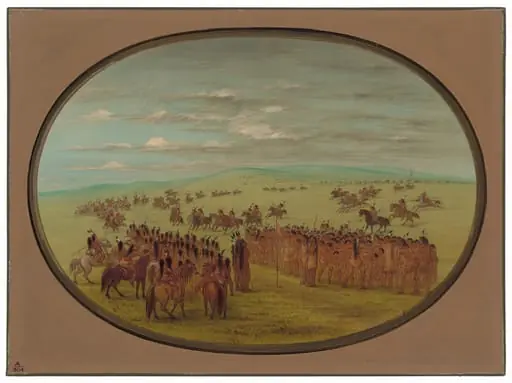 Horse Racing - Minatarrees
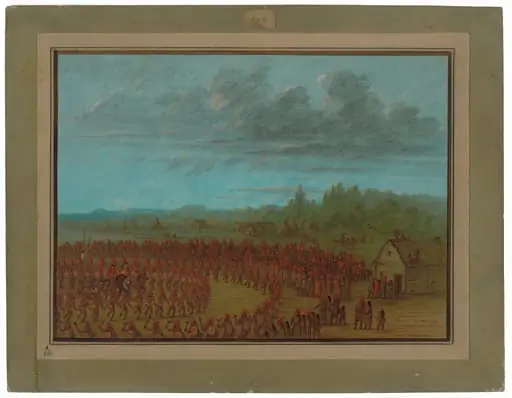 War Dance of the Saukies
 Game of the Arrow - Mandan
 A Crow Village of Skin Tents on the Salmon River
 Amusing Dance - Saukie
 Camanchees Moving
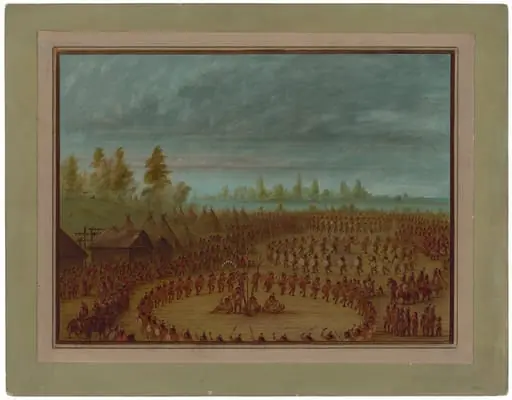 War Dance of the Apachees
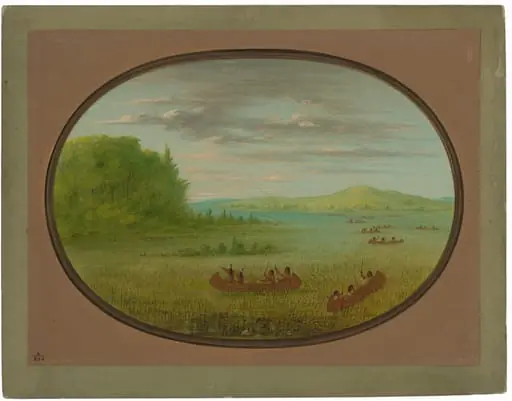 Gathering Wild Rice - Winnebago
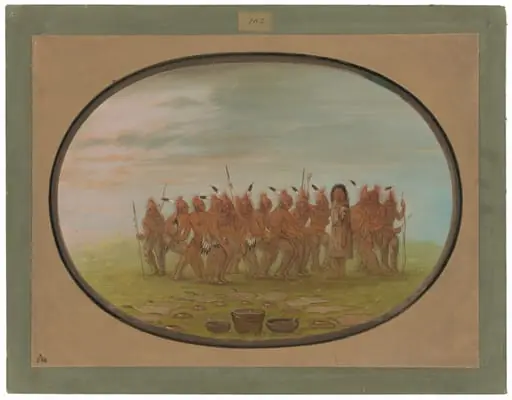 Dance to the Berdache - Saukie
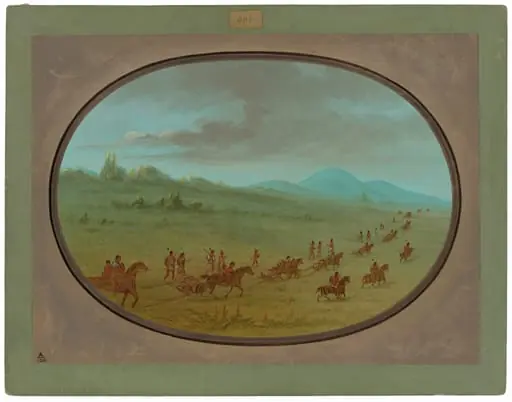 Halsey's Bluff - Sioux Indians on the March
 Nishnabotana Bluffs, Upper Missouri
- Eagle Dance - Choctaw