Artwork
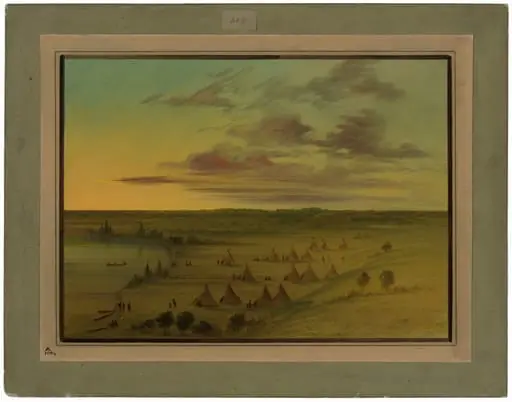
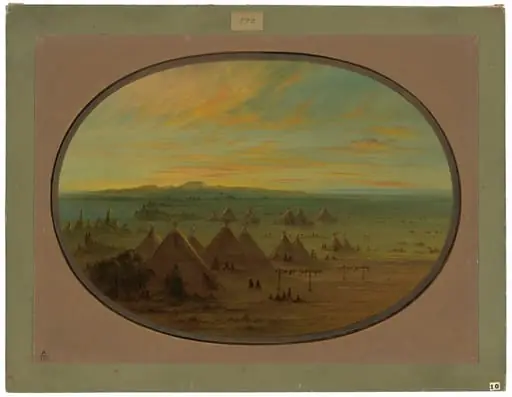
Encampment of Pawnee Indians at Sunset
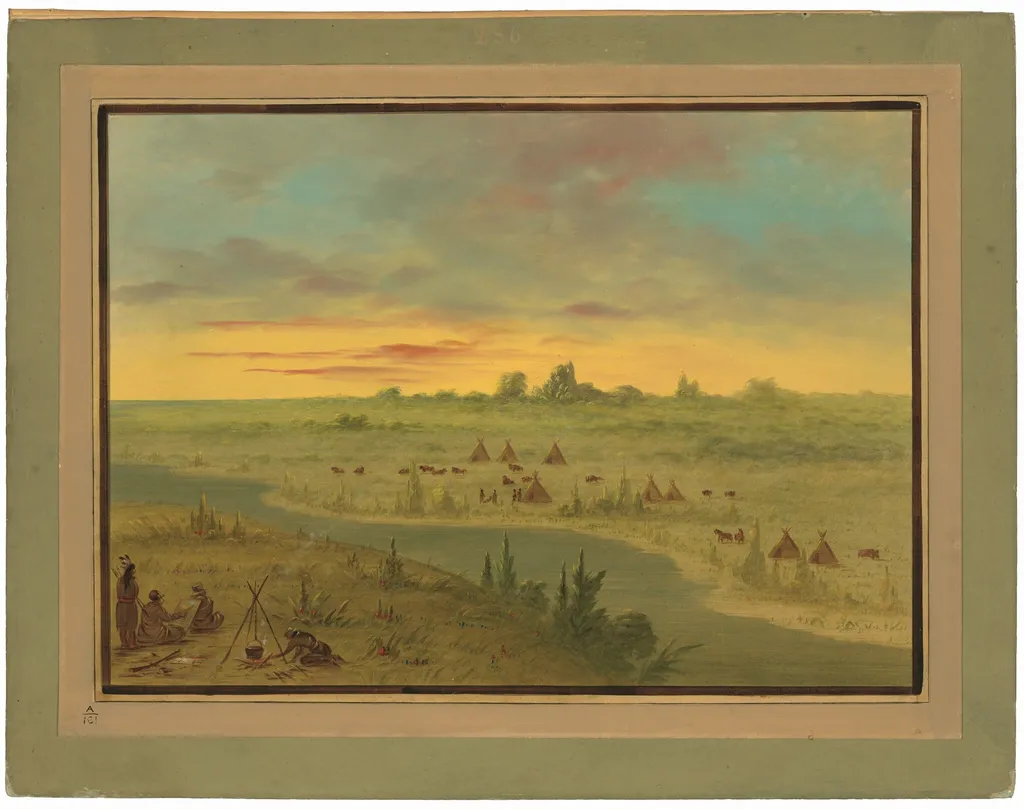
Encampment of Pawnee Indians at Sunset is an oil painting by the American Folk Art artist George Catlin. It dates from 1865 and is held in the collection of the National Gallery of Art.
About this work
Technique & Style
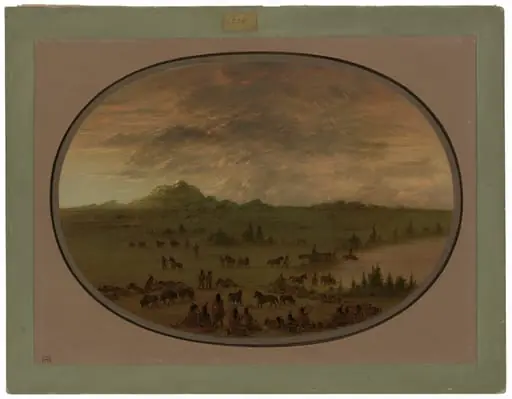
The work is an oil painting on a thin card support that was later mounted on paperboard, a handling typical of Catlin’s portable field practice during the 1860s. The medium’s fluidity allows for the smooth gradations of light across the encampment and the delicate modeling of figures and bison, consistent with his habit of blending strokes to suggest atmosphere rather than individual detail. The composition’s formal structure balances a low horizon line with a sweeping sky, directing attention to the silhouetted camp and herd; this arrangement, together with the warm, attenuated sunset palette, underscores Catlin’s documentary impulse to render the scene as both observed fact and picturesque ideal.
Dimensions are 47 cm in height by 62.8 cm in width.
History & Provenance
The museum later sold it in 1959 through Kennedy Galleries in New York to Paul Mellon of Upperville, Virginia.
George Catlin created the oil painting Encampment of Pawnee Indians at Sunset in 1861. The work was originally owned by the artist until his death in 1872, after which it passed by descent to his daughters: Clara Gregory Catlin, Louise Catlin Kinney, and Elizabeth Wing Catlin.
In 1912, the American Museum of Natural History purchased the piece from Elizabeth Wing Catlin. The museum later sold it in 1959 through Kennedy Galleries in New York to Paul Mellon of Upperville, Virginia. Mellon subsequently gifted the painting to the National Gallery of Art in Washington, D.C., in 1965, where it remains part of the collection.
Context
Encampment of Pawnee Indians at Sunset is an 1861 oil on card mounted on paperboard landscape painting by George Catlin. The work portrays a tree and was classified as a landscape genre painting. Its provenance traces from the artist’s family to the American Museum of Natural History, then to Paul Mellon, and it entered the National Gallery of Art in 1965.
The painting exemplifies Catlin’s broader effort to document Native American encampments, situating it within 19th‑century American art’s engagement with frontier subjects and early ethnographic representation.
Overview
George Catlin, an artist who transitioned from a legal career, created Encampment of Pawnee Indians at Sunset in 1865. This painting, executed in oil on card mounted on paperboard, captures a scene of a Pawnee settlement. It reflects Catlin's sustained interest in depicting the landscapes and indigenous cultures of the American frontier, a theme he explored throughout his extensive travels and artistic practice.
Subject & Meaning
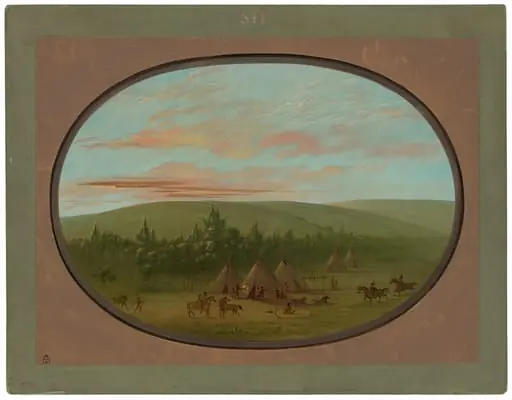
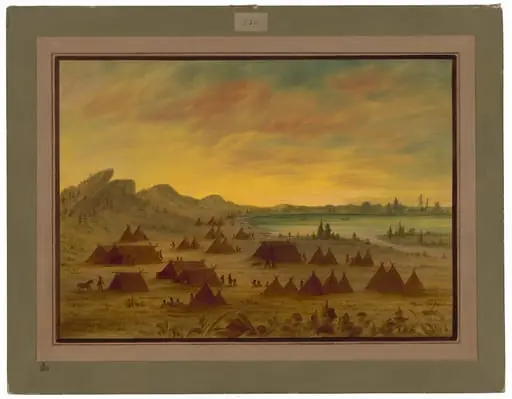
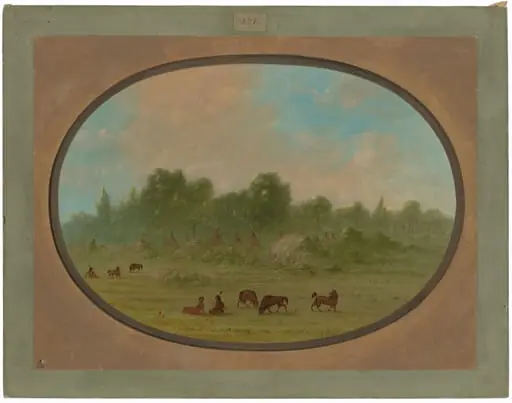
The painting portrays a Pawnee encampment nestled beneath towering trees as dusk settles. Teepees emit curling smoke, suggesting daily life within the settlement. The sky is rendered in hues of pink and gold, illuminated by the setting sun, which casts a warm glow over the entire landscape. This depiction offers a glimpse into the daily existence of Native American communities within their natural environment.
Own this work as a print
Artist & collection

Artist
George Catlin ( KAT-lin; July 26, 1796 – December 23, 1872) was an American lawyer, painter, author, and traveler, who specialized in portraits of Native Americans in the American frontier.

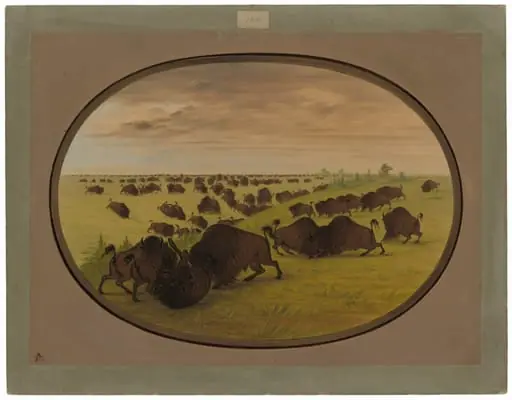 Bulls Fighting
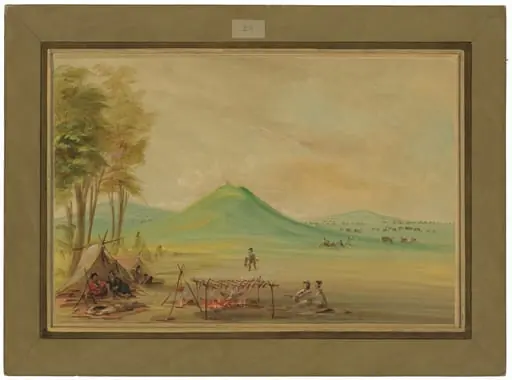 Expedition Encamped on a Texas Prairie. April 1686
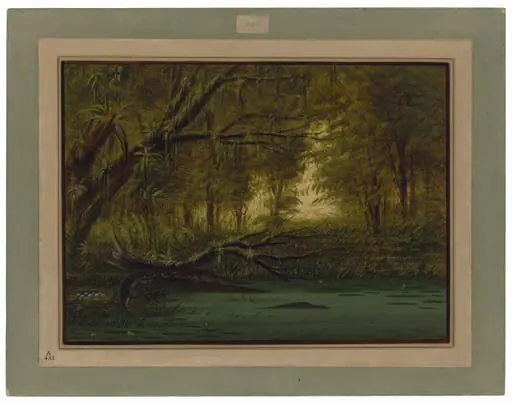 An Alligator's Nest
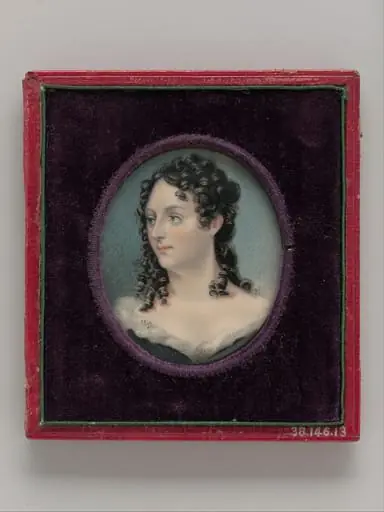 Mrs. George Catlin (Clara Bartlet Gregory)
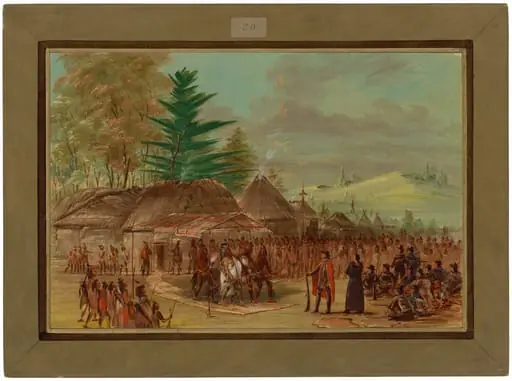 Chief of the Taensa Indians Receiving La Salle. March 20, 1682
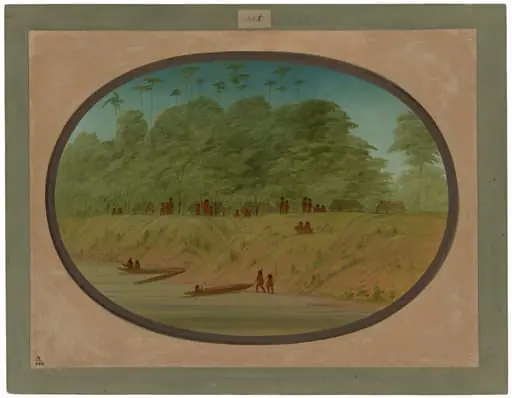 A Small Village - Payaguas Indians
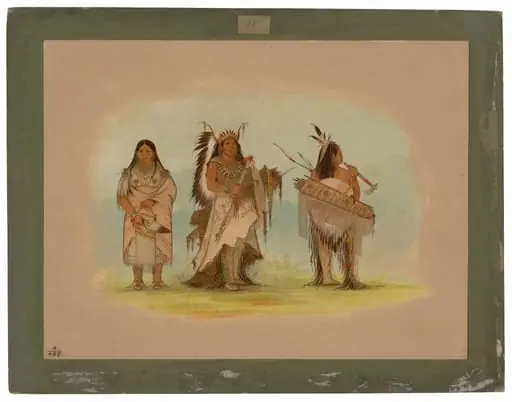 Omaha Chief, His Wife, and a Warrior
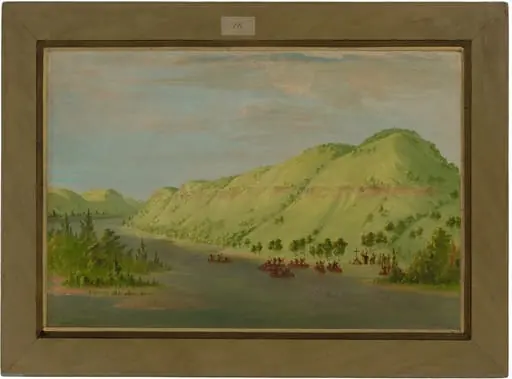 Father Hennepin Leaving the Mississippi to Join La Salle. May 8, 1680