Artwork
Sham Fight of the Camanchees
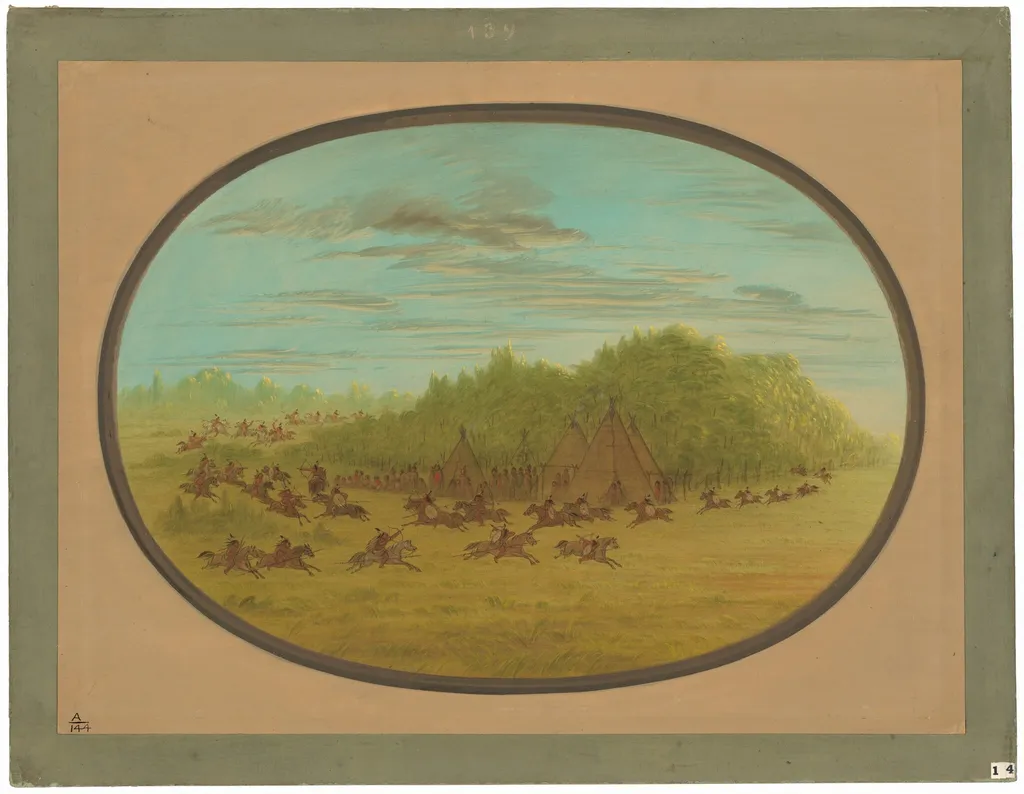
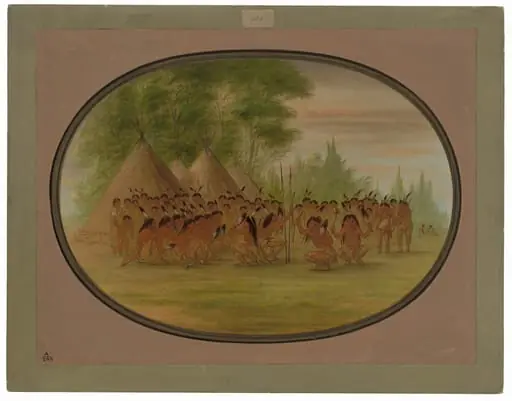
Sham Fight of the Camanchees is an oil painting by the Impressionist artist George Catlin. It dates from 1865 and is held in the collection of the National Gallery of Art. Created in 1865, this oil painting on card, later affixed to paperboard, records a staged combat among members of the Camanche tribe.
About this work
Subject & Meaning
Catlin’s title and visual arrangement underscore the performative nature of the encounter, signaling that the violence is contrived for observation.
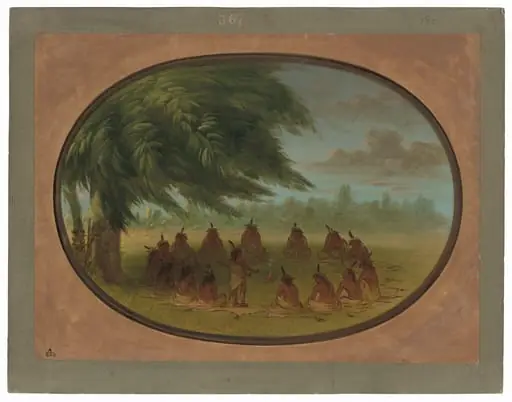
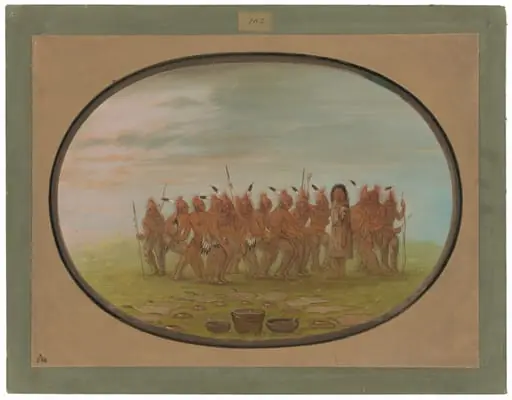
The painting depicts a staged sham fight between groups identified as Comanche warriors, arranged beneath a single tree that serves as both focal point and symbolic canopy. The scene emphasizes choreographed combat rather than actual warfare, using costume, gesture, and composition to frame the encounter as a ceremonial or theatrical display rather than a real battle. The work reflects contemporaneous Euro-American fascination with Indigenous cultures as exotic spectacle, presenting the Comanche as figures of romanticized Otherness rather than as historical agents in their own right.
Catlin’s title and visual arrangement underscore the performative nature of the encounter, signaling that the violence is contrived for observation. The single tree may function as a visual anchor and a narrative device, framing the confrontation within a bounded space and reinforcing the idea of staged display.
Technique & Style
Executed in 1861, this genre scene is an oil painting applied on card that has been mounted onto a paperboard support. The work measures 47.3 cm in height and 63.8 cm in width. Stylistically, the composition incorporates natural elements, specifically depicting a tree within the setting of the simulated battle. The piece is classified as a painting within the collection of the National Gallery of Art.
History & Provenance
George Catlin painted Sham Fight of the Camanchees in 1861, an oil on card mounted on paperboard work depicting a tree. The painting descended through Catlin's daughters, Clara Gregory Catlin, Louise Catlin Kinney, and Elizabeth Wing Catlin, until Elizabeth sold it in 1912 to the American Museum of Natural History. It was later sold in 1959 via Kennedy Galleries to Paul Mellon, who gifted it to the National Gallery of Art in 1965.
Sham Fight of the Camanchees is held in the collection of the National Gallery of Art in Washington, D.C., where it has been accessioned as a painting by George Catlin created in 1861. The work entered the museum in 1965 as a gift from Mr. Paul Mellon following its acquisition from Kennedy Galleries in New York in 1959. Its provenance traces back to George Catlin, then by descent to his daughters, and was purchased by the American Museum of Natural History in 1912 before being resold to Paul Mellon in 1959.
The painting measures 47.3 cm in height and 63.8 cm in width, consistent with the dimensions recorded in its cataloging at the National Gallery of Art.
Context
The painting was part of George Catlin's later series depicting North American Indigenous subjects, reflecting his ongoing ethnographic focus after earlier frontier expeditions. Its depiction of a dramatic confrontation aligns with the genre of historical narrative painting popular in the mid-19th century, though Catlin's approach blended documentary intent with romanticized spectacle. The work entered a major institutional collection in 1965, ensuring its preservation within a national repository of American art.
Scholarly attention to Catlin's output, including this piece, has evolved from 19th-century admiration for his adventurous spirit to modern critiques examining his complex relationship with Indigenous subjects and the political contexts of westward expansion.
The painting measures 47.3 cm in height and 63.8 cm in width, documented in the National Gallery of Art's collection records.
Overview
Created in 1865, this oil painting on card, later affixed to paperboard, records a staged combat among members of the Camanche tribe. The composition centers on mounted figures brandishing lances within an open, tree‑dotted landscape, capturing a moment of ceremonial performance rather than actual warfare.
Own this work as a print
Artist & collection

Artist
George Catlin ( KAT-lin; July 26, 1796 – December 23, 1872) was an American lawyer, painter, author, and traveler, who specialized in portraits of Native Americans in the American frontier.

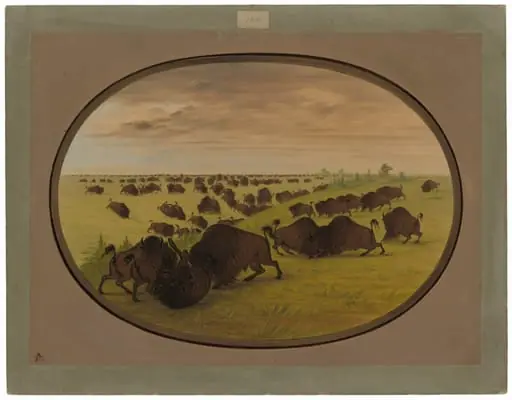 Bulls Fighting
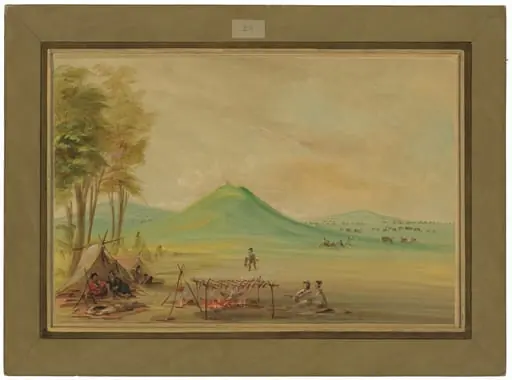 Expedition Encamped on a Texas Prairie. April 1686
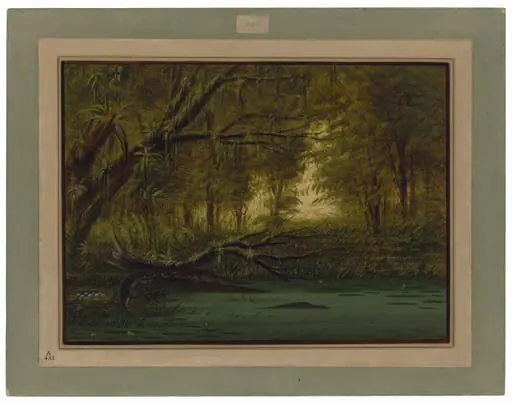 An Alligator's Nest
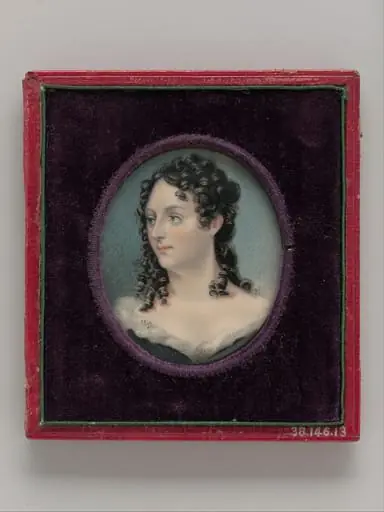 Mrs. George Catlin (Clara Bartlet Gregory)
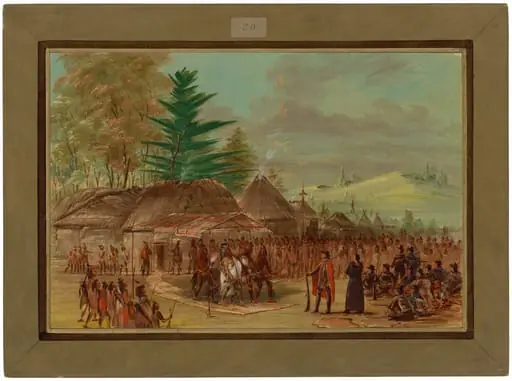 Chief of the Taensa Indians Receiving La Salle. March 20, 1682
 A Small Village - Payaguas Indians
 Omaha Chief, His Wife, and a Warrior
 Father Hennepin Leaving the Mississippi to Join La Salle. May 8, 1680