Artwork
The Japanese Bridge
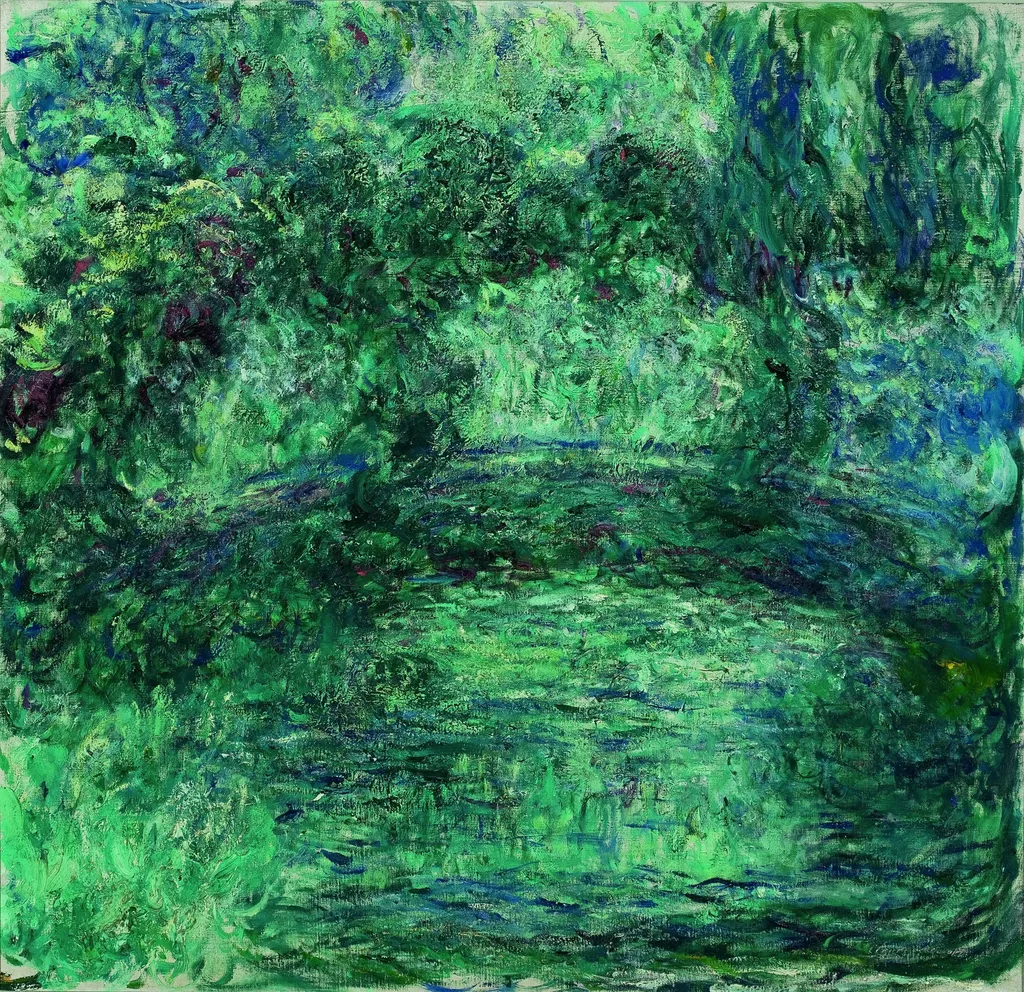
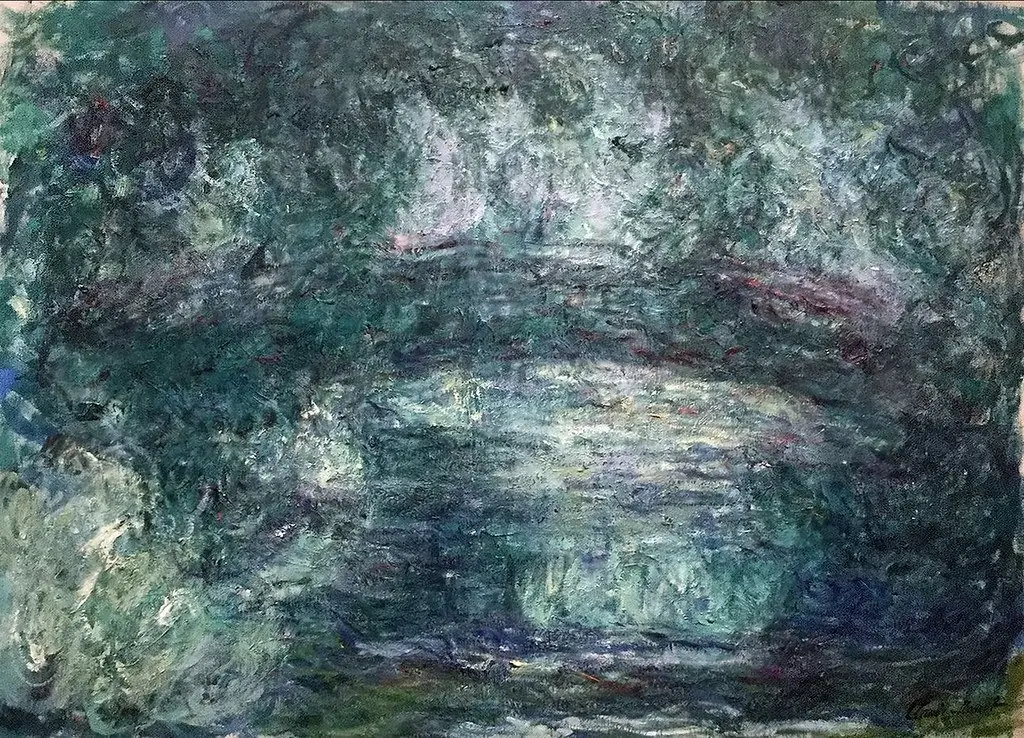
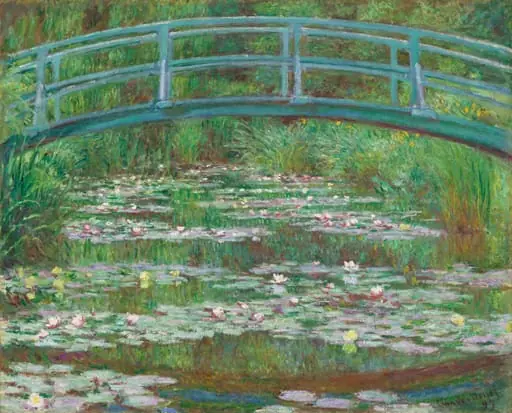
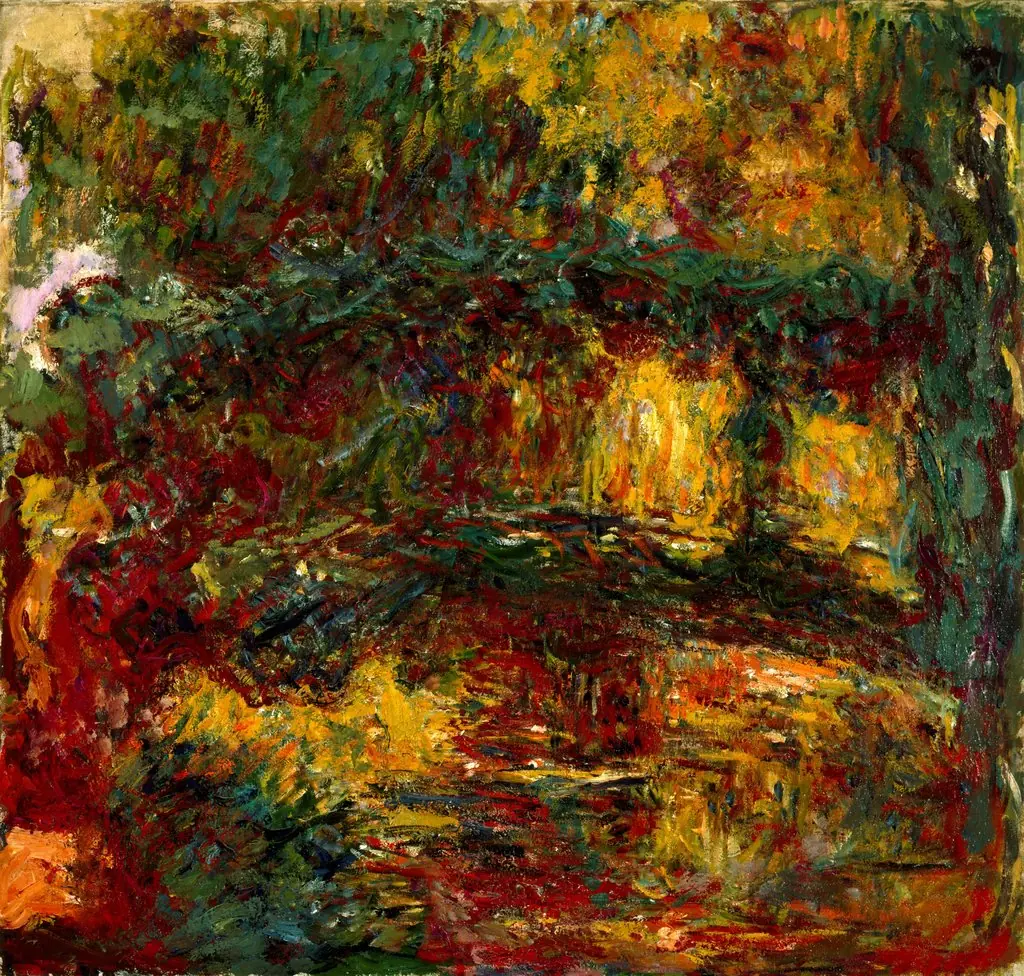
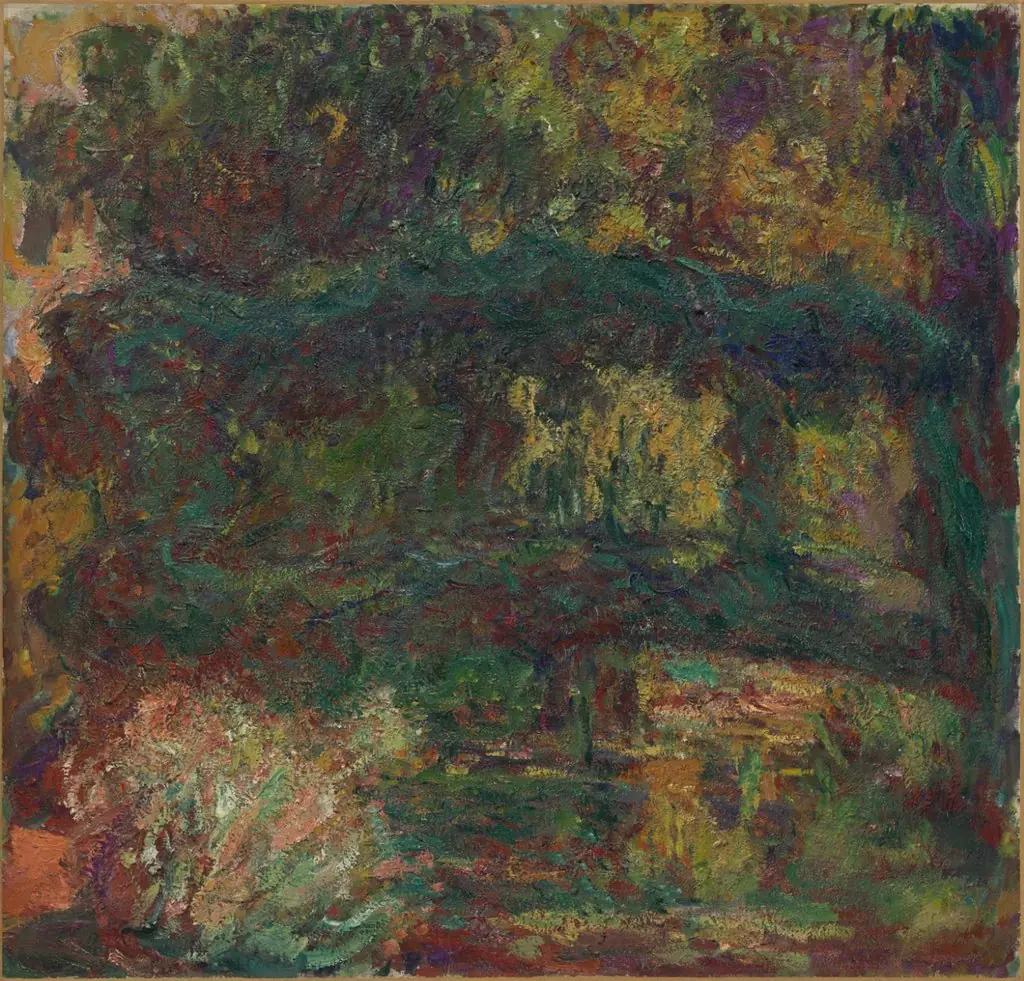
The Japanese Bridge is an oil painting by the Impressionist artist Claude Monet. It dates from 1920 and is held in the collection of the São Paulo Museum of Art.
About this work
Overview
Rather than defining the structure with sharp outlines, Monet uses color and light to create a sense of depth and unity between the architecture and nature.
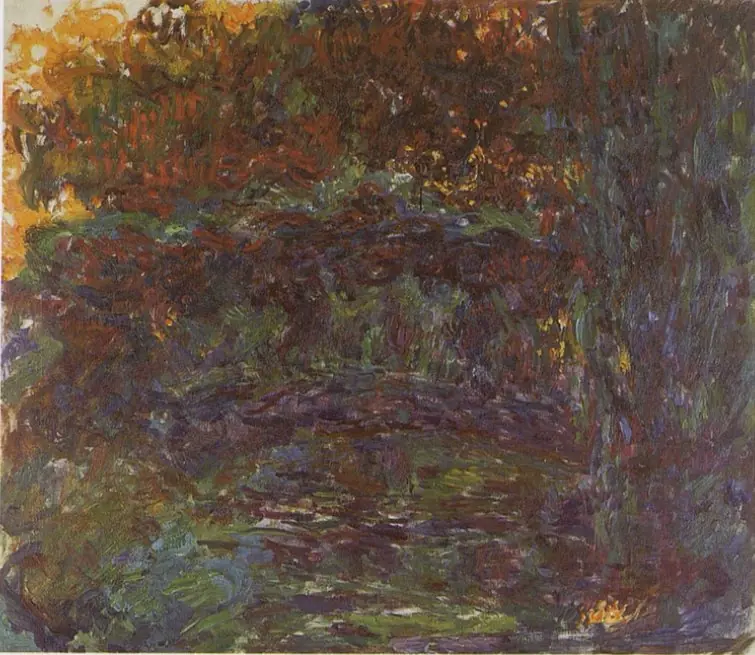
The Japanese Bridge, painted by Claude Monet in 1920, depicts the iconic wooden footbridge spanning the water lily pond in the artist's garden at Giverny. Executed in oil on canvas, the work is a quintessential example of Monet's late style, characterized by large-scale compositions and an intense focus on atmospheric effects. The bridge, rendered in soft, muted tones of pink and green, appears to dissolve into the surrounding foliage, which is applied with bold, rhythmic, and expressive brushstrokes.
Rather than defining the structure with sharp outlines, Monet uses color and light to create a sense of depth and unity between the architecture and nature. This painting belongs to a series of works created during the final decade of Monet's life, a period marked by his struggle with cataracts and his deepening abstraction. The series reflects his lifelong investigation of light and perception, moving away from distinct representation toward a more immersive, almost abstract experience of the landscape.
The Japanese Bridge stands as a significant milestone in the transition from Impressionism to modern abstraction, demonstrating how Monet's garden became a laboratory for his evolving artistic vision.
Subject & Meaning
The work centers on a solitary bridge that serves as a focal point, guiding the eye across the water’s surface toward the lush garden beyond. By emphasizing the interplay of light on water and leaf, Monet evokes a sense of calm and the fleeting atmospheric conditions that characterize his later garden studies.
Technique & Style
Monet employs loose, gestural brushwork that captures the movement of light and the texture of foliage. The application of paint varies from soft, blended areas on the bridge to more vigorous, impasto strokes in the surrounding greenery, creating a dynamic contrast between solidity and the impression of natural vitality.
History & Provenance
Completed in the final decade of Monet’s career, the painting reflects his continued fascination with his Giverny water garden. After its creation, the canvas entered private collections before being acquired by the São Paulo Museum of Art, where it remains part of the museum’s European painting holdings.
Context
Created during Monet’s late period, the piece aligns with his series of water‑lily and bridge studies, where he explored the effects of seasonal light and weather. The Japanese Bridge motif, a recurring element in his garden, symbolizes the synthesis of natural and cultivated landscapes that preoccupied the artist in his later years.
Own this work as a print
Artist & collection
Artist
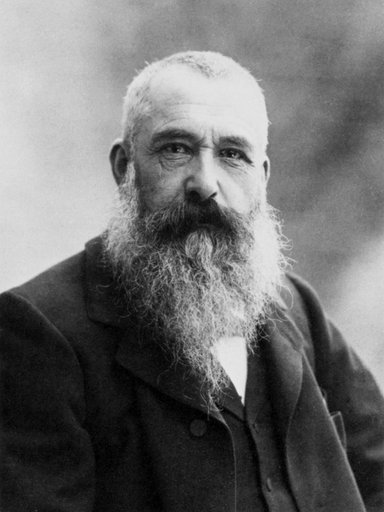
Oscar-Claude Monet was a French painter and founder of Impressionism who is seen as a key precursor to modernism, especially in his attempts to paint nature as he perceived it.