Artwork
The Japanese Footbridge
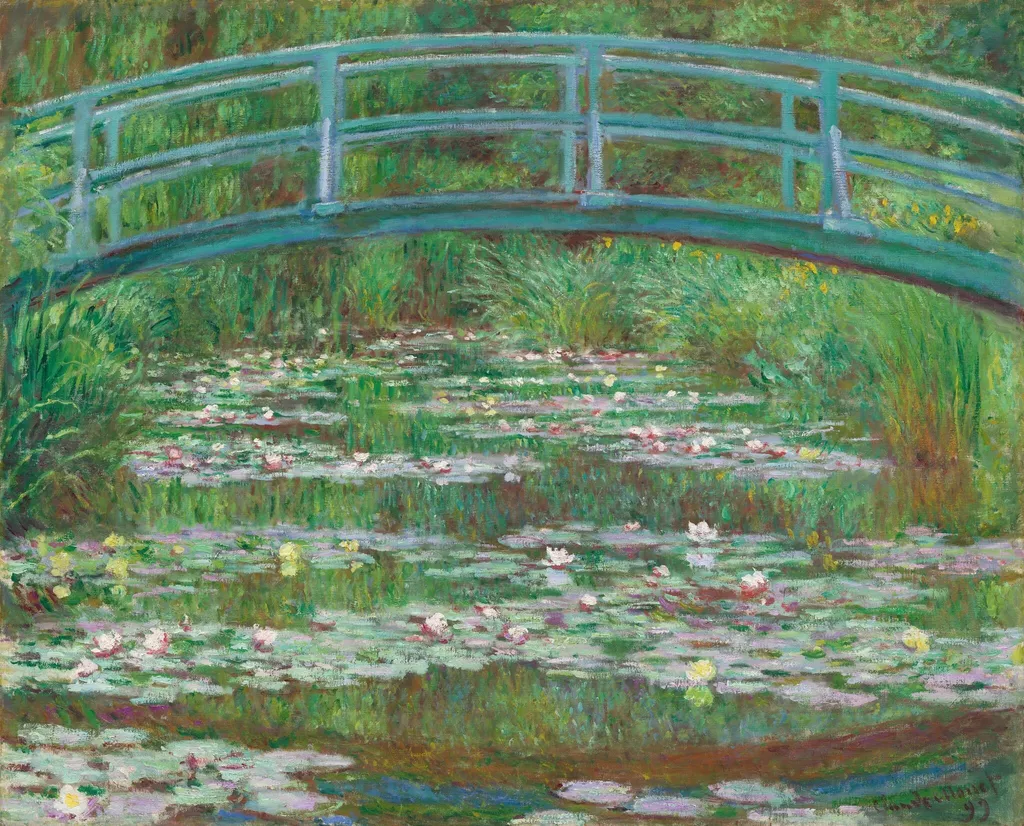
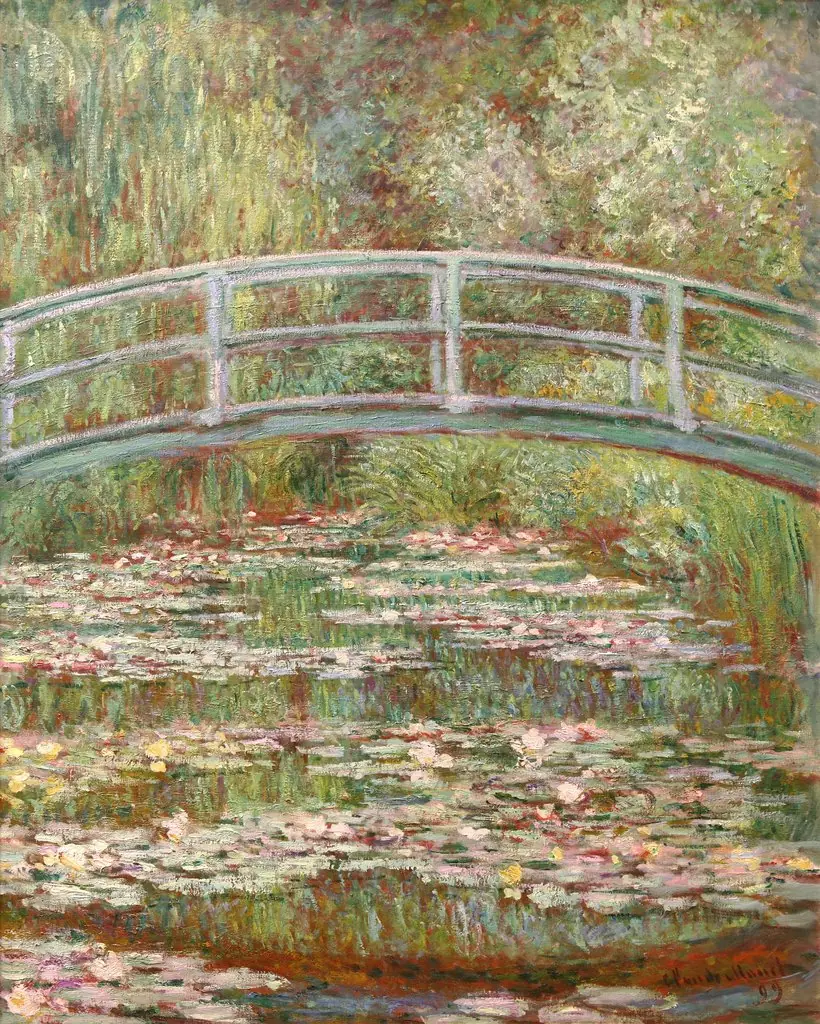
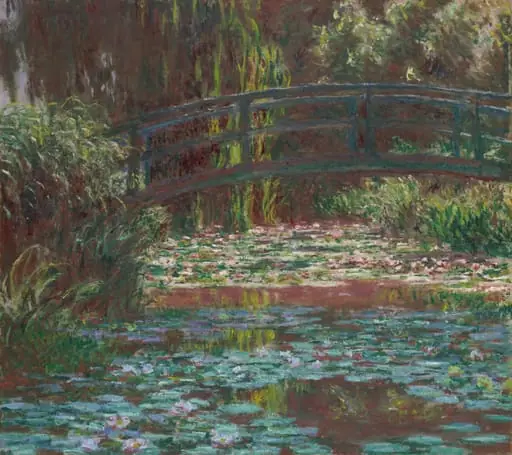
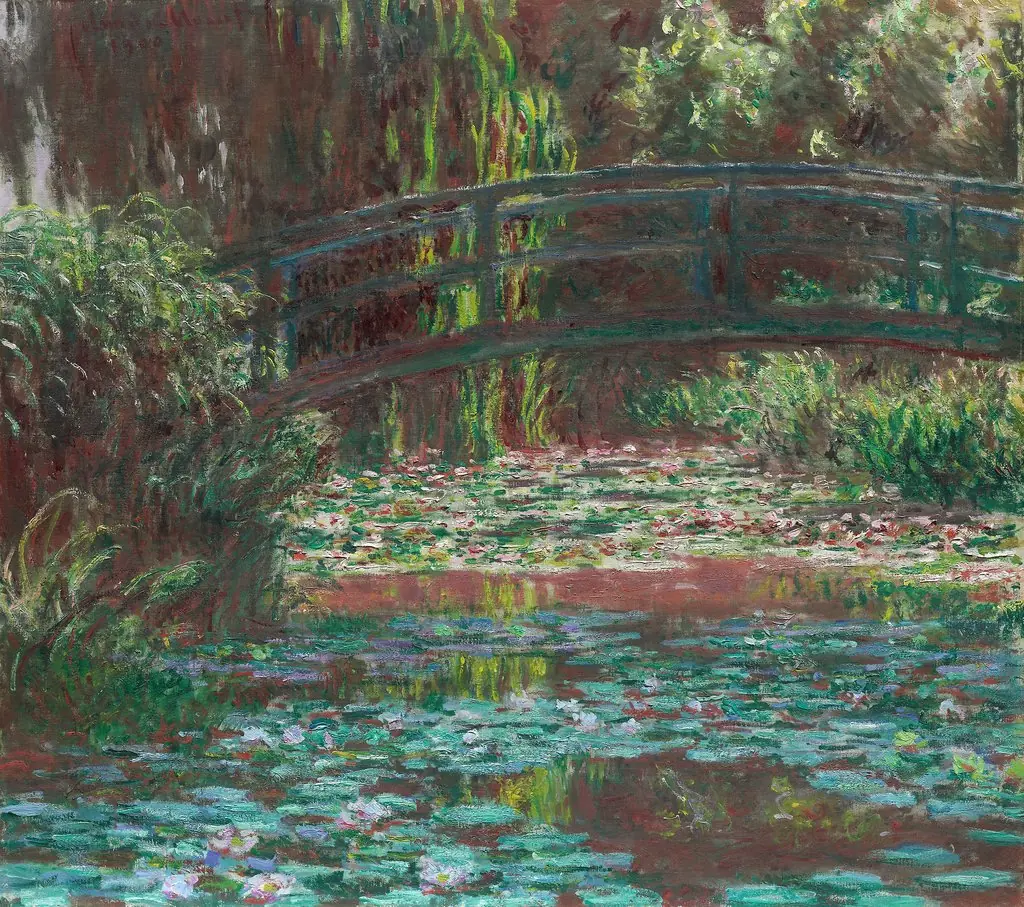
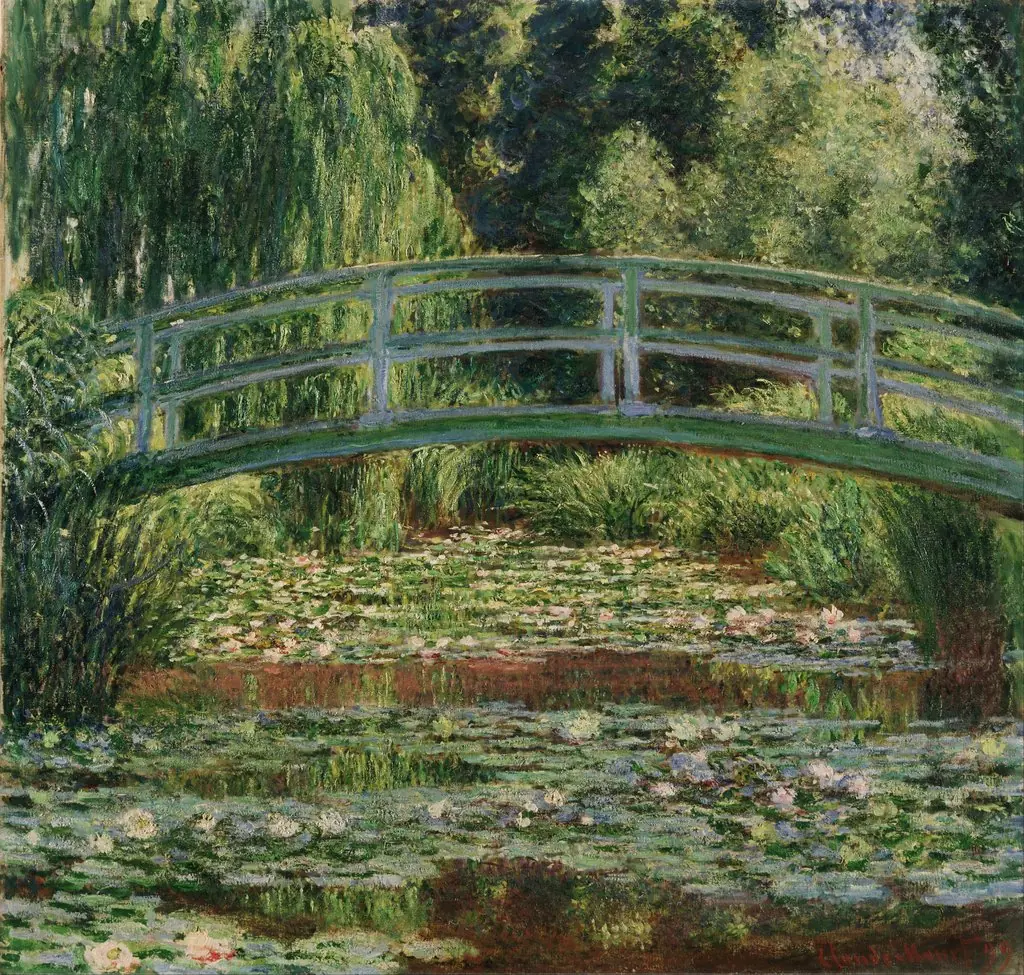
The Japanese Footbridge is an oil painting by the Impressionist artist Claude Monet. It dates from 1899 and is held in the collection of the National Gallery of Art.
- Inscription
- Inscribed:lower right: Claude Monet / 99
About this work
Subject & Meaning
The subject represents Monet's fascination with his own garden landscape, capturing a moment of tranquility and the interplay between architecture and nature.
The painting depicts a specific element within Claude Monet's garden at Giverny: a Japanese-style footbridge surrounded by trees. The work focuses on the natural setting, with the bridge serving as a focal point amidst the foliage. While the bridge itself is a man-made structure, the composition emphasizes its integration into the lush, green environment.
The subject represents Monet's fascination with his own garden landscape, capturing a moment of tranquility and the interplay between architecture and nature.
History & Provenance
Claude Monet created The Japanese Footbridge in 1899. The painting entered the commercial market in January 1900 when it was purchased directly from the artist by the Parisian dealer Durand-Ruel. It remained in his inventory until 1920, when it was sold to the Carnegie Institute in Pittsburgh.
The work changed hands again in 1953, moving to New York dealer Sam Salz, before passing to Henry T. Mudd of Los Angeles. Upon Mudd's death, the painting descended by inheritance to his wife, Victoria Nebeker Coberly. Following her passing in 1991, the work was bequeathed to the National Gallery of Art in Washington, D.C., in 1992.
The painting is in the collection of the National Gallery of Art, Washington, D.C., where it is accessioned as part of the museum’s holdings.
Its exhibition history includes display at Durand-Ruel & Cie. in Paris, shown in the exhibition Around Impressionism: French Paintings from the National Gallery of Art at the Carnegie Institute, Pittsburgh, and later featured in the traveling presentation Masterpieces from the National Gallery of Art.
Overview
The Japanese Footbridge, painted by Claude Monet in 1899, depicts the iconic arched bridge spanning the water lily pond in the artist's garden at Giverny. This oil on canvas work is a central piece of Monet's mature Impressionist period, focusing on the interplay of light, water, and vegetation. The composition centers the green wooden bridge, which curves gently across the frame, reflecting in the dark, still water below.
Surrounding the pond are dense clusters of irises, willows, and other foliage, rendered with the artist's characteristic short, broken brushstrokes that capture the shimmering quality of the surface and the atmosphere. Monet executed this work during a prolific phase where he returned repeatedly to the Giverny garden as his primary subject, moving away from external landscapes to explore the effects of light and color within a controlled environment. The painting exemplifies his dedication to capturing transient optical sensations, transforming a specific architectural feature into a study of nature's harmony.
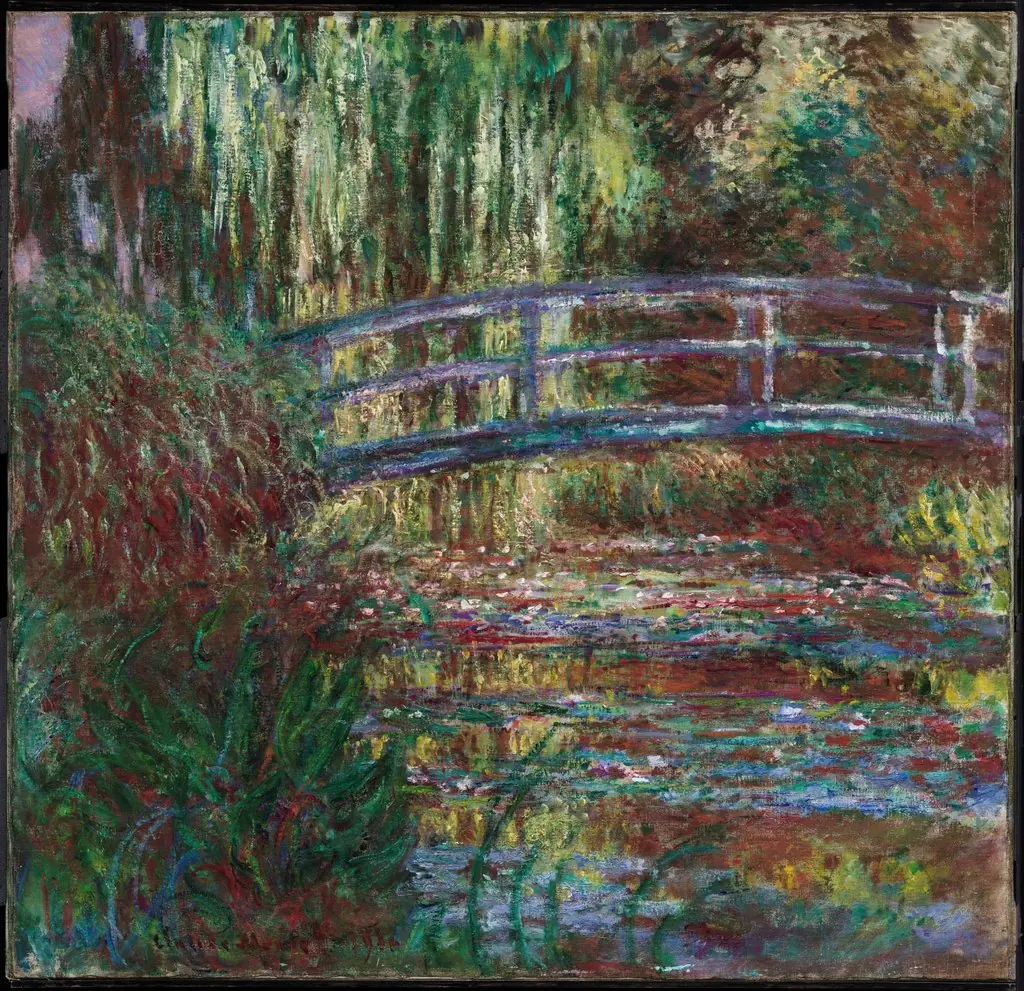
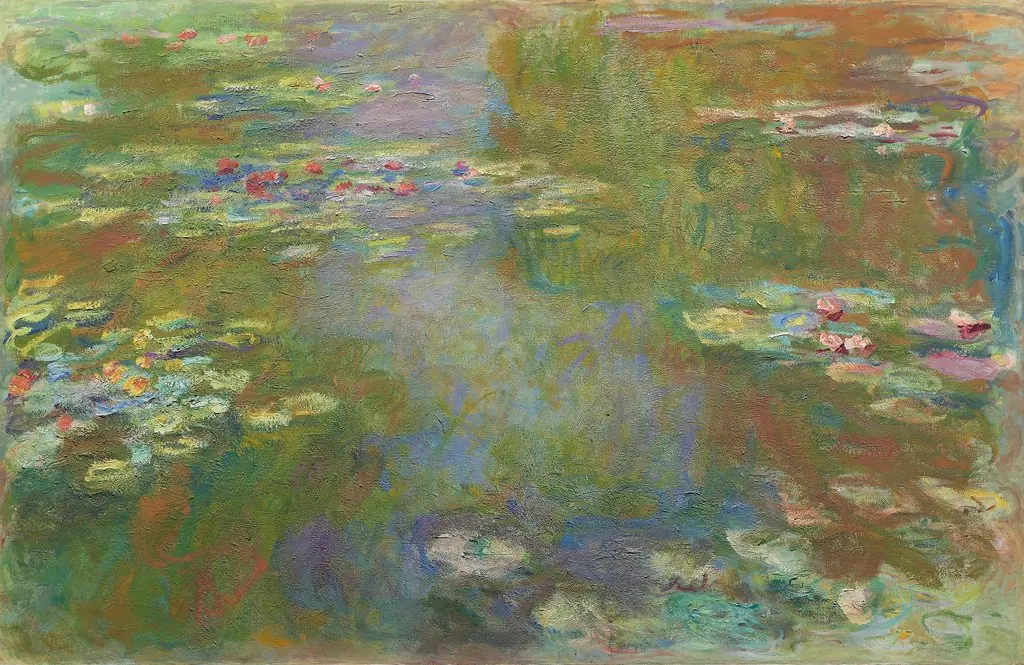
It stands as a significant example of his late-career exploration of series painting, where the same motif is depicted under varying conditions to reveal the fluidity of perception.
Technique & Style
Monet employed oil on canvas to render The Japanese Footbridge, utilizing short, distinct brushstrokes. This technique creates a sense of dynamism, particularly visible in the shimmering water and the texture of the surrounding plant life. Such an approach was characteristic of his work from this era, where he explored the transient effects of light and atmosphere on landscapes and everyday subjects.
Context
This painting aligns with Claude Monet's sustained exploration of his garden at Giverny, a recurring theme in his late career. His persistent interest lay in observing how varying light conditions transformed the colors and emotional resonance of a scene. The Japanese Footbridge exemplifies his commitment to capturing these fleeting moments, a hallmark of his Impressionist practice and his dedication to landscape painting.
Own this work as a print
Artist & collection
Artist
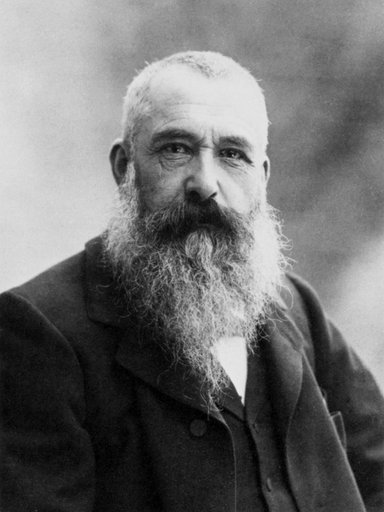
Oscar-Claude Monet was a French painter and founder of Impressionism who is seen as a key precursor to modernism, especially in his attempts to paint nature as he perceived it.