Artwork
Bacchus, Ceres and Venus
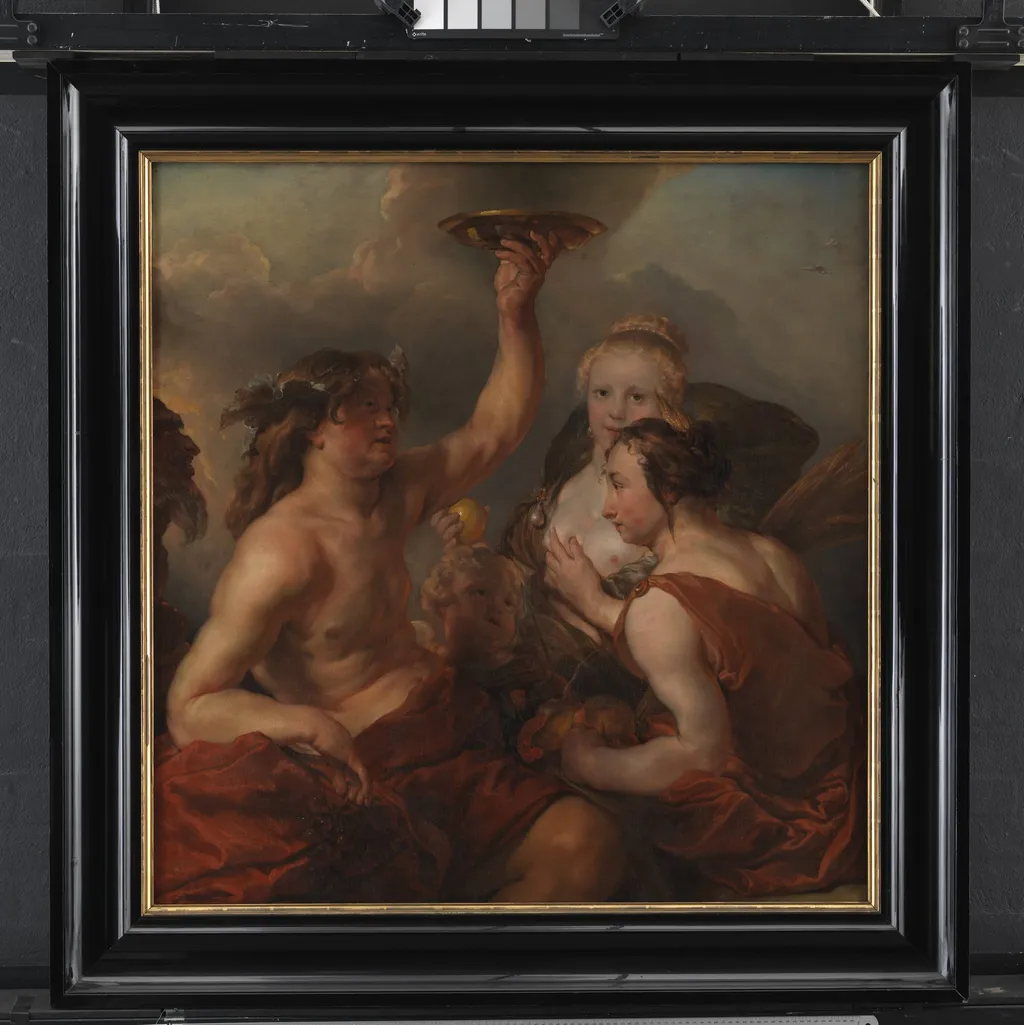
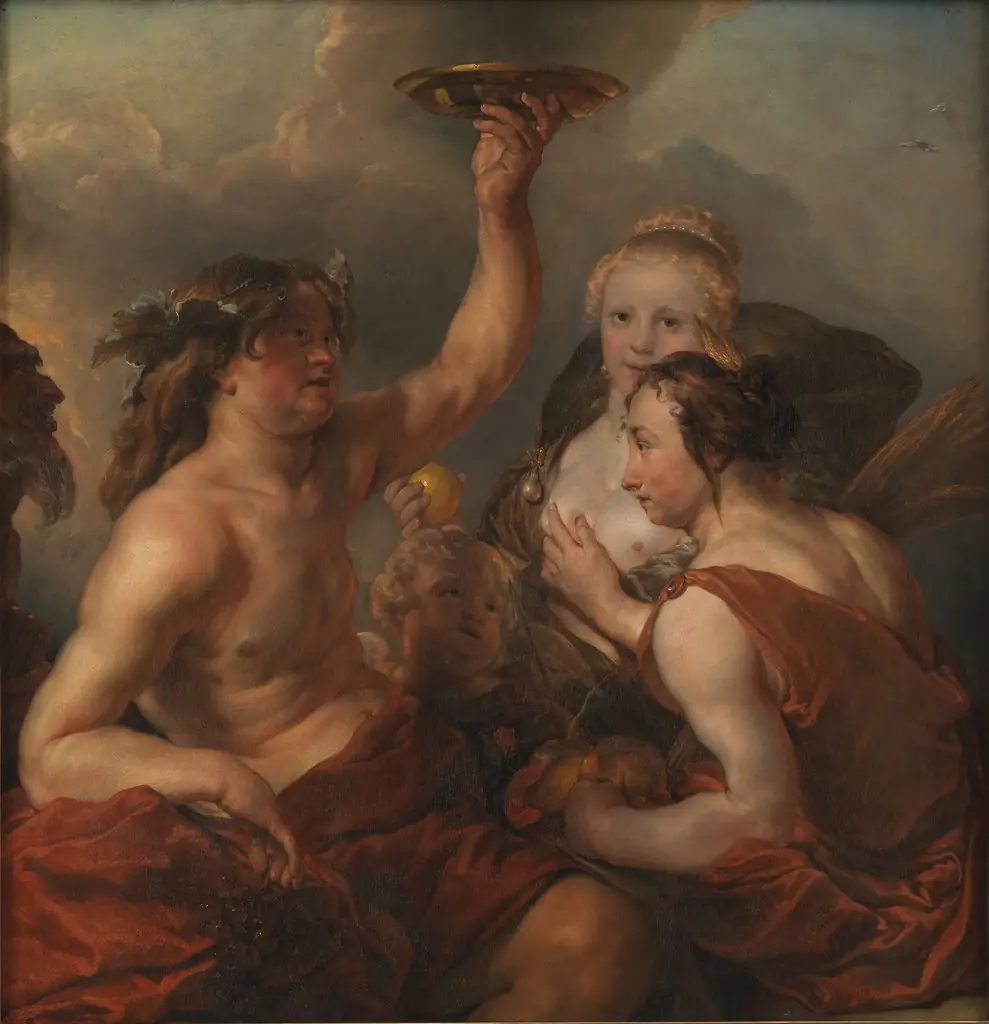
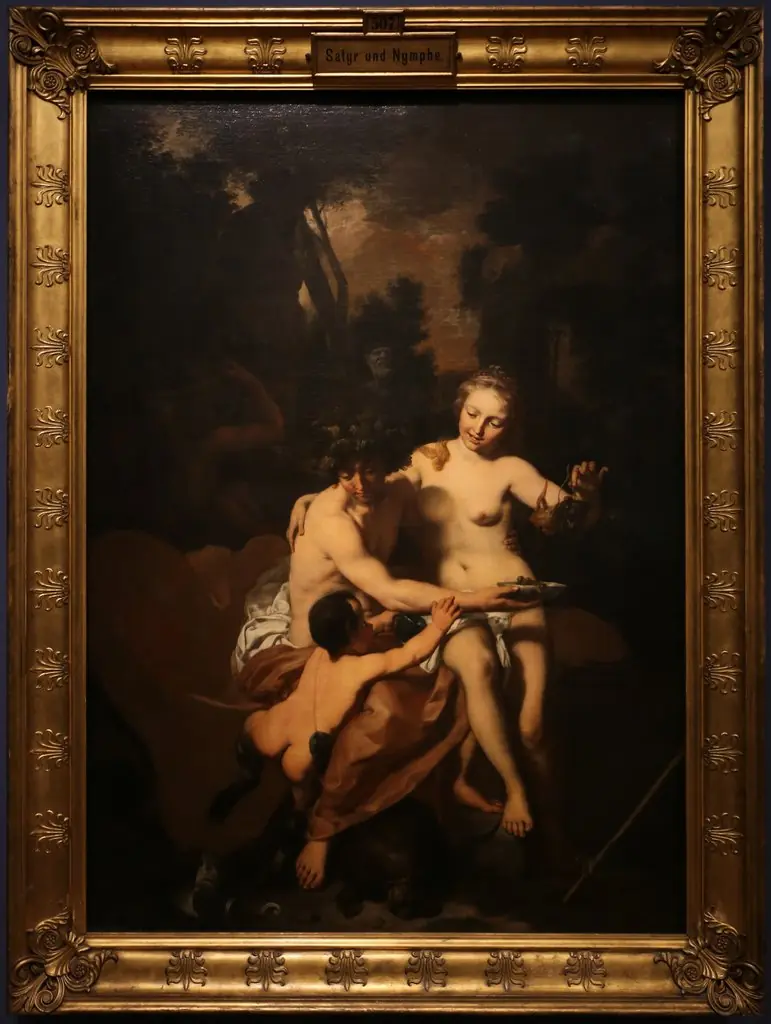
Bacchus, Ceres and Venus is a photography by Unknown. It dates from 1650 and is held in the collection of the Statens Museum for Kunst. Painted around 1650, this mythological scene features three figures associated with classical deities: Bacchus, Ceres, and Venus.
About this work
Overview
Painted around 1650, this mythological scene features three figures associated with classical deities: Bacchus, Ceres, and Venus. The work is attributed to a 17th-century artist, though the painter’s identity remains unconfirmed. It is currently housed in the Museum of Ethnography, where it is displayed as part of a collection focused on cultural representations of ritual and abundance.
Subject & Meaning
Their arrangement suggests a ceremonial gathering, possibly referencing harvest rites or divine feasts.
The composition centers on three figures symbolizing fertility, wine, and love, Bacchus with his raised plate of offerings, Ceres holding grain, and Venus nearby. Their arrangement suggests a ceremonial gathering, possibly referencing harvest rites or divine feasts. The presence of birds and open sky implies a connection between earthly abundance and celestial order, reinforcing themes of cyclical renewal in agrarian societies.
Technique & Style
The artist employs chiaroscuro to model the figures with strong light and shadow, enhancing their three-dimensionality. Rich red drapery on the women contrasts with the bare torso of the central male figure, drawing attention to their forms. Gold detailing on the plate and intricate textile patterns suggest attention to material luxury, while the hazy background creates atmospheric depth without narrative distraction.
History & Provenance
The painting’s early ownership is undocumented, but it entered the Museum of Ethnography in the late 19th century as part of a broader collection of European mythological works. Its classification within an ethnographic context reflects early modern efforts to interpret classical imagery through anthropological lenses, rather than purely aesthetic ones.
Context
Created during a period when mythological themes remained popular in Northern European art, this work diverges from grand Baroque drama by focusing on intimate, ritualistic interaction. It aligns with regional traditions that blended classical symbolism with local customs of feasting and seasonal celebration, offering a quieter, more grounded interpretation of divine presence.
Legacy
Though not widely reproduced or studied in mainstream art history, the painting contributes to understanding how mythological subjects were adapted in smaller-scale, non-courtly contexts. Its preservation in an ethnographic museum underscores shifting 19th-century priorities in categorizing art, not as high culture alone, but as cultural expression tied to communal life.
Artist & collection









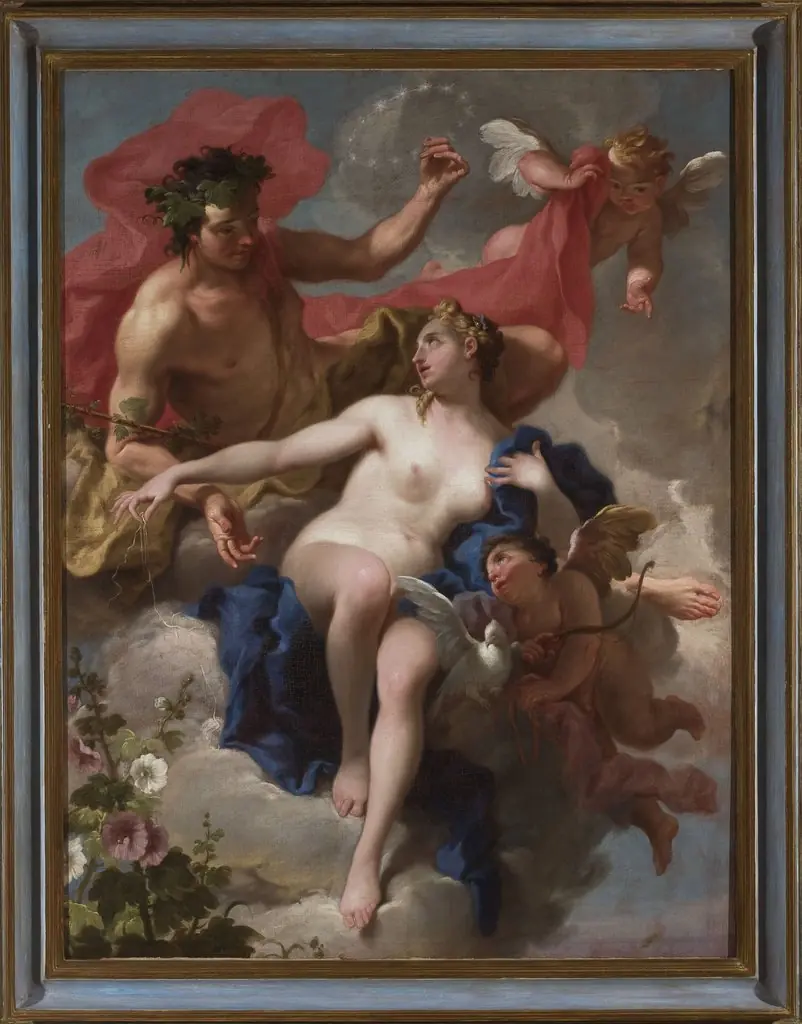 Bacchus and Ariadne
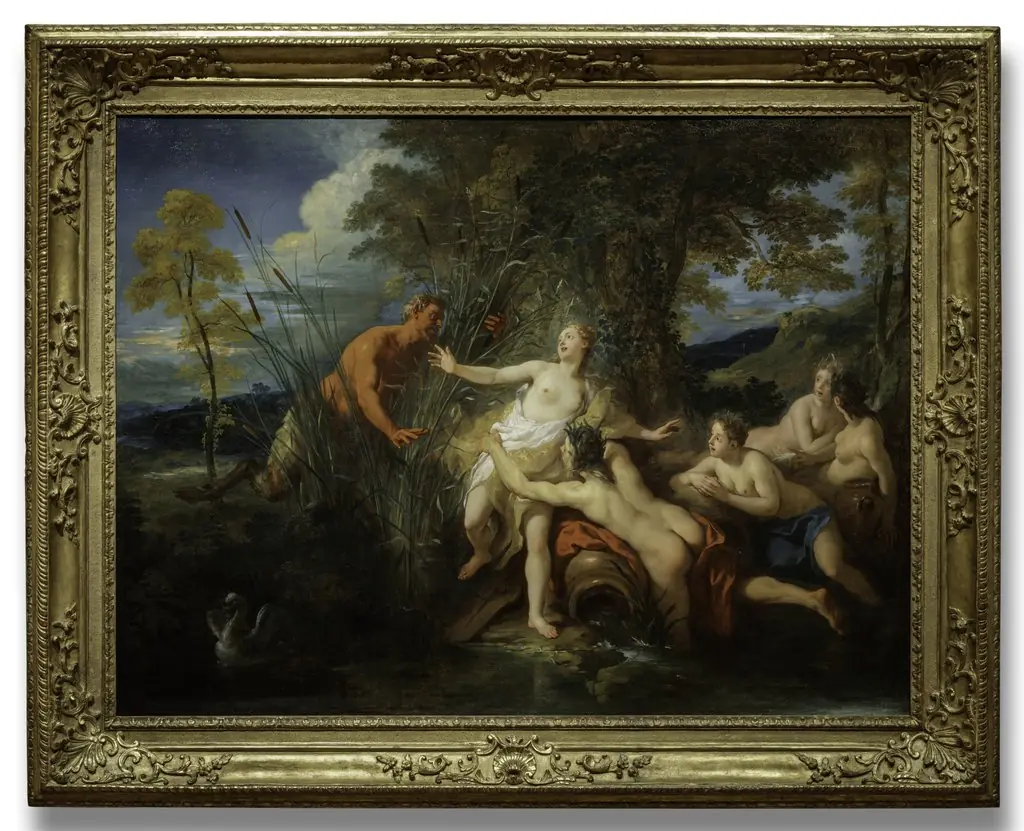 Pan and Syrinx
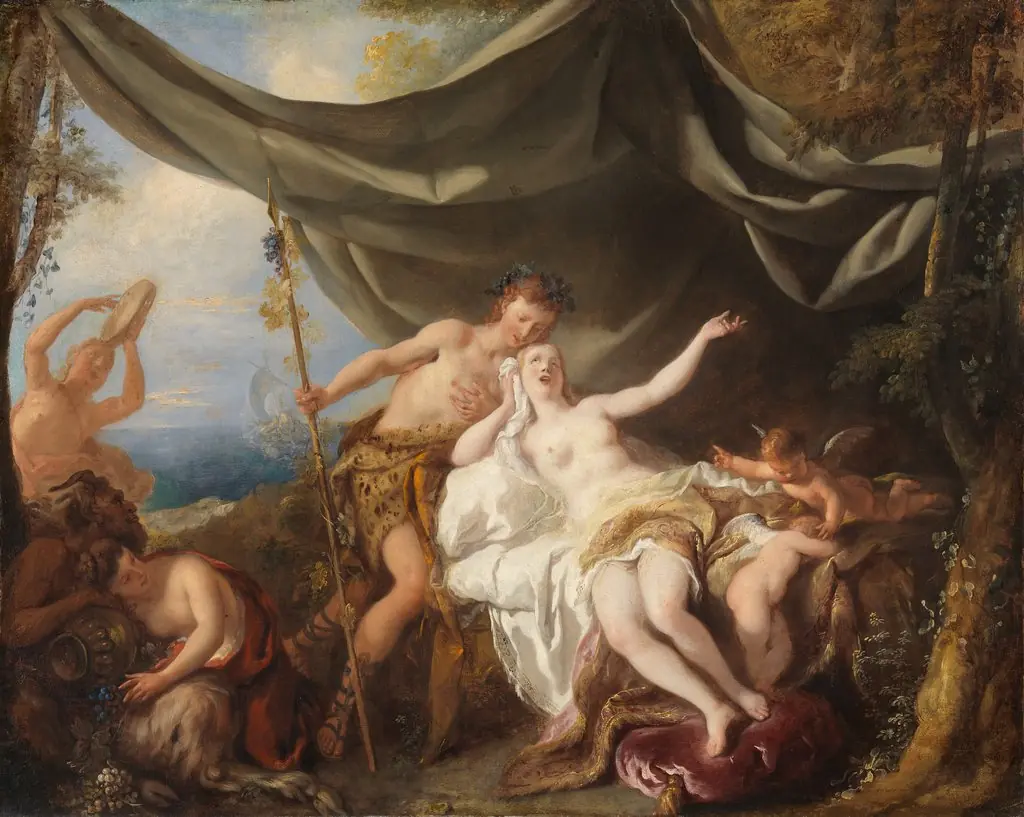 Bacchus and Ariadne
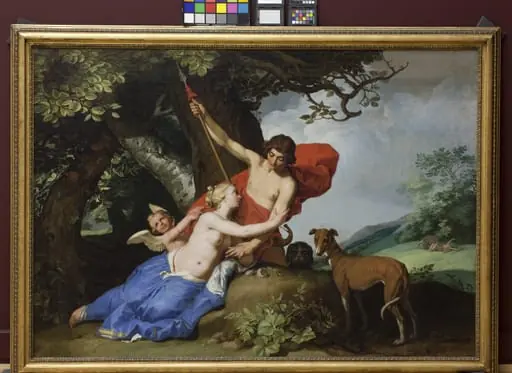 Venus and Adonis
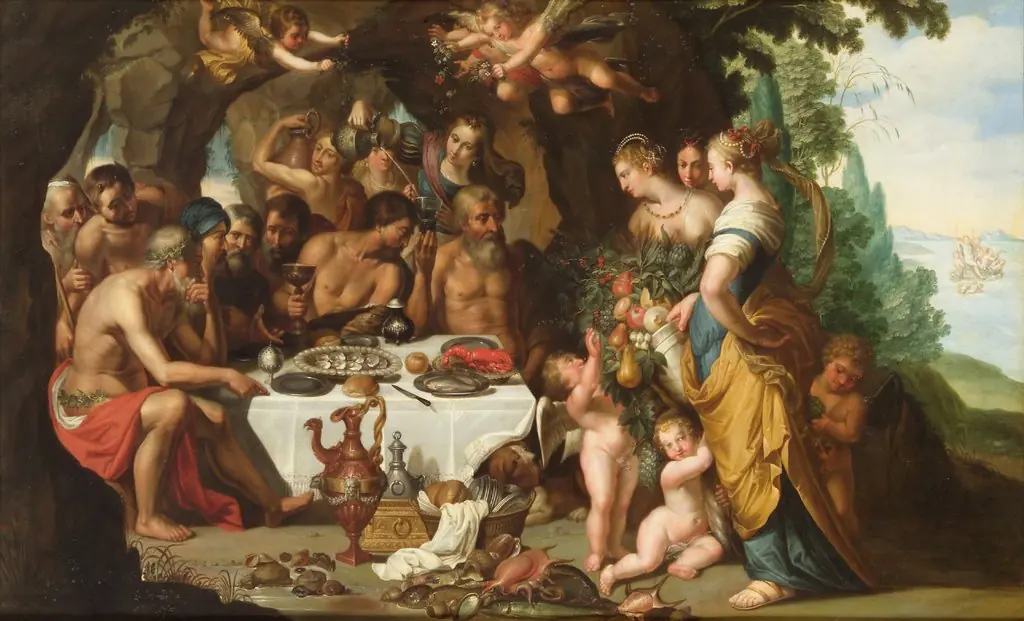 Gastmahl des Achelous
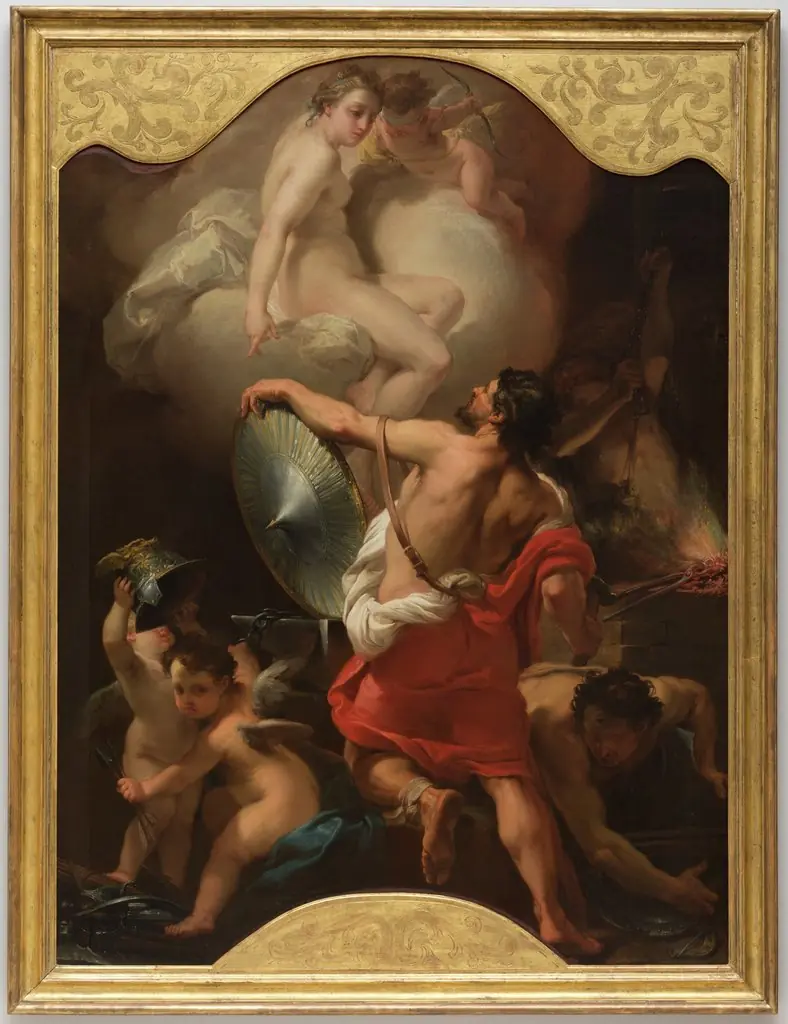 Venus Ordering Armor for Aeneas at Vulcan's Forge
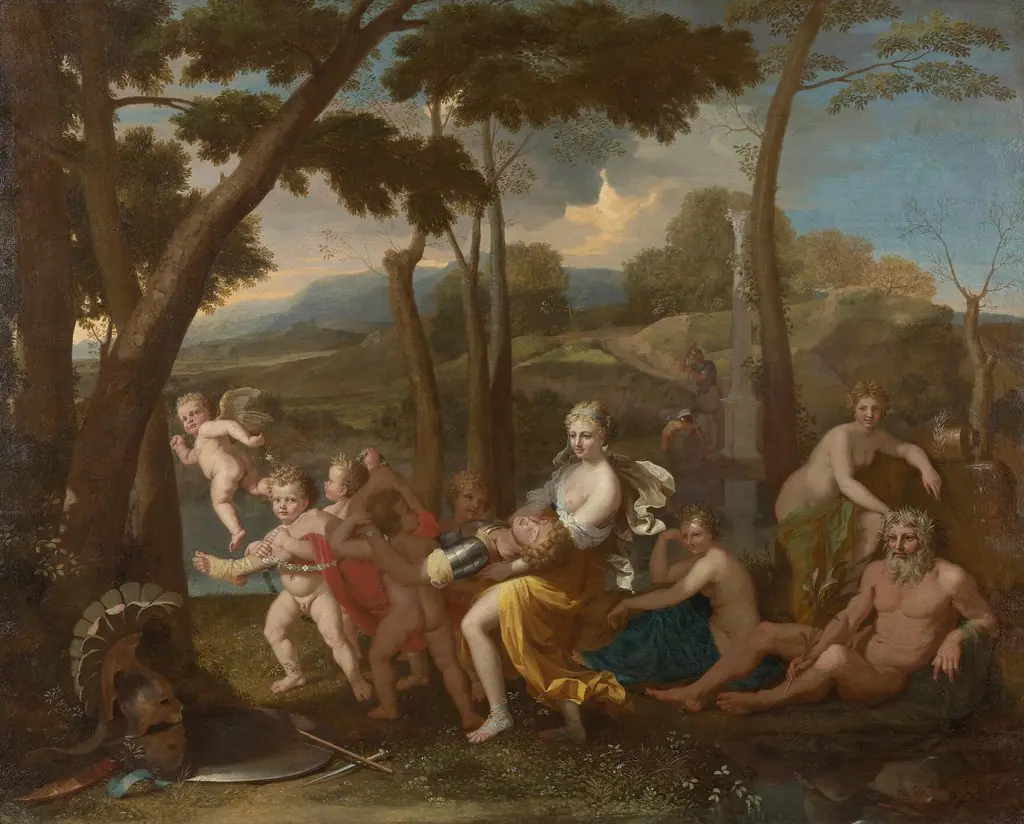 The Abduction of the Euthanized Rinaldo
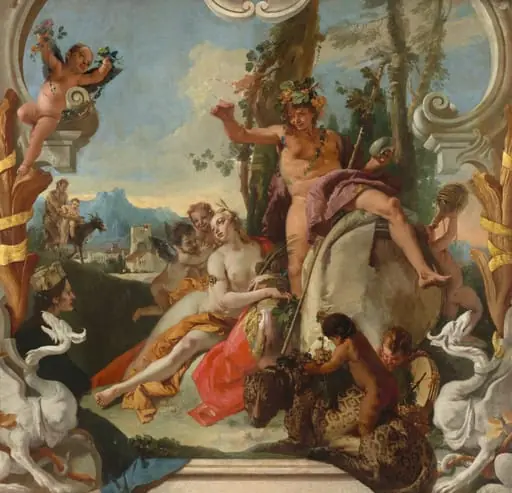 Bacchus and Ariadne
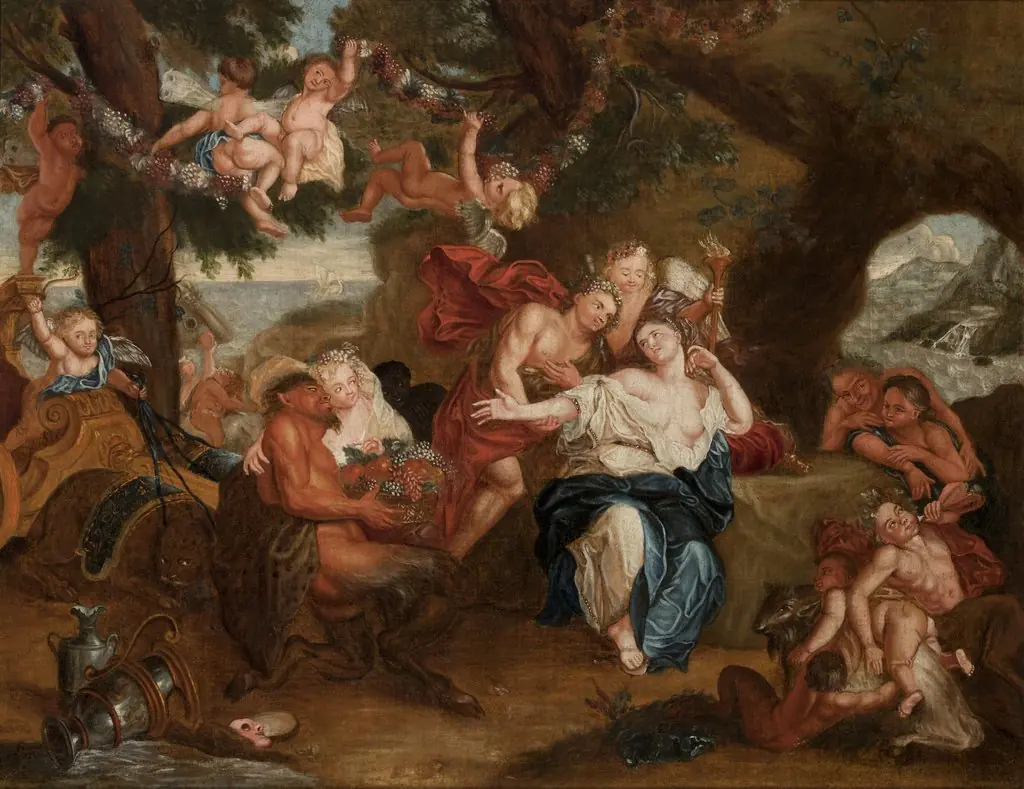 Bacchus and Ariadne on the Island of Naxos
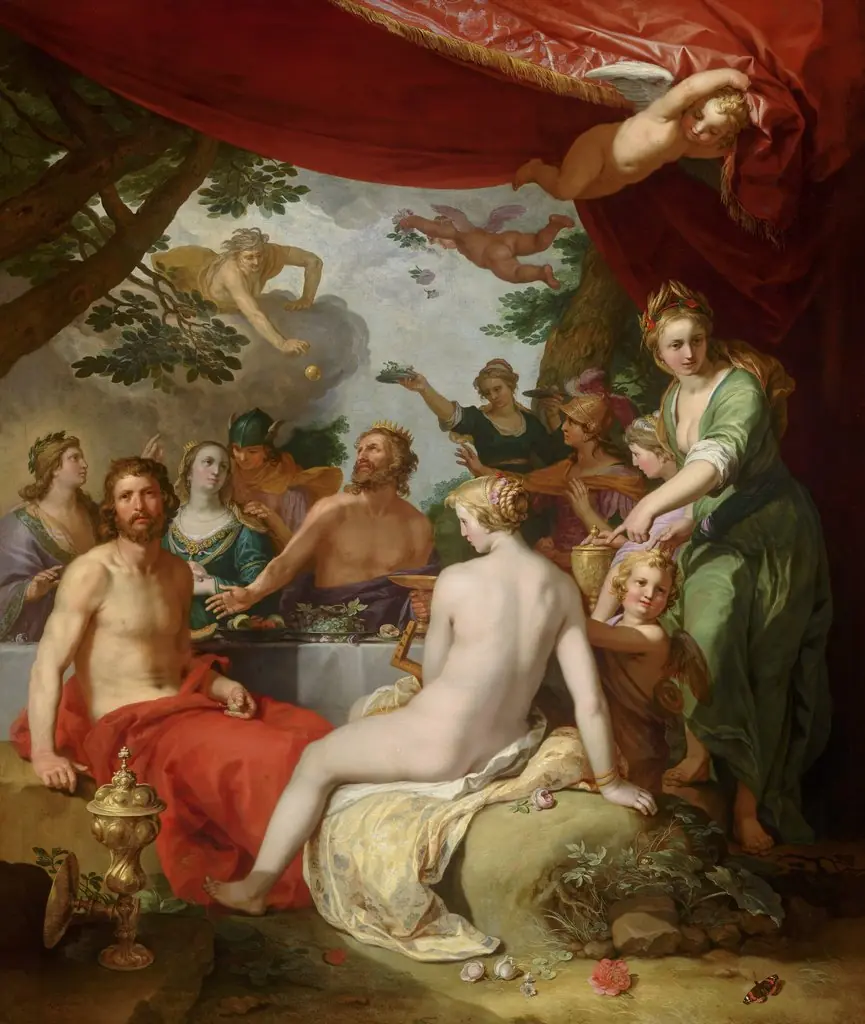 The feast of the gods at the wedding of Peleus and Thetis
 Satyr and nymph with a young faun
- Bacchus, Ceres and Venus