Artwork
Saint Matthew and Saint Jerome [verso]
![Saint Matthew and Saint Jerome [verso], by Antonio da Correggio, ink, 1524](https://artifactworldgallery.com/img/antonio-da-correggio--saint-matthew-and-saint-jerome-verso--233cd3c0f2701d8c-w1024.webp)
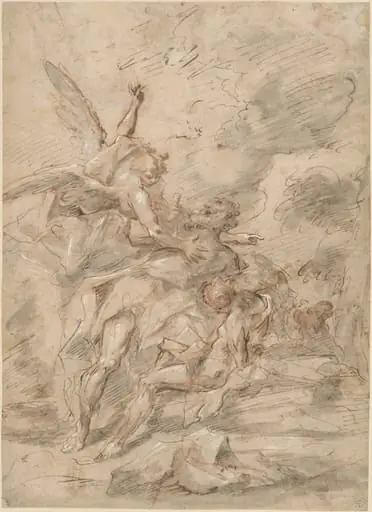
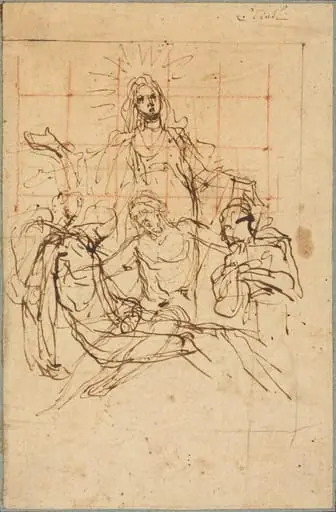
Saint Matthew and Saint Jerome [verso] is an ink drawing by the Renaissance artist Antonio da Correggio. It dates from 1524 and is held in the collection of the National Gallery of Art. Created in 1524, this drawing by Antonio Allegri da Correggio, commonly known as Correggio, depicts Saint Matthew alongside Saint Jerome.
About this work
Overview
Created in 1524, this drawing by Antonio Allegri da Correggio, commonly known as Correggio, depicts Saint Matthew alongside Saint Jerome. Executed on laid paper, the work combines pen work, brown ink, a subtle brown wash, and accents of red chalk. It exemplifies the artist’s early engagement with religious subject matter within the Italian Renaissance framework.
Technique & Style
Correggio employs a layered approach, beginning with fine pen lines that define the figures, then building tonal depth through brown ink washes.
Correggio employs a layered approach, beginning with fine pen lines that define the figures, then building tonal depth through brown ink washes. Red chalk highlights selective details, while the brown wash creates a unified atmospheric effect. The composition showcases his skillful handling of chiaroscuro and a pronounced sense of three‑dimensional space achieved through illusionistic perspective and foreshortening.
Subject & Meaning
The drawing presents two pivotal Christian scholars: Saint Matthew, traditionally associated with the Gospel, and Saint Jerome, famed for translating the Bible into Latin. Their juxtaposition underscores themes of scriptural authority and scholarly devotion, reflecting the devotional practices and theological interests of early 16th‑century patrons.
Context
As a product of the Parma school, the piece illustrates Correggio’s contribution to the region’s artistic identity, characterized by fluid movement and dramatic lighting. Elements such as exaggerated perspective and dynamic pose anticipate compositional strategies later adopted by Baroque and Rococo artists, marking the drawing as a transitional link between High Renaissance ideals and subsequent stylistic developments.
Own this work as a print
Artist & collection
Artist
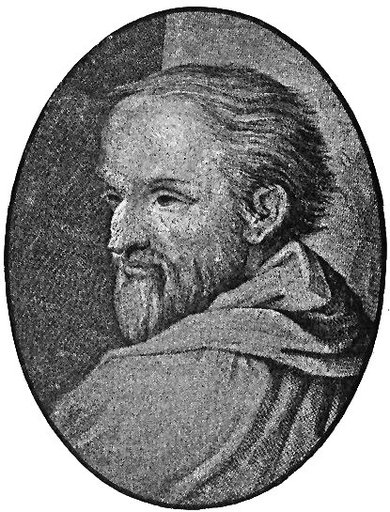
Antonio Allegri da Correggio, usually known as just Correggio, was an Italian Renaissance painter who was the foremost painter of the Parma school of the High Renaissance, who was responsible for some of the most…

- The Sacrifice of Isaac
 The Madonna and Child in Glory Adored by Saints
 The Adoration of the Shepherds
 Study for "The Defeat of the Floating Batteries at Gibraltar"
 Bust of Diana with Putti and Hunting Attributes
 The Descent from the Cross (recto)
 The Last Judgment
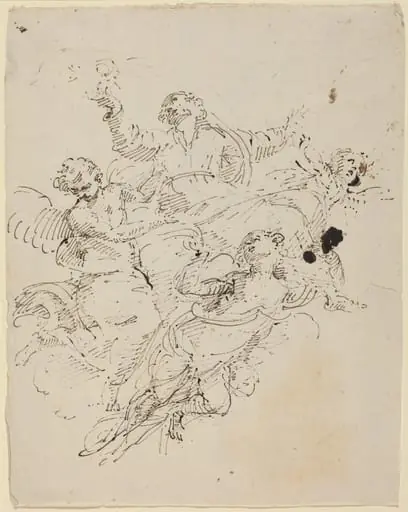 The Ascension of the Virgin
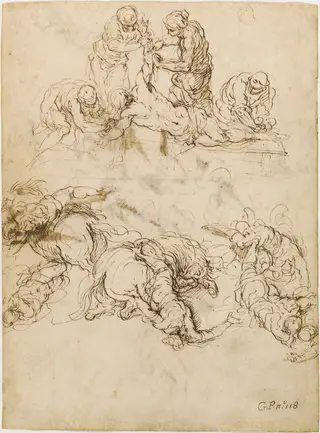 The Martyrdom of Saint Bartholomew; The Conversion of Saint Paul
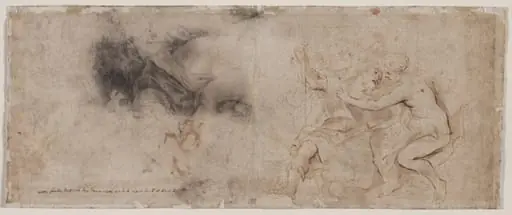 Venus Disarming Mars, Drapery Study (verso)
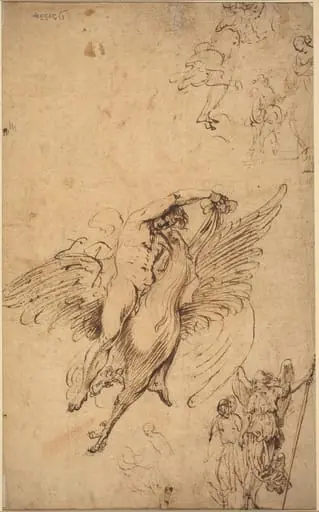 Ganymede
 The Pietà (recto)