Artwork
Madonna with St. Francis
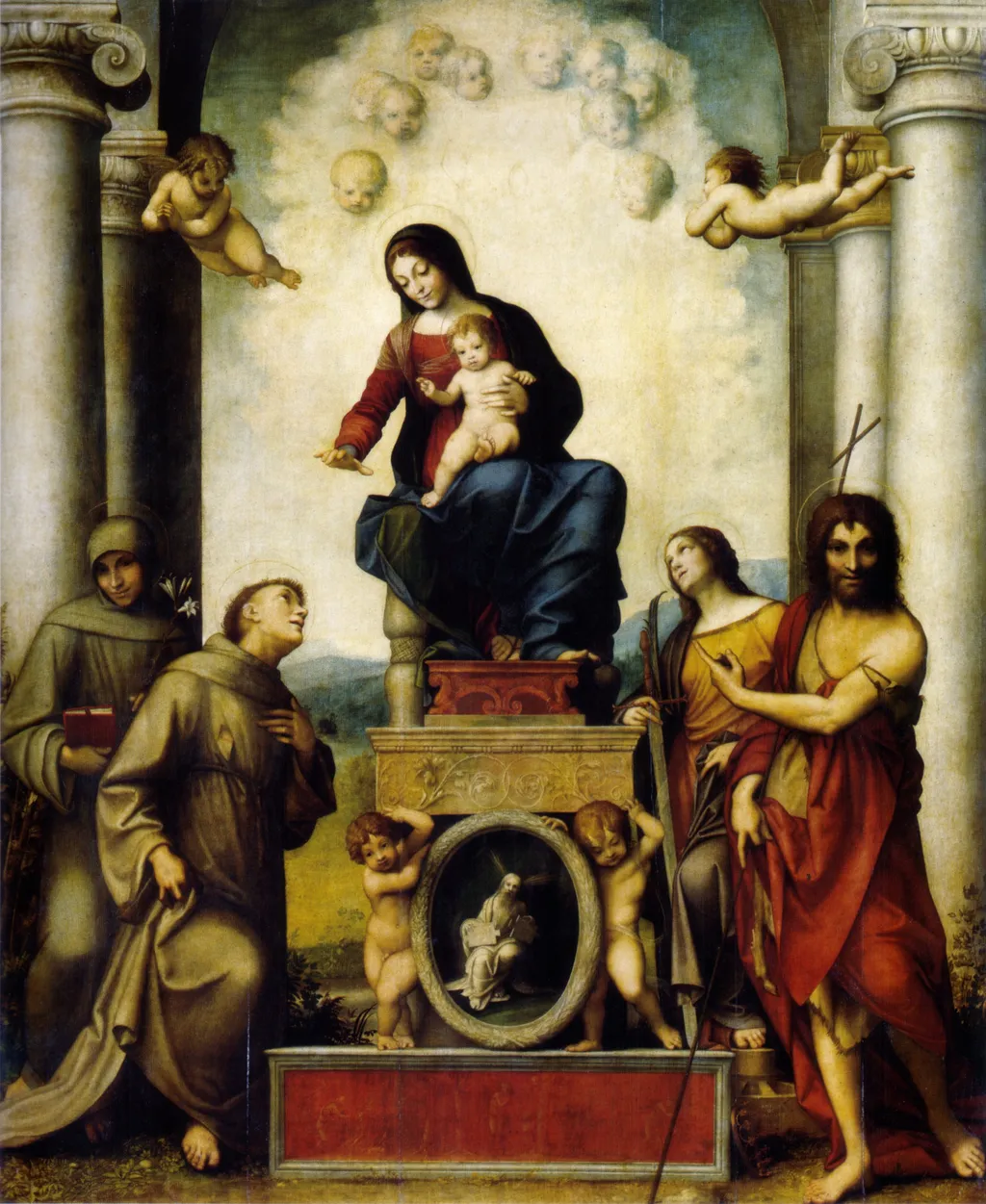
Madonna with St. Francis is an oil painting by the High Renaissance artist Antonio da Correggio. It dates from 1514 and is held in the collection of the Staatliche Kunstsammlungen Dresden. Madonna with St.
About this work
Overview
Francis is an oil on panel painting by the Italian Renaissance master Antonio da Correggio, dated 1514 and measuring 299 by 245 centimeters.
Madonna with St. Francis is an oil on panel painting by the Italian Renaissance master Antonio da Correggio, dated 1514 and measuring 299 by 245 centimeters. Now housed in the Gemäldegalerie Alte Meister in Dresden, this sacra conversazione represents Correggio's first major documented commission and the earliest written evidence of his career. The work occupies a pivotal position in Renaissance art history as one of the first paintings to bridge the transition from the Quattrocento style of the 15th century to the Cinquecento of the 16th century, incorporating proto-baroque tendencies through its soft sfumato technique and atmospheric handling.
Subject & Meaning
The painting depicts a sacra conversazione, a sacred conversation among holy figures gathered around the enthroned Virgin Mary holding the Christ Child. At left, St. Francis of Assisi kneels in adoration, his stigmata visible, supported by St. Anthony of Padua who holds a white lily and a red book. To the right stand St. Catherine of Alexandria, identifiable by her wheel, sword, palm, and crown, and St. John the Baptist in his camel-hair garment with a cross-topped staff. The central theme is the intercession of the Madonna, a devotion promoted by the Franciscans following the definition of the Immaculate Conception dogma in 1473. At the base of the throne, two putti support an oval medallion of Moses with the Tablets of the Law, flanked by a frieze depicting the Creation of Man, the Original Sin, and the Expulsion from Paradise. This layered iconography establishes a typological sequence from the Fall through the Law to Christ's redemptive mission. Two wingless infant angels hover near columns, while additional disembodied cherub heads emerge from clouds above the Virgin, forming a celestial crown. Mary gestures toward St. Francis with her right hand, directing him to kneel and worship the blessing Child.
Technique & Style
Executed in oil on panel, the painting displays the smooth, blended brushwork and gradual tonal transitions characteristic of Correggio's early manner. The palette centers on deep reds, blues, warm browns, and muted greens, with soft atmospheric light diffusing from behind the central figures. The composition is organized according to an isosceles triangle, with the throne base forming the bottom and the Madonna's head the apex, lending the arrangement monumental balance. Fluted classical columns with Ionic capitals frame the scene, surmounted by an arch cut off by the picture edge, evoking an antique triumphal arch set in open landscape. Correggio employs Leonardo da Vinci's sfumato technique, creating imperceptible movement and a circular rhythm around the Virgin. The figures exhibit particular moti dell'animo, movements of the soul, where each saint's psychological state is conveyed through bodily gesture and facial expression. Notable is the suspended hand of the Virgin, which appears to calm the delicate polyphony of gestures, and the nearly imperceptible veil connecting the right wingless putto with St. Catherine's sword, a passage of singular virtuosity. The throne's provisional placement directly on grass rather than within an elaborate church interior has been interpreted as a reference to the Franciscan ideal of poverty.
History & Provenance
The contract for this altarpiece was signed by Correggio on 30 August 1514, with consent from his father and from Brother Girolamo Cattania, guardian of the Franciscan convent in Correggio, Emilia-Romagna, whose church was dedicated to St. Francis. Payment was recorded on 4 April 1515, demonstrating the artist's rapid execution. The painting was likely intended as the high altarpiece for the convent church, which housed the Da Correggio family vault. Shortly before 1638, Francesco I d'Este confiscated the work and transferred it to the Palazzo Ducale in Modena, where it hung among five other Correggios seized from ducal territory. In 1746, the impoverished Francesco III d'Este sold the hundred most celebrated works from the Galleria Estense, including all six Correggios, to Augustus III of Saxony, an episode regarded as one of the most significant depredations of Italian art. The painting has remained in Dresden since, now in the Gemäldegalerie Alte Meister. The artist's signature, Antonivs de Alegri F.[ecit], appears on the wheel of St. Catherine's martyrdom.
Context
This commission emerged when Correggio was approximately twenty-five years old and still under paternal guardianship, marking his entry into documented artistic activity. The work reveals profound engagement with Leonardo da Vinci's theoretical and practical innovations, whether through direct or indirect contact, and achieves results comparable to the most celebrated models of Raphael, such as the Madonna di Foligno and Madonna Sistina, as well as contemporary altarpieces by Andrea del Sarto, notably the Madonna delle Arpie. Scholars have debated which masterworks Correggio could have encountered by this date, with some considering Andrea Mantegna's Madonna della Vittoria of 1495, now in the Louvre, as a possible compositional precedent. The painting's significance extends beyond personal achievement to institutional history, as the Franciscan order's promotion of Marian intercession found visual expression that would influence subsequent altarpiece conventions. Critical discussion continues regarding the extent of Correggio's exposure to central Italian masters, with the painting serving as evidence for evaluating his knowledge of Leonardo, Raphael, and other leading cinquecento artists.
Legacy
Madonna with St. Francis established Correggio's reputation and set the trajectory for his subsequent development, demonstrating his capacity to synthesize regional Emilian traditions with broader Italian Renaissance innovations. The painting's proto-baroque qualities, particularly its atmospheric softness, dynamic figure arrangement, and emotional immediacy, anticipated developments that would flourish more fully in the following century. Its confiscation and removal to Modena in the 1630s, followed by its transfer to Dresden in 1746, reflect the broader patterns of artistic displacement during the early modern period, when works became instruments of dynastic prestige and diplomatic exchange. The 1746 sale to Saxony represents a watershed in the dispersal of Italian Renaissance masterpieces to northern European collections, contributing to the formation of the Gemäldegalerie Alte Meister as one of Europe's foremost painting collections. The work remains a touchstone for understanding the evolution of the sacra conversazione format and the transition from High Renaissance equilibrium toward more emotionally resonant and spatially dynamic religious imagery.
Own this work as a print
Artist & collection

Artist
Antonio Allegri da Correggio, usually known as just Correggio, was an Italian Renaissance painter who was the foremost painter of the Parma school of the High Renaissance, who was responsible for some of the most…

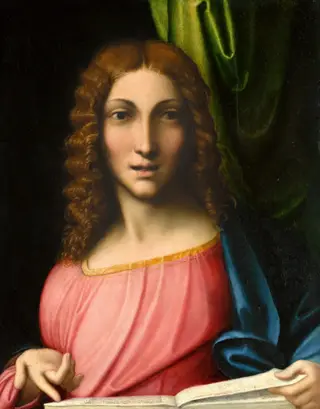
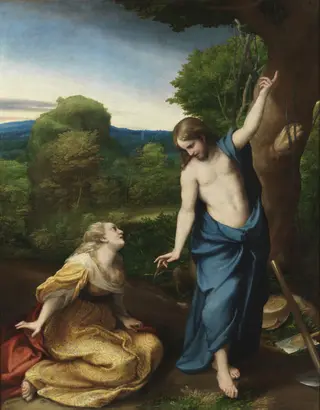
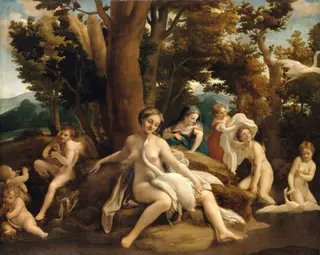
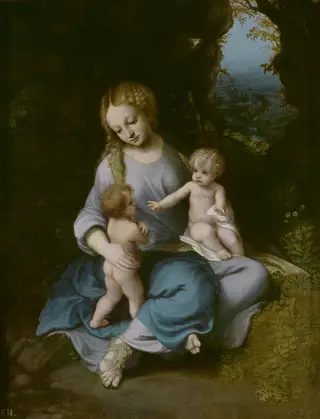
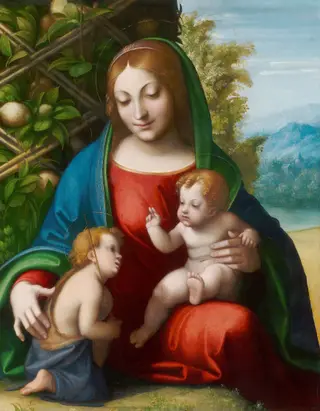
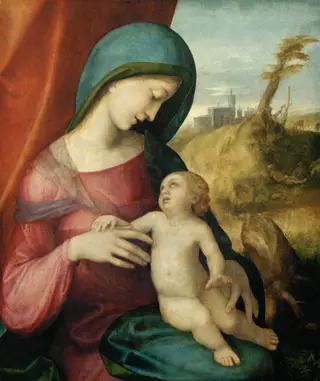
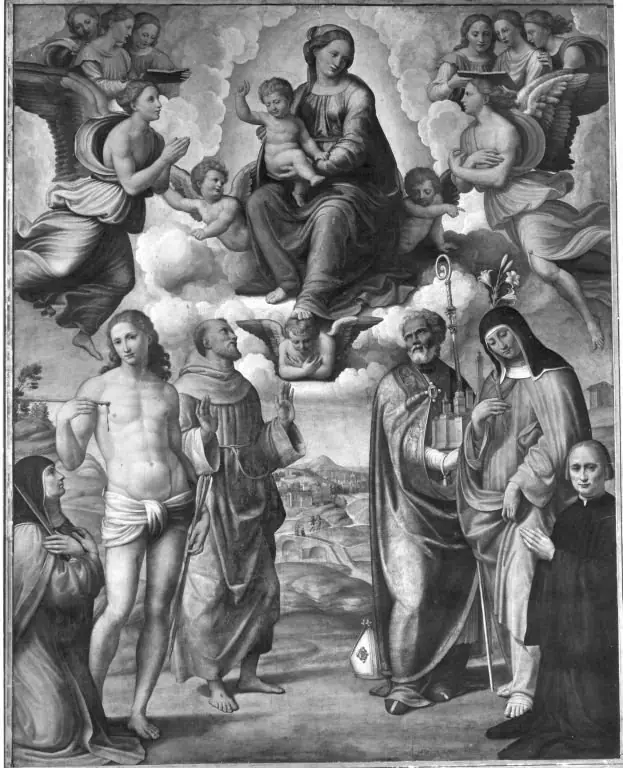 Maria mit Kind und den hll. Katharina von Siena, Sebastian, Franziskus, Petronius, Klara und Stifter
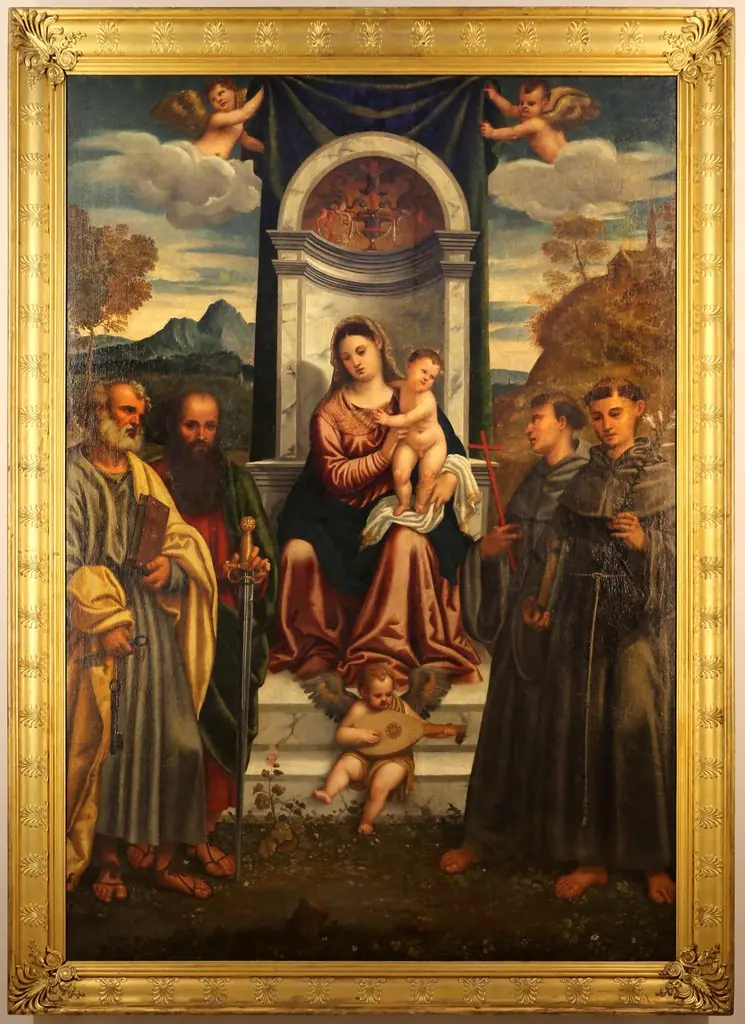 Virgin and Child enthroned with SS. Peter, Paul, Francis and Anthony of Padua
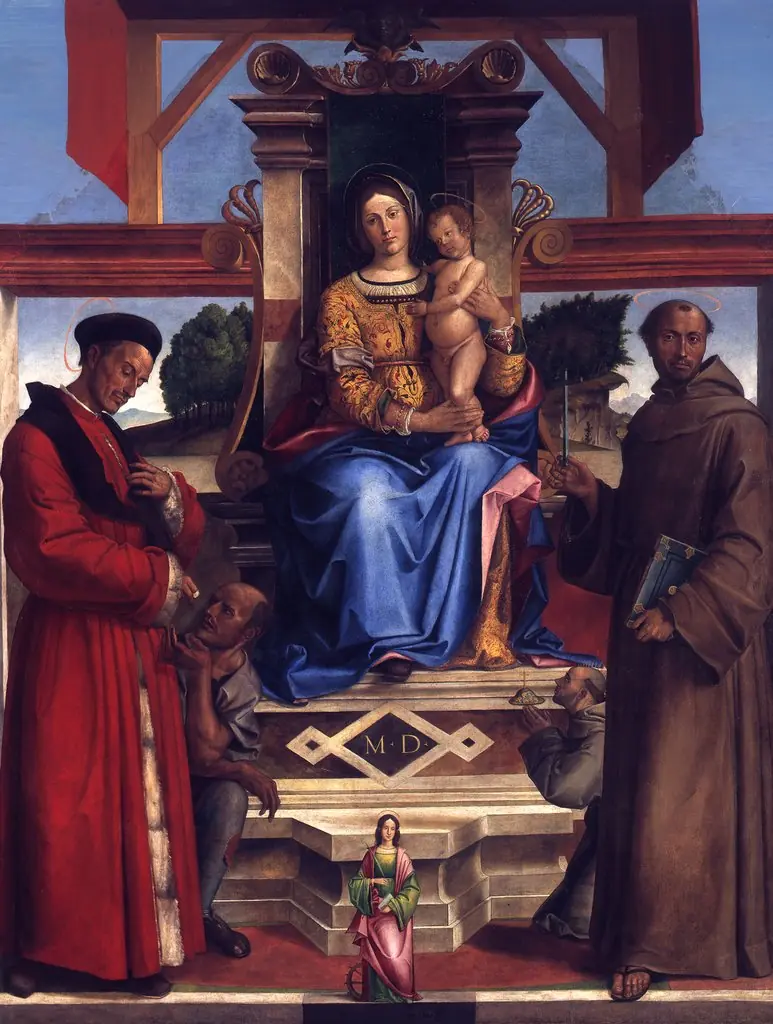 The Virgin and Child Enthroned and St. Homobonus, Francis of Assisi, Catherine of Alexandria and the Donor Bernadino da Feltre (Death 1494)
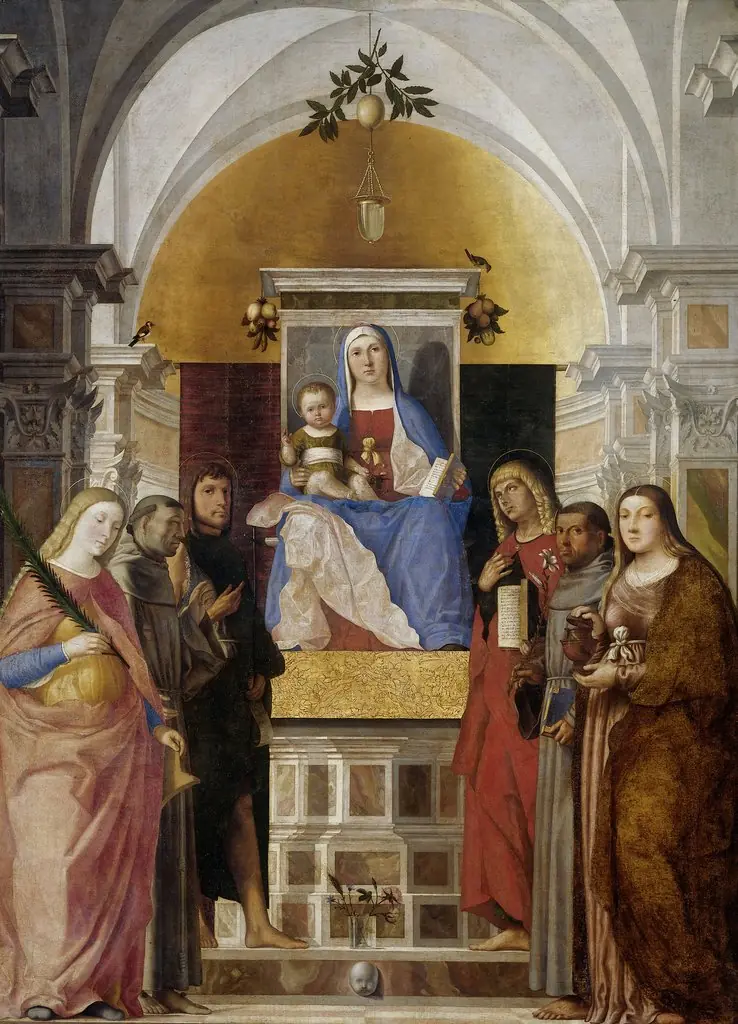 Virgin and Child with Saints Catherine, Francis, John the Baptist, Mary Magdalene, Antony of Padua, John the Evangelist
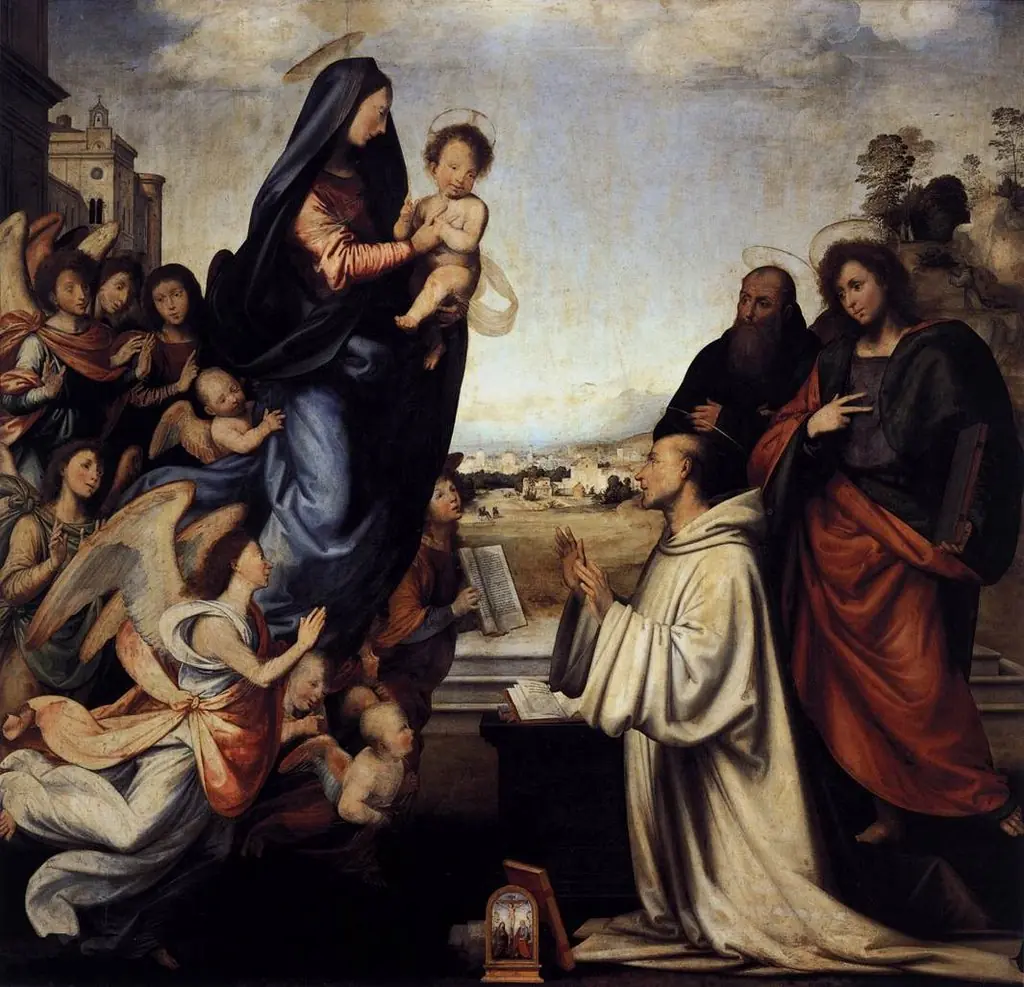 The Vision of Saint Bernard
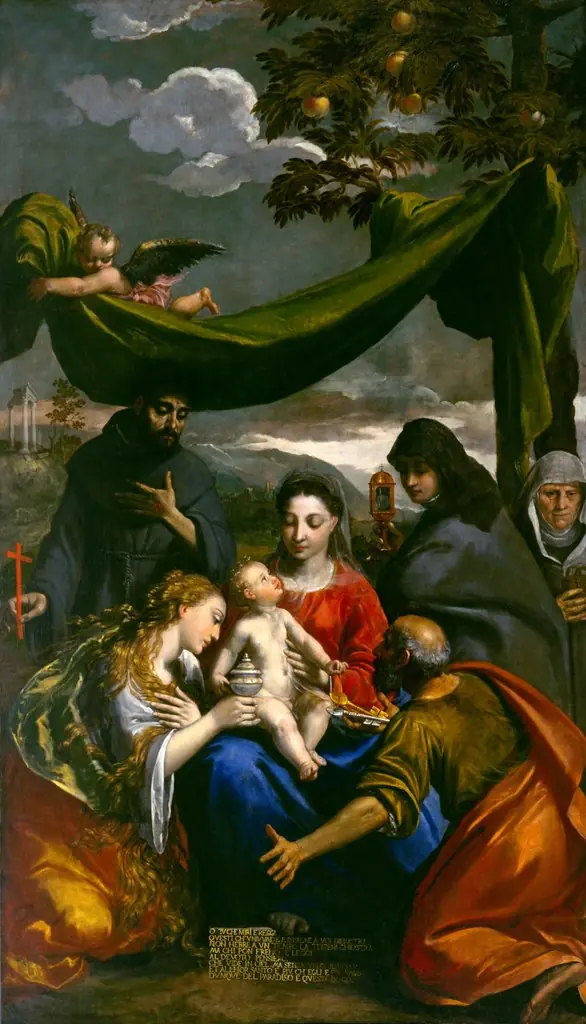 Virgin and Child with Saints Mary Magdalene, Peter, Clare, Francis, and an Abbess
 The Virgin and Child on a Throne of Angels
 Enthroned Madonna with Child and Saints
 Mystic Marriage of St Catherine