Artwork
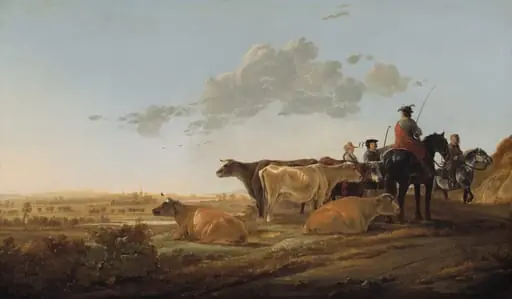
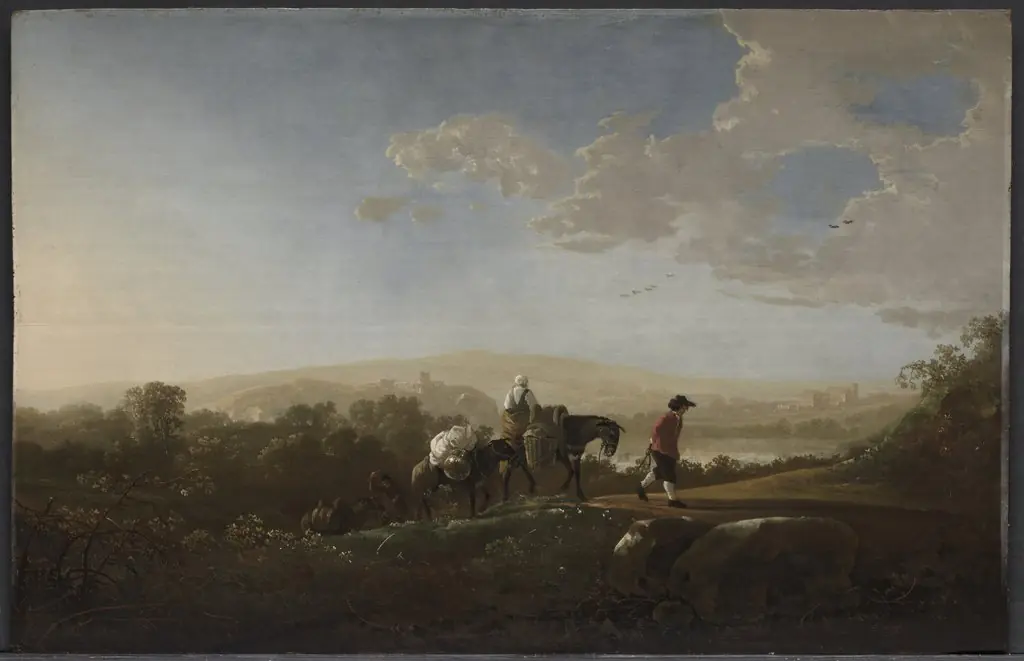
Herdsmen Tending Cattle
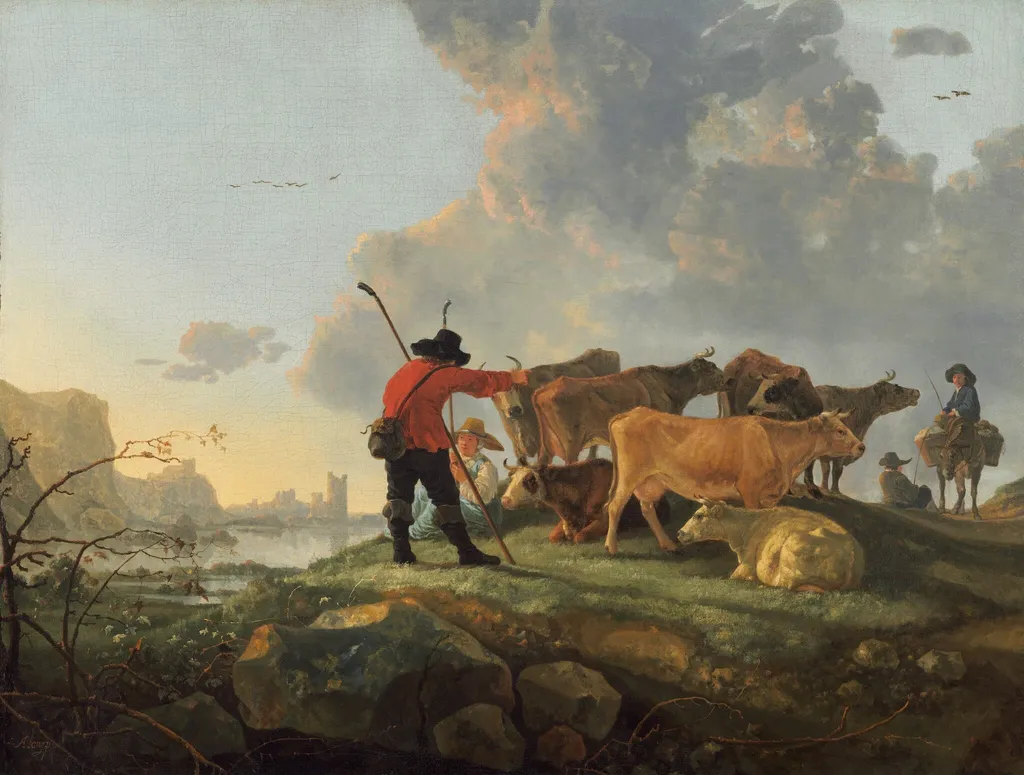
Herdsmen Tending Cattle is an oil painting by the Baroque artist Aelbert Cuyp. It dates from 1658 and is held in the collection of the National Gallery of Art.
- Inscription
- Inscribed:lower left: A.cuijp
About this work
Technique & Style
The physical condition and specific restoration history are not detailed in the available records, though the painting remains part of the Andrew W.
Created in 1658, Herdsmen Tending Cattle is executed in oil paint on a canvas support. The work measures 66 cm in height and 87.6 cm in width, adhering to the traditional landscape format favored by the Dutch Golden Age. As a landscape painting, the piece demonstrates the artist's handling of pastoral scenes, utilizing the medium to render the atmospheric qualities typical of the genre.
The physical condition and specific restoration history are not detailed in the available records, though the painting remains part of the Andrew W. Mellon collection at the National Gallery of Art.
History & Provenance
Herdsmen Tending Cattle was created in 1658 by Aelbert Cuyp as an oil on canvas landscape. Its early ownership is uncertain, but documentation points to a possible passage through the dealer Gerard Vandergucht around 1750, followed by a 1757 sale in which it was purchased by "Jennens" and later acquired by Henry Penton. The work remained in the Penton family until a 1800 auction, entered the possession of Sir Henry Paulet St. John-Mildmay, stayed within that lineage, was handled by M. Knoedler & Co. in 1902, sold to Andrew W. Mellon in 1905, and was bequeathed to the National Gallery of Art in 1937.
Overview
Aelbert Cuyp's 1658 oil on canvas, Herdsmen Tending Cattle, exemplifies the Dutch Golden Age landscape tradition. This painting showcases a tranquil pastoral setting, characteristic of Cuyp's celebrated works. He was a leading figure among Dutch painters, particularly known for his ability to capture luminous atmospheric effects in his depictions of the countryside, often featuring animals and figures bathed in soft, natural light.
Subject & Meaning
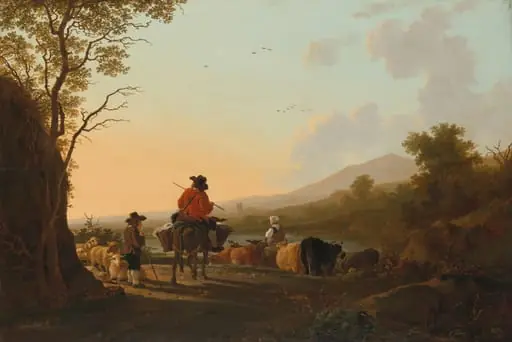
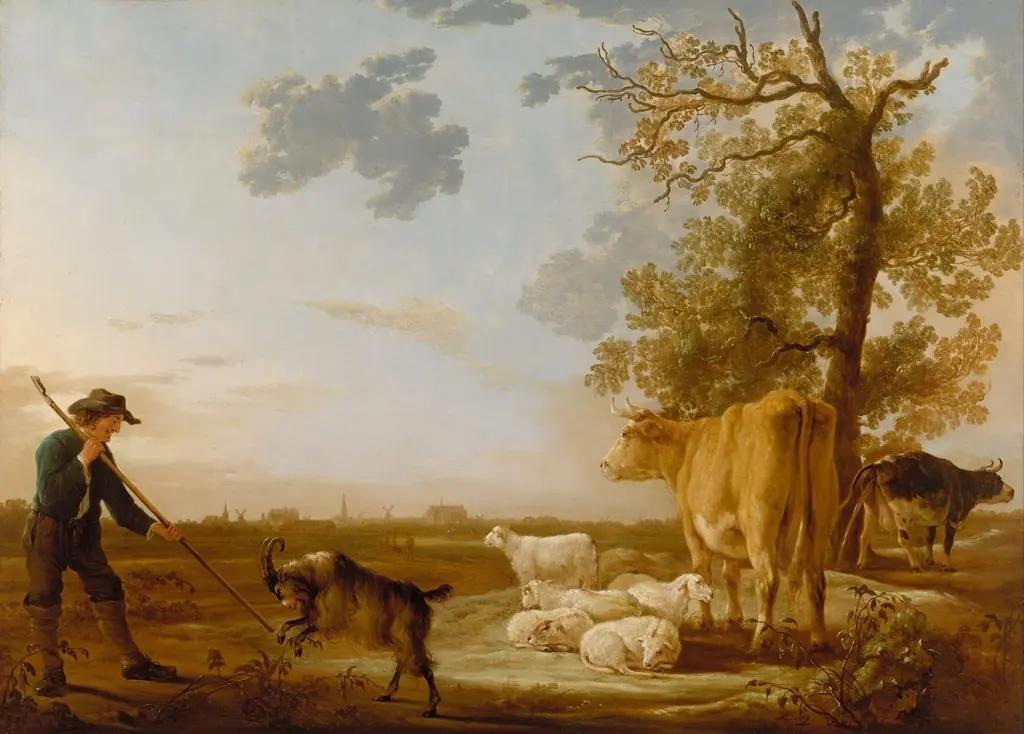
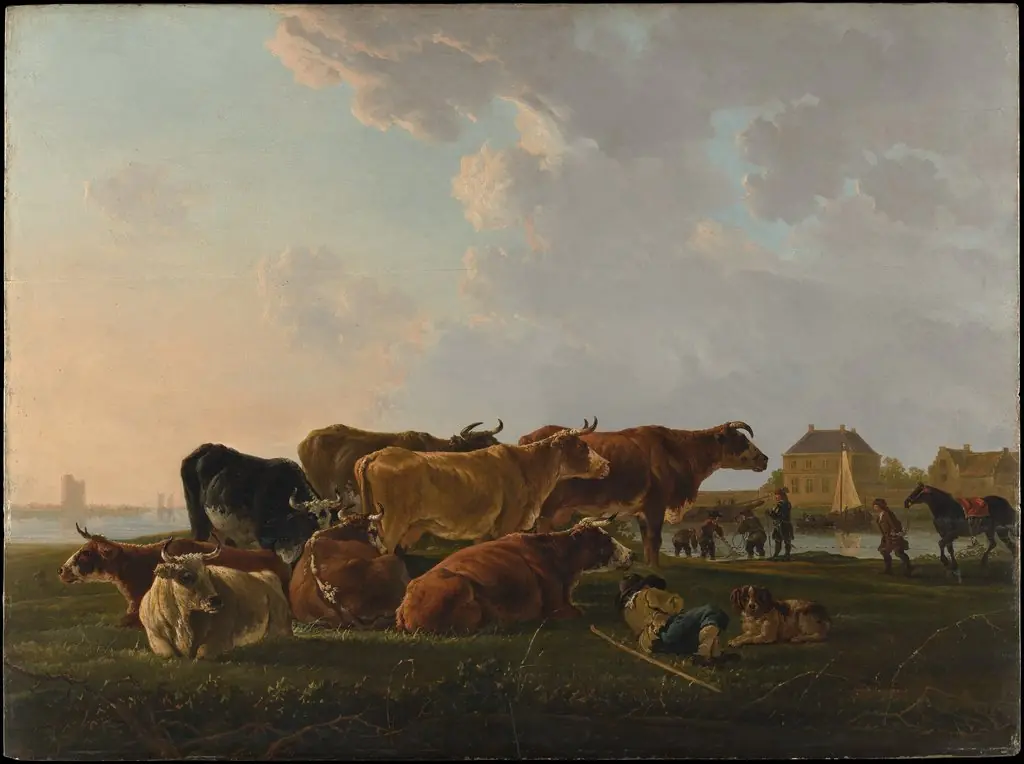
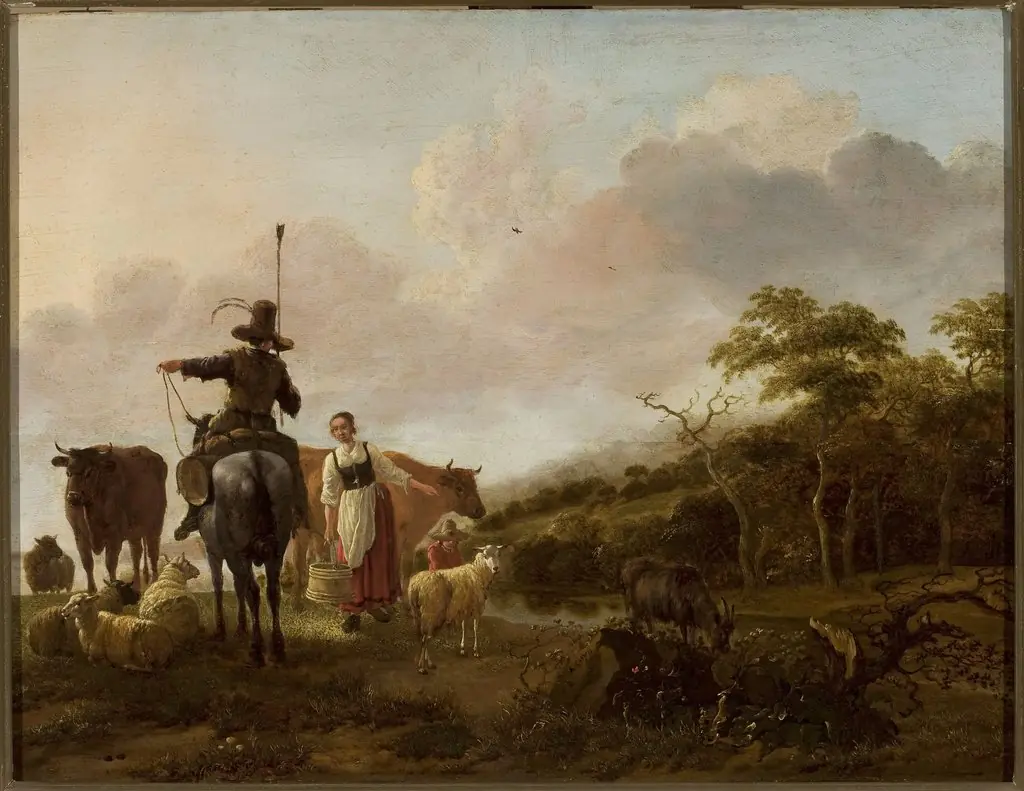
The composition features a group of cattle grazing on a verdant, uneven hillside, overseen by a herdsman in a red coat. Additional figures are subtly placed within the background, contributing to the scene's sense of activity. The overall impression is one of serene rural life, a common theme in Dutch art that idealized the harmony between humans, animals, and the natural environment.
Context
Aelbert Cuyp was a prominent artist within the Dutch Golden Age, a period marked by significant artistic innovation and a flourishing art market. He received his initial training from his father, Jacob Gerritszoon Cuyp, who was also a painter. The artist became particularly renowned for his distinctive landscapes, which often depicted the Dutch countryside and riverside scenes with a unique emphasis on atmospheric light, setting him apart from many contemporaries.
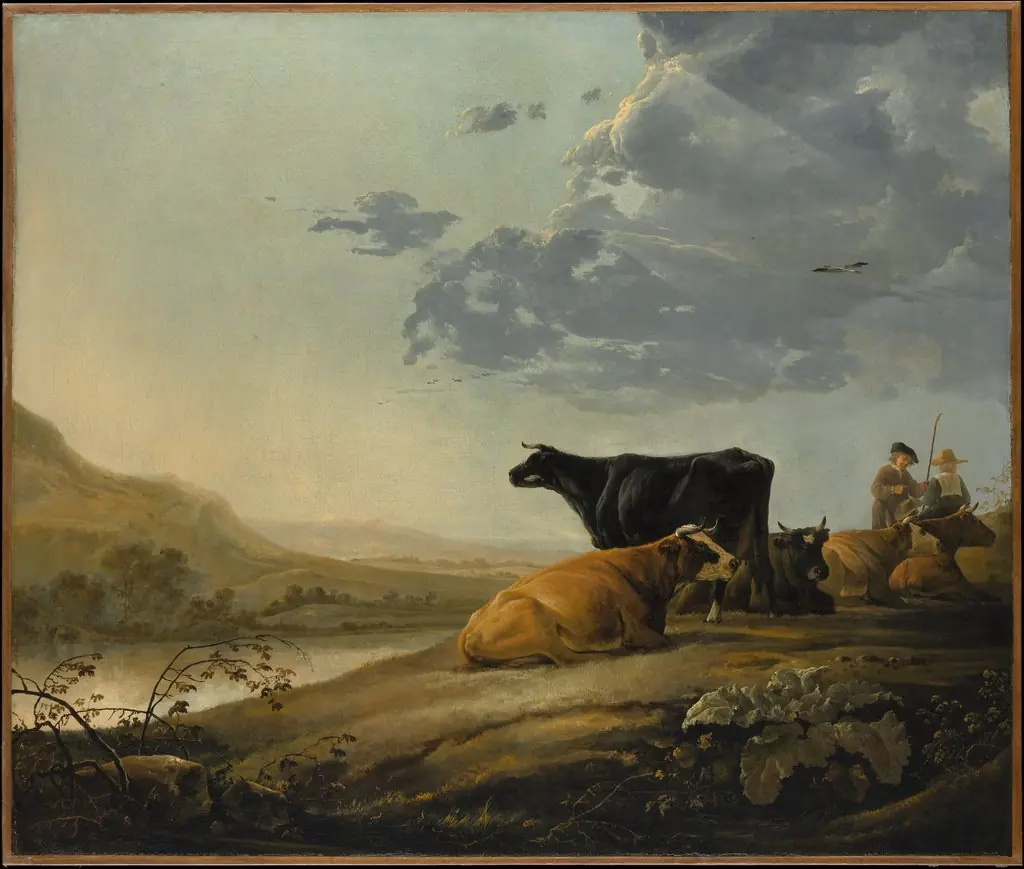
Own this work as a print
Artist & collection

Artist
Aelbert Jacobszoon Cuyp or Cuijp (Dutch pronunciation: ; 20 October 1620 – 15 November 1691) was one of the leading Dutch Golden Age painters, producing mainly landscapes.

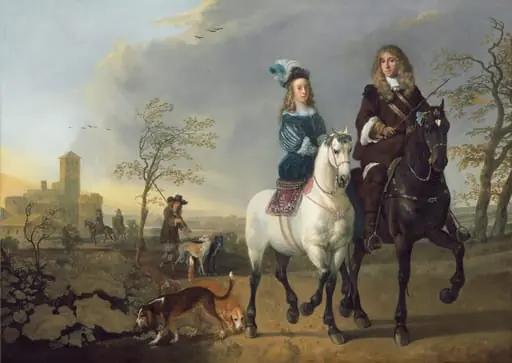 Lady and Gentleman on Horseback
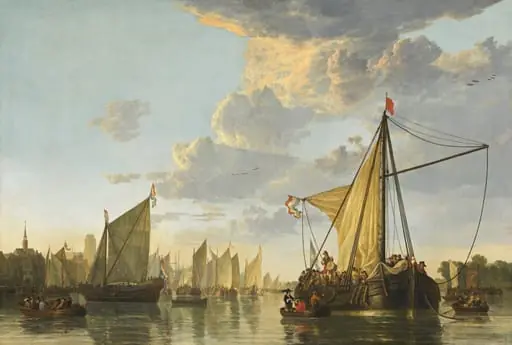 The Maas at Dordrecht
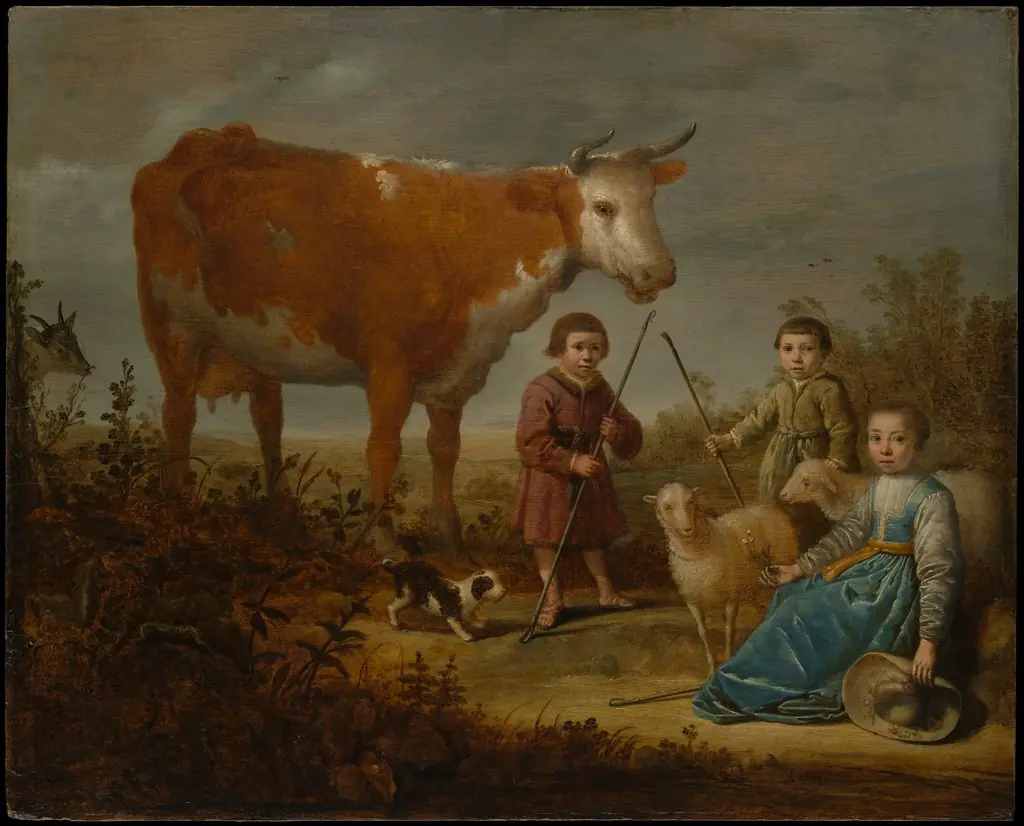 Children and a Cow
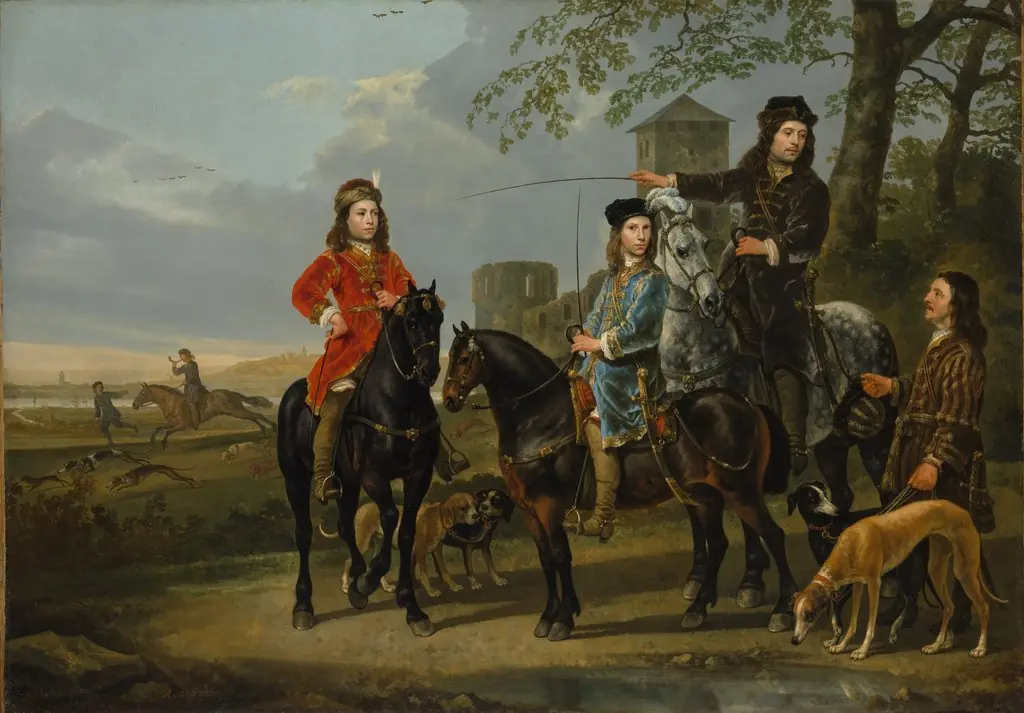 Equestrian Portrait of Cornelis (1639–1680) and Michiel Pompe van Meerdervoort (1638–1653) with Their Tutor and Coachman ("Starting for the Hunt")
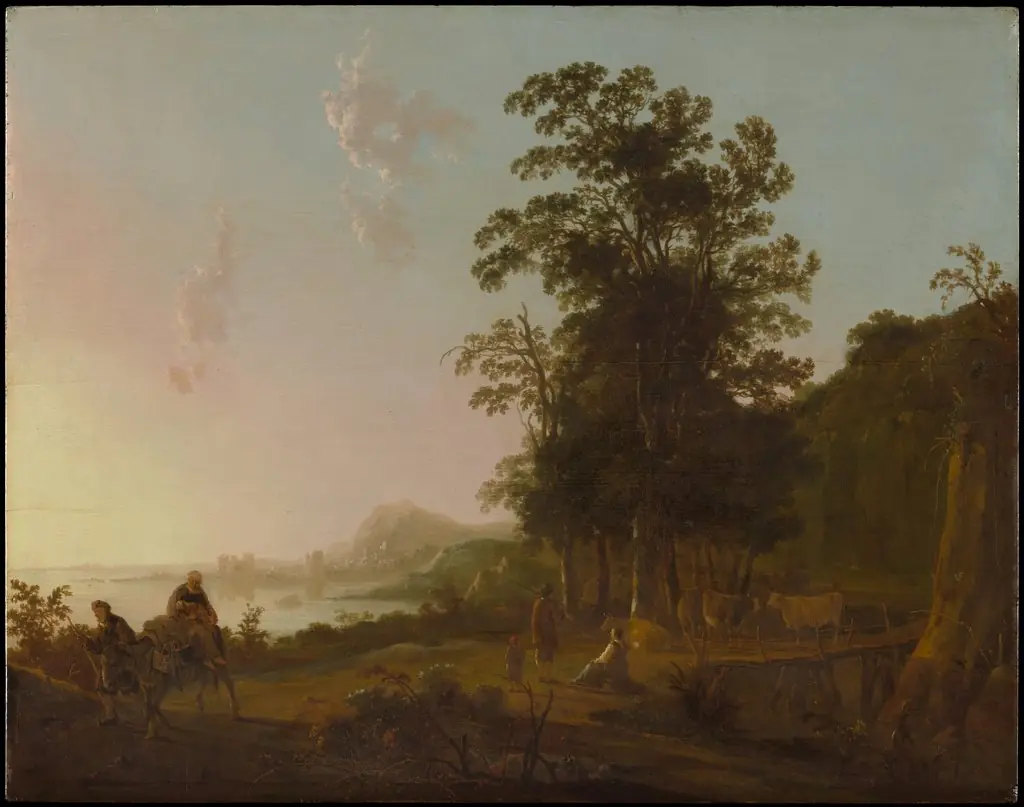 Landscape with the Flight into Egypt
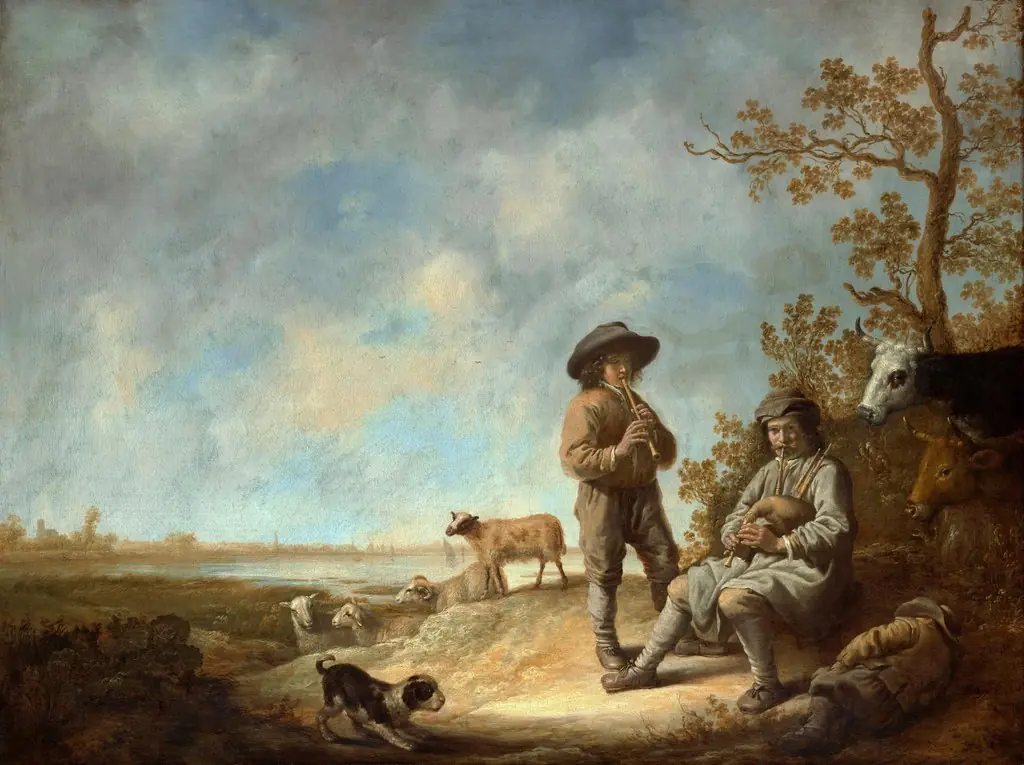 Piping Shepherds
 Travellers in Hilly Countryside
 A Chief Merchant of the VOC with his Wife and an Enslaved Servant