Artwork
Horsemen and Herdsmen with Cattle
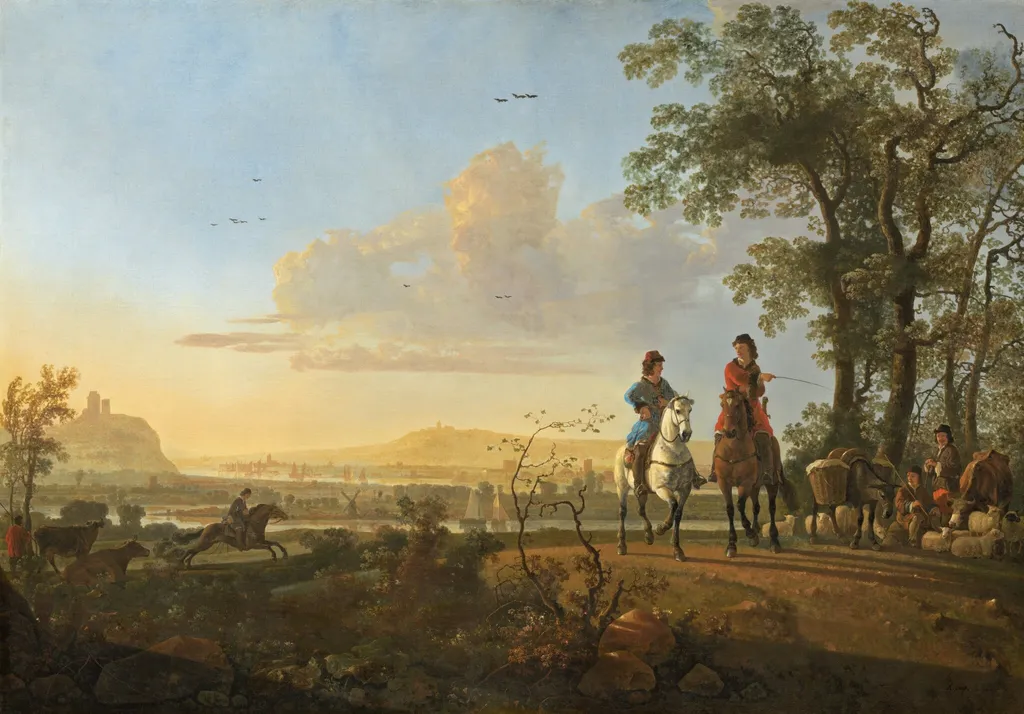
Horsemen and Herdsmen with Cattle is an oil painting by the Baroque artist Aelbert Cuyp. It dates from 1658 and is held in the collection of the National Gallery of Art.
- Inscription
- Inscribed:lower right: A.cuijp.
About this work
Subject & Meaning
The specific arrangement of figures and animals against the illuminated backdrop emphasizes the tranquility and prosperity of the Dutch rural environment.
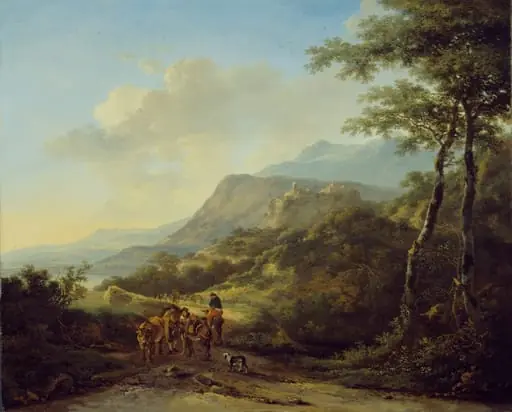
Painted in 1658, this landscape depicts a spacious countryside scene set during the early morning hours under pleasant sunlight. The foreground features two gentlemen on horseback positioned on the right side, accompanied by two resting countrymen attending to their cattle.
The composition integrates aristocratic riders with rural laborers and livestock, illustrating a harmonious interaction between different social classes within a pastoral setting. The specific arrangement of figures and animals against the illuminated backdrop emphasizes the tranquility and prosperity of the Dutch rural environment.
Technique & Style
The work is an oil painting executed on canvas in 1658. It measures roughly 120 cm in height and 171.5 cm in width, as recorded in the National Gallery of Art catalog. The surface is a standard canvas support typical of Dutch 17th-century landscapes, and the paint layer consists of oil pigments applied in a smooth, atmospheric manner that emphasizes luminous morning light.
The composition shows an expansive rural vista with two mounted figures and cattle rendered in soft tonal harmony, reflecting Cuyp's characteristic pastoral style. The painting has been held in the museum's collection since its acquisition in 1942.
History & Provenance
Aelbert Cuyp created the oil-on-canvas painting Horsemen and Herdsmen with Cattle in 1658. The recorded history begins with Johan van der Linden van Slingeland of Dordrecht, who owned it by 1752 before it appeared in his estate sale in August 1785. It subsequently passed through the collections of Fouquet and Albert Dubois in Paris, then William Smith of Norwich.
After a private sale to Edward Gray, the painting was acquired by 1834 by Alexander Baring, later the 1st Baron Ashburton, at his London residence, Bath House. It remained in the Baring family, passing to the 5th Baron Ashburton at The Grange in Hampshire, until the entire collection was sold to a London syndicate in 1907. Peter A.B. Widener purchased the work in 1909, and it entered the National Gallery of Art in Washington, D.C., in 1942 as a gift from his son, Joseph E. Widener. The sources do not record an accession number or exhibition history for the work.
Overview
Aelbert Cuyp's 1658 oil on canvas, Horsemen and Herdsmen with Cattle, exemplifies the Dutch Golden Age landscape tradition. This painting captures a serene pastoral scene featuring figures on horseback and livestock within an expansive Dutch vista. Cuyp, a prominent Dordrecht artist, was renowned for his ability to imbue his landscapes with a distinctive, warm luminosity, often depicting the soft glow of morning or evening light. The work reflects his characteristic approach to rendering natural settings.
Context
Aelbert Cuyp was a leading figure among Dutch Golden Age painters, particularly celebrated for his contributions to landscape art. Based in Dordrecht, he frequently depicted the local riverside scenery and pastoral settings, often characterized by their unique atmospheric qualities. His work, including this piece, reflects the broader artistic trends of 17th-century Holland, where landscape painting gained significant popularity and sophistication as a distinct genre.
Own this work as a print
Artist & collection

Artist
Aelbert Jacobszoon Cuyp or Cuijp (Dutch pronunciation: ; 20 October 1620 – 15 November 1691) was one of the leading Dutch Golden Age painters, producing mainly landscapes.

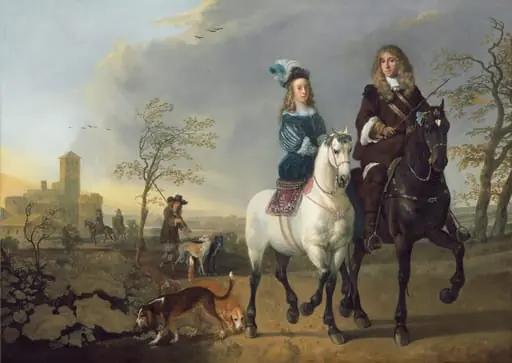 Lady and Gentleman on Horseback
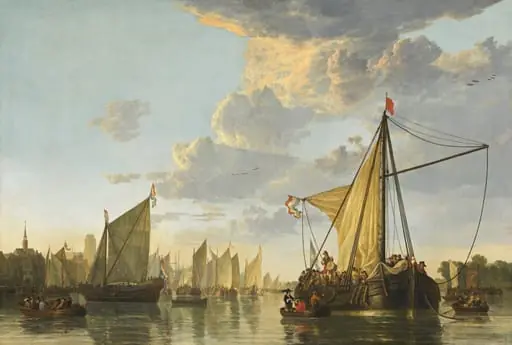 The Maas at Dordrecht
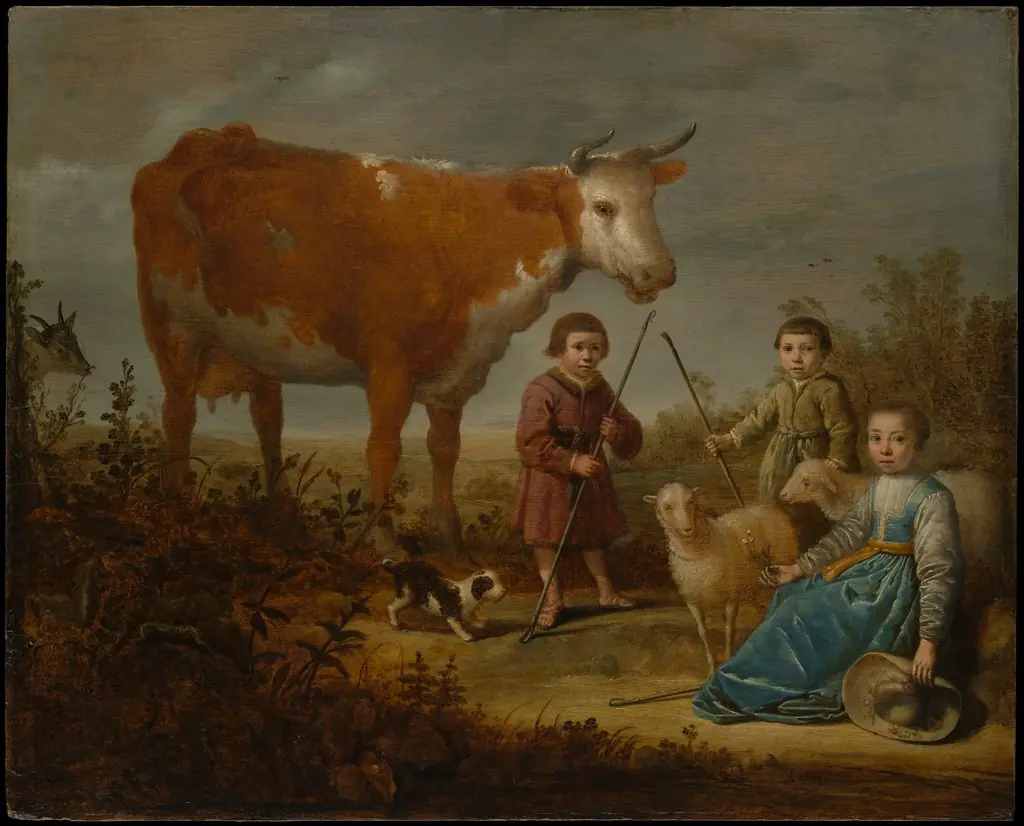 Children and a Cow
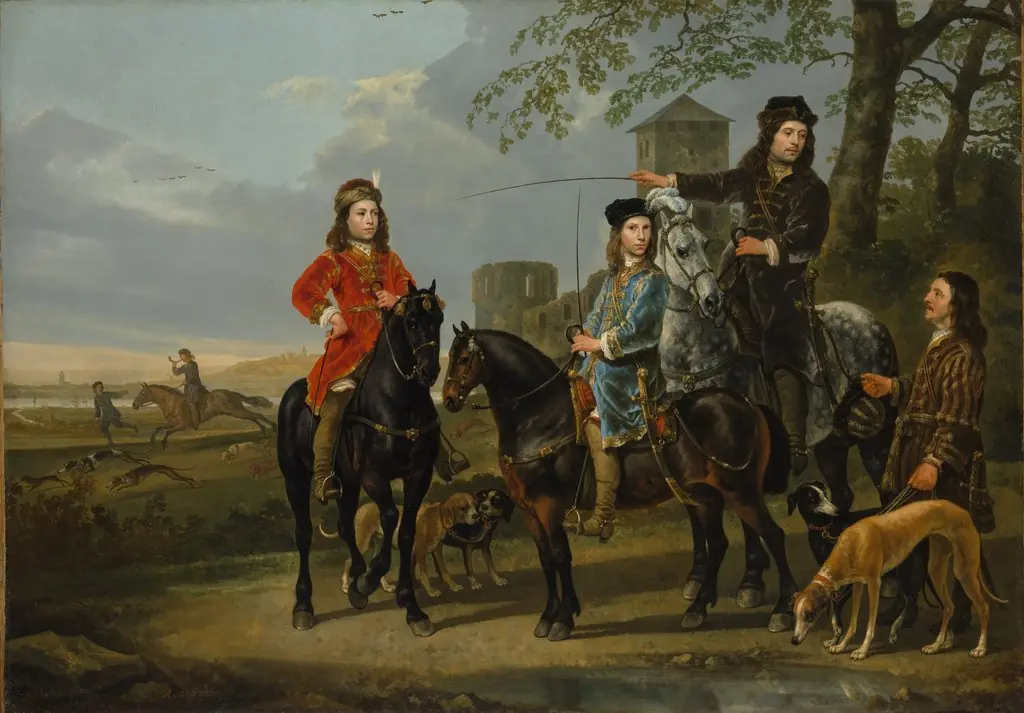 Equestrian Portrait of Cornelis (1639–1680) and Michiel Pompe van Meerdervoort (1638–1653) with Their Tutor and Coachman ("Starting for the Hunt")
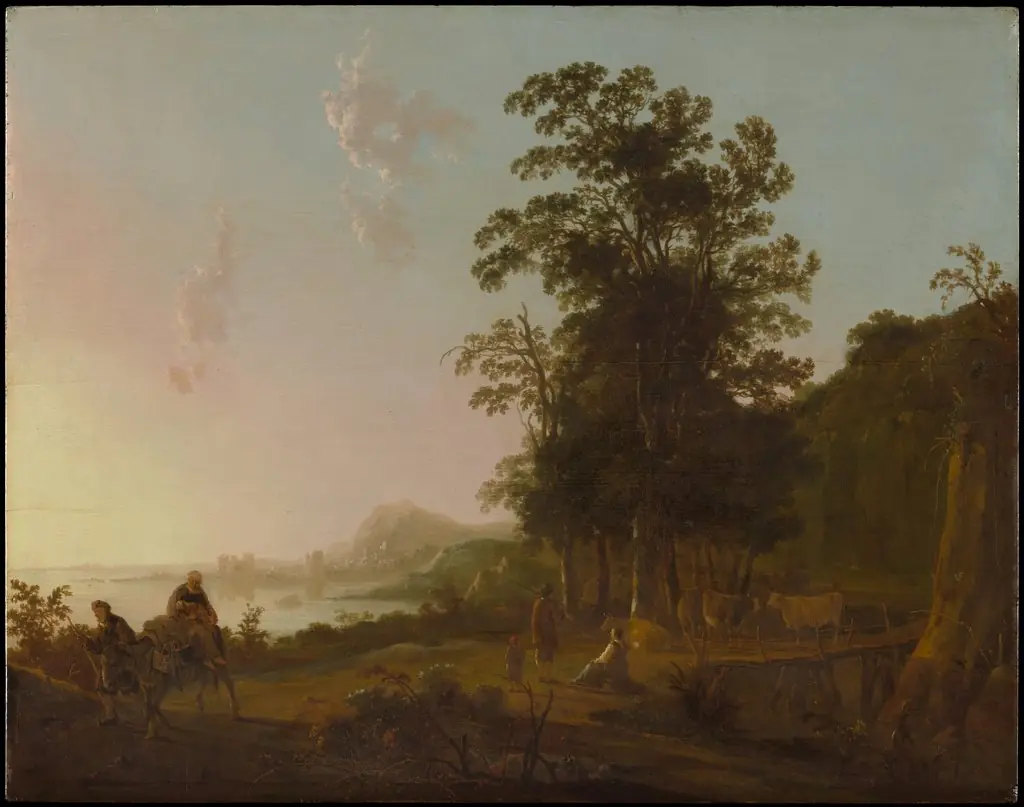 Landscape with the Flight into Egypt
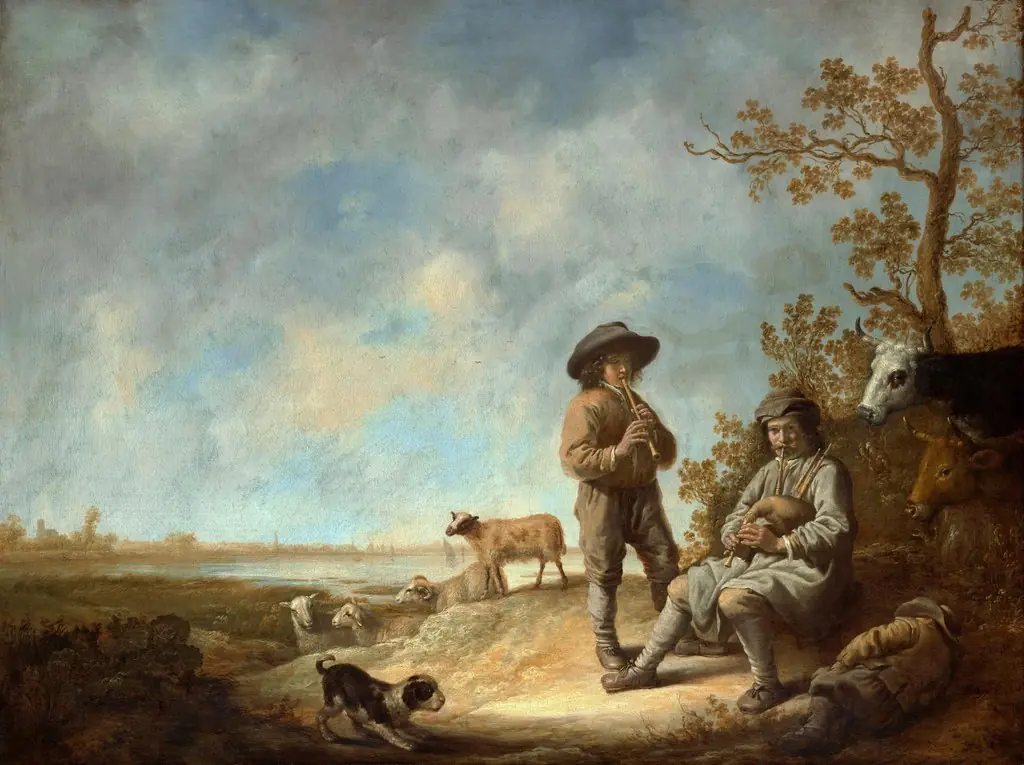 Piping Shepherds
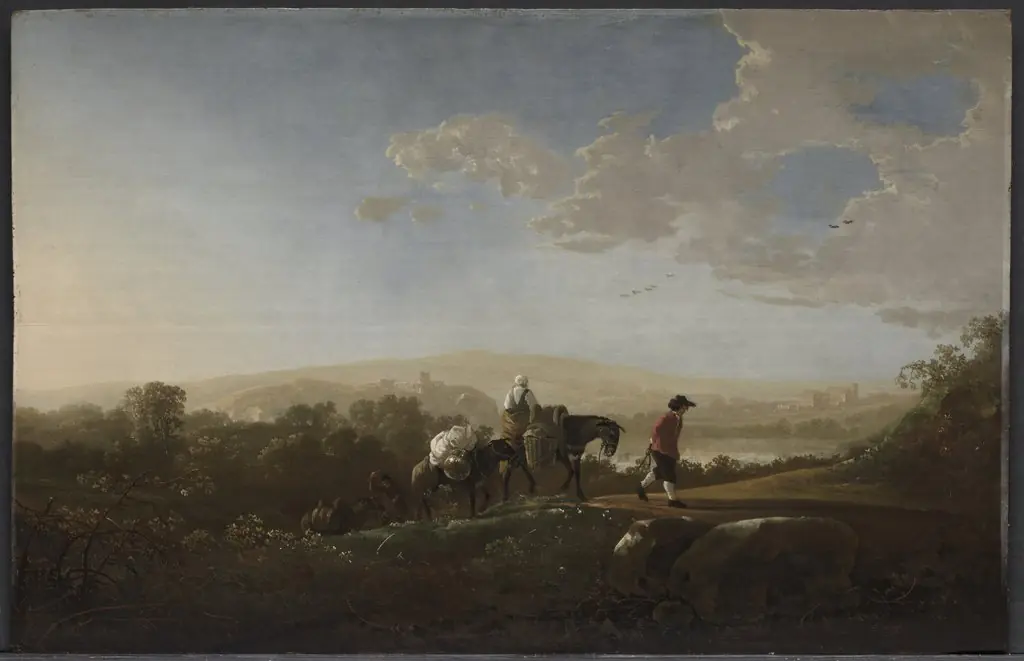 Travellers in Hilly Countryside
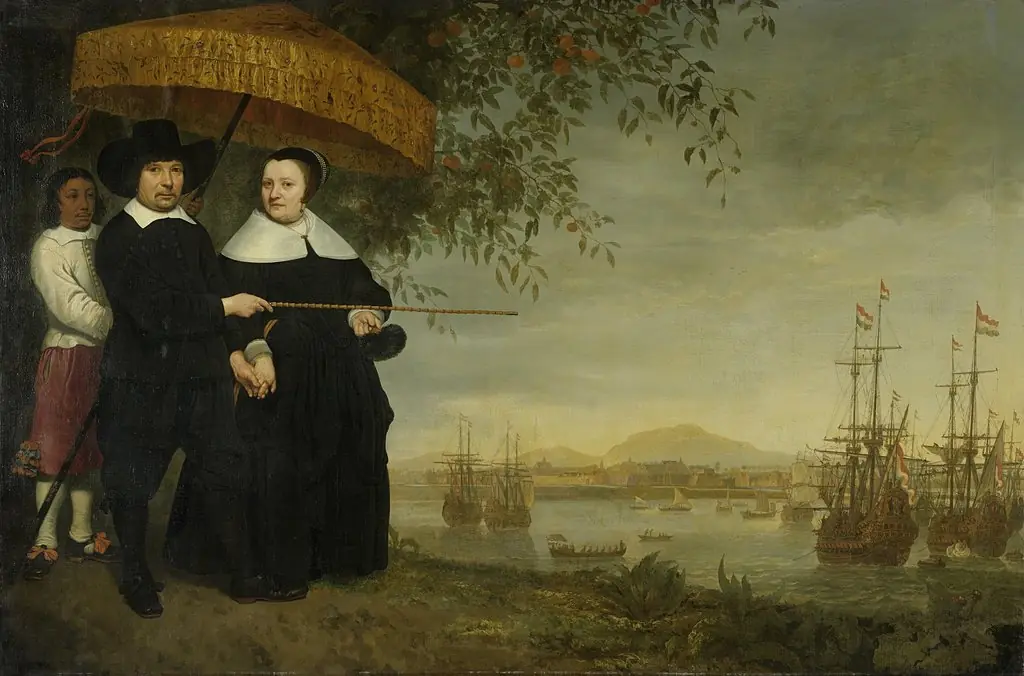 A Chief Merchant of the VOC with his Wife and an Enslaved Servant