Artwork
Saint Sebastian Bound to the Tree
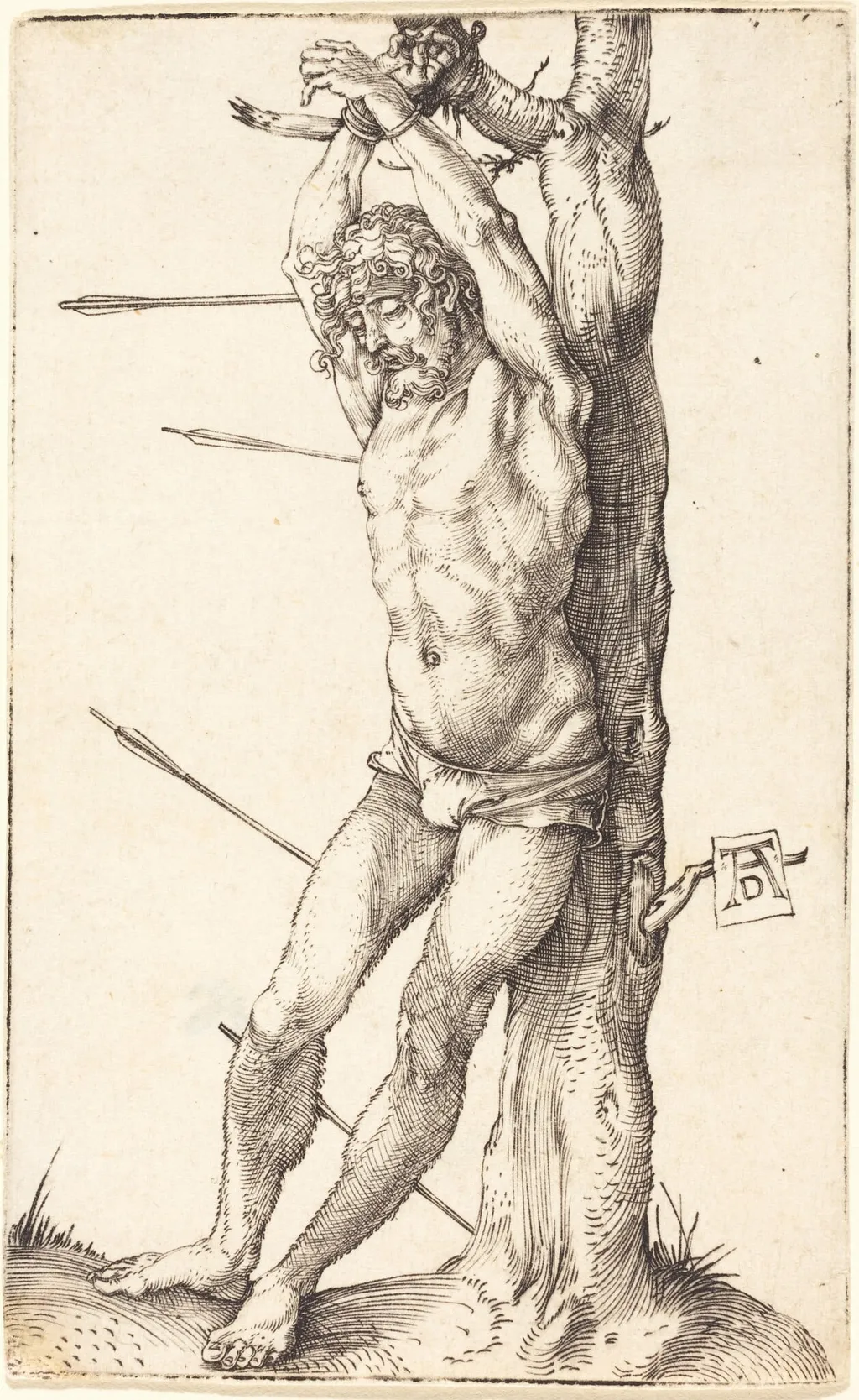
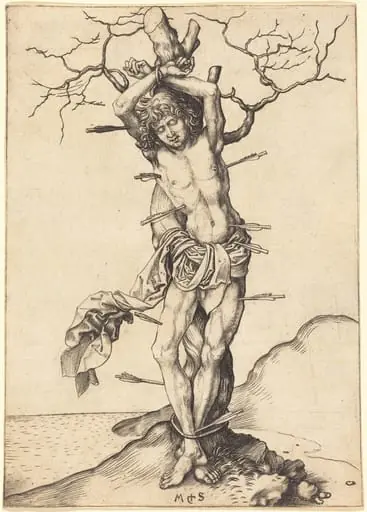
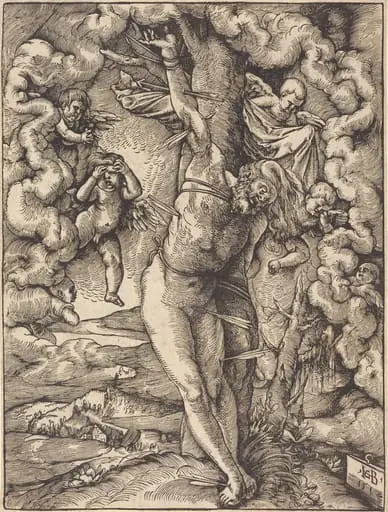
Saint Sebastian Bound to the Tree is an ink print by the Northern Renaissance artist Albrecht Dürer. It dates from 1500 and is held in the collection of the Metropolitan Museum of Art.
- Inscription
- Inscribed:in plate, lower right, on sheet on tree branch: AD [artist's monogram]; verso, lower left, in graphite by a later hand: B55; verso, lower center, in graphite by a later hand: C.17541; verso, lower left, in graphite by a later hand: 30 [upside down]
- Markings
- Marked:none
About this work
Subject & Meaning
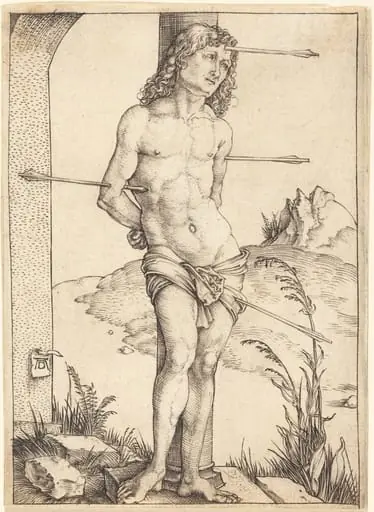
This 1501 engraving depicts the martyrdom of Saint Sebastian, presenting a radical iconographic shift from the artist's earlier 1499 version of the saint.
This 1501 engraving depicts the martyrdom of Saint Sebastian, presenting a radical iconographic shift from the artist's earlier 1499 version of the saint. Whereas the previous iteration showed a slender, beardless figure seemingly indifferent to his suffering, this work portrays a bearded, corpulent, and almost stocky saint whose body sags under the weight of his agony. The imagery of a suffering figure whose legs struggle to support his torso aligns with German artistic traditions established by masters such as E. S. and Martin Schongauer.
Scholars have suggested that the composition may derive from an antique model, potentially adapting a earlier design intended to represent Marsyas being beaten by Apollo.
Technique & Style
The work is an engraving created on paper using the burin technique, characteristic of the German Renaissance printmaking tradition. Dürer rendered Saint Sebastian bound to a tree with a robust, bearded figure whose body bears the strain of suffering, contrasting with his earlier 1499 version in which the saint appears detached and indifferent. This shift reflects a more naturalistic and emotionally charged approach to martyrdom, aligning with the expressive modeling seen in the work of Martin Schongauer and the Master E. S. The composition measures 11.6 cm in height and 7.2 cm in width, and was produced in Nuremberg circa 1501.
It is part of the Rosenwald Collection and now held in the Prints and Drawings department of the National Gallery of Art, Washington, D.C.
History & Provenance
The print Saint Sebastian Bound to the Tree was created by Albrecht Dürer in 1501 as an engraving on laid paper. It entered the collection of Lessing J. Rosenwald in 1928 and was subsequently gifted to the National Gallery of Art in 1943. The work is part of the Rosenwald Collection and is housed in the National Gallery of Art in Washington, D.C. Its dimensions measure 11.6 cm in height and 7.2 cm in width, and it was produced in Nuremberg.
The image depicts Saint Sebastian in a markedly different pose from Dürer’s earlier 1499 representation, showing a mature, bearded figure enduring physical suffering, a shift that reflects evolving iconographic concerns in the German Renaissance.
The engraving Saint Sebastian Bound to the Tree is held by the National Gallery of Art in Washington, D.C., specifically within the Prints department of the Rosenwald Collection. The work entered the museum's holdings through the bequest of Lessing J. Rosenwald, who purchased the piece in Jenkintown, Pennsylvania, in 1928 and subsequently gifted it to the gallery in 1943. While other institutions such as the Metropolitan Museum of Art and the Albertina are noted as holding related works or collections of Dürer's prints, the specific provenance for this 1501 impression traces directly to the Rosenwald acquisition and donation. No specific exhibition history is detailed in the provided sources.
Context
Executed in 1501, this engraving marks a radical iconographic shift from Albrecht Dürer's earlier 1499 depiction of Saint Sebastian. The artist replaces the previous gracile, beardless figure with a corpulent, bearded man whose body visibly sags under the weight of his suffering, contrasting with the indifference shown in the prior work. Scholars suggest the composition may derive from an antique model of Marsyas beaten by Apollo, while the specific portrayal of a suffering saint struggling to stand aligns with German traditions established by Master E. S. and Martin Schongauer.
This work situates Dürer within the German Renaissance, demonstrating his engagement with both classical antiquity and local printmaking heritage.
Overview
Albrecht Dürer's engraving Saint Sebastian Bound to the Tree, created in 1500, depicts the Christian martyr Sebastian tied to a tree trunk, pierced by arrows. The composition centers on the saint's anguished yet resigned figure, his gaze cast downward in a moment of spiritual contemplation rather than physical suffering. Dürer employs his masterful engraving technique, utilizing dense, varied hatching and cross-hatching to render the textures of the tree bark, the saint's anatomy, and the surrounding foliage with remarkable precision.
This work exemplifies the German Renaissance's fusion of Northern European attention to detail with Italianate ideals of proportion and classical form. The year 1500 marks a period of significant maturity in Dürer's career, following his second journey to Italy, where he absorbed Renaissance principles that influenced his approach to human anatomy and spatial depth. The piece stands as a testament to Dürer's technical virtuosity in printmaking, transforming the medium into a vehicle for complex religious expression and artistic innovation.
Own this work as a print
Artist & collection
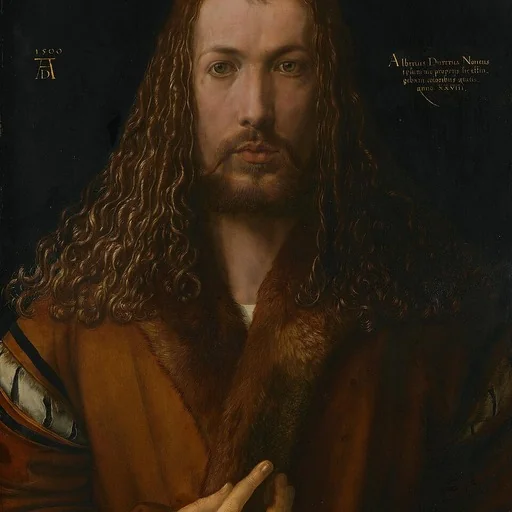
Artist
Albrecht Dürer spent his life in Nuremberg, a busy German city where artists traded prints like currency.

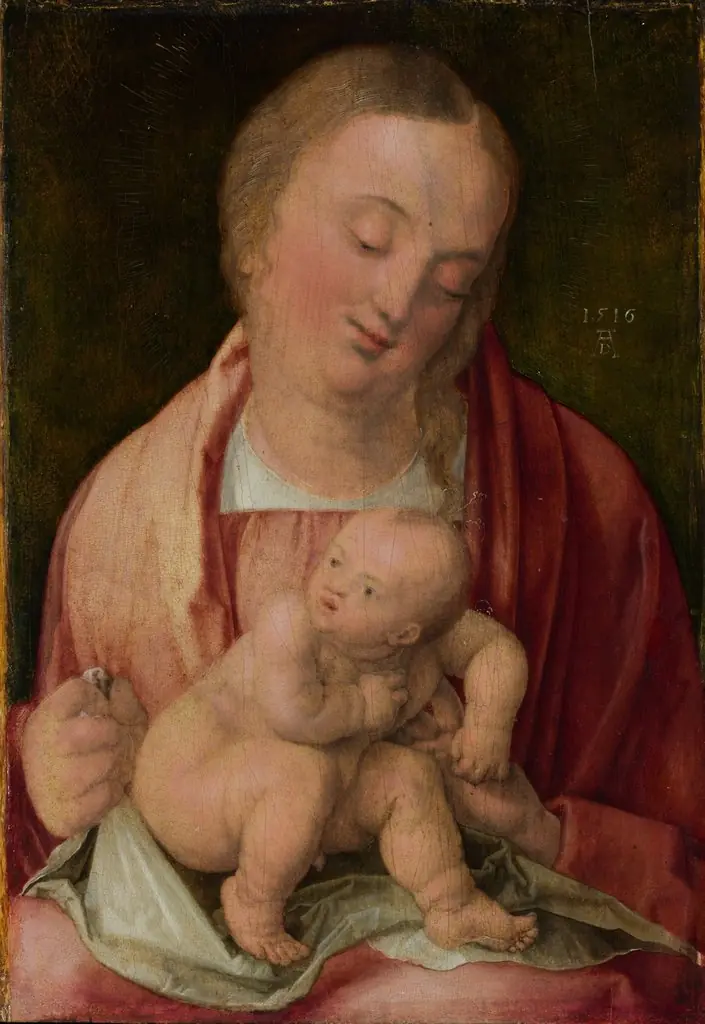
![Madonna and Child [obverse], by Albrecht Dürer](https://artifactworldgallery.com/img/albrecht-durer--madonna-and-child-obverse--d7b8ebf05d22ebe5-w320.webp)
![Lot and His Daughters [reverse], by Albrecht Dürer](https://artifactworldgallery.com/img/albrecht-durer--lot-and-his-daughters-reverse--b4ebf9b282faa17a-w320.webp)