Artwork
Bocca Baciata
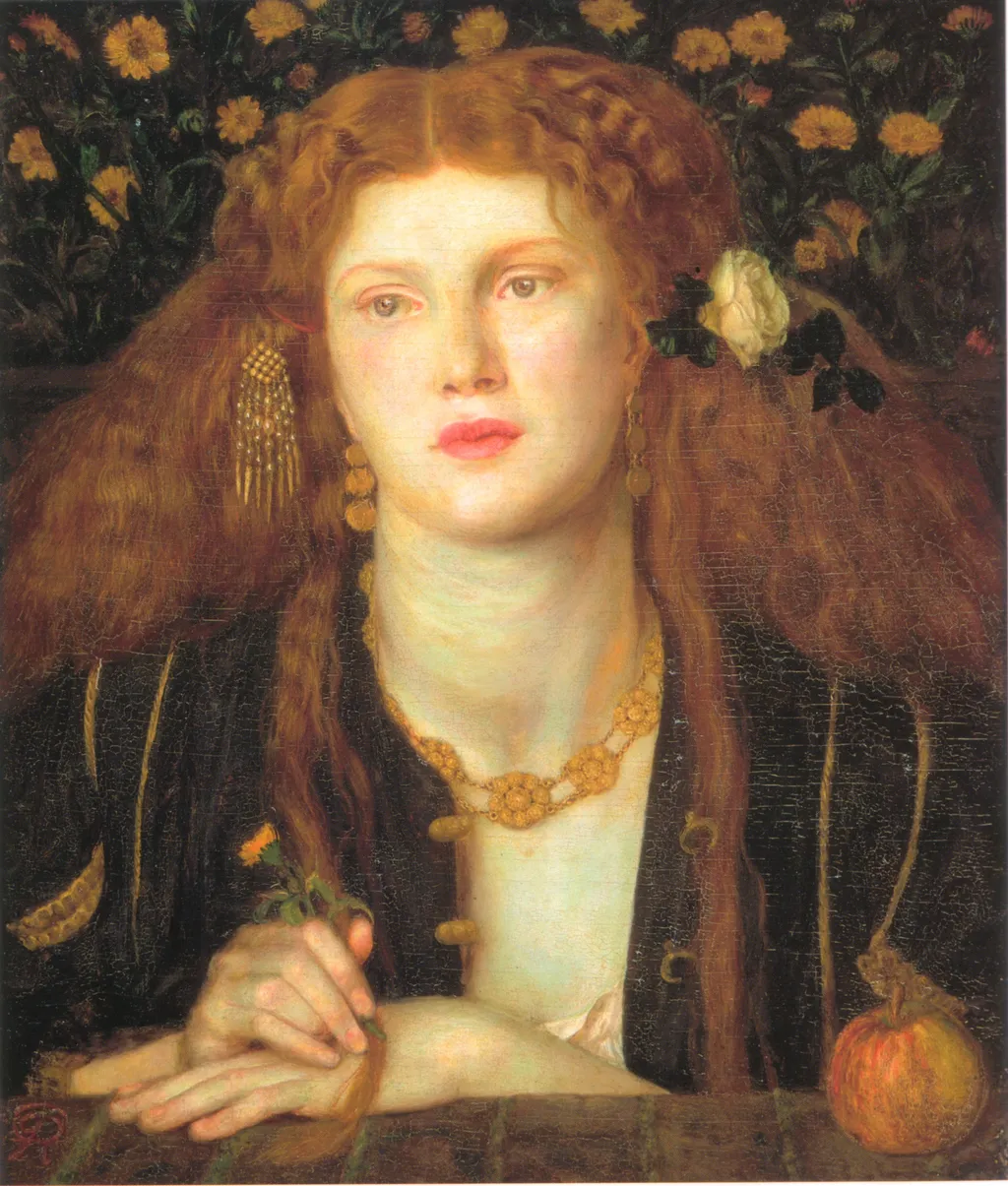
Bocca Baciata is an oil painting by the Pre-Raphaelite artist Dante Gabriel Rossetti. It dates from 1859 and is held in the collection of the Museum of Fine Arts Boston.
About this work
It was his first picture of a single female figure and introduced the style that would become his signature.
Bocca Baciata is an oil painting made in 1859 by the English artist Dante Gabriel Rossetti. The work is in the collection of the Museum of Fine Arts Boston.
It marks a turning point in Rossetti’s career. It was his first picture of a single female figure and introduced the style that would become his signature. The model was Fanny Cornforth, the main inspiration for his sensuous figures.
You might also like to explore the Museum of Fine Arts Boston today.
Subject & Meaning
Bocca Baciata is a half-length portrait of a single female figure, modeled by Fanny Cornforth, who served as the principal inspiration for Rossetti's sensuous women. The title, Italian for "mouth that has been kissed," alludes to the subject's sexual experience and is drawn from a proverb inscribed on the back of the panel: "Bocca baciata non perde ventura, anzi rinnova come fa la luna", the mouth that has been kissed does not lose its good fortune but renews itself like the moon.
Rossetti likely encountered the phrase in Boccaccio's Decameron, where it concludes the tale of Alatiel, a Saracen princess who, after numerous lovers, presents herself to the King of Algarve as a virgin bride. The work is therefore read as a celebration of sensual, experienced femininity rather than innocence.
The composition reinforces this through its attributes: the sitter's loose red-gold hair, a rose held at her breast, an apple, a necklace, and an earring, motifs that fuse erotic allure with traditional symbols of love and temptation.
Technique & Style
Bocca Baciata is an oil painting on a mahogany panel measuring 32.1 cm in height and 27.0 cm in width.
Rossetti handled the medium to emphasize luminous flesh tones and rich color, deliberately avoiding the stippled handling that he criticized in Pre-Raphaelite practice. He built up the surface with careful glazing to achieve a Venetian-inspired luminosity, a stylistic shift that marked a turning point in his oeuvre. The composition is a bust-length portrait of Fanny Cornforth, rendered with heightened sensuality and a restrained yet palpable physical presence.
History & Provenance
Bocca Baciata was painted by Dante Gabriel Rossetti in 1859, executed in oil on panel. In a letter to William Bell Scott, Rossetti described the work as a "small half-length oil" through which he was attempting to render flesh more fully and move away from the stippled handling common to Pre-Raphaelite painting. The title and an accompanying Italian proverb were inscribed on the reverse of the panel, drawn from Boccaccio's Decameron.
The painting has since entered the collection of the Museum of Fine Arts, Boston, in the United States, where it is presently held. According to the French-language source, the work entered the Boston museum through a donation made in 1980.
The painting is held by the Museum of Fine Arts, Boston. It entered the collection through a gift in 1980.
It has been exhibited nationally as part of the museum’s holdings; specific loan venues are not documented in the cited sources.
Context
Painted in 1859, Bocca Baciata marks a definitive turning point in Dante Gabriel Rossetti's career, serving as his first solo female portrait and establishing the signature style for his subsequent work. The piece reflects a deliberate shift away from the stippled flesh technique common to Pre-Raphaelite painting, as Rossetti sought to achieve fuller, more masterful color execution inspired by the Venetian school, specifically Titian. The work's thematic depth is anchored in the Italian proverb inscribed on its reverse, derived from Boccaccio's Decameron, which alludes to the sexual experience of the subject, Fanny Cornforth.
Art historical analysis suggests the composition may also draw influence from John Everett Millais's earlier portrait of Sophie Gray.
Legacy
Bocca Baciata (1859) is recognized as a pivotal work in Dante Gabriel Rossetti's oeuvre, marking his first standalone portrait of a single female figure and establishing a sensual style that defined his later output. The painting's influence stems from its innovative approach to flesh rendering, as Rossetti noted in correspondence with William Bell Scott, where he sought to overcome technical shortcomings in depicting skin and to emulate the coloristic mastery of Old Masters. Its legacy is further reinforced by scholarly attention to its thematic depth, particularly the Italian proverb on the reverse referencing Alatiel from Boccaccio's Decameron, which frames the work within literary and artistic traditions.
The work's significance is underscored by its presence in major institutional collections, including the Museum of Fine Arts, Boston, where it has been part of the collection since a 1980 donation.
Overview
Created in 1859, Bocca Baciata is an oil on canvas by the English painter Dante Gabriel Rossetti. The work is held by the Museum of Fine Arts in Boston. It depicts a solitary woman and signals a decisive shift in Rossetti’s artistic direction, introducing a motif that would dominate his later output.
Own this work as a print
Artist & collection
Artist
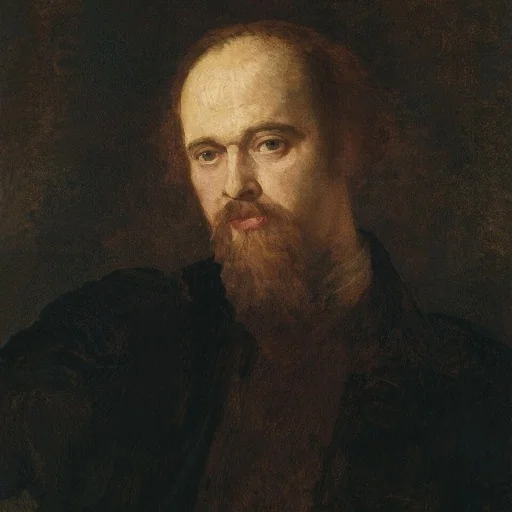
Gabriel Charles Dante Rossetti (12 May 1828 – 9 April 1882), generally known as Dante Gabriel Rossetti ( rə-ZET-ee; Italian: ), was an English poet, illustrator, painter and translator.


 Compared in the Pre-Raphaelites course