Artwork
Lady Lilith
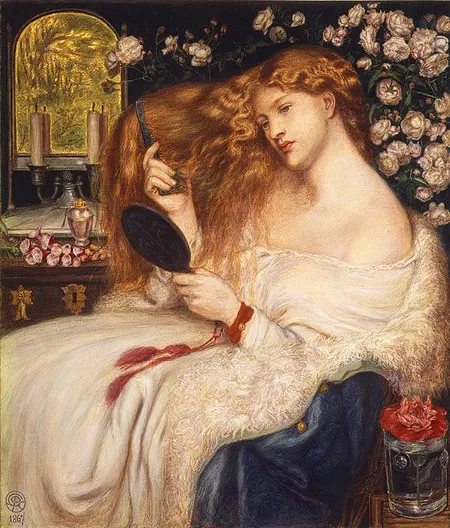
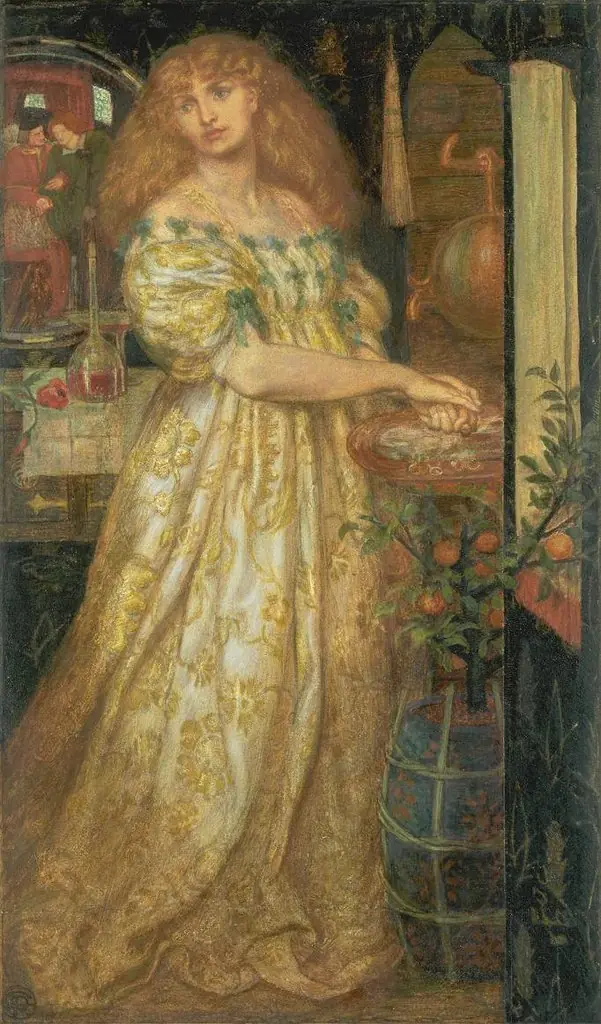
Lady Lilith is an oil painting by the Pre-Raphaelite artist Dante Gabriel Rossetti. It dates from 1866 and is held in the collection of the Metropolitan Museum of Art.
About this work
Subject & Meaning
Lady Lilith depicts the mythological figure Lilith, identified in ancient Judaic tradition as Adam's first wife who embodies seduction and danger.
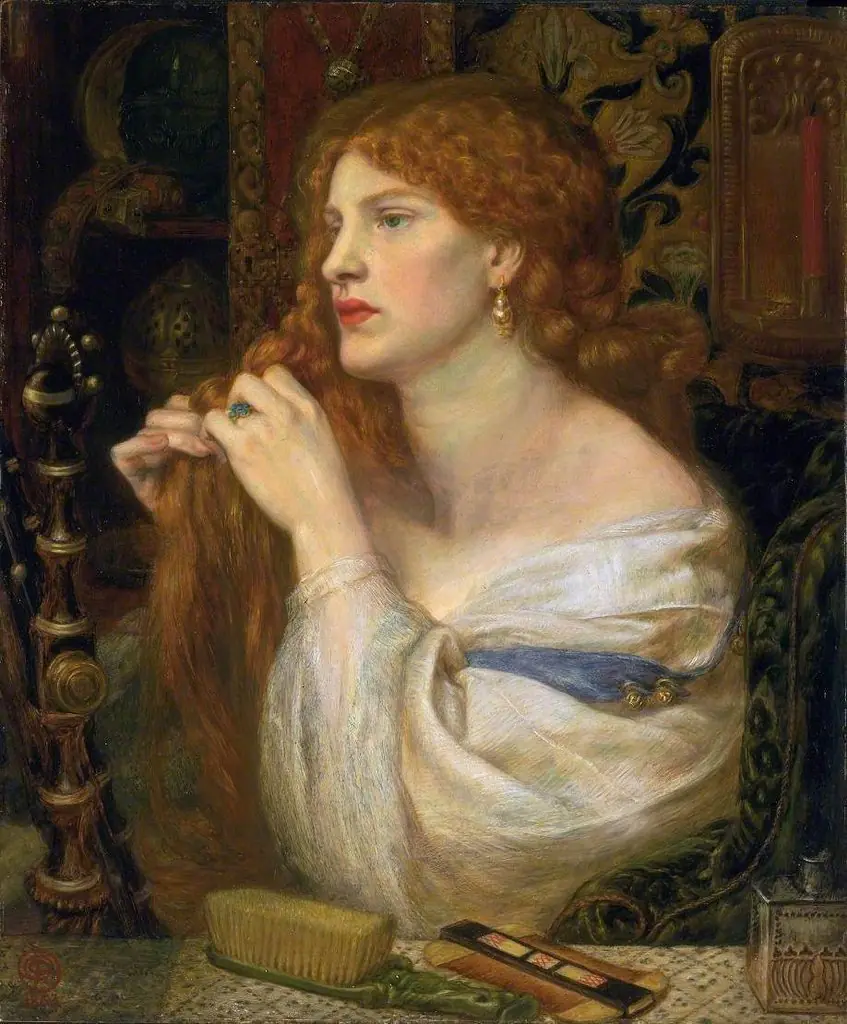
Lady Lilith depicts the mythological figure Lilith, identified in ancient Judaic tradition as Adam's first wife who embodies seduction and danger. Rossetti presents her as a modern, narcissistic temptress absorbed in admiring her own flowing golden hair in a hand mirror, a composition type he termed a “mirror picture.”
The iconography centers on Lilith's long, abundant hair, traditionally associated with her lethal allure, and on floral symbolism: white roses suggesting cold, sensuous love, poppies indicating sleep and oblivion, and foxgloves signaling insincerity. The crowded, depthless space and flattened mirror reflecting both interior candles and an exterior garden underscore artifice over naturalism, emphasizing Lilith's mythic and allegorical status.
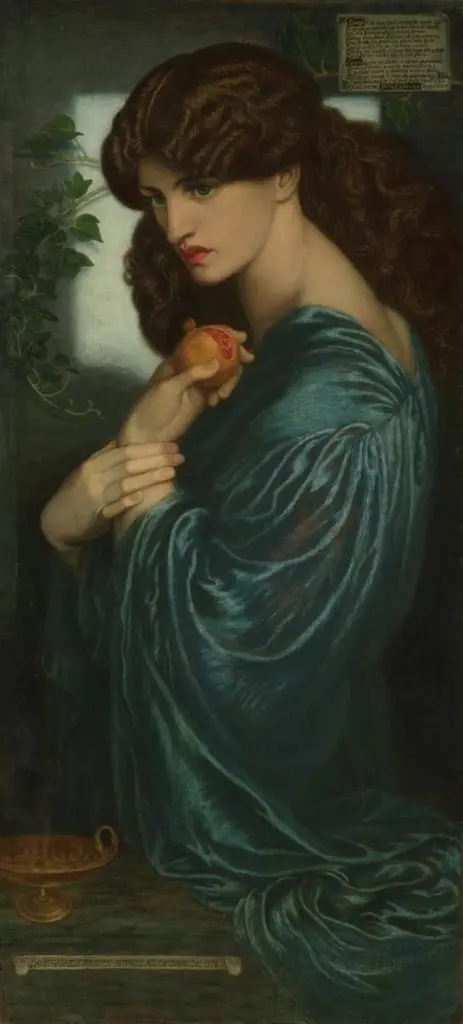
Rossetti paired Lady Lilith with Sibylla Palmifera to contrast outer and inner beauty; he later retitled the poems Body's Beauty and Soul's Beauty, framing Lilith as the embodiment of physical beauty and its peril.
Technique & Style
Lady Lilith is an oil painting on canvas measuring 96.5 by 85.1 centimetres. Rossetti executed the work in two distinct phases: initially between 1866 and 1868, and subsequently altered between 1872 and 1873. The composition features a figure seated within a crowded, depthless space where background elements, such as roses and a reflected garden, appear with the same intensity as foreground objects.
This flattening of perspective creates an unrealistic environment where the figure seems to press against the picture plane.
The artist employed overt floral symbolism, utilizing white roses to suggest cold, sensuous love, while poppies and foxgloves allude to sleep, forgetfulness, and insincerity. The primary modification involved overpainting the original model's face with that of a different sitter. A separate watercolour replica created in 1867 preserves the original facial features, contrasting with the final oil version held in Delaware.
History & Provenance
Lady Lilith was commissioned by the Liverpool shipping magnate Frederick Richards Leyland in early 1866. On 9 April 1866 Rossetti wrote to Leyland describing the work as "a lady combing her hair," the same size as Palmifera, with a palette of white and silver and a great mass of golden hair. Rossetti painted the canvas between 1866 and 1868 using his mistress Fanny Cornforth as model, and delivered it to Leyland in early 1869 at a price of £472 10s.
The painting was returned to Rossetti in February 1872, and he completed the repainting on 2 December at Kelmscott Manor before returning it to Leyland, substituting Alexa Wilding's face for Cornforth's.
After Leyland's death in 1892 the painting was acquired by the American textile industrialist Samuel Bancroft of Wilmington, Delaware. In 1935 Bancroft's estate donated his European painting collection, including Lady Lilith, to the Delaware Art Museum, where it remains.
Context
Within the Pre-Raphaelite movement, Lady Lilith serves as a seminal exploration of the femme fatale archetype, contrasting physical allure with spiritual emptiness. Rossetti conceived the work as a modern interpretation of the mythological figure, pairing it with Sibylla Palmifera to represent "Body's Beauty" against "Soul's Beauty." This thematic duality was formalized in the sonnets published alongside the paintings in The House of Life, where the two works were presented as consecutive sonnets.
The painting's critical legacy includes its influence on subsequent "mirror pictures" depicting narcissistic female figures, with scholars often citing it as the epitome of the genre. Twentieth-century criticism has further reframed the work through a feminist lens, interpreting Lilith as a symbol of Victorian anxiety regarding the emancipated woman who resists male domination. The 1872–73 alteration of the model's face from Fanny Cornforth to Alexa Wilding, likely at the behest of patron Frederick Richards Leyland, underscores the work's complex relationship between artistic vision and commercial demand.
Legacy
Lady Lilith established itself as the definitive example of the "mirror picture" genre, inspiring other painters to create similar works featuring narcissistic female figures. The painting's reputation evolved significantly in the twentieth century when critics began interpreting Lilith as an embodiment of Victorian anxiety regarding the emancipated woman, reframing her as an early advocate for women's rights rather than merely a mythological temptress. This feminist reading highlights her resistance to male domination and her dual nature as both alluring and dangerous.
The work's legacy is further cemented by its thematic pairing with Sibylla Palmifera, which Rossetti explicitly contrasted as representing "Body's Beauty" against "Soul's Beauty." Although the original oil painting resides in the Delaware Art Museum, a large 1867 watercolour replica featuring the original model Fanny Cornforth is held by the Metropolitan Museum of Art, ensuring the image's continued visibility in major collections.
Overview
Dante Gabriel Rossetti's oil painting, Lady Lilith, depicts a figure from ancient Judaic myth. Completed between 1866 and 1868, and later revised, the work portrays Lilith, often described as Adam's first wife. Rossetti's interpretation emphasizes her legendary associations with female power and allure, presenting a compelling and somewhat enigmatic image. The painting is a notable example of his engagement with literary and mythological themes.
Artist & collection
Artist
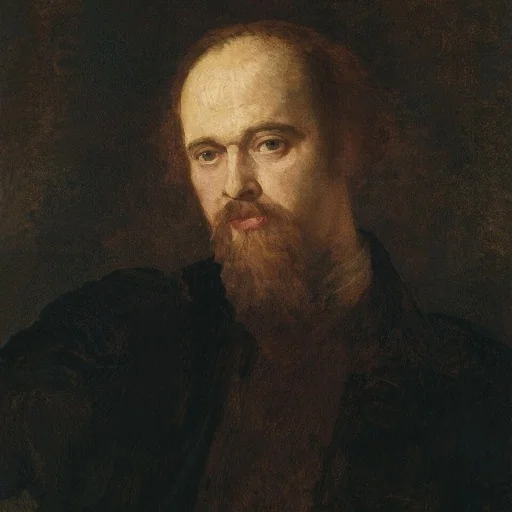
Gabriel Charles Dante Rossetti (12 May 1828 – 9 April 1882), generally known as Dante Gabriel Rossetti ( rə-ZET-ee; Italian: ), was an English poet, illustrator, painter and translator.

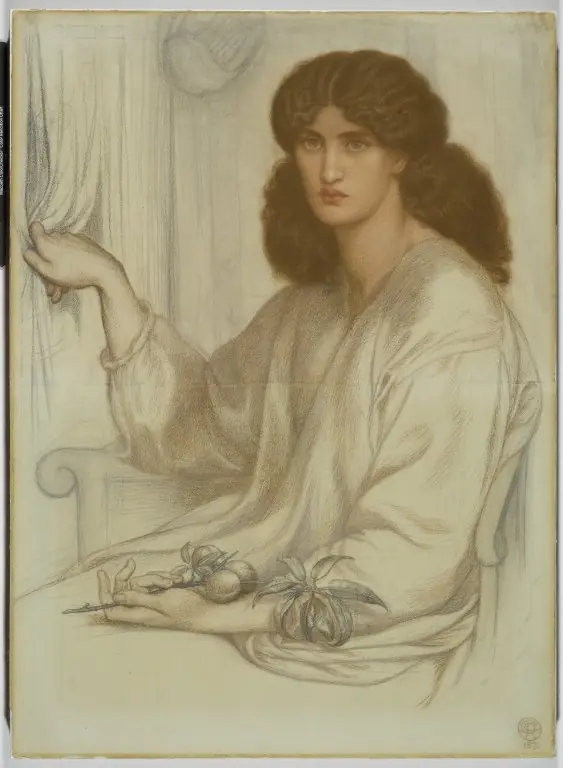
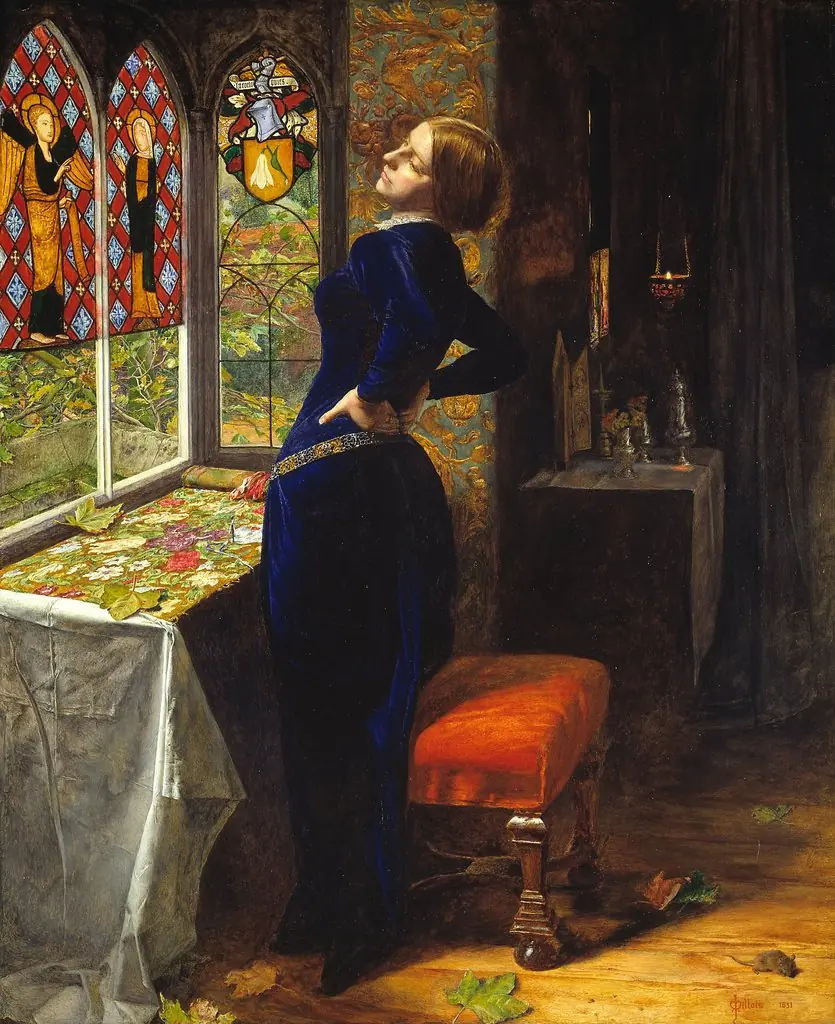
 Compared in the Pre-Raphaelites course