Artwork
The Parrot Addresses Khujasta at the Beginning of the Sixth Night, from a Tuti-nama (Tales of a Parrot)
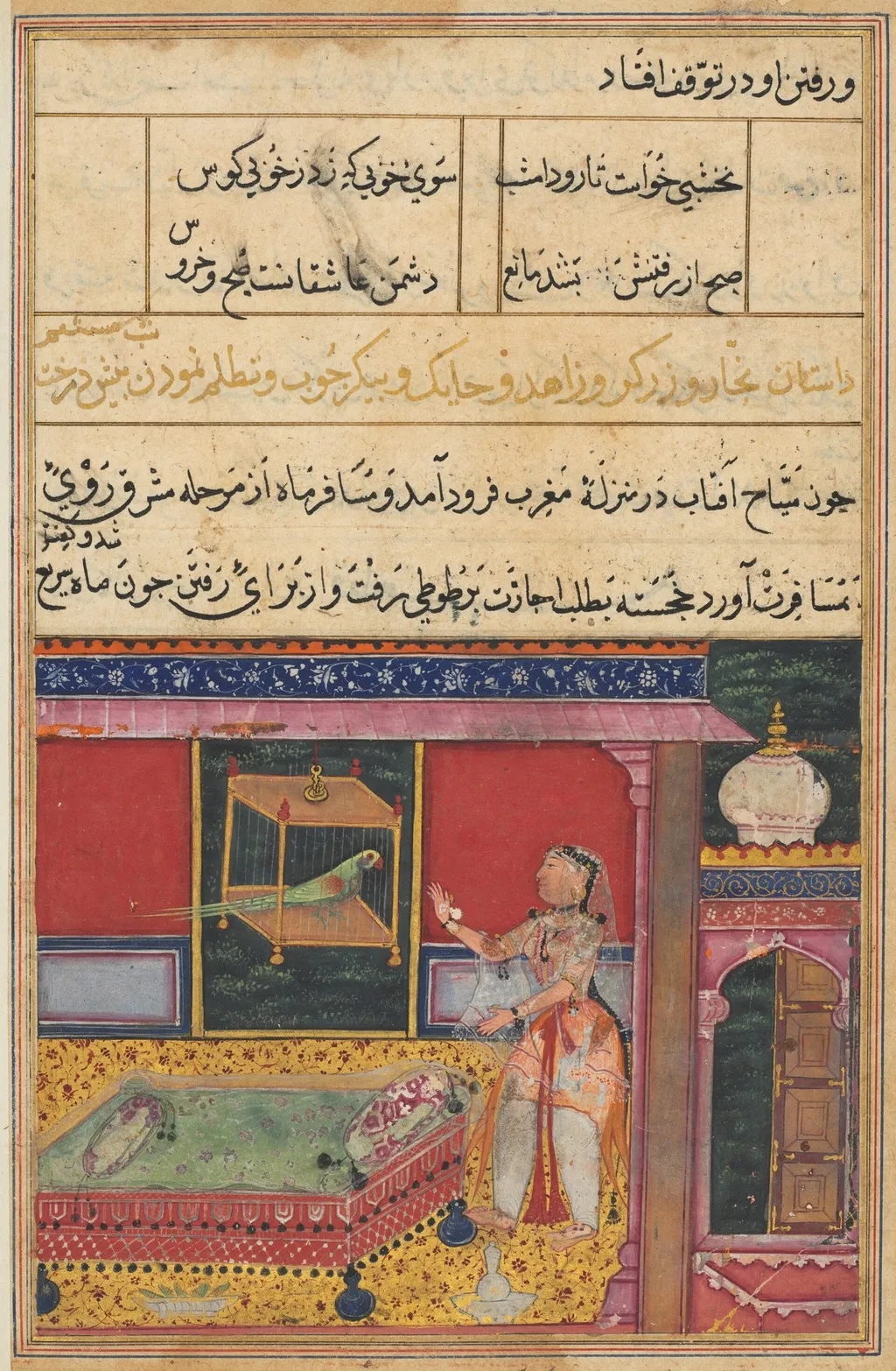
The Parrot Addresses Khujasta at the Beginning of the Sixth Night, from a Tuti-nama (Tales of a Parrot) is an unspecified painting by the Mughal Painting artist Dasavanta. It dates from 1560 and is held in the collection of the Cleveland Museum of Art.
About this work
Technique & Style
Daswanth rendered fine linework and subtle washes to depict the parrot addressing Khujasta, employing a compositional balance that emphasizes narrative clarity.
The work is an opaque watercolor painting executed on paper, characteristic of Mughal manuscript illumination. Daswanth rendered fine linework and subtle washes to depict the parrot addressing Khujasta, employing a compositional balance that emphasizes narrative clarity. The delicate handling of pigment reveals meticulous attention to detail, while the stylized forms and flattened spatial depth reflect the decorative conventions of 16th‑century Indian court art.
History & Provenance
Created in 1560 within the Mughal Empire, this painting is attributed to the artist Daswanth. It was originally produced as part of the Tuti-nama (Tales of a Parrot), a manuscript containing illustrations for the Sixth Night story. The work is currently held in the collection of the Cleveland Museum of Art, where it is cataloged under the accession number 1962.279.37.b.
Context
Daswanth, active in the mid-16th century, created this painting within the Mughal artistic milieu celebrated for its synthesis of Persian miniature traditions and indigenous Indian aesthetics. The work, depicting a parrot speaking to Khujasta on the sixth night, exemplifies the narrative richness and intricate detail characteristic of Mughal manuscript illustration, particularly within the Tuti-nama series produced for imperial patronage. Its presence in the Cleveland Museum of Art's collection underscores its significance as a representative piece of Mughal painting from circa 1560, reflecting both the stylistic conventions and the cultural storytelling practices of the era.
Overview
Created in 1560 by the Mughal painter Daswanth, this miniature illustrates a moment from the Tuti‑nama, a collection of parrot tales. The work is part of the Cleveland Museum of Art’s collection and depicts an interior scene in which a richly attired man engages with a caged green parrot at the start of the sixth night of the narrative.
Subject & Meaning
The composition centers on a dialogue between the human figure and the bird, suggesting the parrot’s role as a storyteller or moral commentator within the tale. The man’s attentive posture and raised hand imply he is listening to the parrot’s address, a common motif in Persian‑influenced literature where the bird conveys wisdom or warning.
Own this work as a print
Artist & collection

- The Parrot Addresses Khujasta at the Beginning of the Eleventh Night, from a Tuti-nama (Tales of a Parrot)
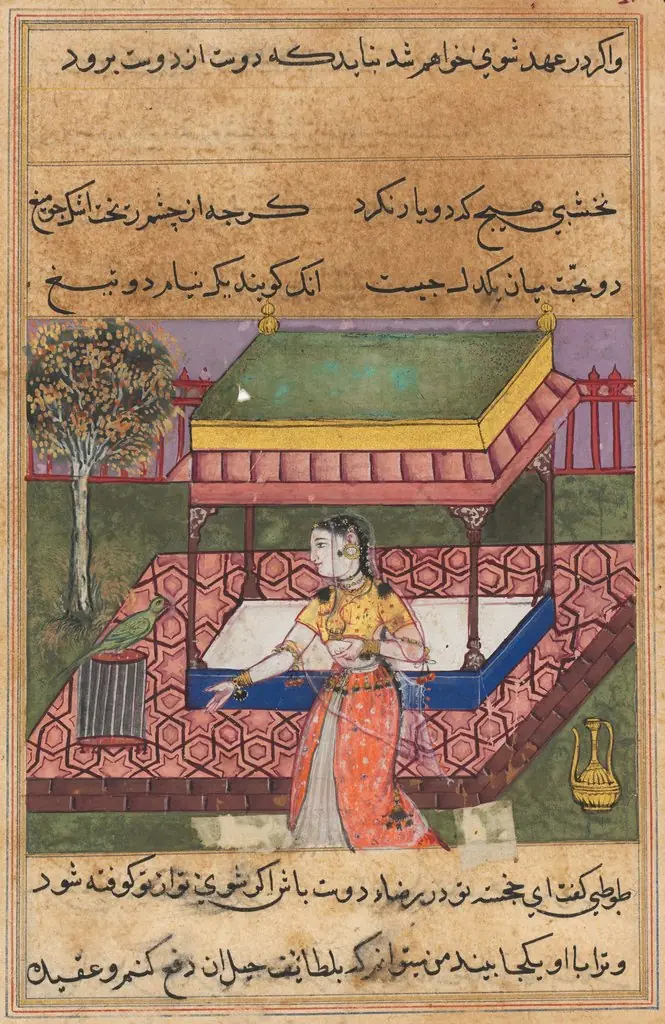 The parrot addresses Khujasta at the beginning of the fortieth night, from a Tuti-nama (Tales of a Parrot)
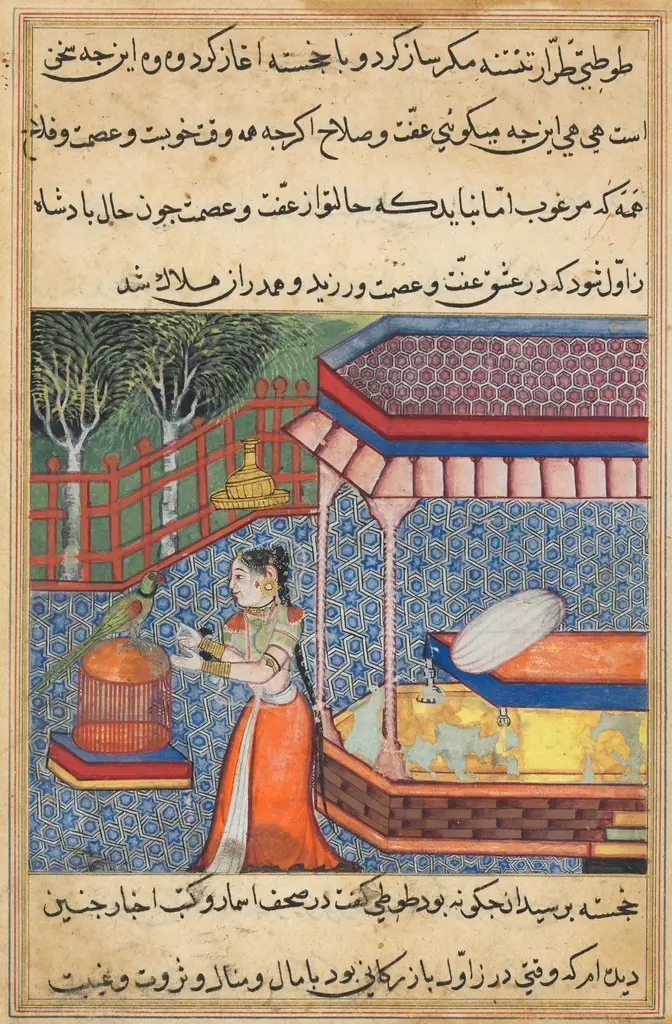 The parrot addresses Khujasta at the beginning of the thirty-sixth night, from a Tuti-nama (Tales of a Parrot)
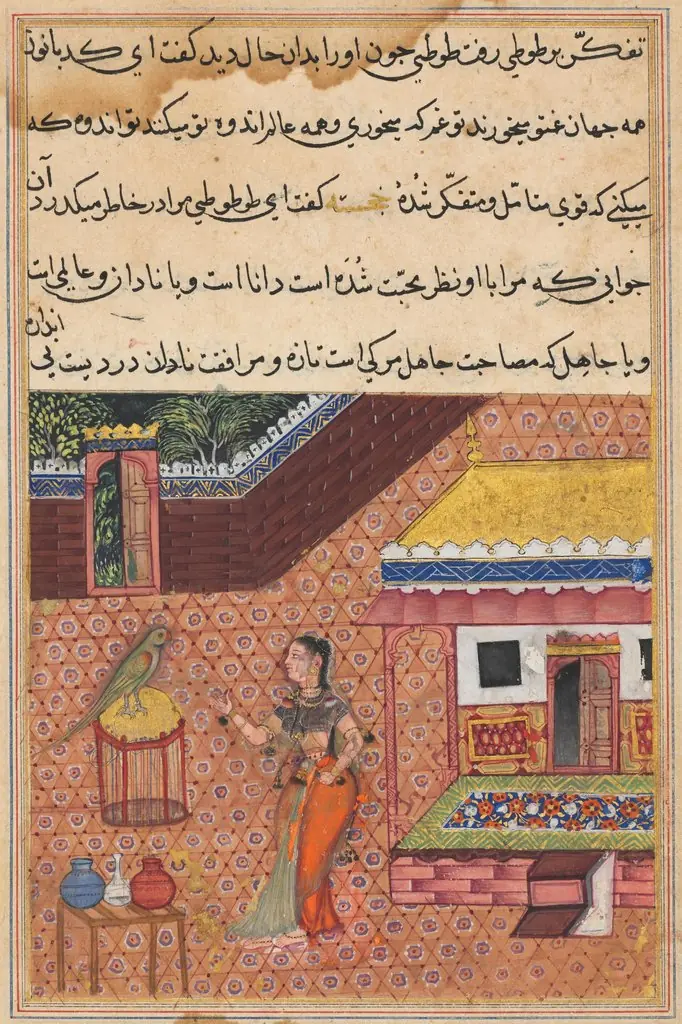 The parrot addresses Khujasta at the beginning of the thirty-fourth night, from a Tuti-nama (Tales of a Parrot)
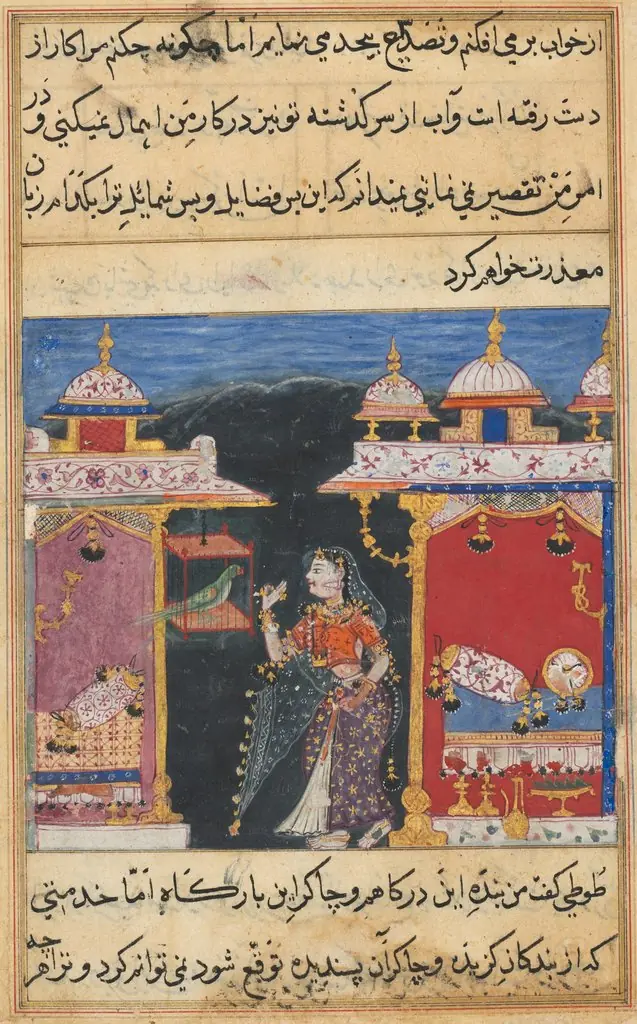 The Parrot Addresses Khujasta at the Beginning of the Seventh Night, from a Tuti-nama (Tales of a Parrot)
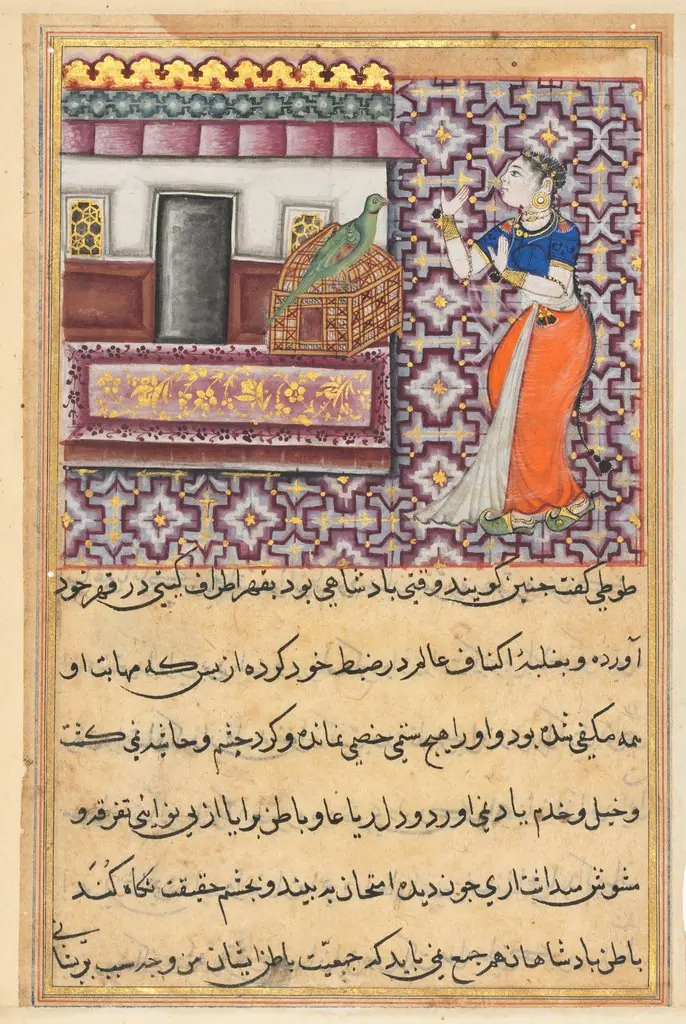 The parrot addresses Khujasta at the beginning of the fiftieth night, from a Tuti-nama (Tales of a Parrot): Fiftieth Night
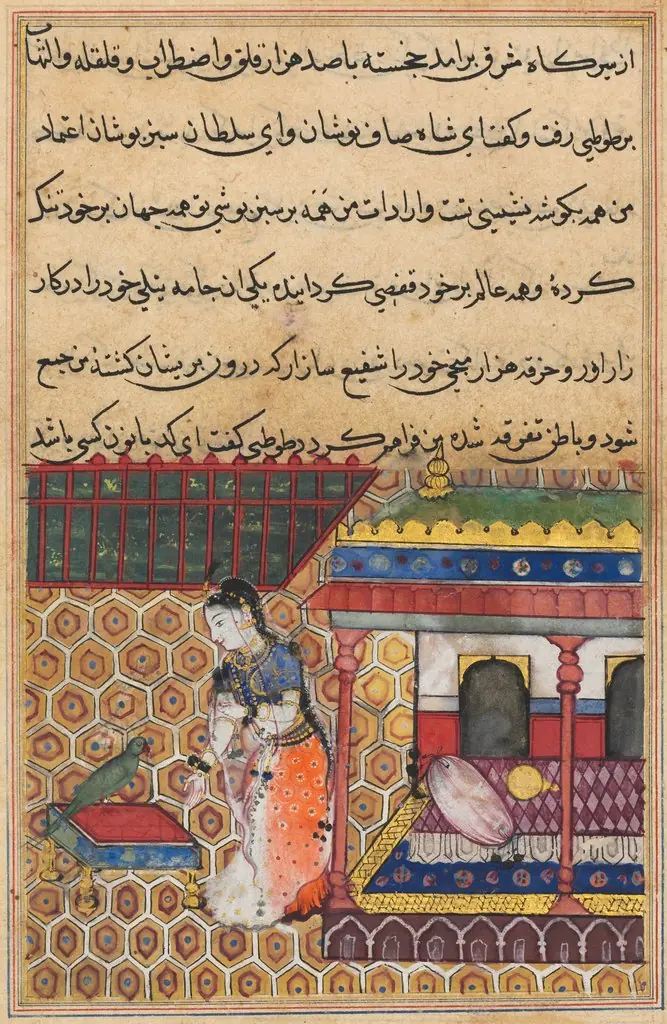 The parrot addresses Khujasta at the beginning of the thirty-eighth night, from a Tuti-nama (Tales of a Parrot)
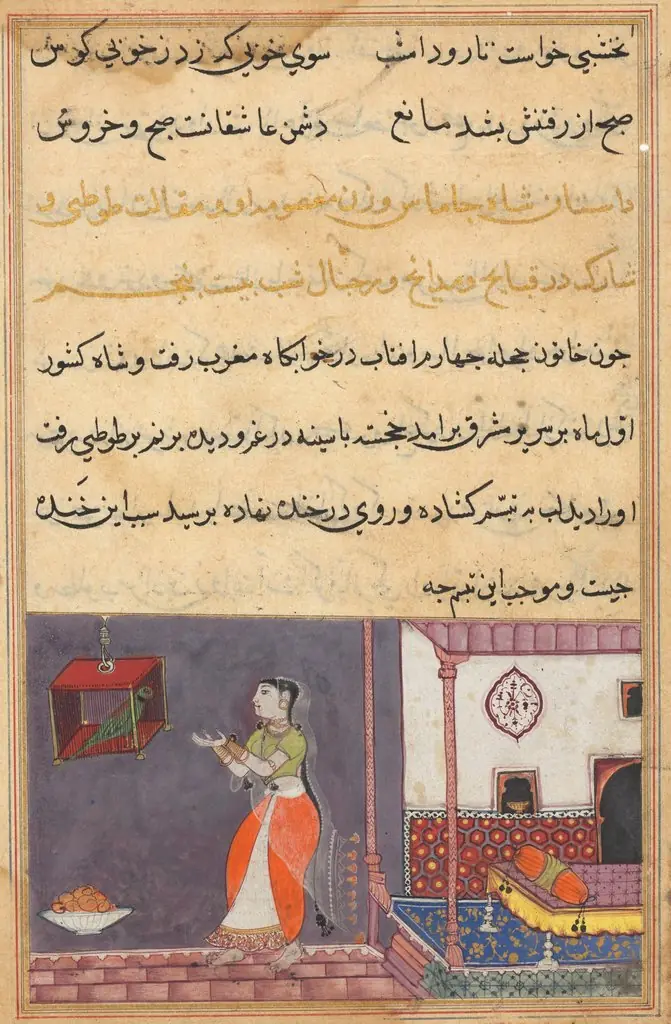 The Parrot Addresses Khujasta at the Beginning of the Twenty-fifth Night, from a Tuti-nama (Tales of a Parrot)
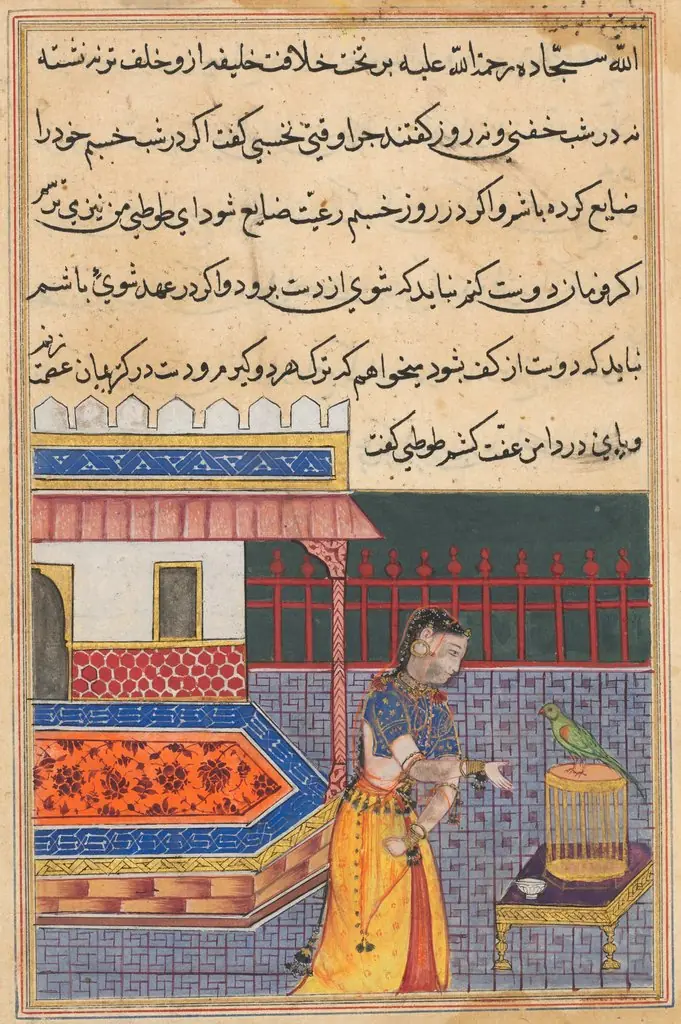 The parrot addresses Khujasta at the beginning of the forty-first night, from a Tuti-nama (Tales of a Parrot): Forty-first Night
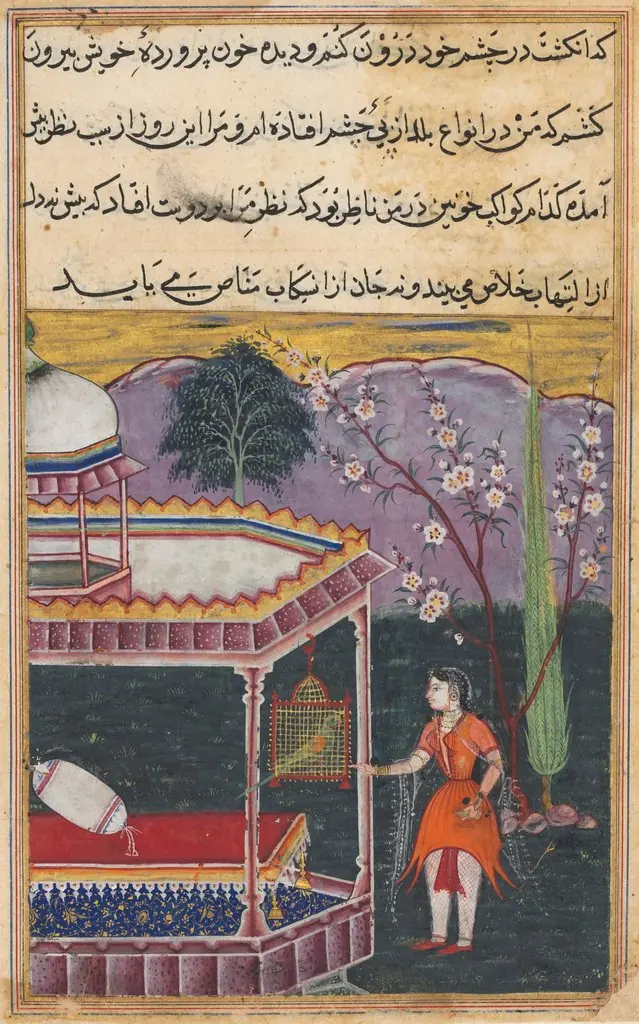 The Parrot Addresses Khujasta at the Beginning of the Eighth Night, from a Tuti-nama (Tales of a Parrot)
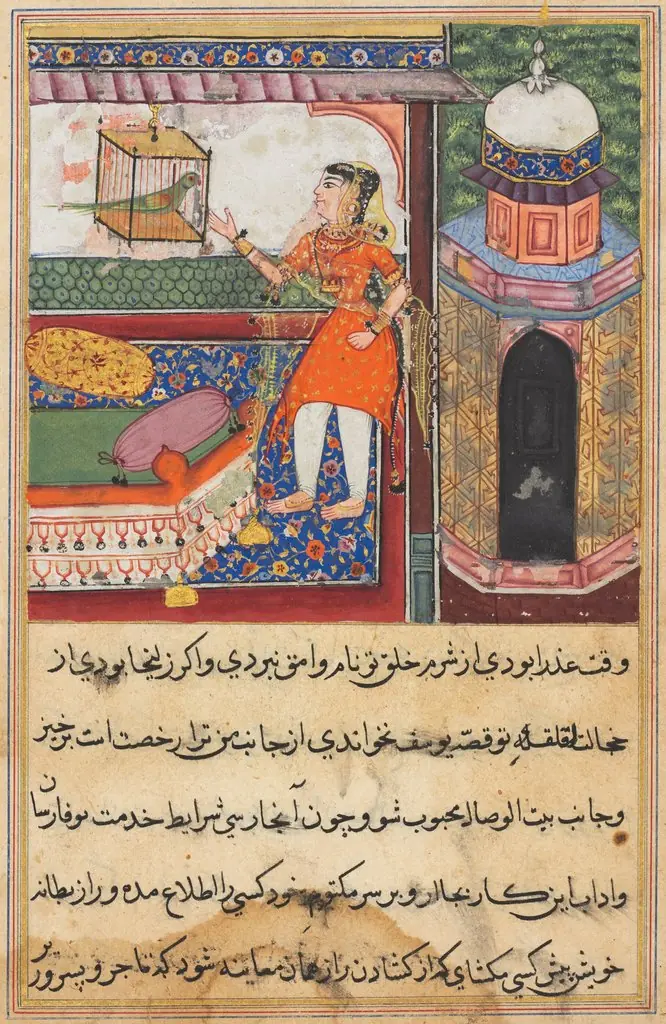 The Parrot Addresses Khujasta at the Beginning of the Tenth Night, from a Tuti-nama (Tales of a Parrot)
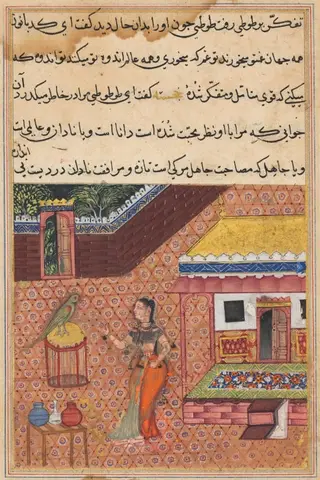 The parrot addresses Khujasta at the beginning of the thirty-fourth night, from a Tuti-nama (Tales of a Parrot)
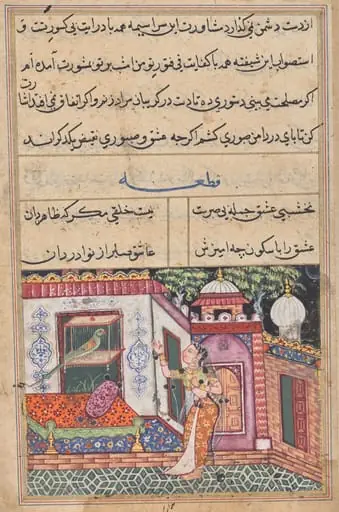 The Parrot Addresses Khujasta at the Beginning of the Eleventh Night, from a Tuti-nama (Tales of a Parrot)
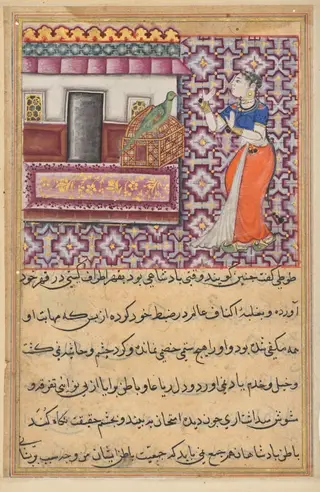 The parrot addresses Khujasta at the beginning of the fiftieth night, from a Tuti-nama (Tales of a Parrot): Fiftieth Night
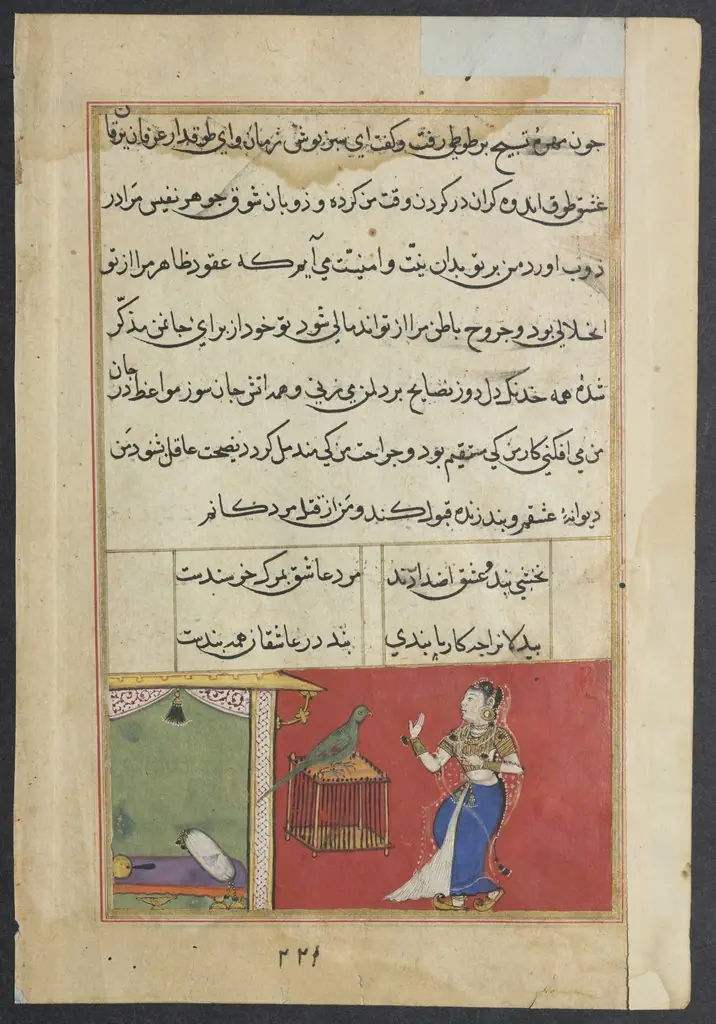 The parrot addresses Khujasta at the beginning of the forty-seventh night, from a Tuti-nama (Tales of a Parrot): Forty-seventh Night