Artwork
Dis donc, mon homme, s'ils savaient ...
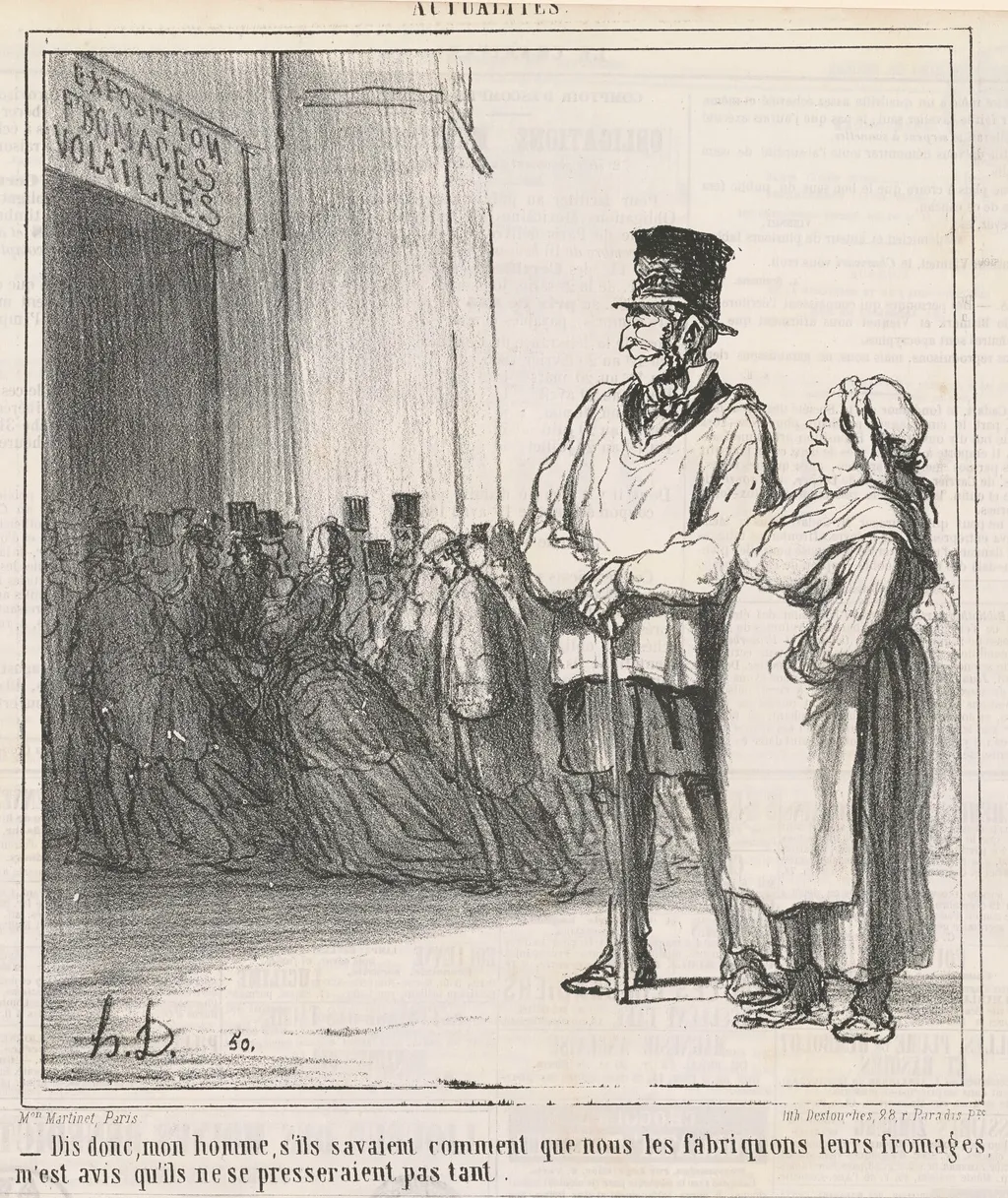
Dis donc, mon homme, s'ils savaient ... is an ink print by the Impressionist artist Honoré Daumier. It dates from 1865 and is held in the collection of the National Gallery of Art.
About this work
Overview
This lithograph by Honoré Daumier captures a bustling queue outside a shop labeled 'Exposition Fromages Volailles.' The scene, rendered in grainy ink, portrays a cross-section of Parisian society, men in top hats, laborers in worn coats, all pressed together in eager anticipation. Daumier’s keen observation turns a mundane moment into a quiet satire of public fascination with the trivial.
Subject & Meaning
The exhibition’s focus on cheese and poultry, mundane goods elevated to spectacle, mocks the public’s susceptibility to manufactured novelty.
The title, 'Dis donc, mon homme, s'ils savaient...', suggests a whispered secret among the crowd, hinting at the absurdity of their enthusiasm. The exhibition’s focus on cheese and poultry, mundane goods elevated to spectacle, mocks the public’s susceptibility to manufactured novelty. Daumier implies that the crowd’s excitement is misplaced, even ridiculous, yet he portrays them without outright scorn.
Technique & Style
Daumier employed lithography to achieve a spontaneous, textured effect, allowing ink to cling unevenly and create a sense of movement. His loose, expressive lines define figures with minimal detail, emphasizing posture and gesture over individual features. The grainy surface enhances the chaotic energy of the scene, making each face, whether scowling or grinning, feel immediate and alive.
History & Provenance
Created in the mid-19th century, this print was likely produced for inclusion in a periodical or as a standalone satirical image. Daumier regularly published such works in journals like Le Charivari, targeting bourgeois customs and public folly. The lithograph’s survival in museum collections reflects its enduring value as a document of everyday social behavior in industrializing France.
Context
During Daumier’s time, public exhibitions of ordinary goods were a growing trend, often promoted as cultural events to attract middle-class audiences. The artist, long critical of social pretension, used such scenes to expose the gap between perceived sophistication and actual banality. His work resonated with readers familiar with the absurdities of urban life under the July Monarchy.
Legacy
This print exemplifies Daumier’s role in shaping modern visual satire. His ability to distill social critique into fleeting, human moments influenced later cartoonists and realist artists. The lithograph’s unembellished realism and psychological nuance set a precedent for depicting ordinary crowds not as caricatures, but as complex, quietly ironic participants in their own society.
Own this work as a print
Artist & collection
Artist
Honoré-Victorin Daumier (French: ; 26 February 1808 – 10 or 11 February 1879) was a French painter, sculptor, and printmaker, whose many works offer commentary on the social and political life in France, from the…

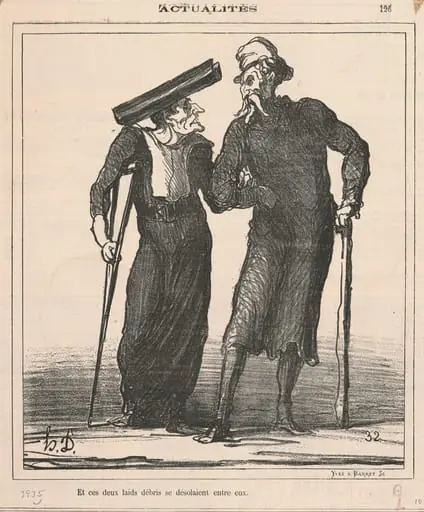 Et ces deux laids débris se désolaient entre eux
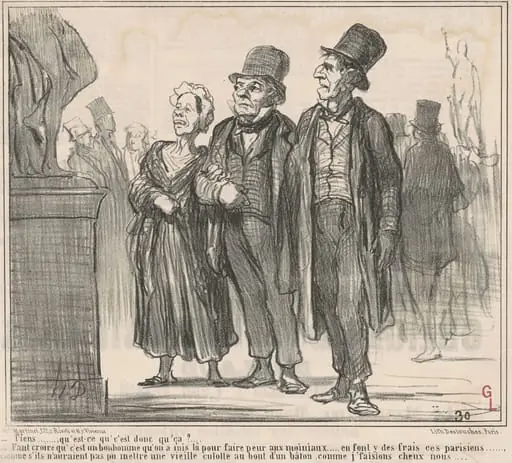 Tiens ... qu'est-ce qu'c'est donc qu'ça? ...
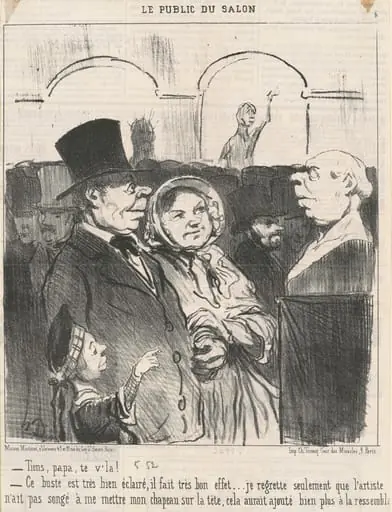 Tiens, papa, te v'la! ...
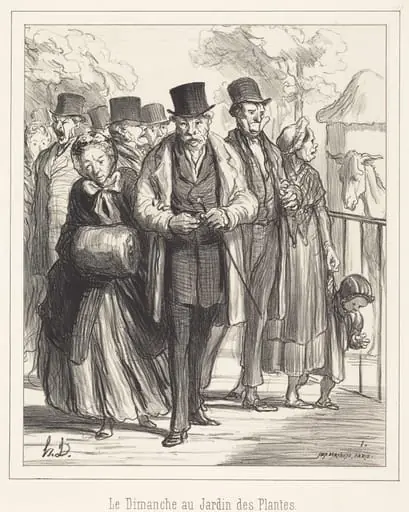 Le Dimanche au Jardin des Plantes
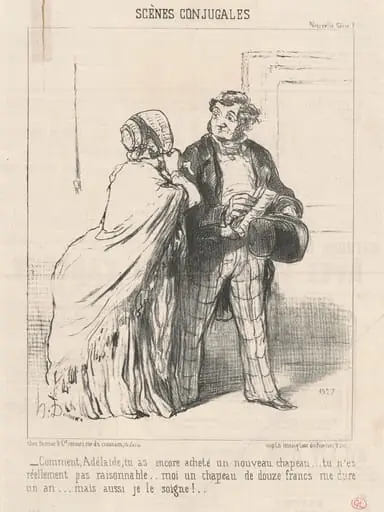 Comment ... tu as encore acheté un ... chapeau ...
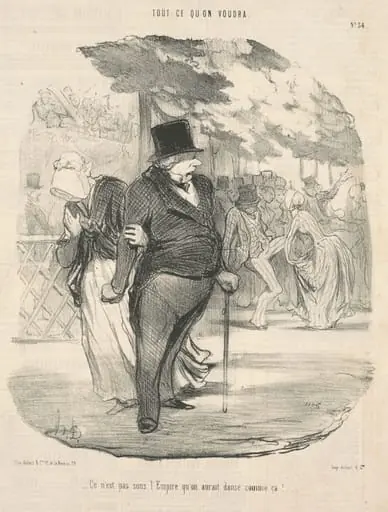 Ce n'est pas sous l"empire qu'on aurait dansé comme ca! ...
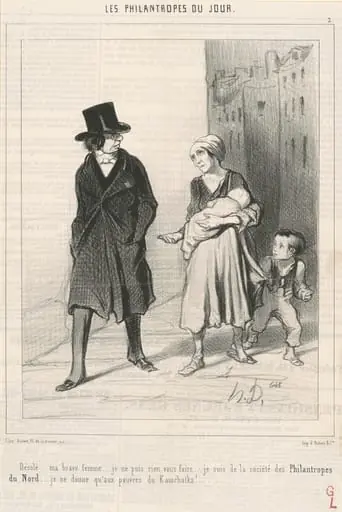 Désolé ... Je suis de la société des philantropes du nord ...
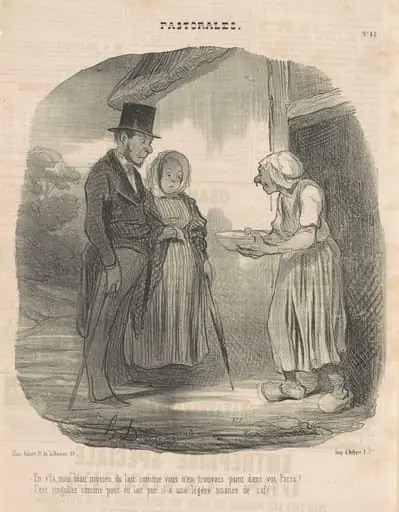 Femme de lettre humanitaire se livrant sur l'homme ...
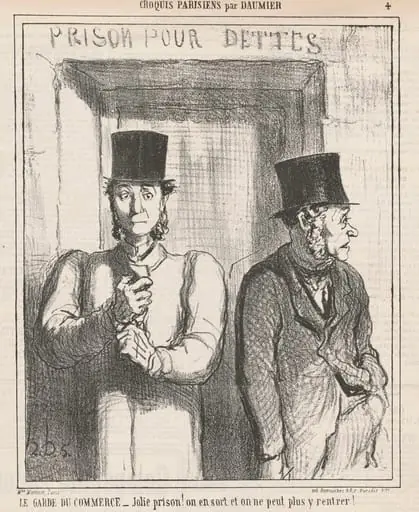 Le garde du commerce