Artwork
La hache qui le coupera n'est pas encore trempée
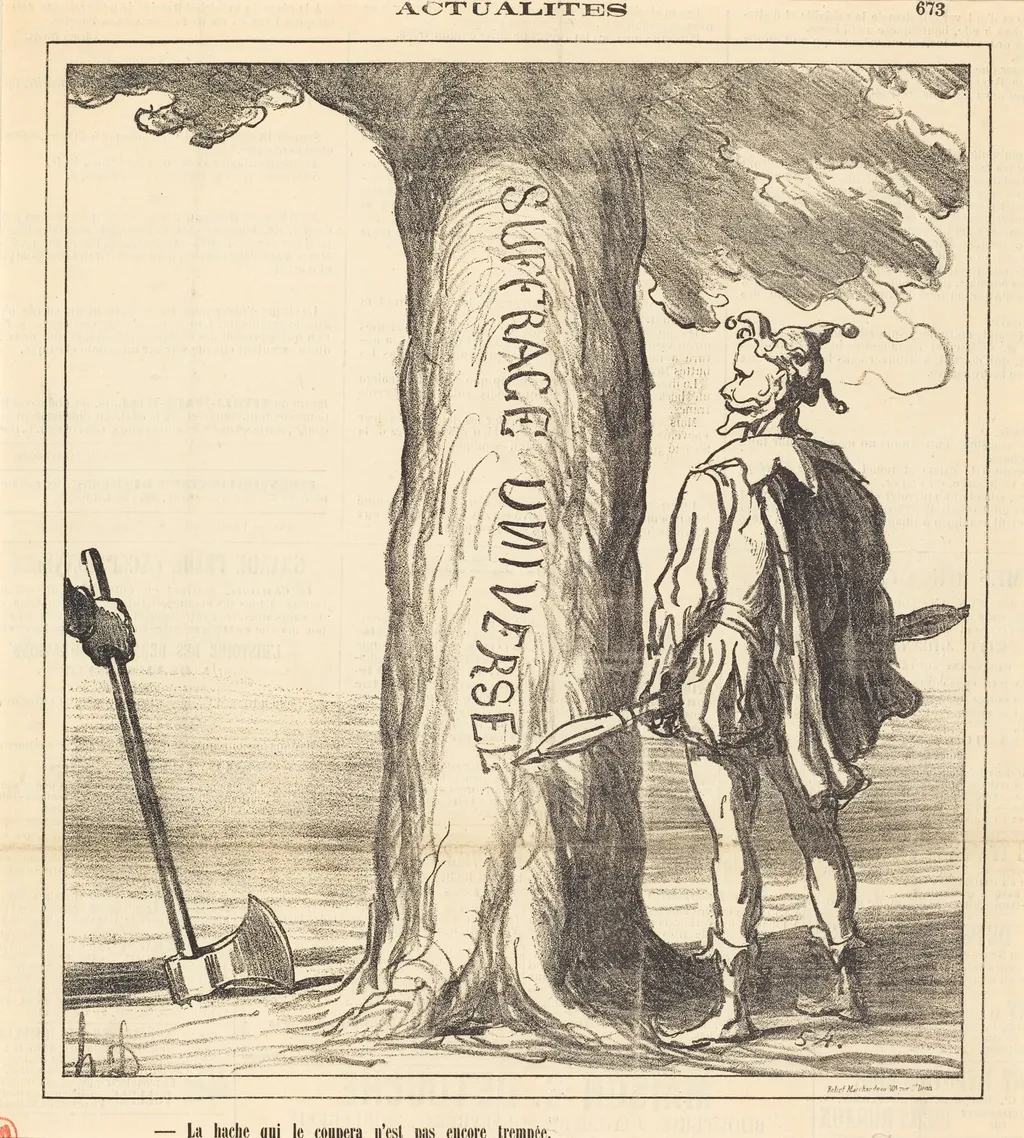
La hache qui le coupera n'est pas encore trempée is a print by the Impressionist artist Honoré Daumier. It dates from 1871 and is held in the collection of the National Gallery of Art. Honoré‑Victorin Daumier’s 1871 gillotage, a print executed on newsprint, delivers a sharply satirical political scene.
About this work
Overview
Honoré‑Victorin Daumier’s 1871 gillotage, a print executed on newsprint, delivers a sharply satirical political scene. The work portrays a colossal figure with a bark‑like visage clutching a diminutive, formally dressed man, while a hat and a small boat lie discarded nearby. The giant’s name is boldly inscribed on his leg, underscoring the piece’s mocking tone toward authority.
Subject & Meaning
The title, “The axe that will cut it down is not yet forged,” hints at a pending, yet unrealized, challenge to entrenched power.
The composition juxtaposes overwhelming power with a feeble individual, suggesting the absurdity of oppressive rule. The tiny figure, cane‑in‑hand and clutching a scroll, represents a beleaguered official or bureaucrat, while the giant’s tree‑like face evokes a natural, unrefined force. The title, “The axe that will cut it down is not yet forged,” hints at a pending, yet unrealized, challenge to entrenched power.
Technique & Style
Daumier employed the gillotage method, a form of relief printing that produces bold, graphic lines suitable for rapid political commentary. Executed on inexpensive newsprint, the medium reinforces the work’s immediacy and its intended circulation among a broad, contemporary audience.
Context
Created in the aftermath of the 1870‑71 turmoil that followed the fall of the Second French Empire, the print reflects Daumier’s continued republican‑democratic critique of monarchy, aristocracy, and clerical influence. It aligns with his long‑standing practice of using caricature in publications such as La Caricature and Le Charivari to lampoon the ruling elite.
Legacy
While not as widely reproduced as Daumier’s newspaper cartoons, this gillotage exemplifies his commitment to visual satire as a tool of political dissent. It remains a testament to the artist’s ability to condense complex power dynamics into a single, striking image that continues to inform studies of 19th‑century French political art.
Own this work as a print
Artist & collection
Artist
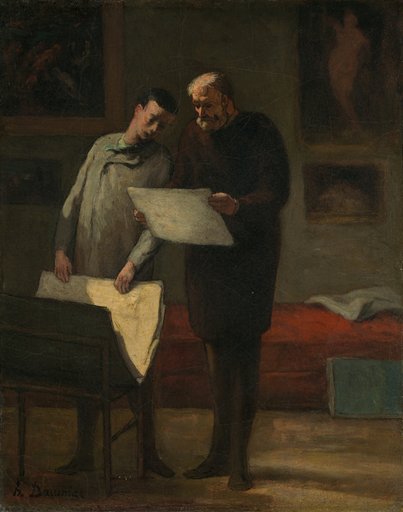
Honoré-Victorin Daumier (French: ; 26 February 1808 – 10 or 11 February 1879) was a French painter, sculptor, and printmaker, whose many works offer commentary on the social and political life in France, from the…









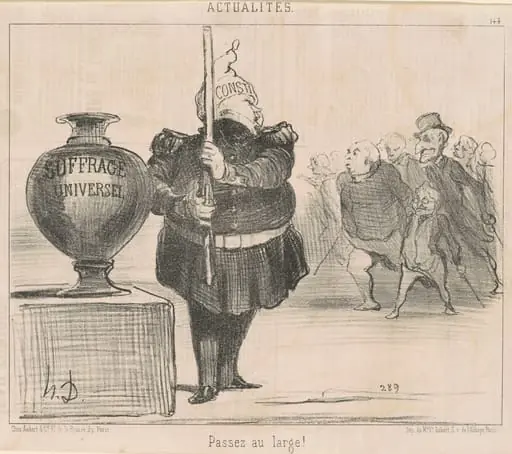 Passez au large!
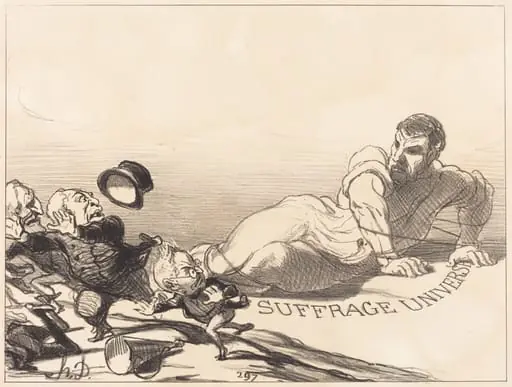 Une Panique de Lilliputiens...
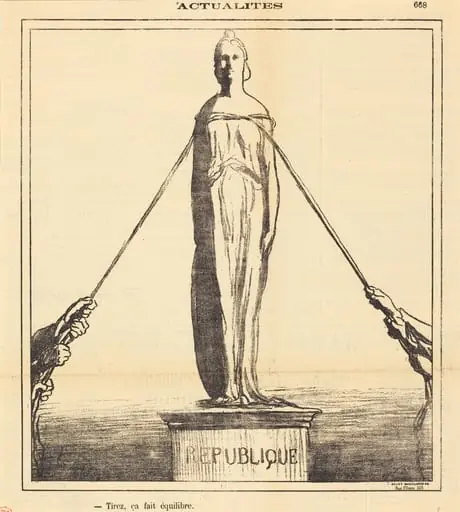 Tirez, ça fait équilibre
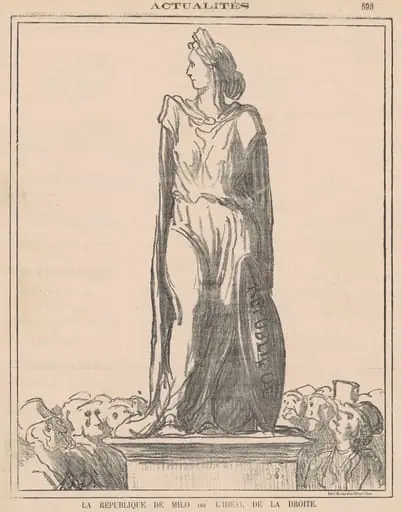 La république de Milo...
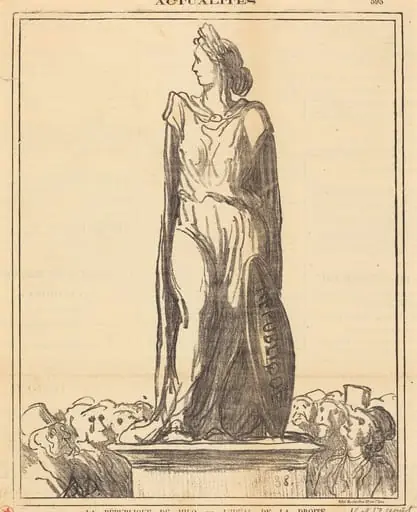 La république de Milo...
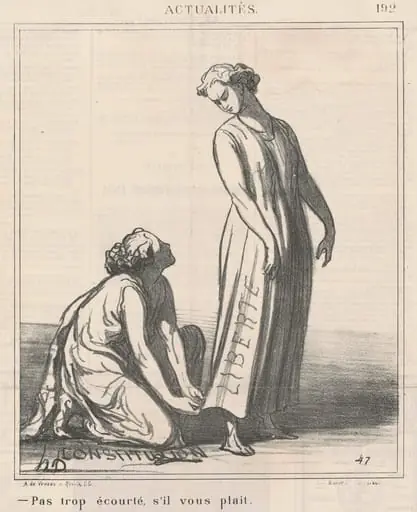 Pas trop écourté, s'il vous plait
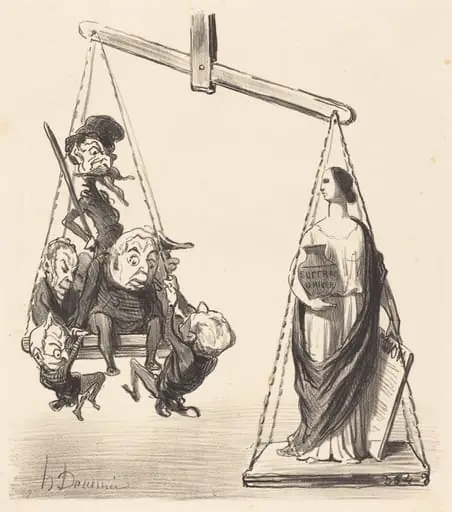 Suffrage universel (Universal Suffrage)
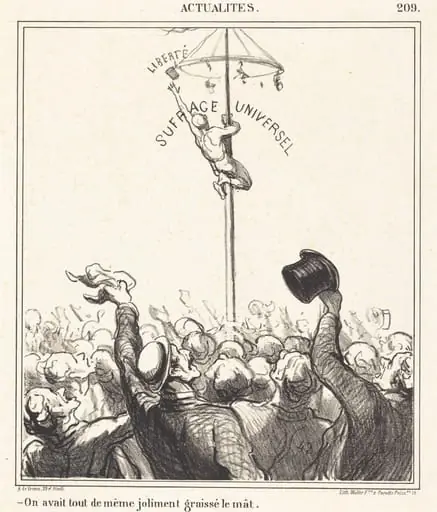 On avait... joliment graissé le mât
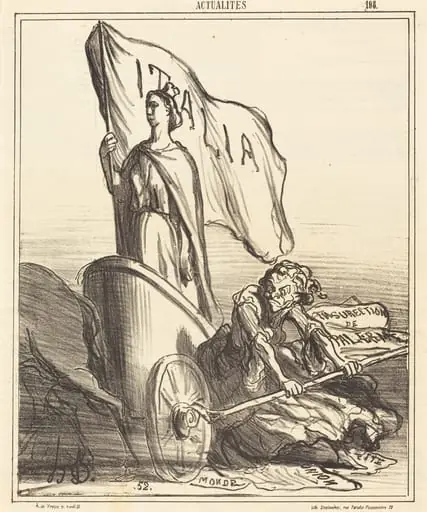 La Presse réactionnaire cherchant en vain...
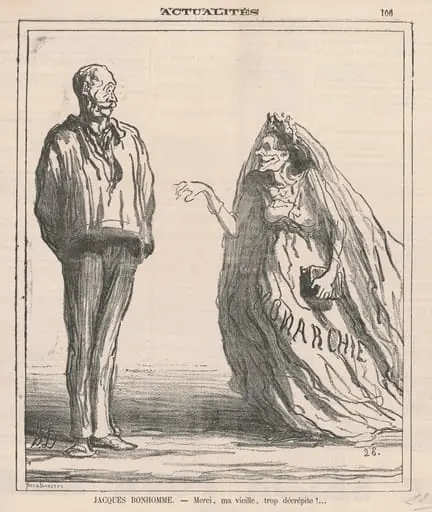 Merci, ma vieille, trop décrépite! ...
- Attendez... il faut encore ceci...
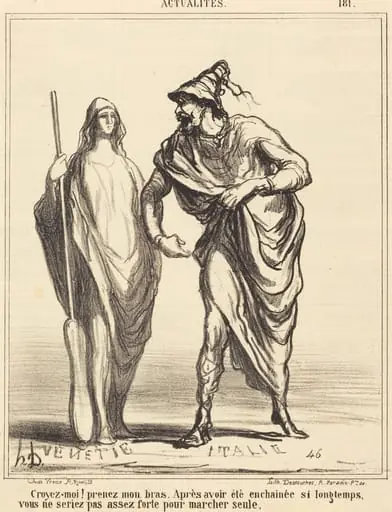 Croyez-moi! prenez mon bras...