Artwork
Nouveaux équipements pour la chasse au lion
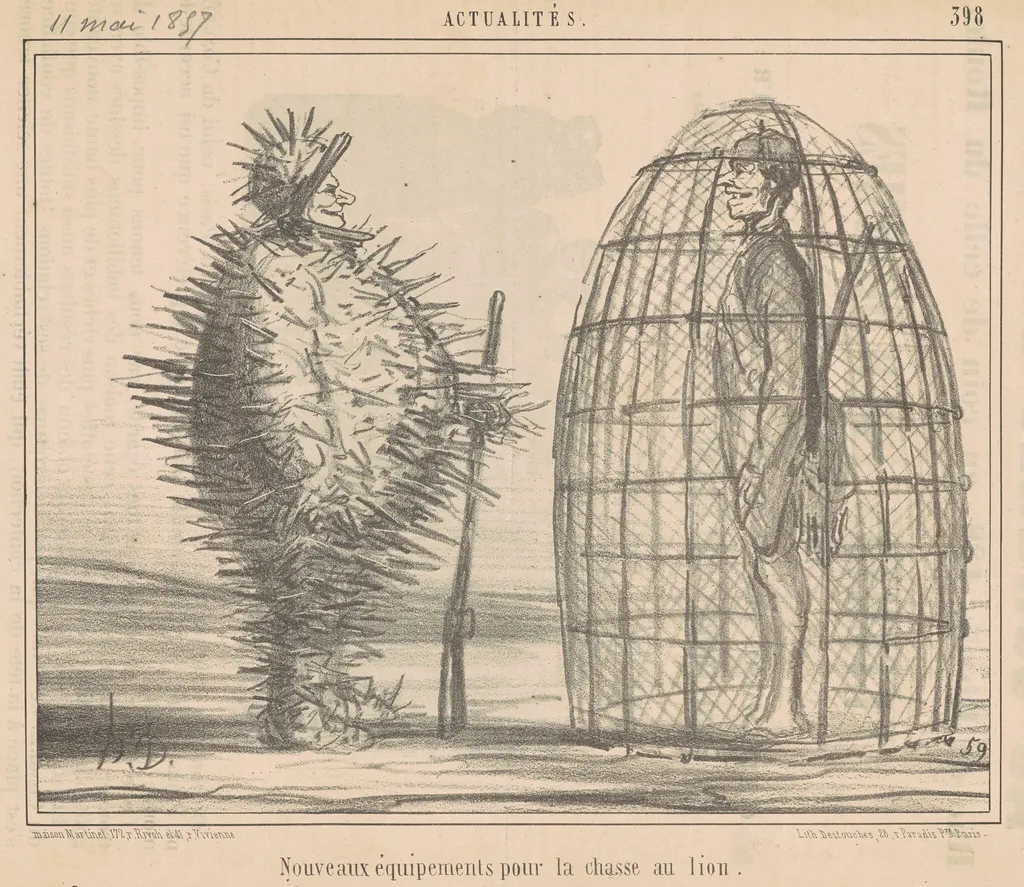
Nouveaux équipements pour la chasse au lion is an ink print by the Impressionist artist Honoré Daumier. It dates from 1857 and is held in the collection of the National Gallery of Art.
About this work
Overview
Created in 1857 by Honoré Daumier, this lithograph portrays two hunters dressed in exaggerated, spike-covered armor as they prepare to pursue lions. Rendered in ink on paper, the work belongs to a series of satirical prints that critique societal pretensions. Its tone is ironic, using visual absurdity to question human attempts to dominate nature through technological overreach.
Subject & Meaning
The figures, clad in spiked protective gear and armed with rifles, embody a futile attempt to impose control over wild nature.
The figures, clad in spiked protective gear and armed with rifles, embody a futile attempt to impose control over wild nature. Their cumbersome attire mocks the belief that mechanical innovation can neutralize natural threats. Daumier uses this grotesque imagery to expose the arrogance of colonial-era hunting practices, suggesting that such displays of power are performative rather than effective.
Technique & Style
Executed in lithography, the print relies on fluid ink lines and tonal contrasts to convey texture and movement. Daumier’s loose, expressive draftsmanship emphasizes the absurdity of the figures’ forms, with exaggerated proportions and jagged outlines heightening the satirical effect. The medium allowed for rapid reproduction, enabling widespread circulation of his social commentary among urban audiences.
History & Provenance
The print was produced during Daumier’s prolific period of political and social satire, published in French periodicals of the 1850s. It was not commissioned but rather a personal critique of contemporary attitudes toward nature and technology. The work entered public collections in the late 19th century, preserved as part of Daumier’s broader legacy in graphic satire.
Context
In mid-19th century France, colonial expansion and big-game hunting were symbols of elite status. Daumier’s image responds to this trend by ridiculing the performative nature of such pursuits. His work aligns with broader cultural debates about human dominance over animals and the limits of industrial progress, reflecting a growing skepticism toward technological hubris.
Legacy
Daumier’s lithograph remains a key example of visual satire that anticipates modern critiques of anthropocentrism. Its influence extends to later caricaturists and political illustrators who used absurdity to challenge authority. The work is studied today for its early engagement with ecological ethics and the psychology of human overconfidence in the face of natural forces.
Own this work as a print
Artist & collection
Artist
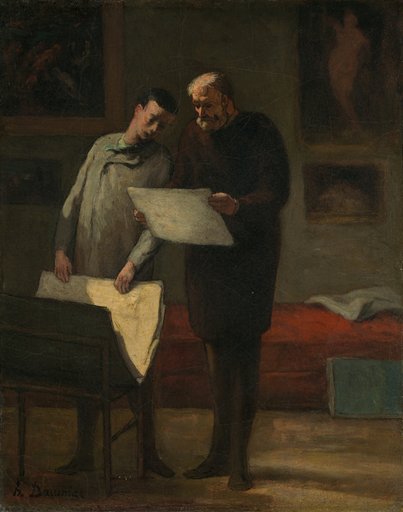
Honoré-Victorin Daumier (French: ; 26 February 1808 – 10 or 11 February 1879) was a French painter, sculptor, and printmaker, whose many works offer commentary on the social and political life in France, from the…









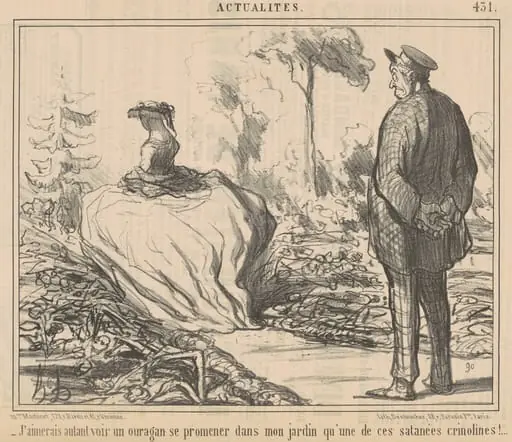 J'aimerais autant voir un ouragan ...
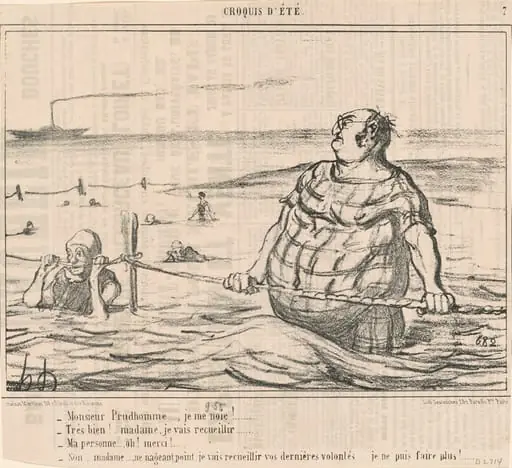 Monsieur Prudhomme ... Je me noie! ...
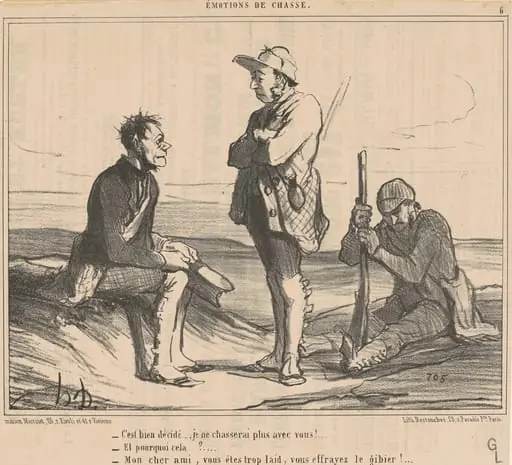 C'est bien décidé ... Je ne chasserai plus avec vous! ...
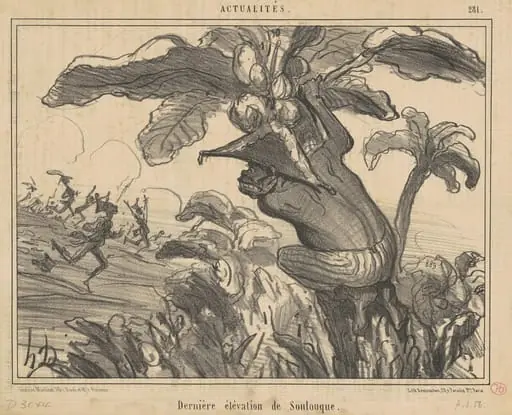 Dernière élévation de soulouque
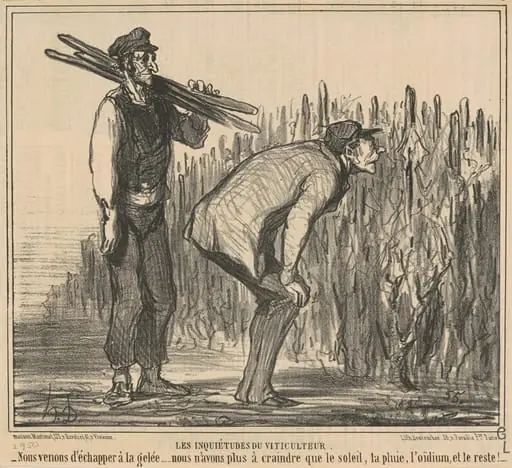 Les inqiétudes du viticulteur
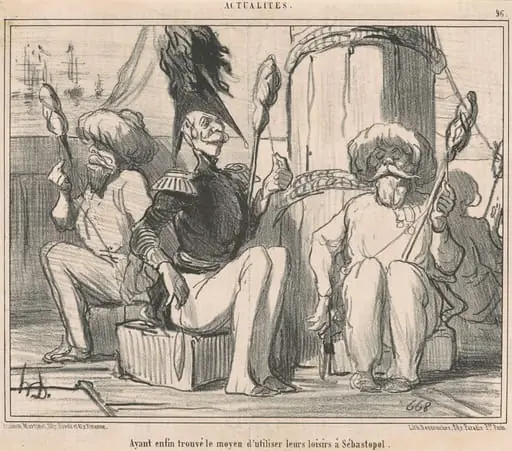 Ayant enfin trouvé le moyen d'ultiliser leurs loisirs!
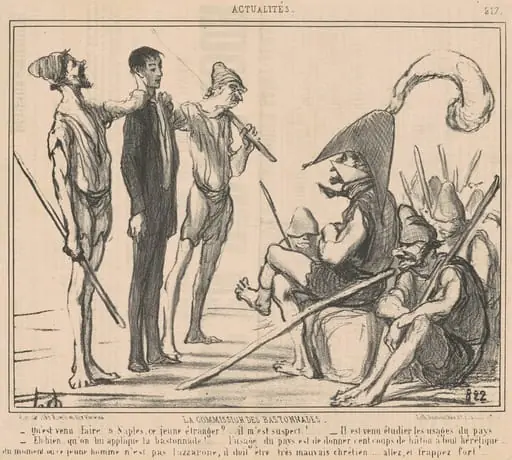 Commission des bastonnades
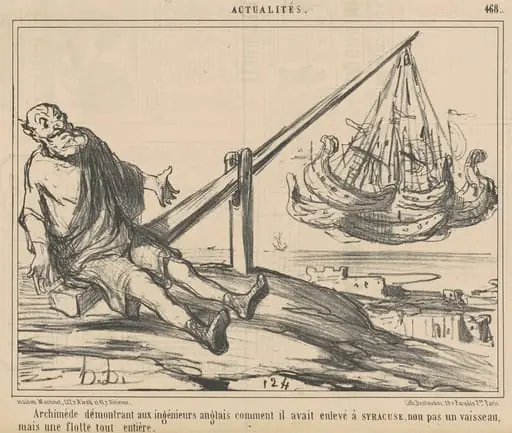 Archimède démontrant aux ingènieurs anglais ...
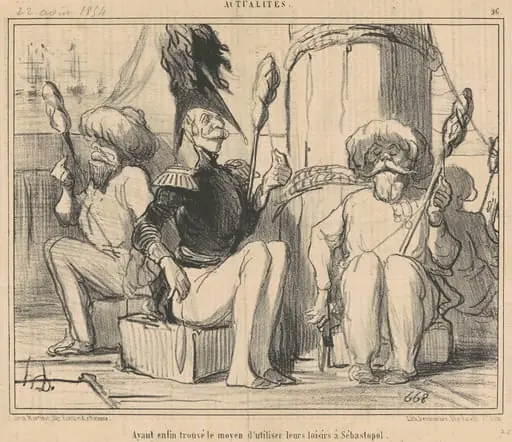 Ayant enfin trouvé le moyen d'utiliser leurs loisirs!
 Mariage chinois