Artwork
Une Leçon de botanique
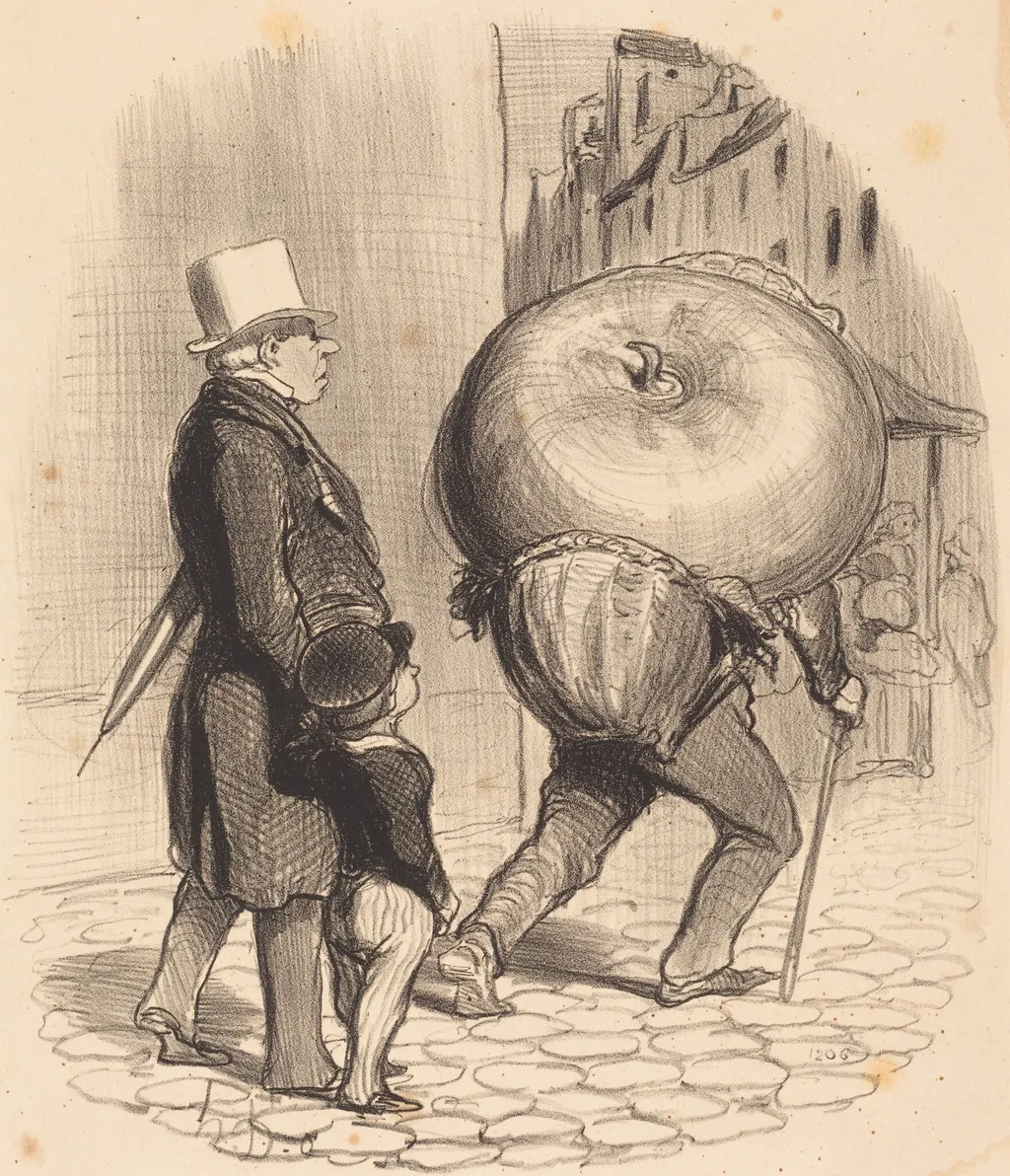
Une Leçon de botanique is an ink print by the Impressionist artist Honoré Daumier. It dates from 1852 and is held in the collection of the National Gallery of Art.
About this work
Overview
Created in 1852, Une Leçon de botanique is a lithographic print by the French artist Honoré Daumier. Known for his incisive social satire, Daumier employed the medium to produce a scene that blends everyday observation with exaggerated caricature, characteristic of his work for periodicals such as La Caricature and Le Charivari.
Subject & Meaning
The disproportionate load serves as a visual metaphor, mocking the weight of institutional authority and the absurdities of contemporary instruction.
The image presents two figures strolling along a cobblestone street. The gentleman on the left, dressed in a top hat and long coat and leaning on a cane, appears composed, while his companion is hunched under a massive, round object strapped to his back, evoking a sense of burden. The disproportionate load serves as a visual metaphor, mocking the weight of institutional authority and the absurdities of contemporary instruction.
Technique & Style
Executed in lithography, Daumier drew directly onto a limestone plate with greasy ink, allowing for swift reproduction of bold lines and fluid shading. The print’s stark contrasts and exaggerated proportions reflect his caricatural style, where humor arises from distortion and the stark simplicity of the medium.
History & Provenance
Daumier produced the work during a prolific period of political and social commentary, circulating prints through satirical newspapers that reached a wide urban audience. While the original stone plate no longer survives, the print has been preserved in several museum collections, documenting the artist’s engagement with mid‑nineteenth‑century French public life.
Context
The mid‑1800s in France were marked by rapid social change and frequent political upheaval. Daumier’s prints responded to these conditions by targeting the pretensions of the bourgeoisie and the rigidity of educational or bureaucratic institutions, using everyday street scenes as a canvas for broader critique.
Own this work as a print
Artist & collection
Artist
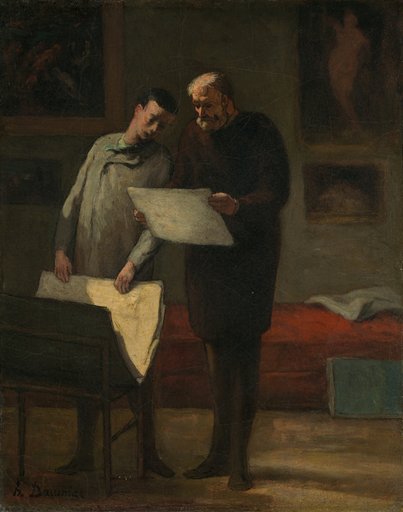
Honoré-Victorin Daumier (French: ; 26 February 1808 – 10 or 11 February 1879) was a French painter, sculptor, and printmaker, whose many works offer commentary on the social and political life in France, from the…

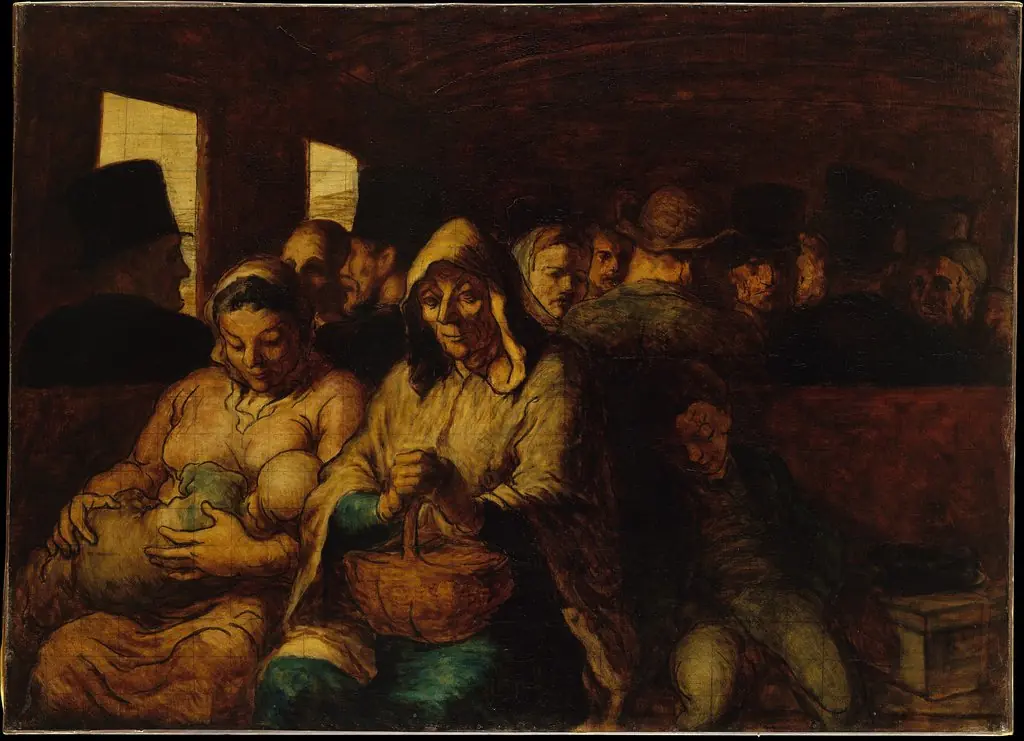

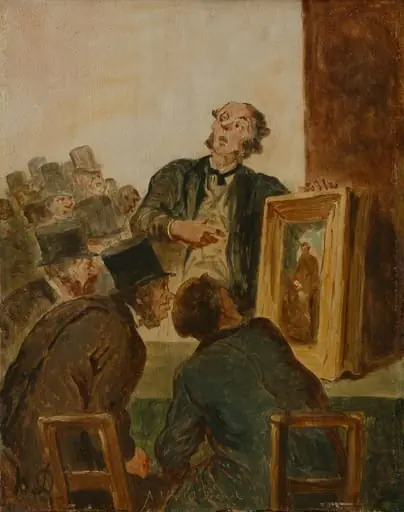
- Un amateur
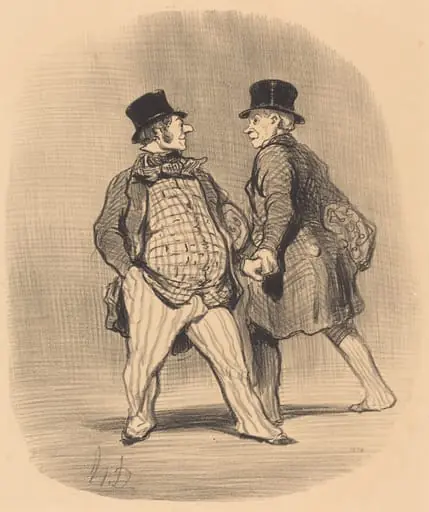 Confrère, méfiez-vous du petit baron...
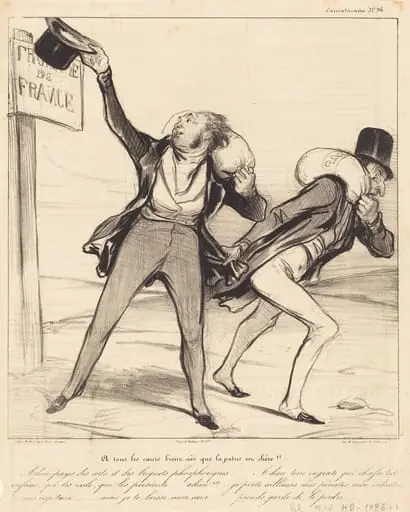 A tous les coeurs bien nés que la patrie est chère!!!
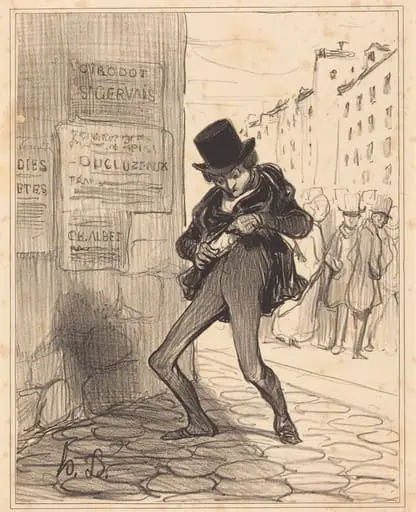 Volé!... Rue vide-gousset...
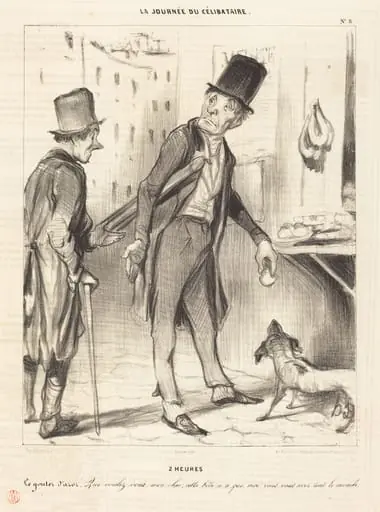 2 heures - Le gouter d'Azor
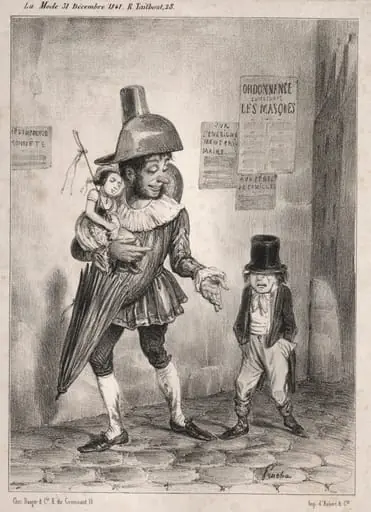 Pochades de carnaval: Vois-tu, si ton maître est bien content de toi et si tu as le prix de sagesse cette année! je te laisserai deguiser en paillasse! ...l'année prochaine!!
 2 heures
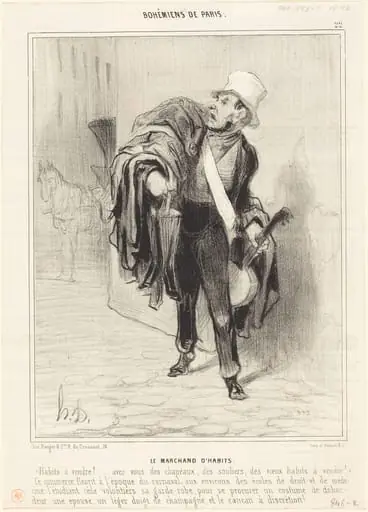 Le Marchand d'habits
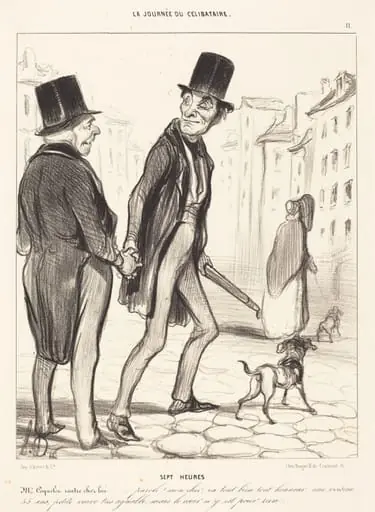 Sept heures
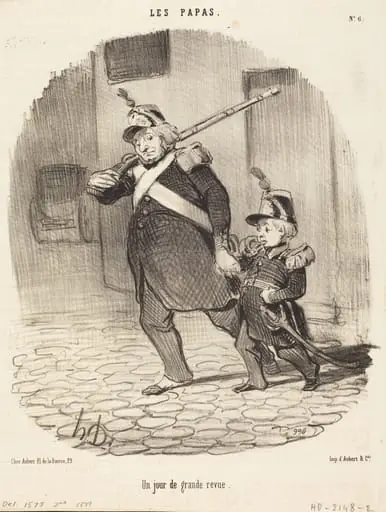 Un Jour de grande revue
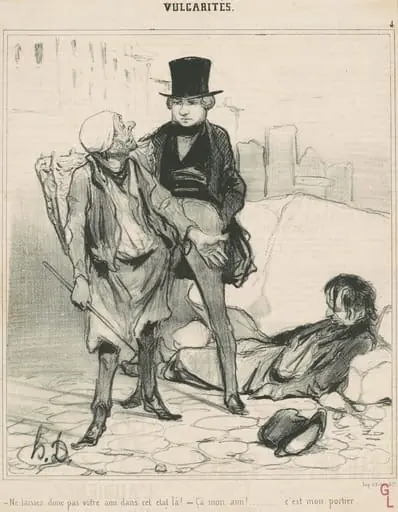 Ne laissez donc pas votre ami dans cet état la!
 Précaution indispensable que prennent les Parisiens ...