Artwork
Adoration of the Magi
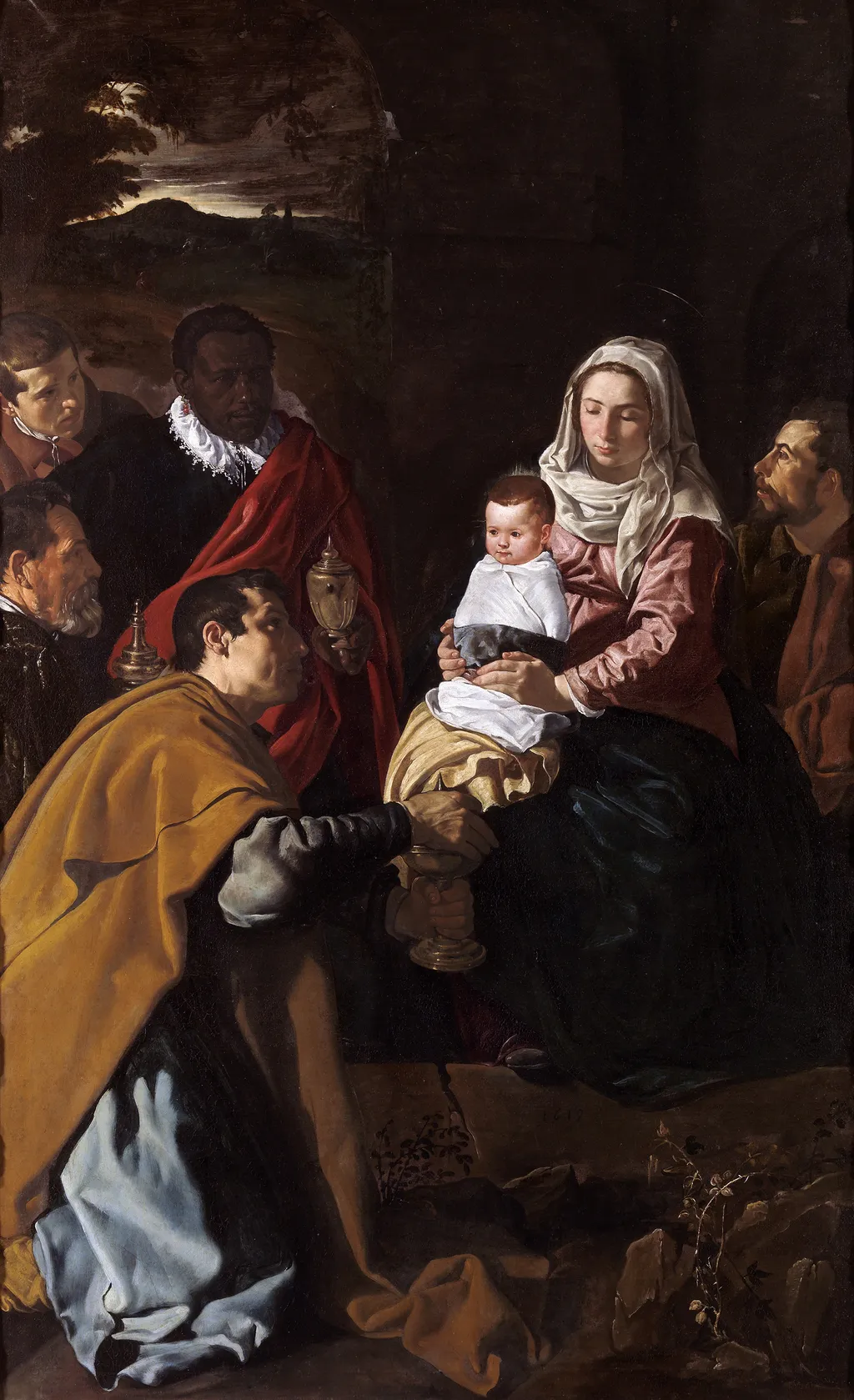
Adoration of the Magi is an oil painting by the Early Baroque Italian artist Diego Velázquez. It dates from 1619 and is held in the collection of the Museo del Prado.
About this work
Subject & Meaning
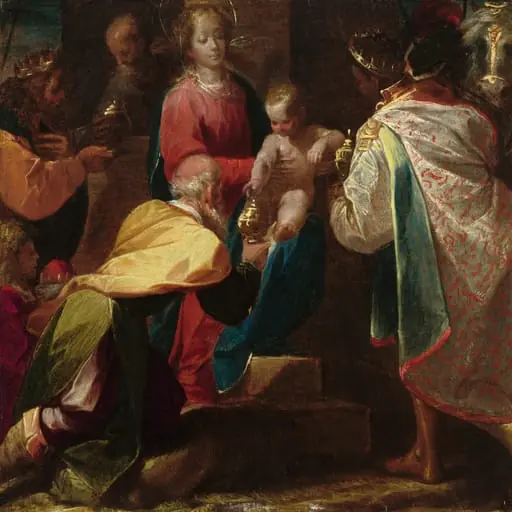
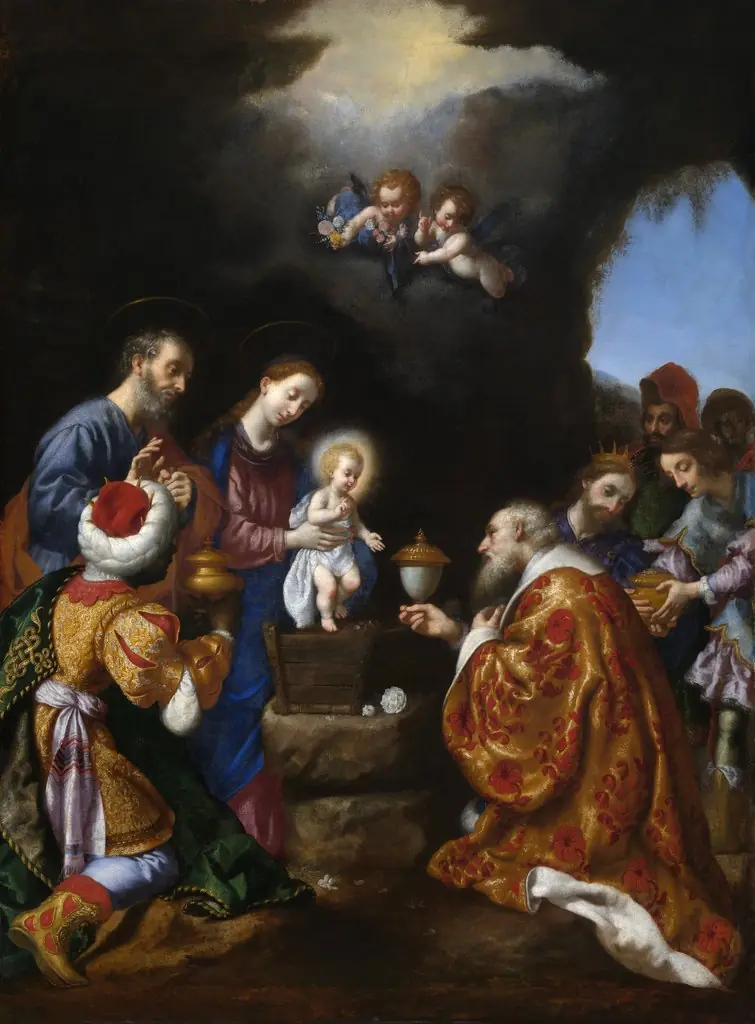
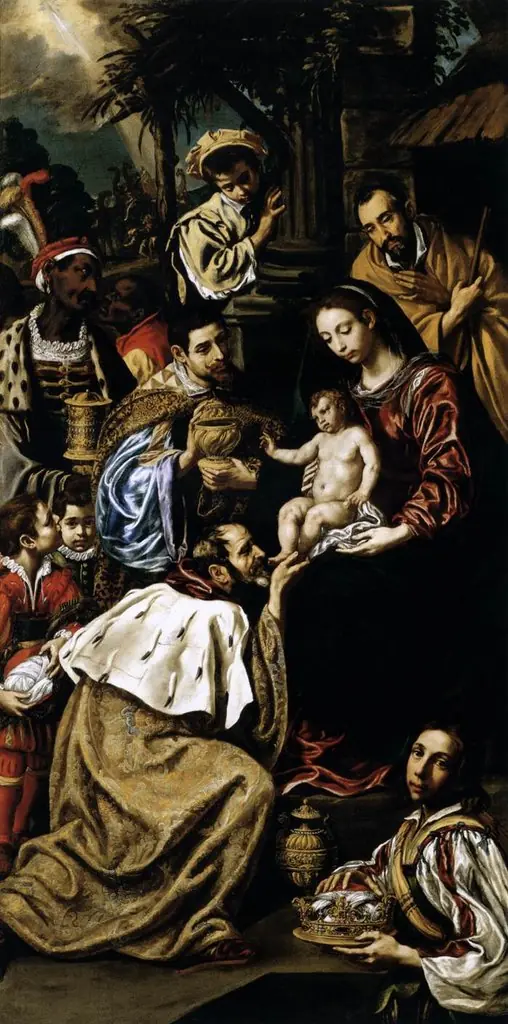
The painting depicts the biblical Adoration of the Magi, showing the three kings presenting gifts of gold, frankincense, and myrrh to the Christ Child.
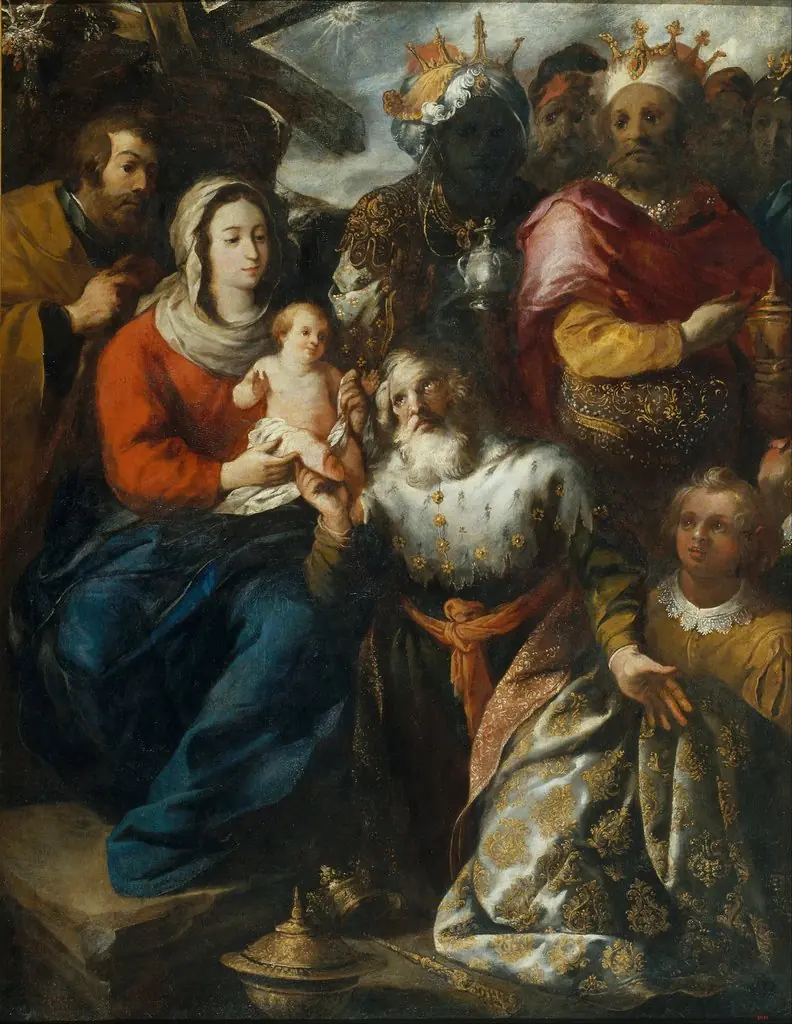
The painting depicts the biblical Adoration of the Magi, showing the three kings presenting gifts of gold, frankincense, and myrrh to the Christ Child. Velázquez follows Christian tradition by portraying Melchior as an older, bearded figure, Balthazar with darker features, and Gaspar as a younger man. The Virgin Mary holds the Christ Child at the center, draped in white, while Saint Joseph stands to the right.
A thorn bush at Mary’s feet symbolizes her contemplation of Christ’s future Passion. The composition is framed by a somber nocturnal setting, with a shaft of light illuminating the central figures, underscoring the sacred moment. Some scholars propose that Velázquez employed family members as models, Juana Pacheco for the Virgin, their daughter for the Christ Child, and Francisco Pacheco for Melchior, though these identifications remain unproven.
Technique & Style
Executed in 1619, this work is an oil painting on canvas measuring 203 cm in height and 125 cm in width. Technical studies indicate the canvas likely retains its original dimensions, though it may have been slightly trimmed at the bottom. The composition is characterized by a dense arrangement of figures that fill the picture plane, creating an intimate yet somewhat claustrophobic atmosphere intended to encourage meditation.
Velázquez employs a dramatic tenebrist style, utilizing strong chiaroscuro to illuminate the Virgin and Child from the upper left while casting the surrounding figures and colorful drapery into deep shadow. The handling reveals the hand of a young artist, with some critics noting specific anatomical awkwardness, such as the disproportionately small head of Saint Joseph and the Virgin's robust, heavy hands. Despite these youthful imperfections, the lighting effectively models the forms and directs the viewer's focus toward the Christ Child.
History & Provenance
Completed in 1619 when the artist was twenty, this large-scale religious work was likely commissioned for the Jesuit Novitiate of San Luis in Seville, a theory supported by the influence of Velázquez's mentor, Francisco Pacheco. Following the expulsion of the Jesuits from Spain in 1767, the painting entered the collection of the Sevillian patron Francisco de Bruna, where it was observed by the English traveler Richard Twiss prior to 1775. After Bruna's death, his nephew Luis Meléndez gifted the canvas to King Ferdinand VII, integrating it into the Spanish royal holdings.
Initially housed at the Monastery of El Escorial and mistakenly attributed to Francisco de Zurbarán in early catalogs, the work was transferred to the Museo del Prado upon its opening in 1819, where it remains. While a lithograph from 1832 suggested the canvas might have been cropped, modern technical analysis indicates the current dimensions are essentially original.
The Adoration of the Magi by Diego Velázquez is held in the Museo del Prado, Madrid, with accession inventory P001067.
It entered the Spanish royal collection by 1819 and has remained in the museum since its inauguration that year. Earlier, it was owned by Francisco de Bruna in Seville and recorded by English traveler Richard Twiss before 1775.
Context
Painted in 1619 when the artist was twenty, the work stands as the largest of Velázquez's early productions, demonstrating his nascent mastery of religious composition and naturalistic portraiture. Scholars generally accept the theory that the piece was commissioned for the Jesuit Novitiate of San Luis in Seville, a connection facilitated by the artist's mentor and father-in-law, Francisco Pacheco. The painting exhibits a distinct Caravaggian influence through its tenebrist use of chiaroscuro, where a dramatic beam of light isolates the figures against a dark background to underscore the Baroque aesthetic.
While technical studies confirm the canvas retains its original dimensions, critics have noted youthful imperfections, such as the small head of Saint Joseph and the robust hands of the Virgin Mary. Despite these early mannerisms, the composition is celebrated for its profound devotional intensity and intimate atmosphere, aligning with Ignatian spiritual directives to focus meditation on the Christ Child.
Overview
Diego Velázquez's Adoration of the Magi, an oil painting from 1619, exemplifies the Baroque style and is housed in the Museo del Prado, Madrid. This significant early work, created when the artist was only twenty, showcases his burgeoning talent in both religious narrative and lifelike depiction. It stands as the largest canvas from his formative years, demonstrating his command of composition and figure painting at a young age.
Own this work as a print
Artist & collection
Artist
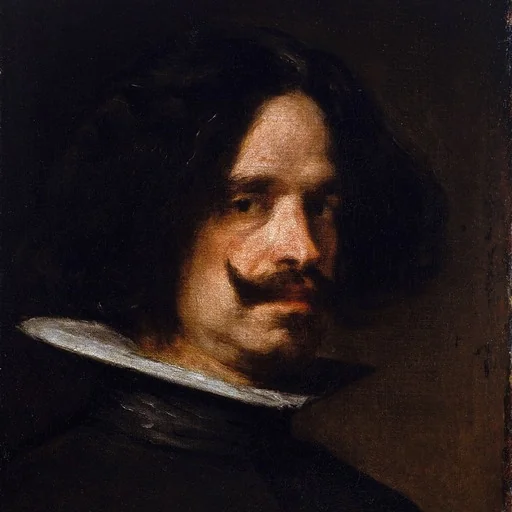
Diego Rodríguez de Silva y Velázquez was a Spanish Baroque painter, the leading artist in the court of King Philip IV of Spain and Portugal, and of the Spanish Golden Age.