Artwork
Portrait of a Man
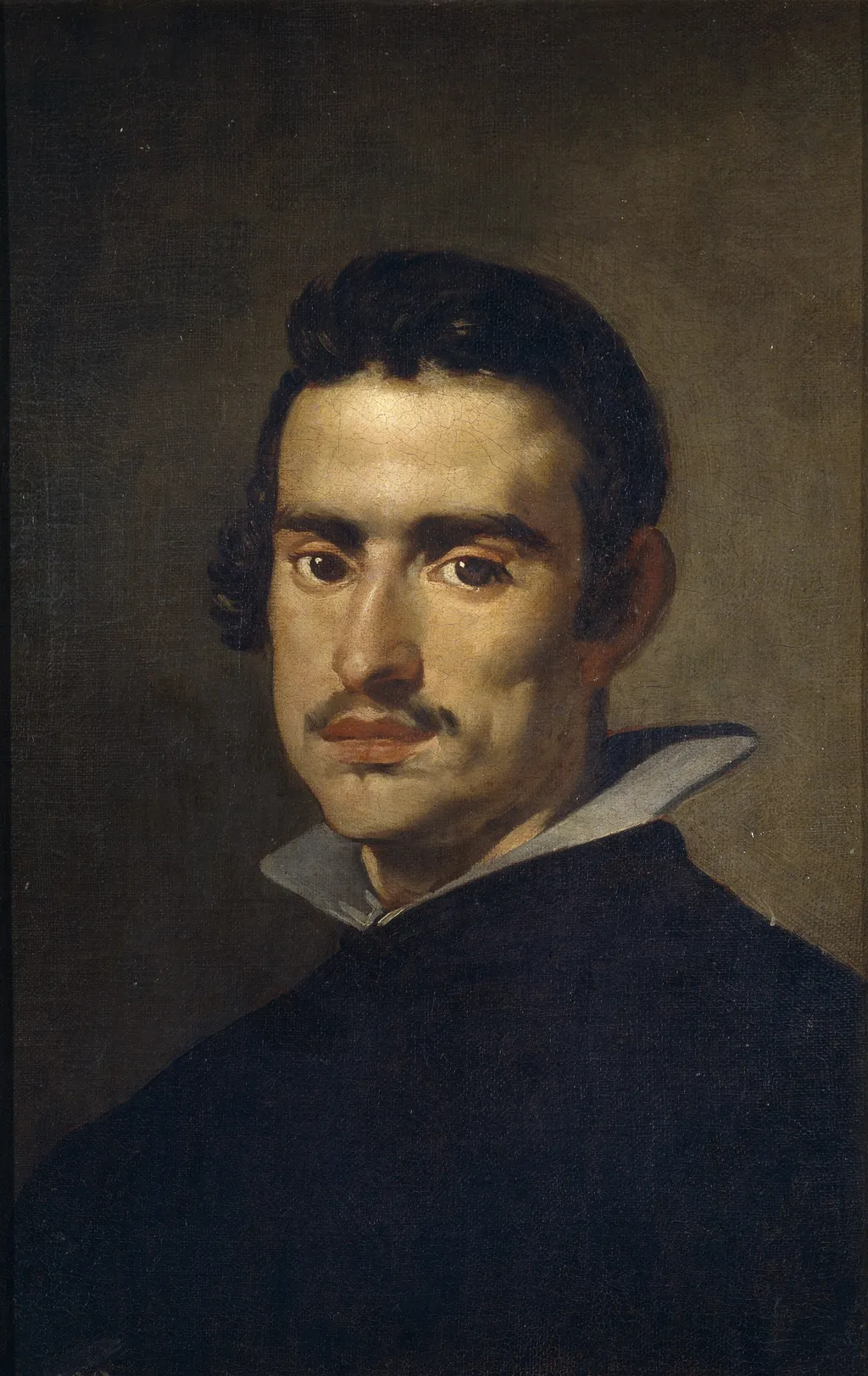
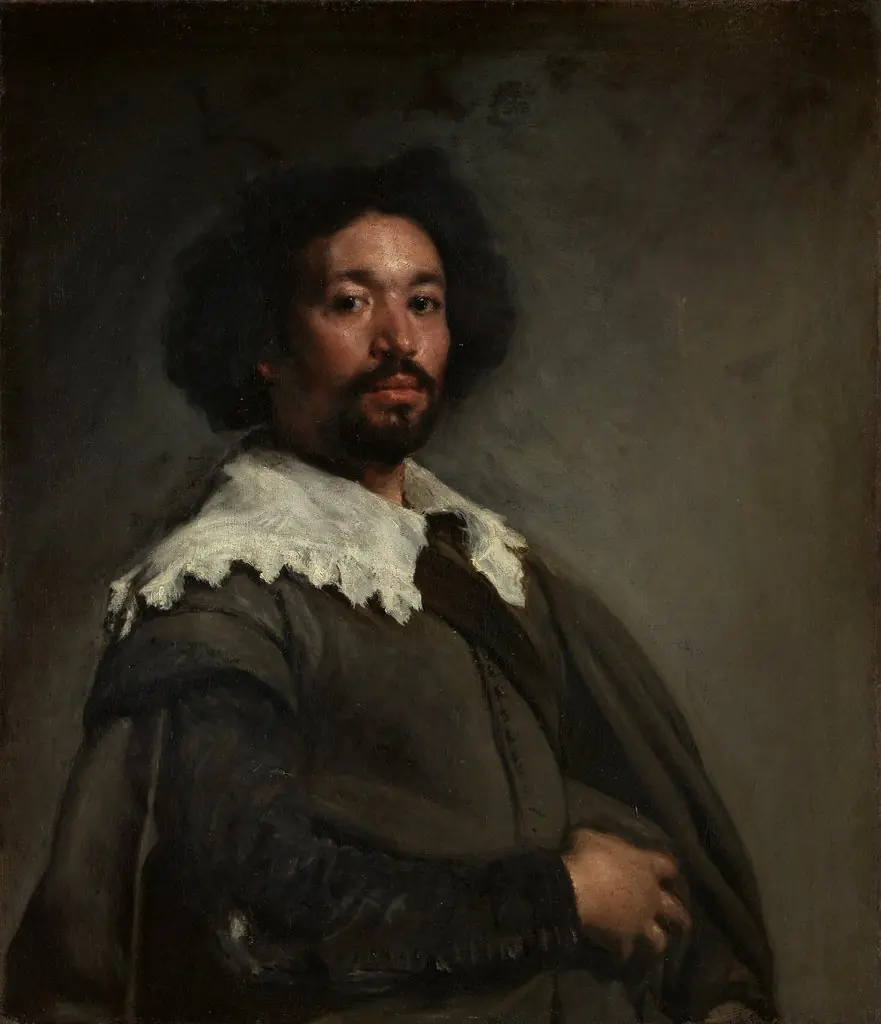
Portrait of a Man is an oil painting by the Early Baroque Italian artist Diego Velázquez. It dates from 1623 and is held in the collection of the Museo del Prado.
About this work
Subject & Meaning
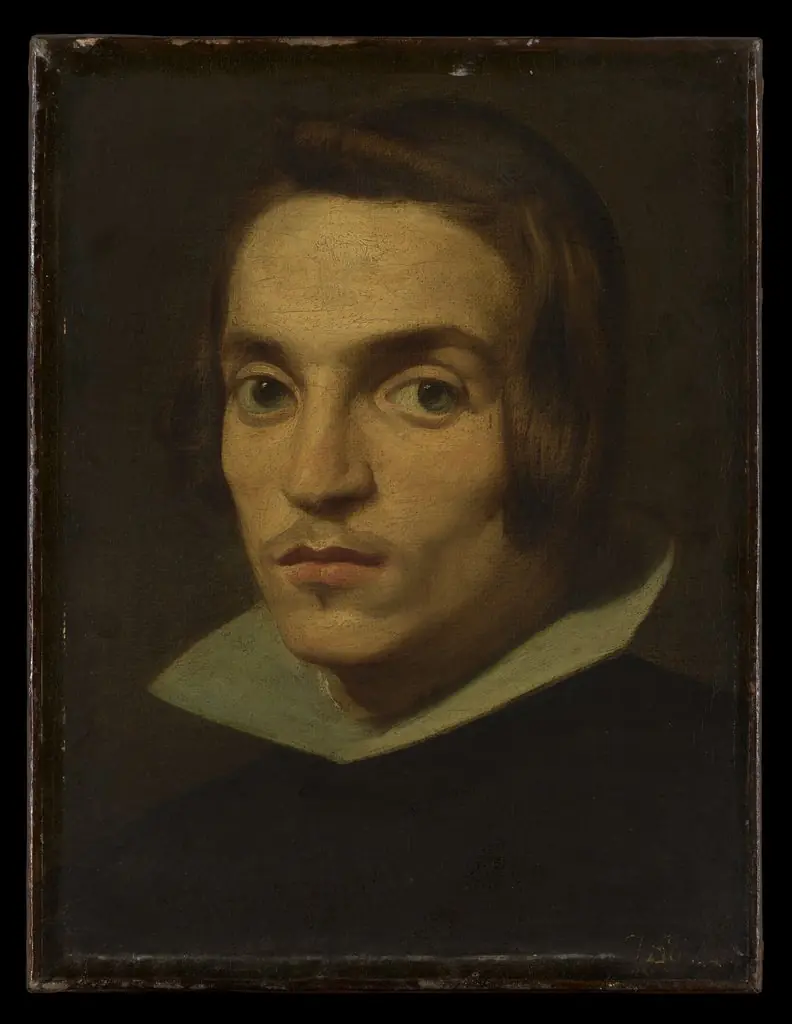
The portrait depicts a young man in three-quarter view against a neutral ground, dressed in a black garment with a stiff, white starched collar known as a golilla. Introduced in Madrid in January 1623 after sumptuary laws restricted lavish ruffs, the collar’s appearance here provides a terminus post quem for the work’s execution in 1623, aligning it stylistically with Velázquez’s earliest court portraits of Philip IV. The sitter’s physiognomy, rendered through concentrated highlights on the nose and eyes and delicate touches defining eyebrows, lashes, and mustache, has prompted repeated speculation that the figure is an idealized self-representation by the artist. Some scholars, including López-Rey and Jonathan Brown, alternatively propose the subject as Juan, Velázquez’s brother and fellow painter in Madrid, citing visual parallels with the figure of Saint John in the artist’s earlier religious compositions.
Technique & Style
The brushwork is described as tight yet technically refined, with radiographic evidence revealing looser underpainting beneath the surface.
The work is an oil painting on canvas, created in 1623 during Velázquez's early period in Madrid. It depicts a young man in three-quarter view against a neutral background, wearing black clothing with a stiff, white, starched collar that entered local fashion in January 1623 following sumptuary laws. The brushwork is described as tight yet technically refined, with radiographic evidence revealing looser underpainting beneath the surface. A limited palette emphasizes black, dark brown, flesh tones, and greyish-white collar elements, while modeling of facial features employs characteristic touches of light on the nose, eyes, and fine details such as eyelashes, eyebrows, and mustache. Scholars note its stylistic proximity to early portraits of Philip IV and suggest it may represent either the artist's brother or a secondary sitter, serving as a laboratory for experimental techniques later applied to royal commissions.
History & Provenance
The work titled Portrait of a Man was painted by Diego Velázquez in 1623 while he was based in Madrid. It was acquired by the Museo del Prado as part of the collection inherited from Ferdinand VII and has remained in that institution since the museum's founding in 1819. Art historians suggest the portrait likely dates after January 1623, when a new style of white, pleated collar replaced older dress accessories, a detail used to establish a precise dating window. Stylistic analysis links it to early works of Velázquez and to possible representations of his brother or a close associate, rather than a self-portrait. The painting is an oil on canvas measuring 55.5 cm by 38 cm and exemplifies the restrained palette and precise modeling characteristic of the artist's early Madrid period. The painting has been held by the Museo del Prado in Madrid since the museum's founding in 1819, when it entered as part of the collection bequeathed by Ferdinand VII. No information about the work is documented prior to its arrival at the museum, possibly because it lacks identifying features that would have linked it to the royal collection. The work has been included in several exhibitions. It appeared in the 1990 Velázquez exhibition at the Museo del Prado, with catalogue entries on pages 80-83, and in the 1999 "Velázquez y Sevilla" exhibition in Seville, cited on page 204 of that catalogue. It is also discussed in Jonathan Brown's 1986 study Velázquez. Pintor y cortesano (p. 34), José López-Rey's 1996 catalogue raisonné (vol. II, p. 54), and Fernando Marías's 1999 monograph (p. 47).
Context
Scholarly debate surrounds the identity of the sitter and the work's authenticity. While early critic Carl Justi dismissed the painting as apocryphal and harsh in execution, later authorities such as Jacinto Octavio Picón, Allende Salazar, August L. Mayer, and José Camón Aznar proposed it was a self-portrait, though Aznar suspected it might be a copy. Conversely, José López-Rey and Jonathan Brown attribute the work to Velázquez but identify the subject as the artist's brother, Juan, citing facial similarities to the figure in Saint John on Patmos. Fernando Marías suggests the piece served as an experimental study for new stylistic techniques prior to Velázquez's official royal portraits. The dating to shortly after January 1623 relies on the depiction of the golilla collar, which replaced the ruff following sumptuary laws, marking the artist's transition upon settling permanently in Madrid.
Legacy
The painting has shaped portraiture by demonstrating how a restrained palette and simplified modeling can convey psychological presence, a strategy that later artists such as Diego Velázquez’s contemporaries and successors adopted when seeking immediacy without ornamental excess. Its technical approach, especially the underpainting of intense red beneath thin glazes, informed the studio practice of 17th‑century Spanish portraitists who experimented with similar tonal foundations before applying them to royal subjects. The attribution debates surrounding its authorship have kept the work at the center of scholarly discourse, prompting reevaluations of workshop practices and the identification of other undocumented portraits in the Museo del Prado collection.
Own this work as a print
Artist & collection
Artist
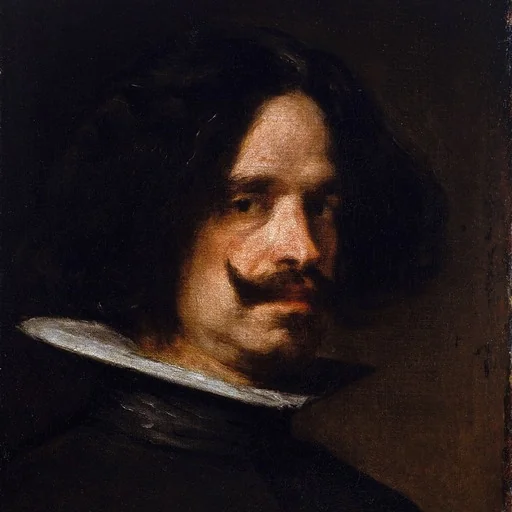
Diego Rodríguez de Silva y Velázquez was a Spanish Baroque painter, the leading artist in the court of King Philip IV of Spain and Portugal, and of the Spanish Golden Age.

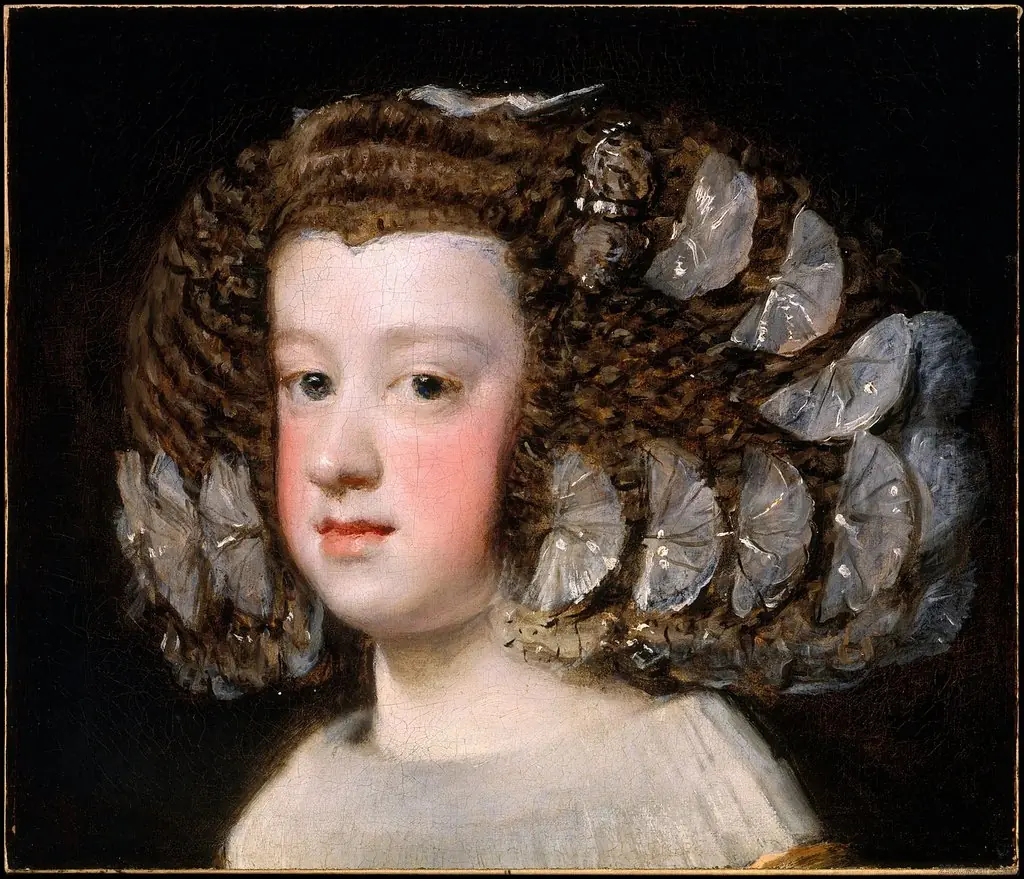
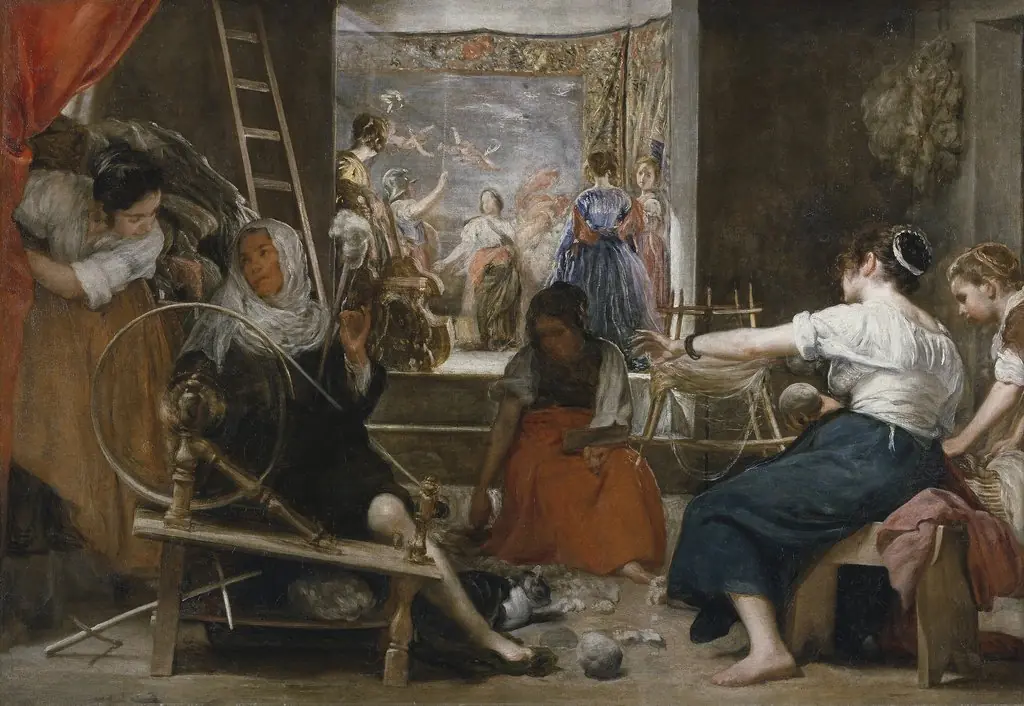
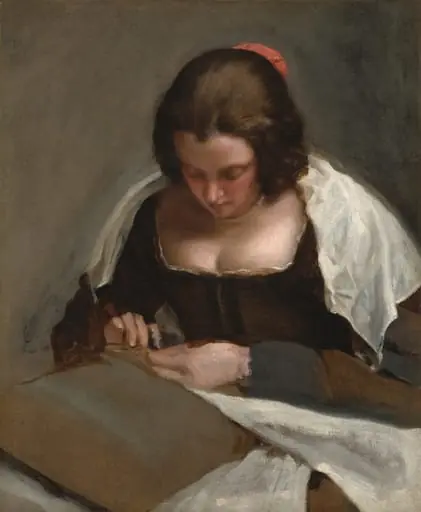
- Portrait of a Man
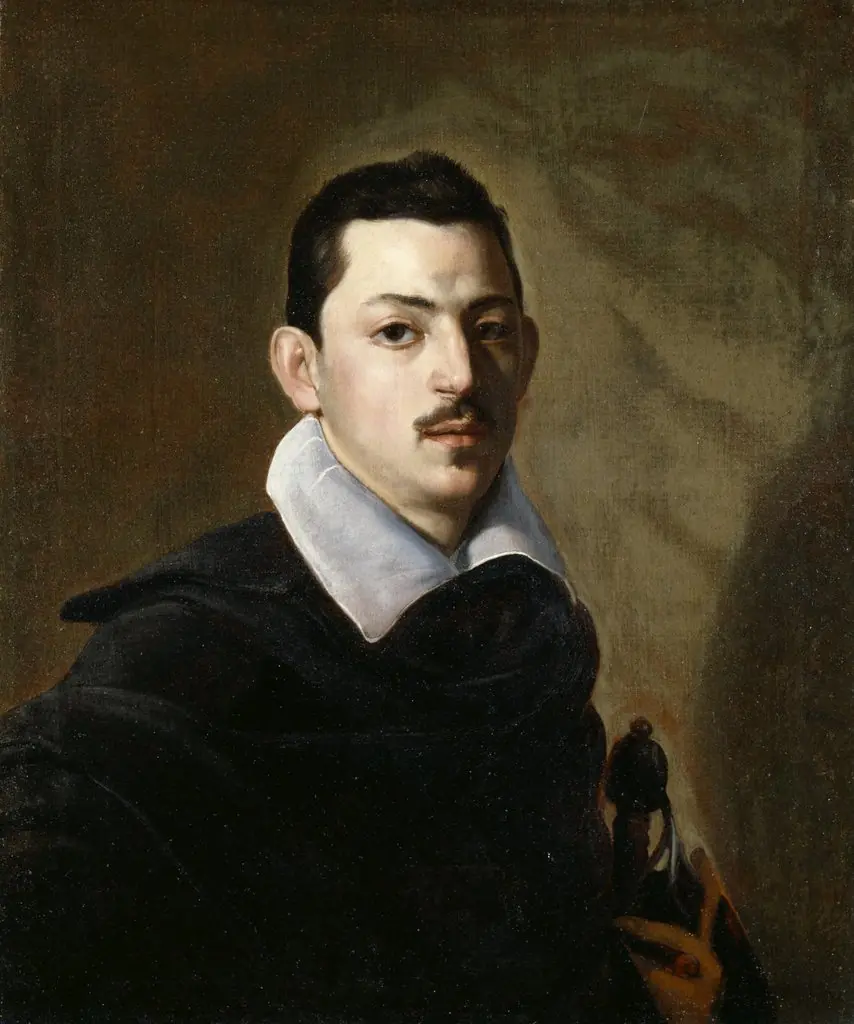 Portrait of a Young Man with a Sword
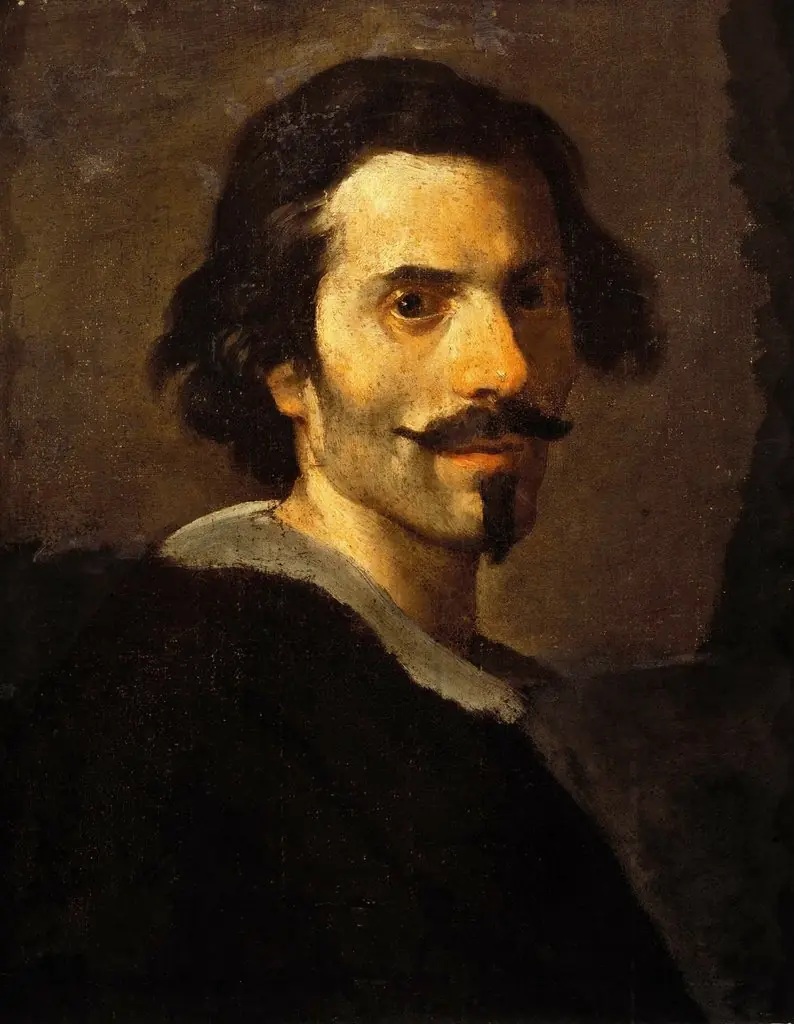 Self Portrait of Gianlorenzo Bernini as a Mature Man (1638-40)
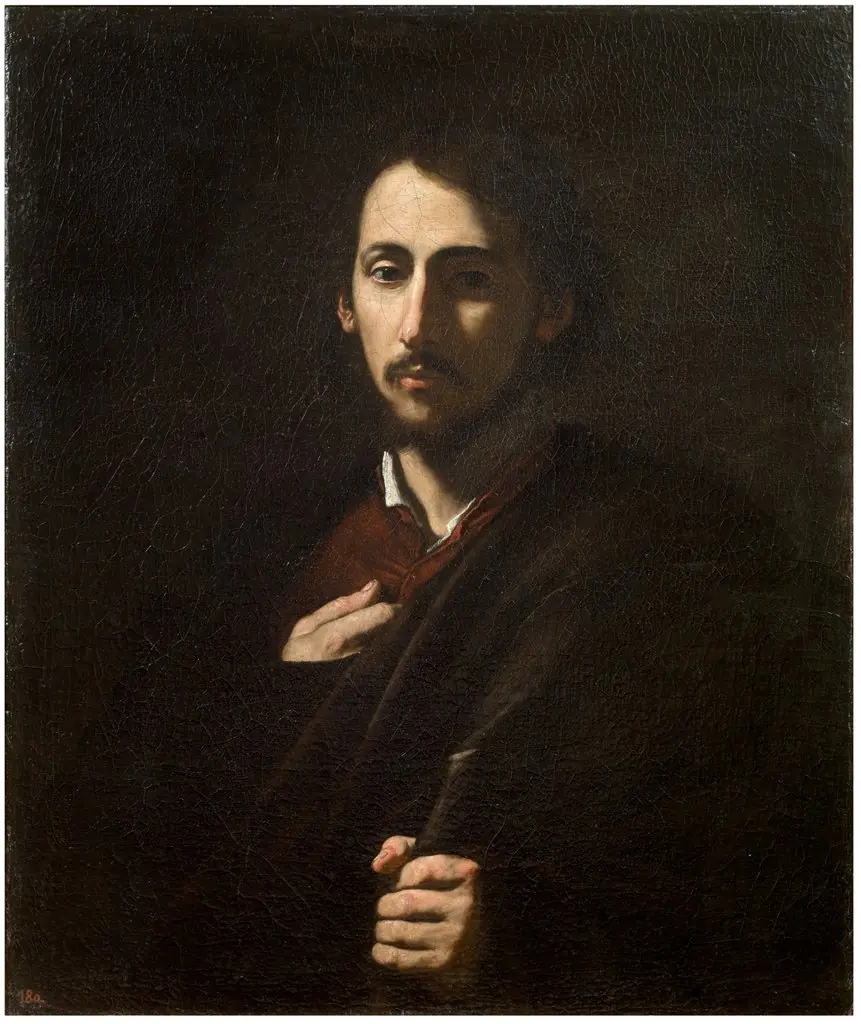 Saint James the Less
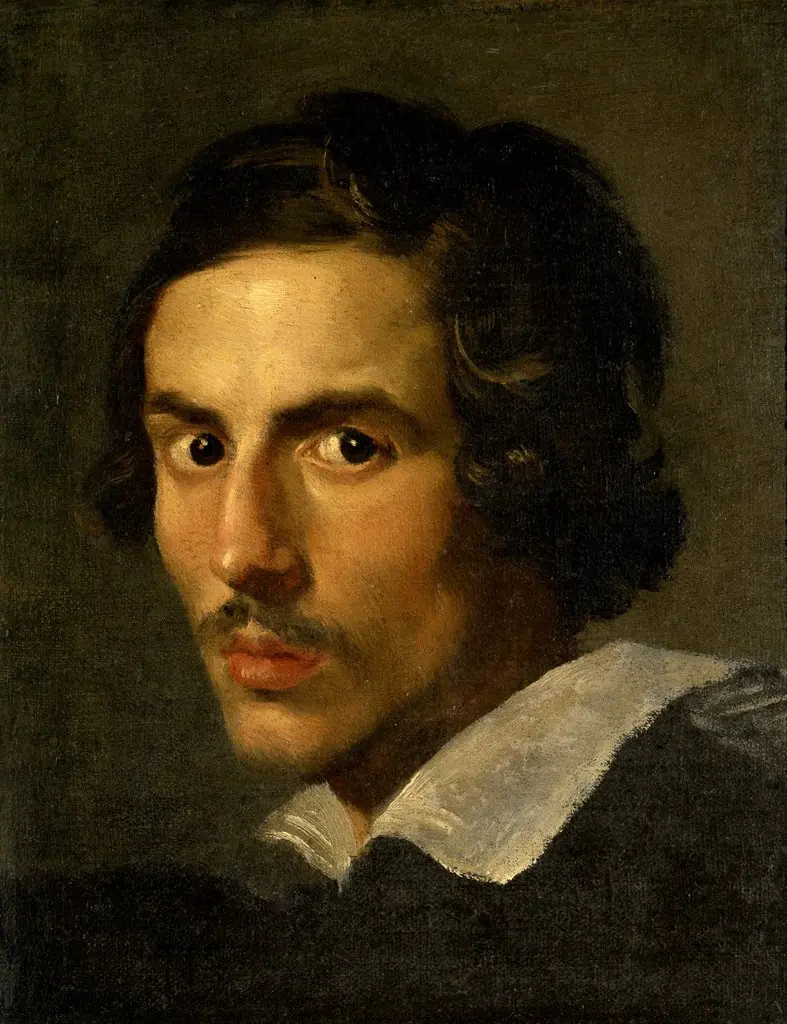 Self Portrait of Gianlorenzo Bernini as young man (1623)
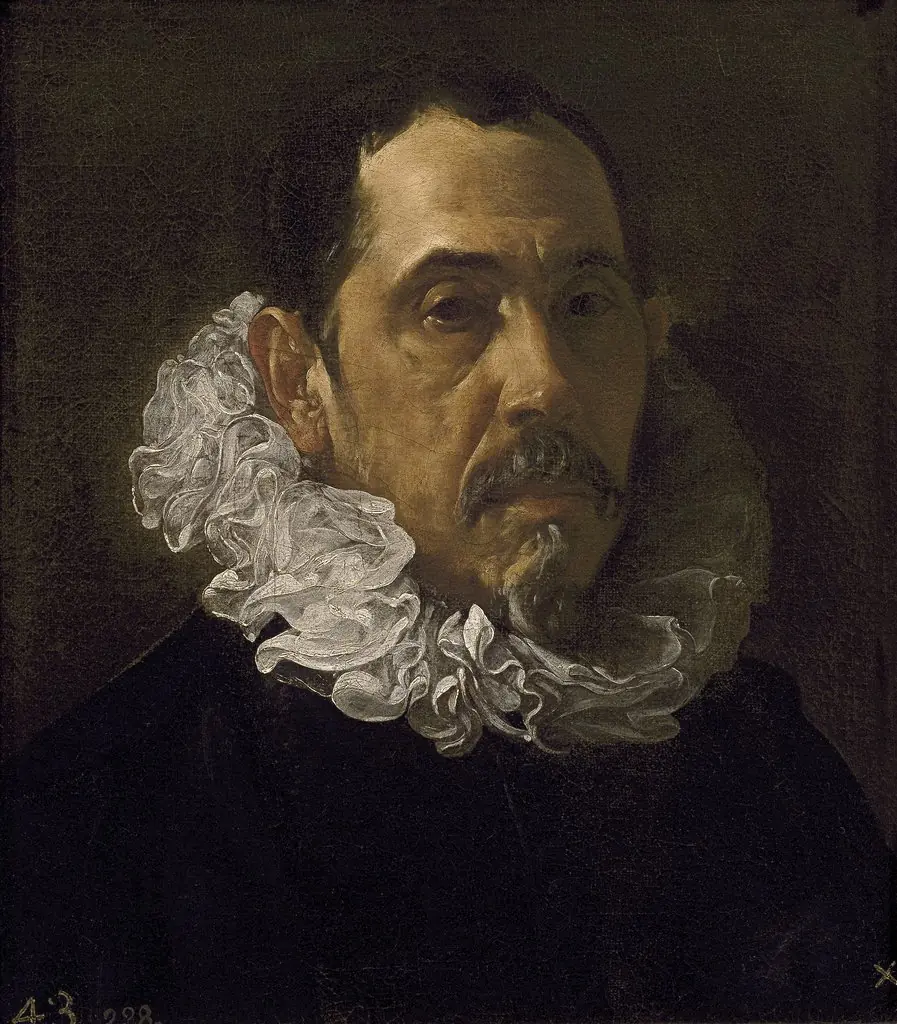 Francisco Pacheco
 Portrait of a man
 Brustbild eines jungen bärtigen Mannes
 Head of a Man
 Self Portrait of Gianlorenzo Bernini
 Portrait of a Knight of Malta
 Portrait of a Young Man