Artwork
Prince Balthasar Charles With a Dwarf
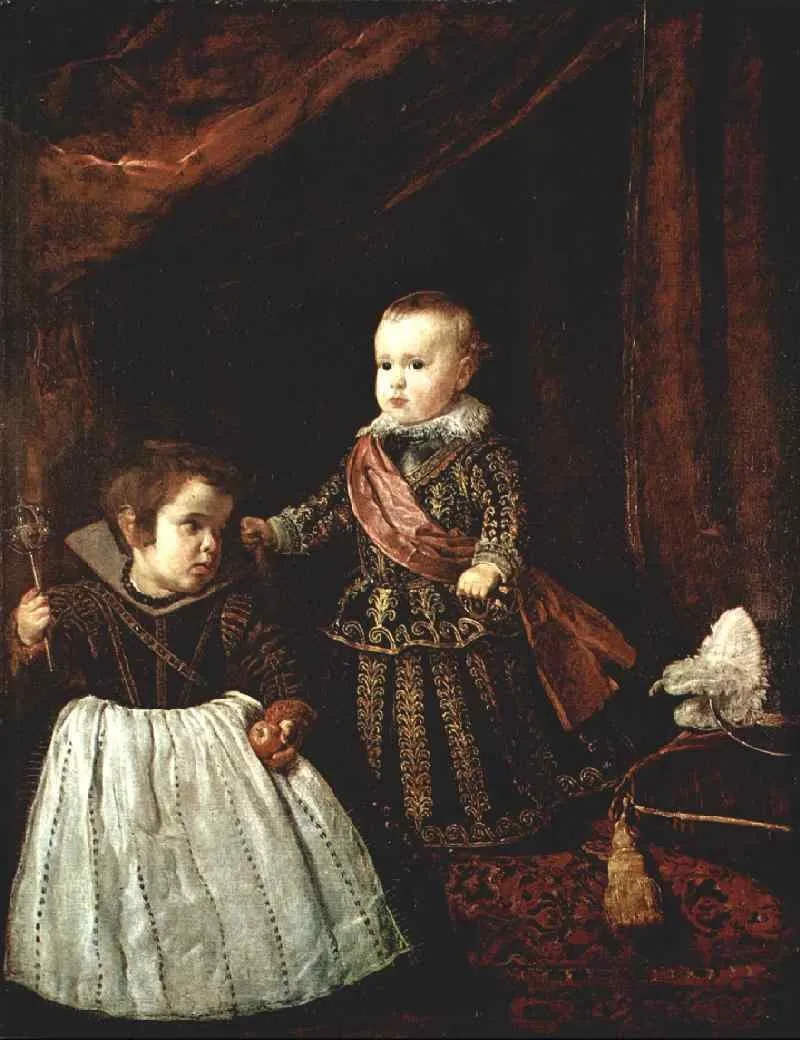
Prince Balthasar Charles With a Dwarf is an oil painting by the Early Baroque Italian artist Diego Velázquez. It dates from 1631 and is held in the collection of the Museum of Fine Arts Boston.
About this work
Diego Velázquez painted Prince Balthasar Charles With a Dwarf in 1631. The oil portrait shows the young prince with a court dwarf. Velázquez made several portraits of this boy.
This was the first portrait Velázquez did of the prince. The prince would later rule Spain for just four years before dying young. The dwarf stands beside him in the painting.
Look up Diego Velázquez next.
Overview
9 centimeters, the painting is held in the collection of the Museum of Fine Arts, Boston, where it has resided since 1901.
Prince Balthasar Charles With a Dwarf is an oil on canvas portrait painted by Diego Velázquez in 1631, depicting Balthasar Charles, Prince of Asturias, alongside a court dwarf. Measuring 128.0 by 101.9 centimeters, the painting is held in the collection of the Museum of Fine Arts, Boston, where it has resided since 1901. This work is the first of several portraits Velázquez made of the young prince, and it occupies a significant place in the artist's early court production, exemplifying his innovative approach to royal portraiture through its complex spatial construction and the provocative pairing of heir and dwarf.
Subject & Meaning
The portrait depicts the young Prince Balthasar Charles in the elaborate dark costume of a captain general, complete with gold embroidery, a white lace collar, a pink sash across his chest, and the baton and sword of military command, his right hand gripping the garment of the standing figure beside him. The dwarf, positioned to the left, holds a rattle and supports a white cloth or garment, wearing dark clothing with a large white collar; a plumed hat rests on a surface nearby. The dwarf also carries an apple. These objects, rattle and apple, carry symbolic weight: scholars have interpreted them as childish playthings that contrast with the prince's military regalia, underscoring that the heir to Europe's most powerful monarchy required not toys but martial instruction and governance training. The static, formal pose of the prince contrasts sharply with the dwarf's dynamic presence, creating a visual and conceptual tension between the obligations of state and the freedoms of childhood. Julián Gállego has proposed that the dwarf functions as a symbolic counterpoint to Habsburg gravitas, while the debate over the figure's gender, attire, and identity, including José Camón Aznar's suggestion of feminine dress, remains unresolved in scholarship.
Technique & Style
Velázquez executed the work in oil on canvas with a palette dominated by deep browns, blacks, and reds, accented by touches of white and gold. The composition is vertical and intimate, with the two figures pressed close to the picture plane against a dark interior framed by heavy drapery, a patterned red carpet beneath them. Strong chiaroscuro models the figures against the dark background. The brushwork is smooth and precise in the faces and textiles, with notably looser handling in the drapery and background areas. A tassel hangs near the carpet's edge, adding tactile detail. Scholarly debate centers on stylistic discrepancies between the meticulously rendered prince and the more freely painted dwarf, which Bernardino de Pantorba argued indicates the dwarf was a later addition, painted separately from the original portrait. Gállego's alternative interpretation proposes that the horizontal line dividing the carpet signals a picture-within-a-picture: the dwarf occupies real space while the prince stands upon a vertically perspectived, illusionistic carpet as if within a framed replica of an earlier 1631 portrait, the dwarf's looser style thus reflecting his placement in the real world versus the prince's artifice.
History & Provenance
The painting was originally acquired by Henry Howard, 4th Earl of Carlisle, in Parma in the mid-eighteenth century. It remained in the Carlisle family for over a century, passing through successive earls: Frederick Howard, 5th Earl; George Howard, 6th Earl; George Howard, 7th Earl; William George Howard, 8th Earl; and George Howard, 9th Earl. In 1900, George James Howard, the 9th Earl, sold the work to the dealer Knoedler and Co., which received shipment in October of that year. The Museum of Fine Arts, Boston, purchased the painting for $80,000 in 1901, and it officially entered the collection on February 2, 1901, where it remains. The work has been exhibited publicly, including in the Velázquez exhibition referenced in museum catalogues.
Context
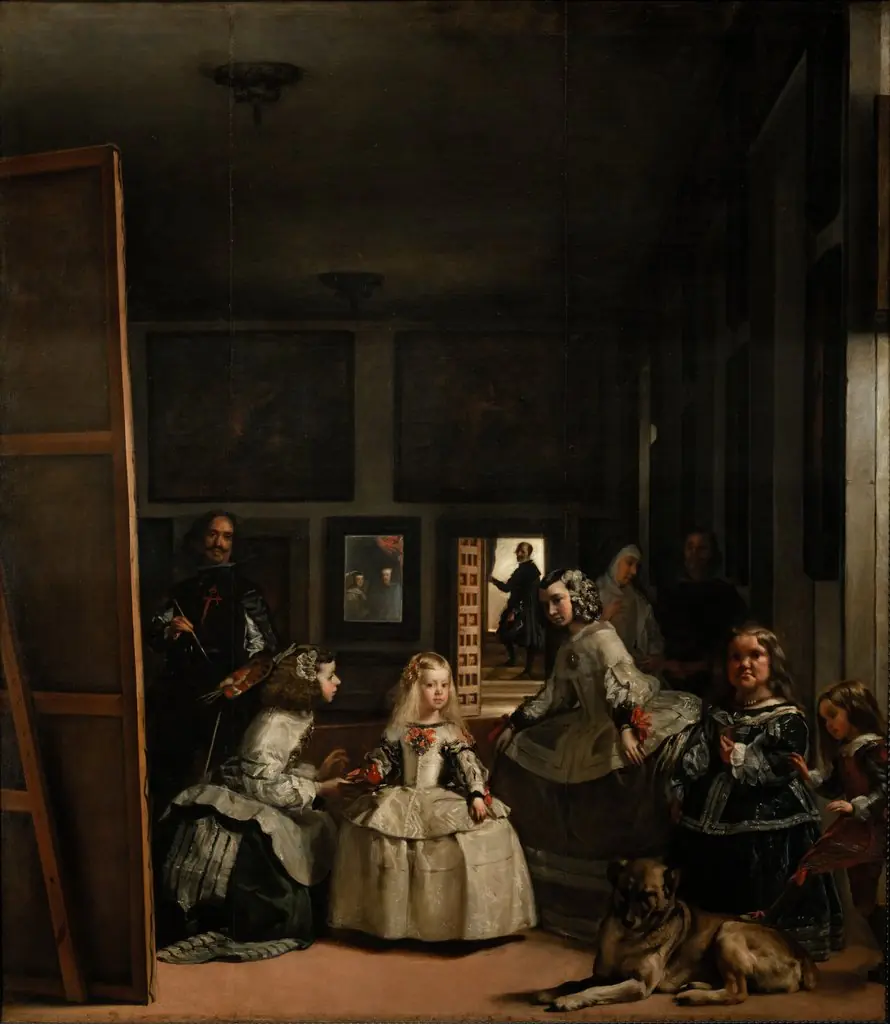
Painted early in Velázquez's career at the Spanish court, this portrait emerges from the artist's role as pintor del rey to Philip IV. The inclusion of a court dwarf reflects the established Habsburg practice of keeping such figures, yet Velázquez's treatment transcends mere convention. The scholarly disputes, Pantorba's argument for a later addition of the dwarf, Camón Aznar's gender reading, and Gállego's picture-within-picture hypothesis, all testify to the painting's resistance to easy interpretation. If Gállego is correct, the work engages in sophisticated meta-pictorial games comparable to Velázquez's later Las Meninas, collapsing boundaries between reality and representation decades before that masterpiece. The proposed dates of 1631 to 1632 would align with the documented entry of the dwarf Francisco Lezcano into the prince's service around 1634, though this chronology remains contested. The painting thus stands at the center of ongoing debates about Velázquez's working methods, his conceptual ambitions, and the evolving function of court portraiture in seventeenth-century Spain.
Legacy
As the inaugural portrait of Balthasar Charles by Velázquez, the painting established a visual template for subsequent representations of the young heir. Its acquisition by the Museum of Fine Arts, Boston, in 1901 marked an important moment in the international recognition of Spanish Golden Age painting, with the substantial purchase price of $80,000 reflecting its perceived significance. The work's presence in American collections has made it accessible to generations of scholars and viewers outside Spain, contributing to Velázquez's reputation as a painter of psychological and formal complexity. The unresolved debates about its composition, the dwarf's identity, and the picture-within-picture hypothesis continue to generate scholarly attention, ensuring its place in Velázquez studies as a work that challenges rather than confirms easy assumptions about court portraiture. Its cultural afterlife is thus inseparable from the interpretive problems it poses, problems that have only intensified its stature in the history of European art.
Artist & collection
Artist
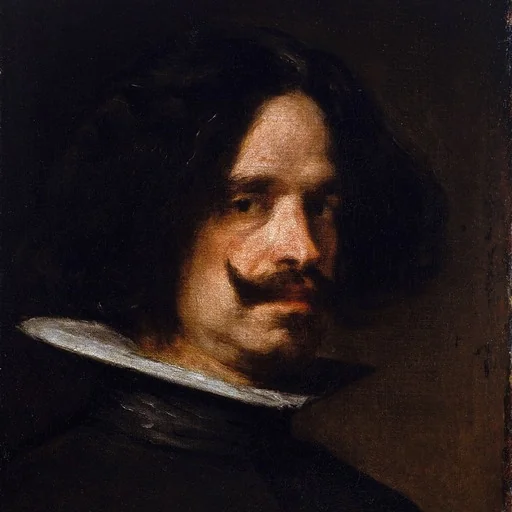
Diego Rodríguez de Silva y Velázquez was a Spanish Baroque painter, the leading artist in the court of King Philip IV of Spain and Portugal, and of the Spanish Golden Age.

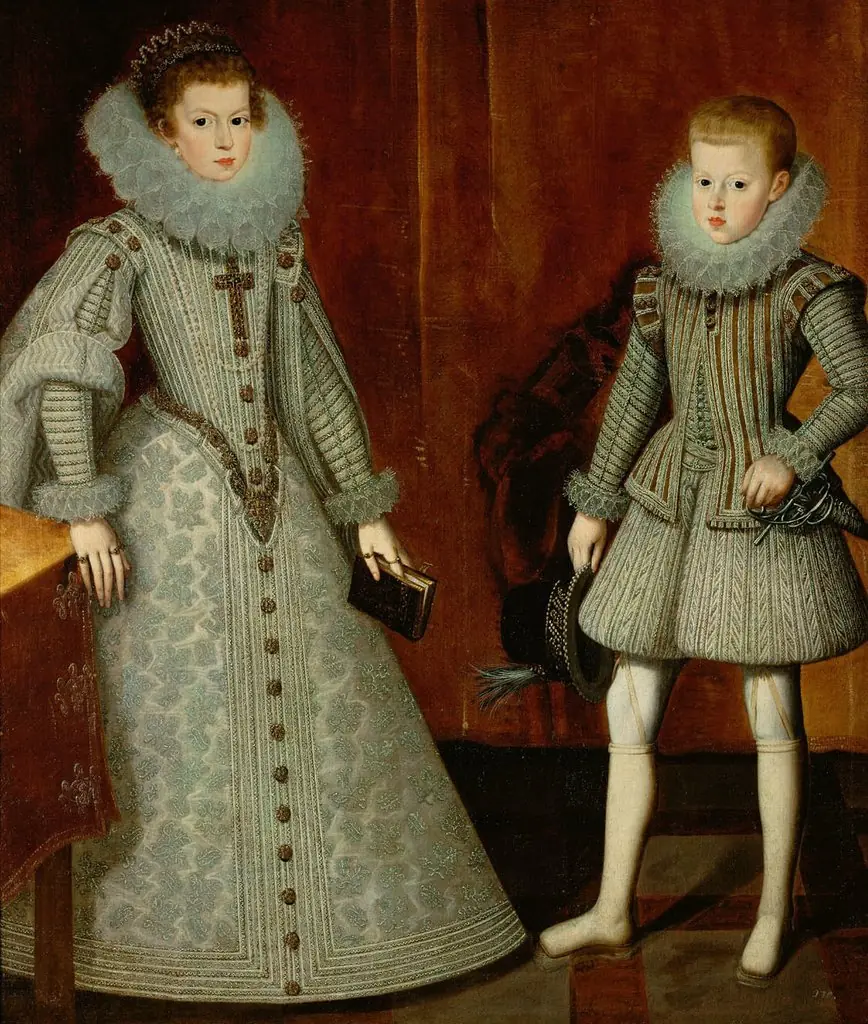
- König Philipp IV. von Spanien (1605-1665) mit seiner Schwester, der Infantin Anna (1601-1666), Bildnis in ganzer Figur
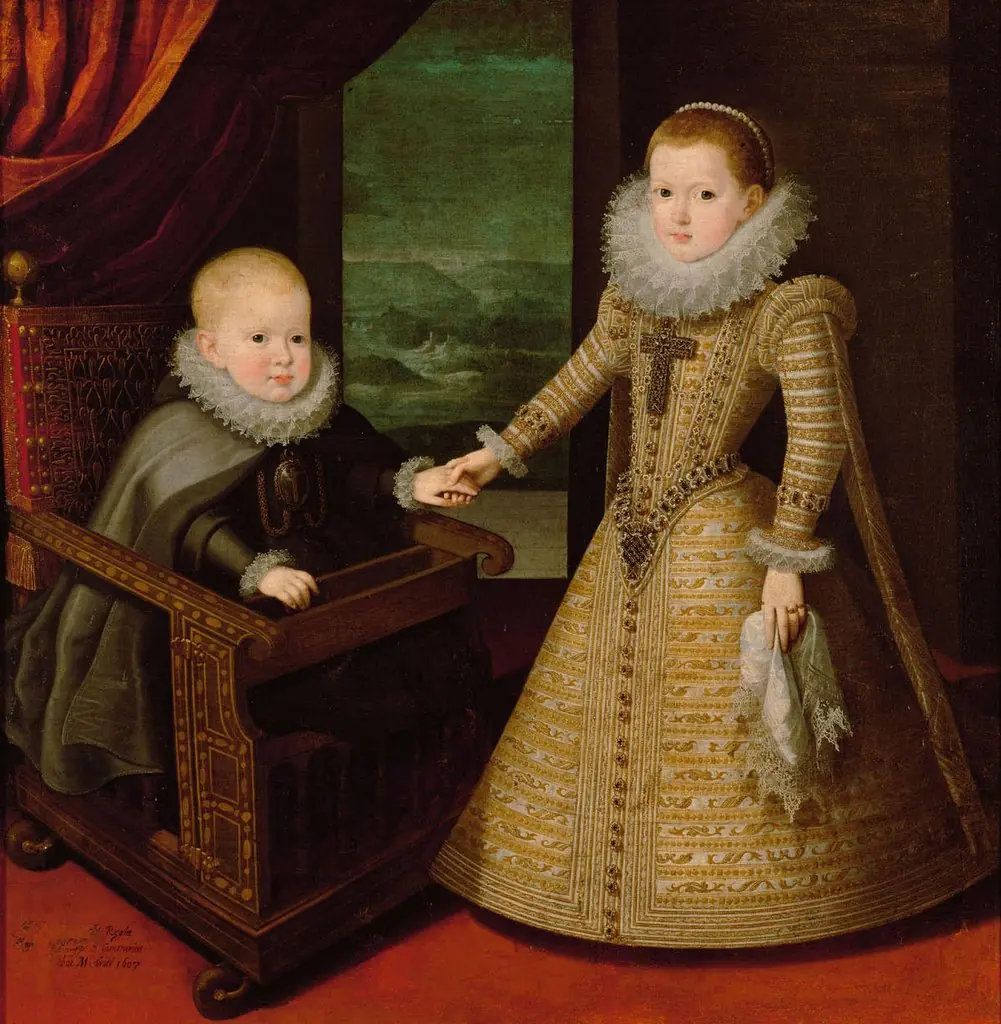 König Philipp IV. von Spanien (1605-1665) in geistlichem Gewand und seiner Schwester Infantin Anna (1601-1666), Bildnis in ganzer Figur
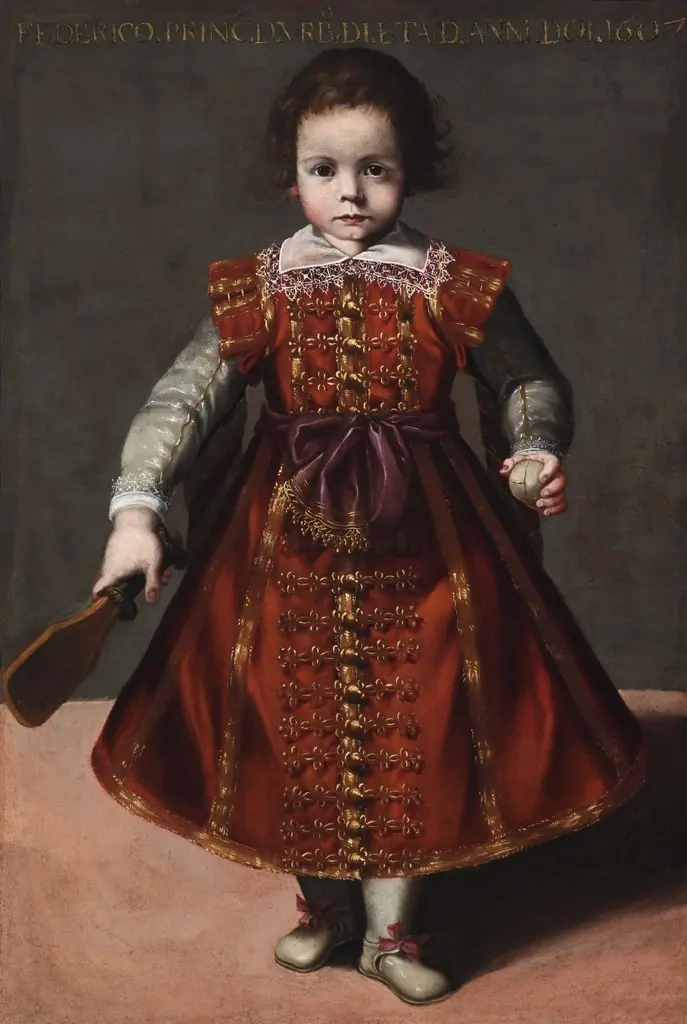 Federico, Prince of Urbino, at the Age of Two Years
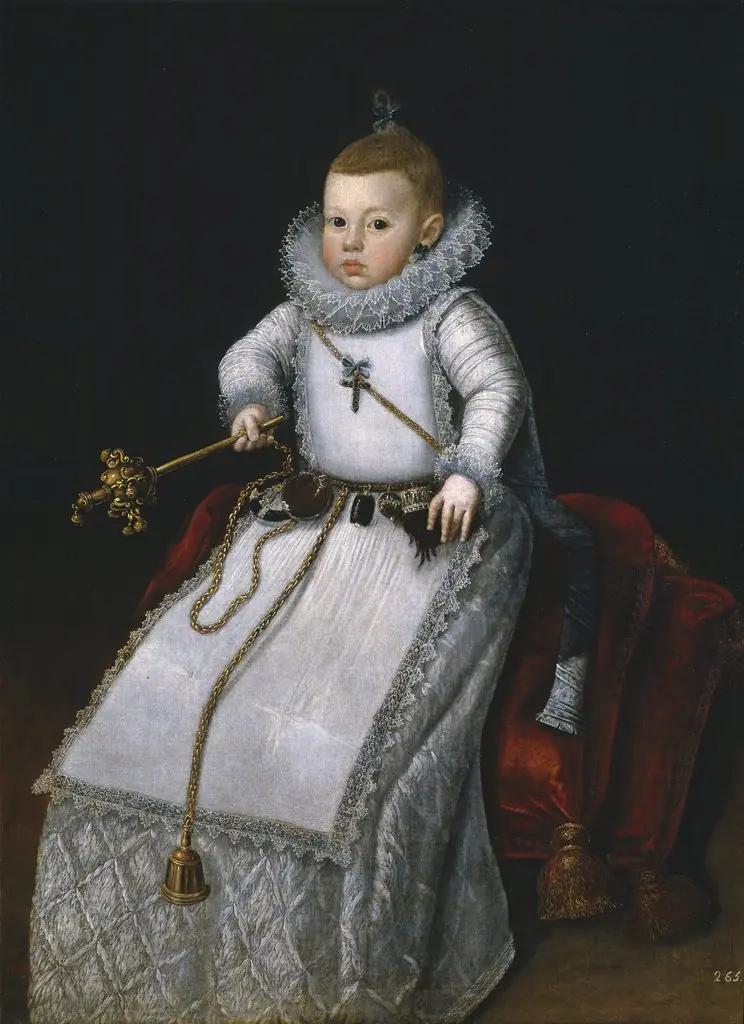 Infanta Margarita Francisca, Daughter of Philip III
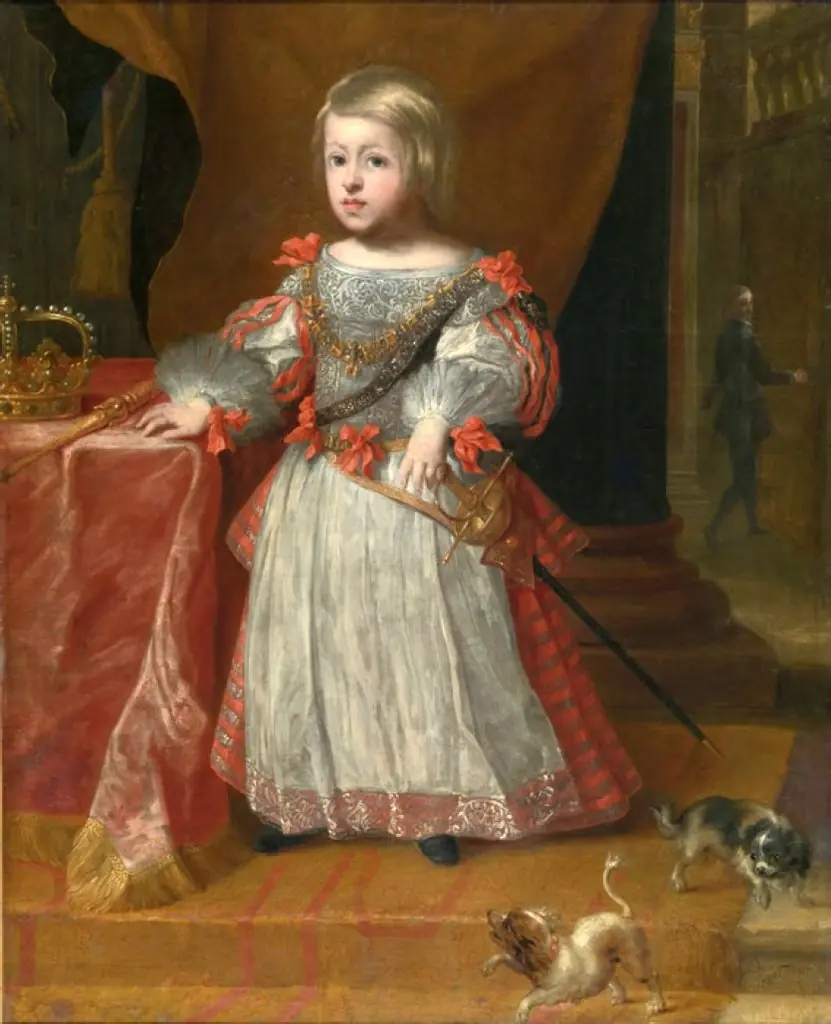 Childhood portrait of Charles II of Spain
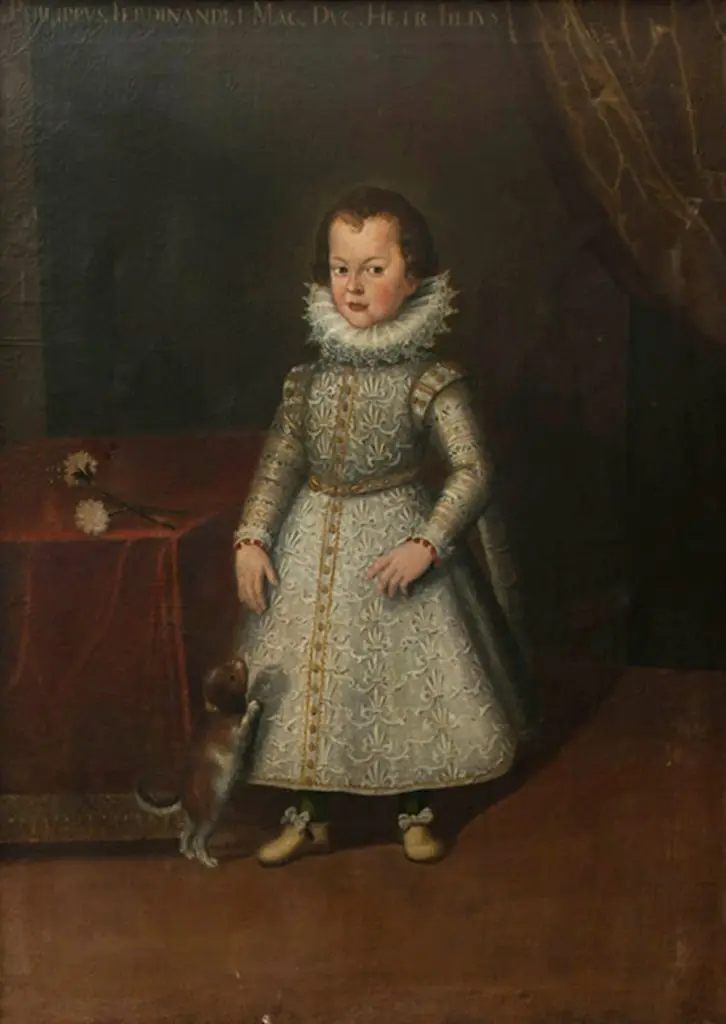 Kinderbildnis des Philipp, Sohn des Großherzogs Ferdinand I. von Toskana
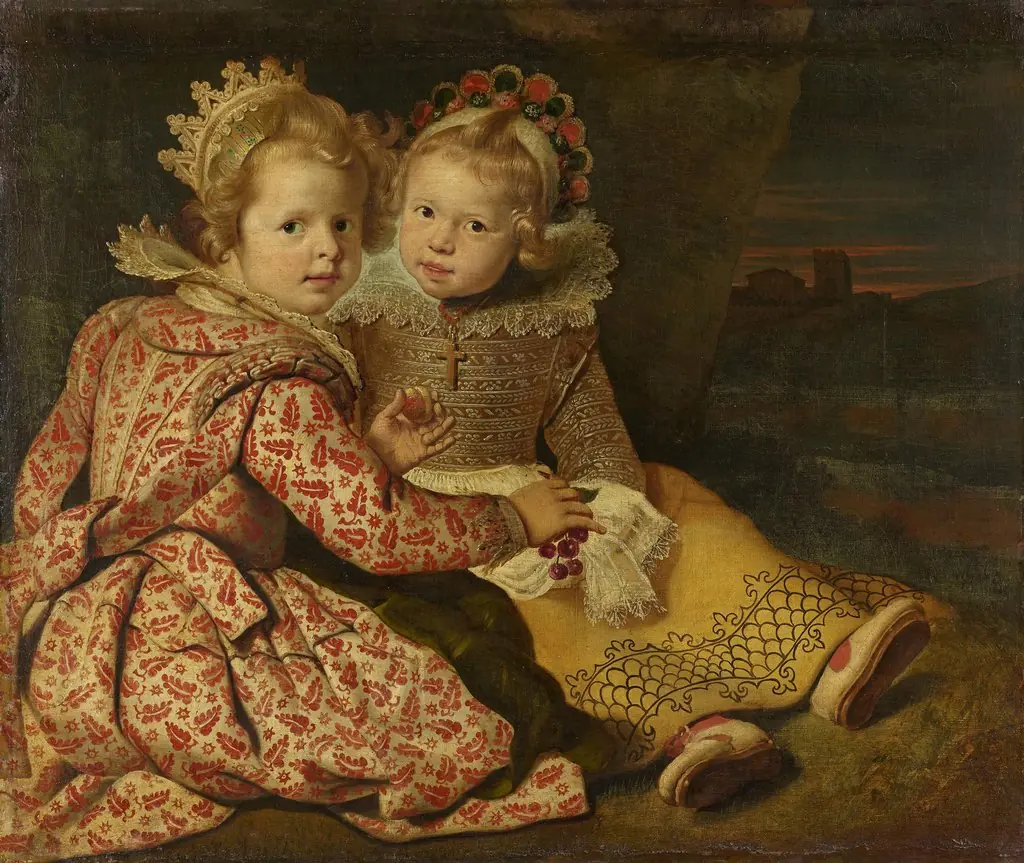 Magdalena and Jan-Baptist de Vos, Children of the Painter
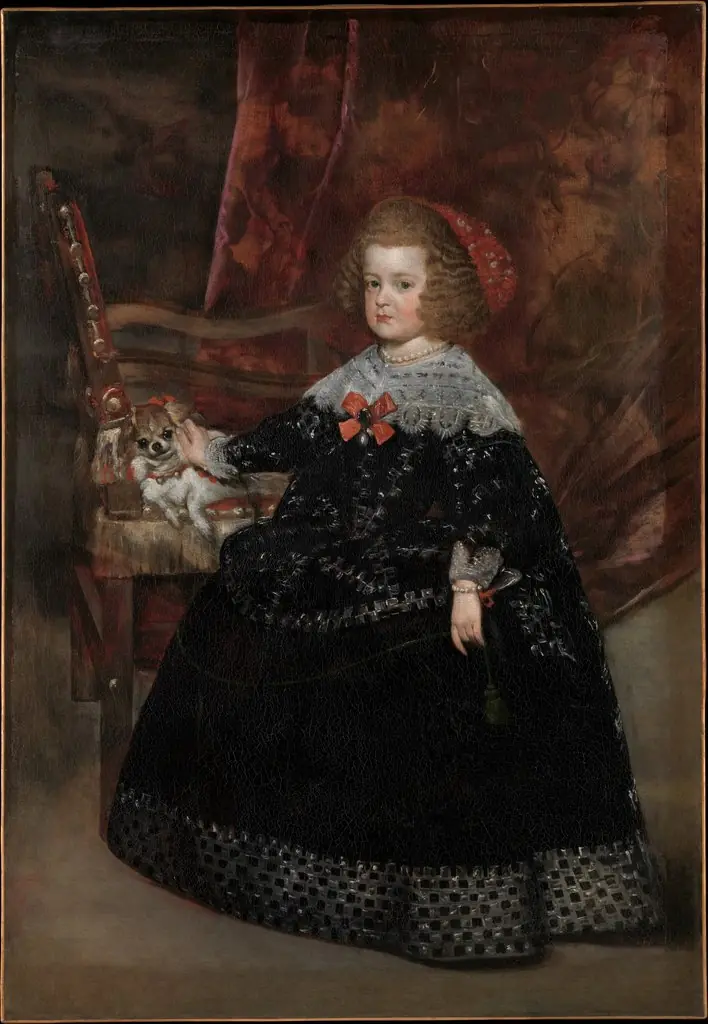 María Teresa (1638–1683), Infanta of Spain
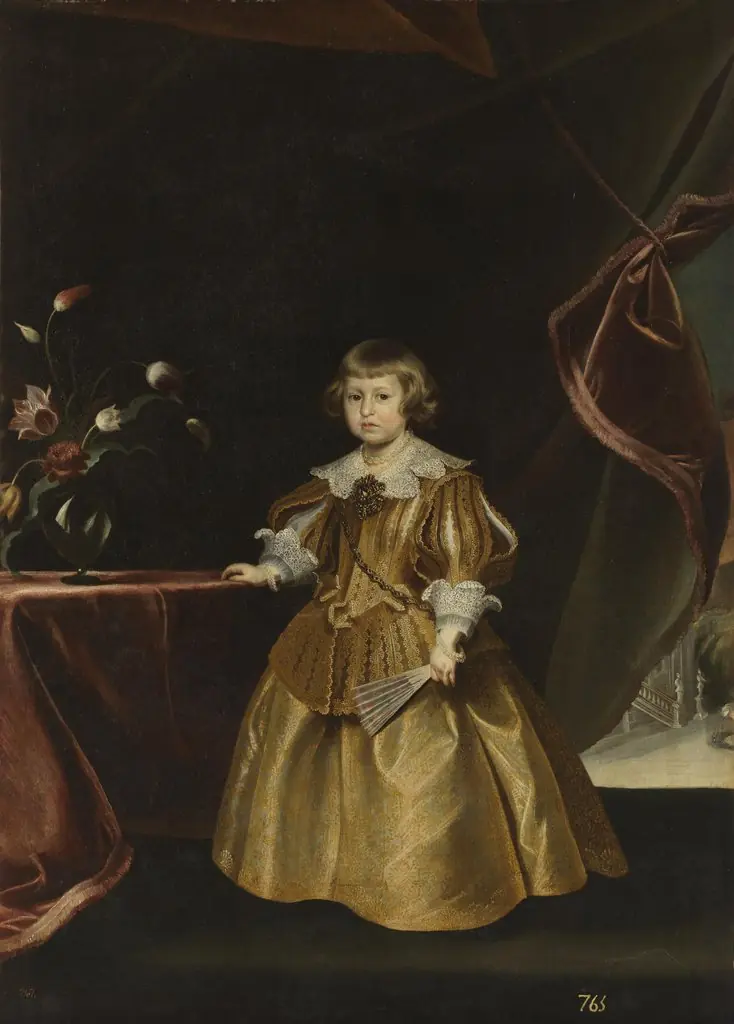 Portrait of an infanta
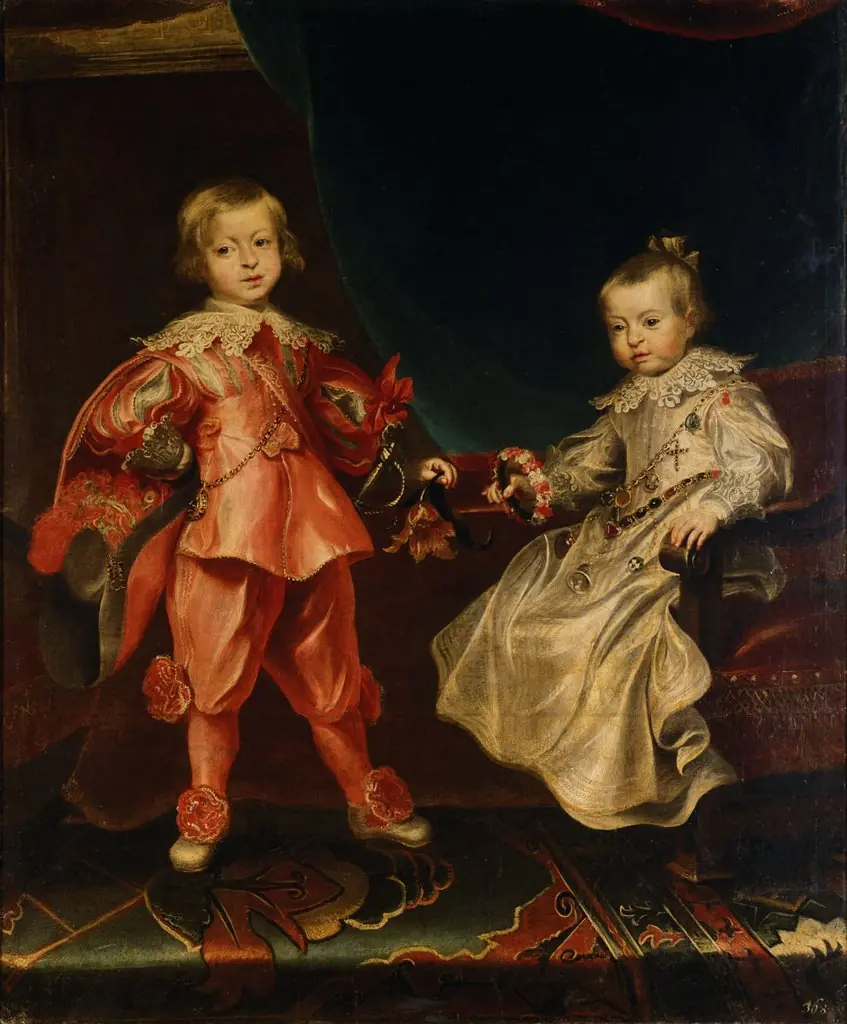 Portrait of Ferdinand IV with his sister Maria Anna