Artwork
The Supper at Emmaus
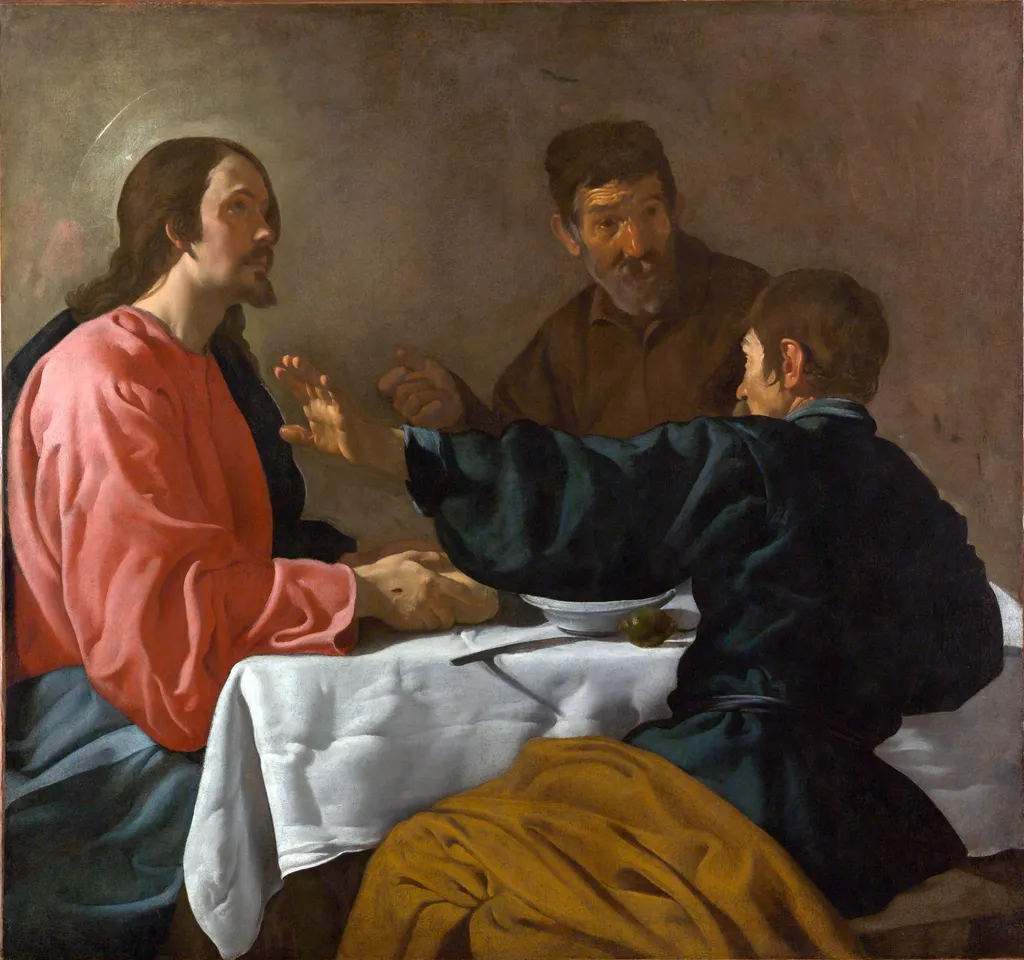
The Supper at Emmaus is an oil painting by the Early Baroque Italian artist Diego Velázquez. It dates from 1618 and is held in the collection of the Metropolitan Museum of Art.
About this work
Subject & Meaning
The Supper at Emmaus depicts the biblical episode from Luke 24:13–35, where the resurrected Jesus reveals himself to two disciples during a meal in Emmaus.
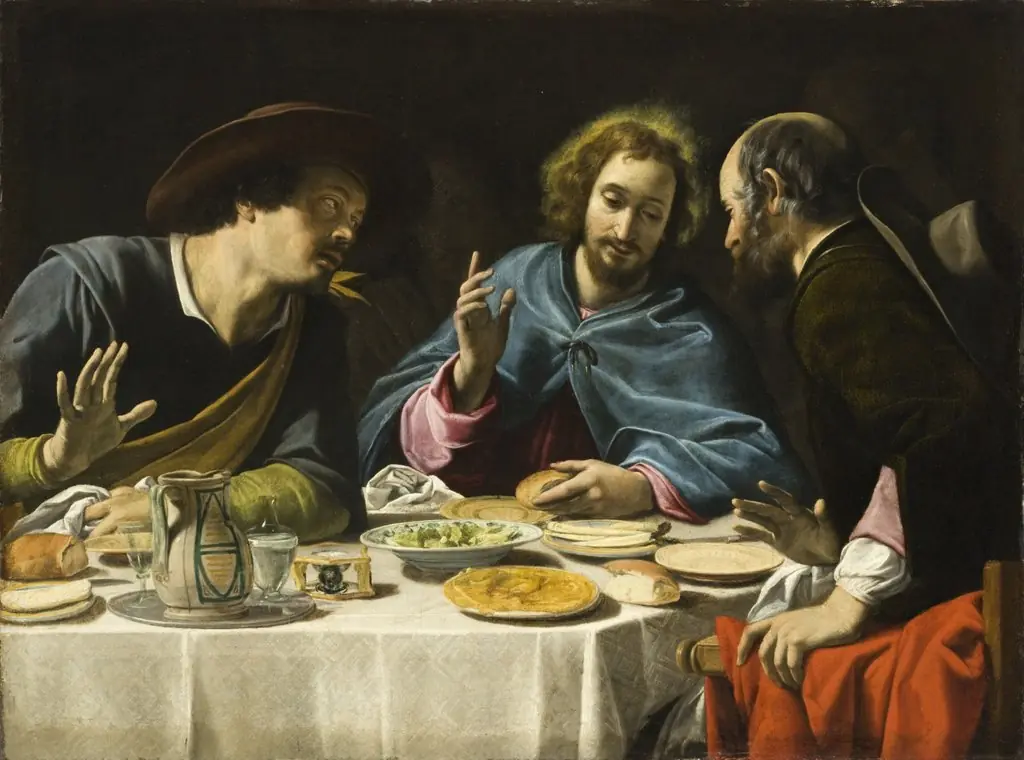
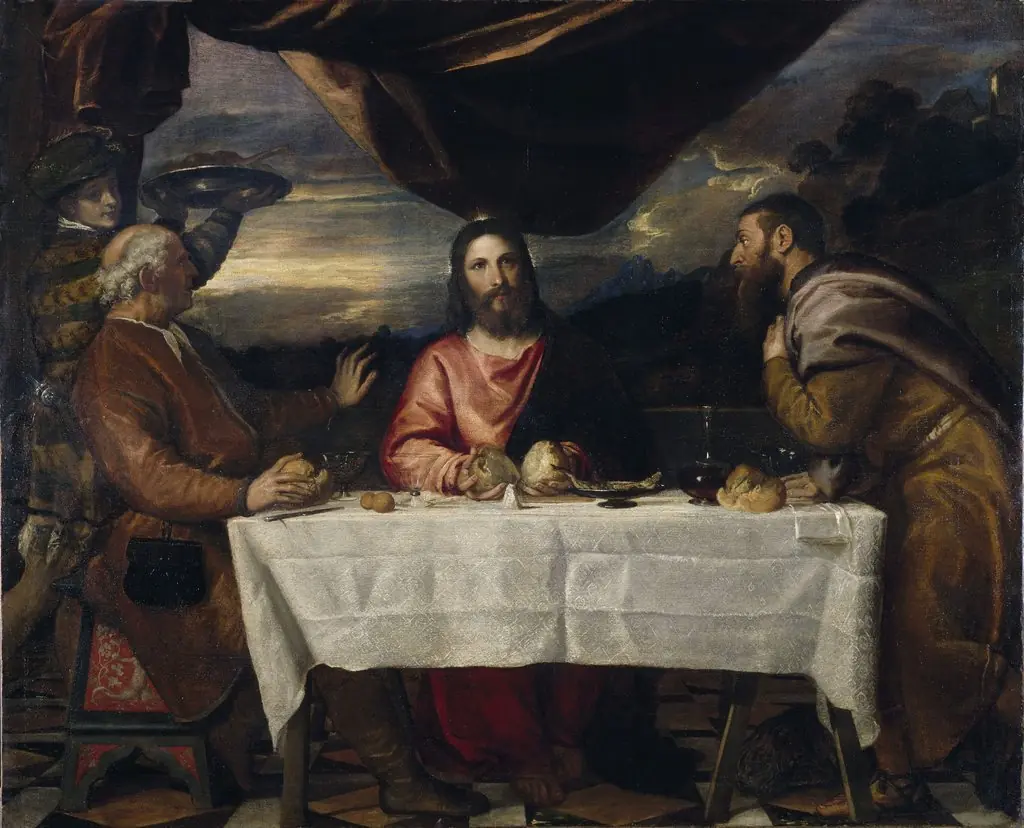
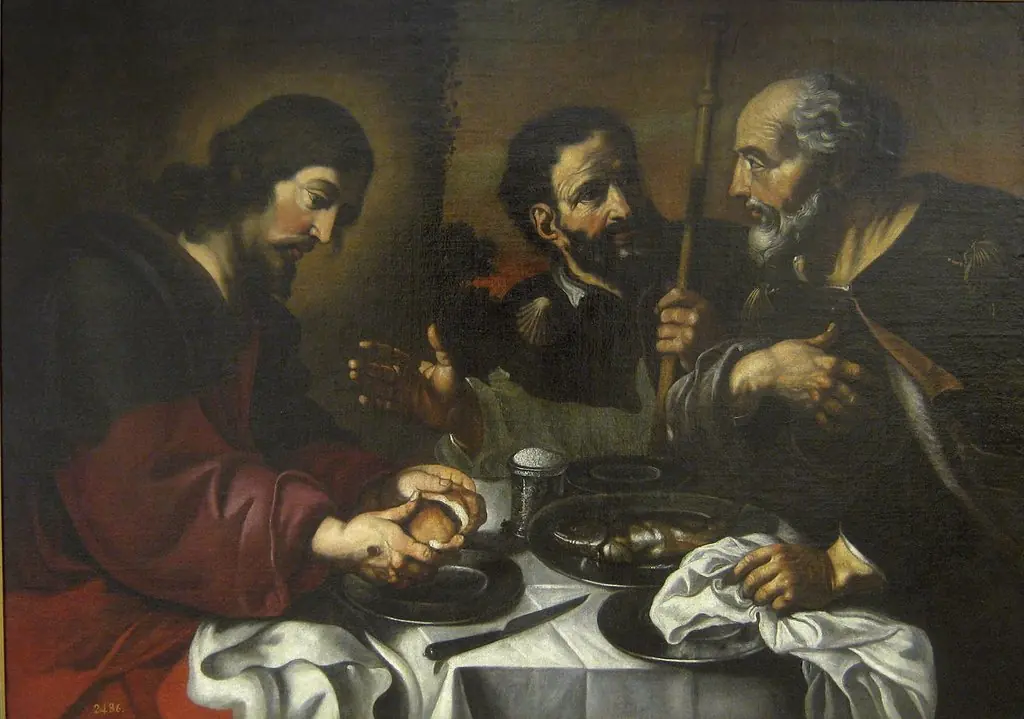
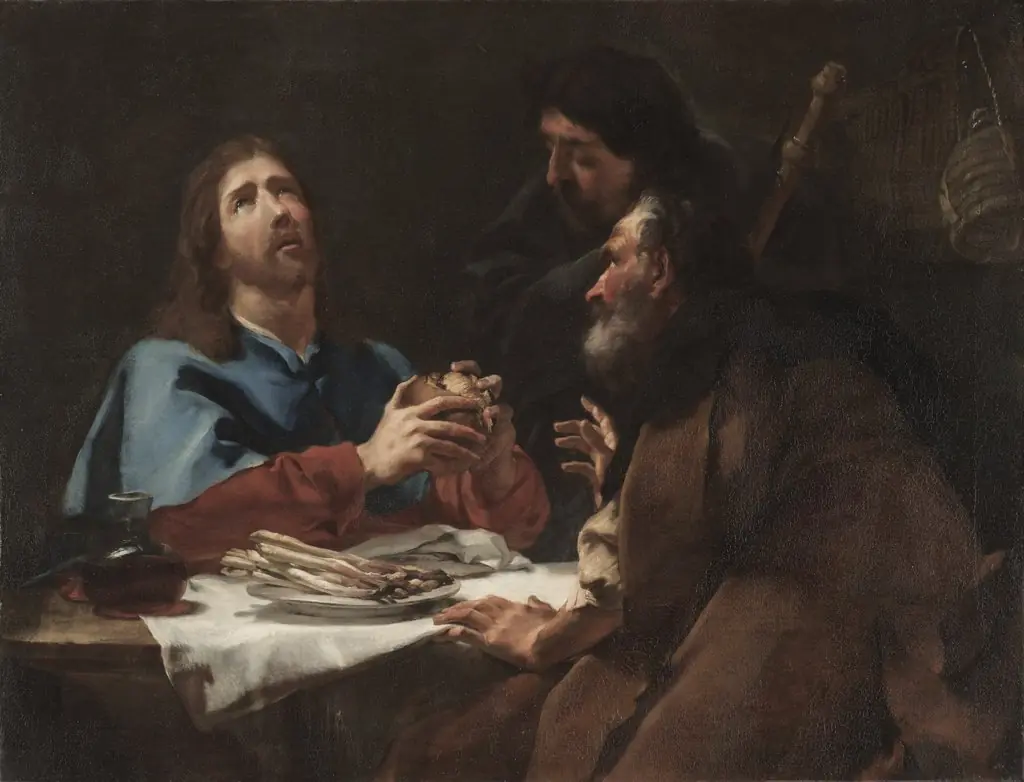
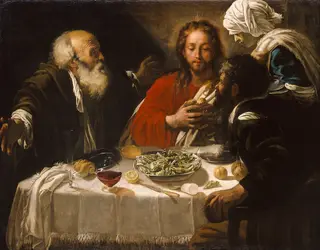
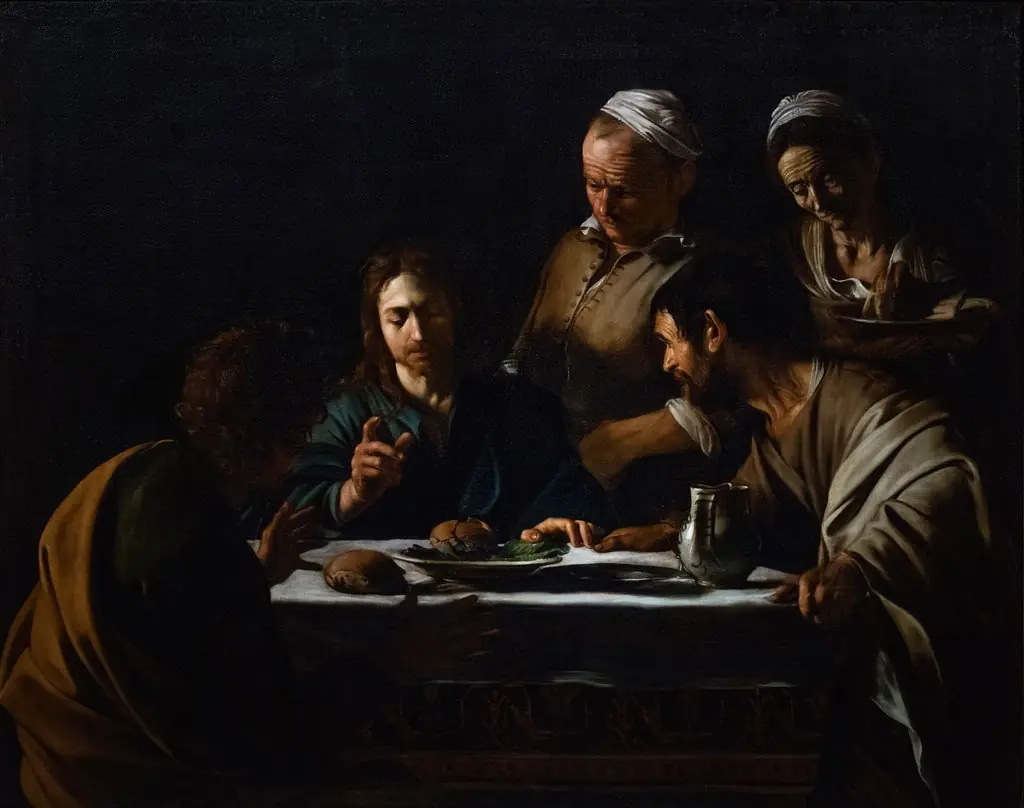
The Supper at Emmaus depicts the biblical episode from Luke 24:13–35, where the resurrected Jesus reveals himself to two disciples during a meal in Emmaus. Velázquez’s composition centers on a darkened interior where Christ, robed in red, sits at a table with two apostles; one apostle, seen from behind, extends an arm toward Christ. The lighting, rendered in chiaroscuro, isolates Jesus as the focal point, contrasting with the shadowed figures of the apostles clad in darker tones.
The scene conveys the moment of divine recognition, emphasizing revelation and spiritual awakening through the interplay of light and human gesture.
Technique & Style
Executed in oil paint on canvas, the work measures 123.2 by 132.7 centimeters. The physical support has been trimmed on all four sides, altering its original dimensions. Stylistically, the composition relies heavily on chiaroscuro to structure the scene.
The central figure of Jesus, clad in red, is illuminated against a dark background, while the two apostles are positioned in shadow wearing darker blue and brown tones. This dramatic lighting highlights the figure on the left, leaving the others in relative obscurity. The handling of light and shadow creates a focused, intimate atmosphere typical of the artist's early Seville period, emphasizing the religious subject matter through stark contrasts rather than detailed background elements.
History & Provenance
Attributed to Diego Velázquez, this oil on canvas was variously dated between 1618 and 1630. While some records suggest an inception in 1618 during the artist's Sevillian period, scholar La Fuente Ferrari proposed 1622, following Velázquez's exposure to royal collections in Madrid. Other estimates extend to his return from Italy in 1630.
The work was brought to scholarly attention by Aureliano de Beruete in 1898. Historically, the canvas was trimmed on all four sides. It entered the collection of Benjamin Altman before becoming part of the holdings at the Metropolitan Museum of Art in New York, where it remains.
The Supper at Emmaus by Diego Velázquez is held by the Metropolitan Museum of Art in New York, where it forms part of the museum's collection. Before entering the museum, the painting was owned by Benjamin Altman. The work was brought to light by Aureliano de Beruete in 1898, after which a wide range of dates was proposed for its execution, spanning from the Sevillian period in 1619 to the artist's return from Italy in 1630, with La Fuente Ferrari suggesting 1622 following Velázquez's trip to Madrid to view the royal painting collections. The canvas has been trimmed on all four sides.
Context
Diego Velázquez’s Supper at Emmaus, painted circa 1618–1622, entered the Metropolitan Museum of Art collection through the bequest of Benjamin Altman. Early scholarship, notably by Aureliano de Beruete in the 1890s, identified the work as a distinct canvas that had been trimmed on all sides. Subsequent dating debates have placed its execution between the Sevillian period (1619) and the artist’s return from Italy (1630), with many authorities favoring 1622 as the most plausible date.
The painting exemplifies Velázquez’s mature use of chiaroscuro and naturalistic narrative within Counter‑Reformation religious art, situating it among his broader exploration of sacred subjects and his influence on later Spanish portraiture.
Overview
Diego Velázquez completed The Supper at Emmaus in 1618, an oil painting depicting a significant biblical event. This early work by the Spanish artist portrays Jesus Christ revealing his identity to two disciples after his resurrection. The painting is currently part of the collection at The Metropolitan Museum of Art, representing a key moment in Velázquez's developing style.
Own this work as a print
Artist & collection
Artist
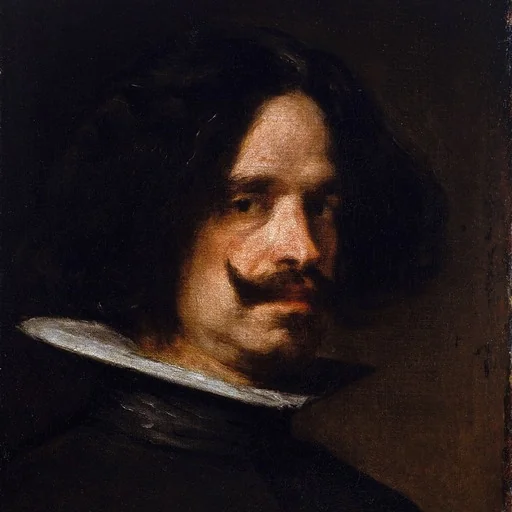
Diego Rodríguez de Silva y Velázquez was a Spanish Baroque painter, the leading artist in the court of King Philip IV of Spain and Portugal, and of the Spanish Golden Age.