Artwork
Head of a Young Man
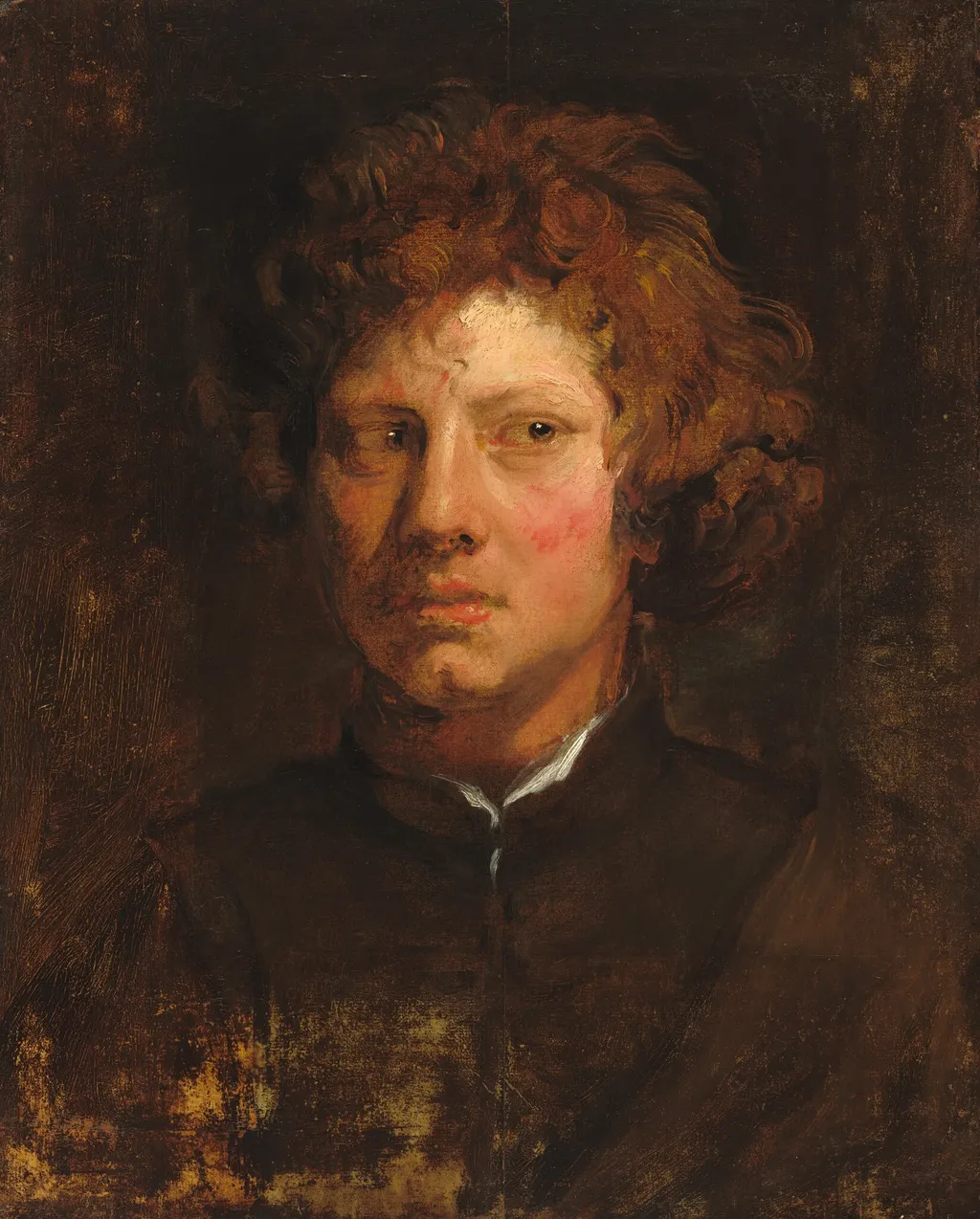
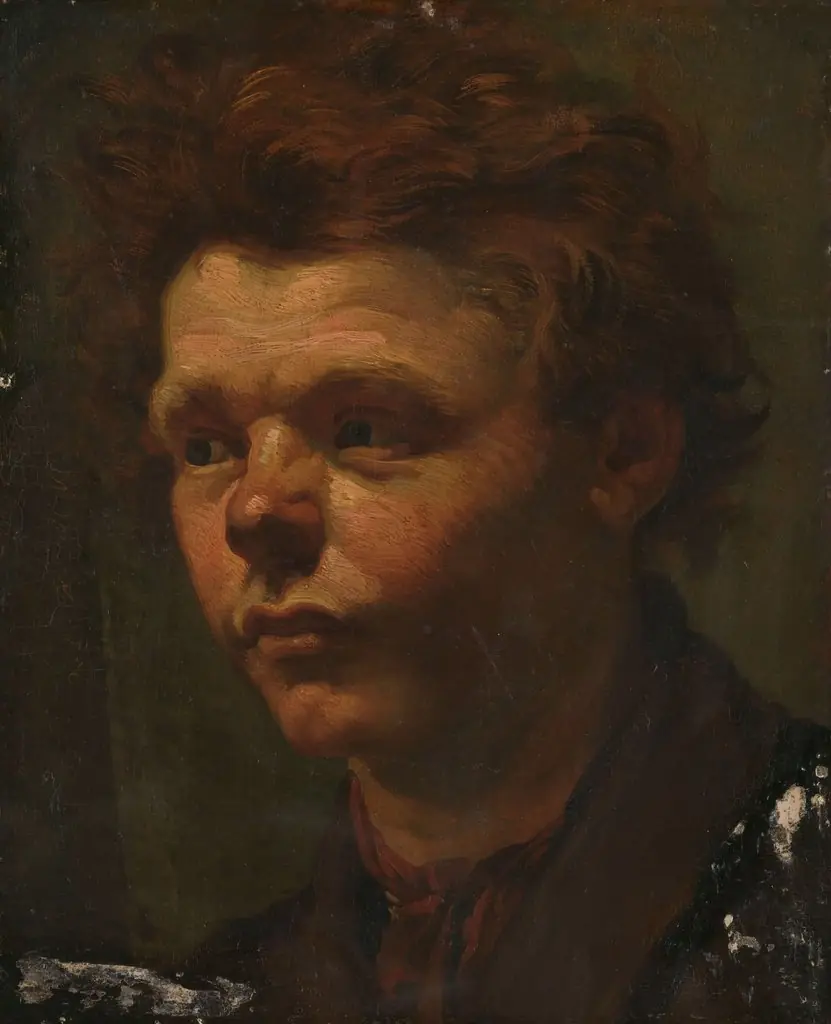
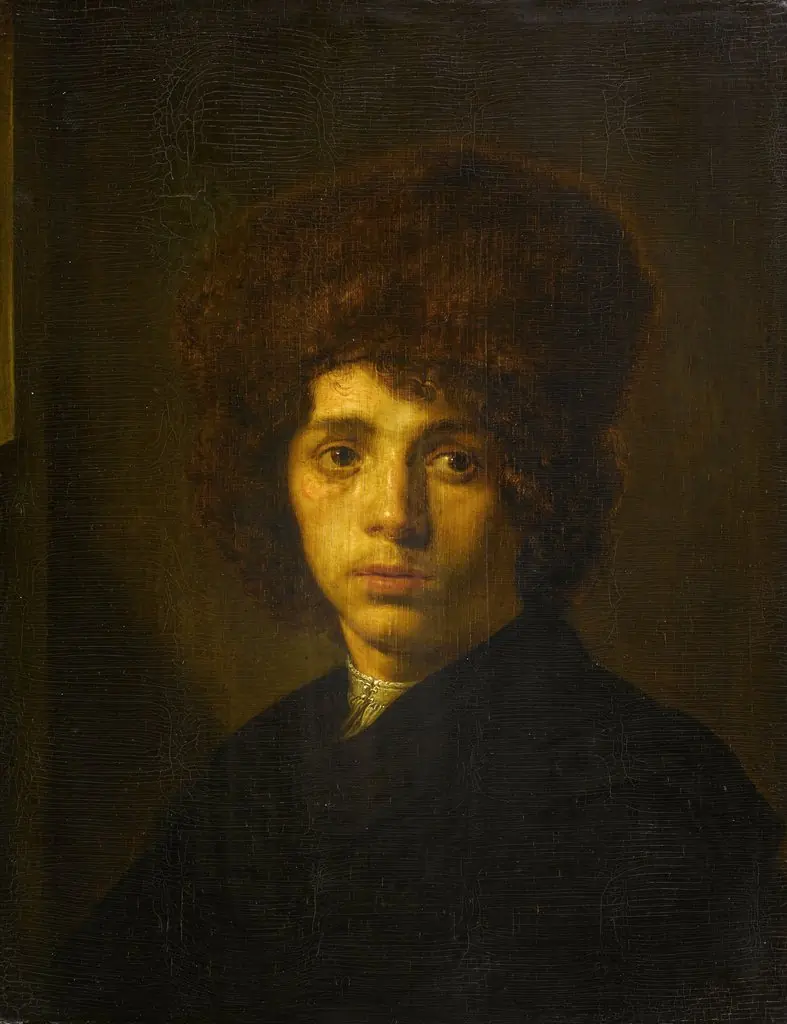
Head of a Young Man is an oil painting by the Baroque artist Anthony van Dyck. It dates from 1618 and is held in the collection of the National Gallery of Art.
About this work
Technique & Style
The portrait genre classification and small dimensions align with the kind of small-scale work favored by collectors such as Edouard Warneck.
Head of a Young Man is executed in oil on paper laid down on panel, a support combination characteristic of Van Dyck's small-scale head studies from his early Antwerp period. The work measures 51.2 by 41.4 centimeters, a modest format suited to an intimate portrait sketch. The oil medium is applied over a paper interlayer mounted onto a wooden panel, a technique that allowed the artist to work quickly while preserving the drawing beneath.
The portrait genre classification and small dimensions align with the kind of small-scale work favored by collectors such as Edouard Warneck.
History & Provenance
Executed around 1618, this small oil sketch on paper laid down on panel is one of Anthony van Dyck's early portrait heads. The work's early history is uncertain: it may have belonged to Josephus Augustinus Brentano in Amsterdam, appearing in his estate sale there on 13 May 1822, lot 96. By the early twentieth century it was in the possession of Edouard Warneck in Paris.
It was subsequently handled by Galerie Dr. Kurt Benedikt & Co. in Berlin and Van Diemen & Co. in New York between 1928 and 1929, before entering the collection of Adolph Caspar Miller of Washington, D.C. Miller bequeathed it to the National Gallery of Art, Washington, in 1953. The painting was included in the Eighth Loan Exhibition of Old Masters: Paintings by Anthony van Dyck, organized by the Detroit Institute of Arts in 1929 (no. 1), and in the 1960 exhibition Antoon Van Dyck: Tekeningen en olieverfschetsen, which traveled between Antwerp and Rotterdam.
Overview
Head of a Young Man is a portrait by Sir Anthony van Dyck, executed around 1618. This painting, rendered in oil on paper mounted onto a panel, exemplifies the artist's early approach to portraiture. It captures a specific individual, reflecting the artistic conventions of the period while hinting at the developing stylistic traits that would characterize van Dyck's later work.
Subject & Meaning
The artwork presents a young man, depicted from the chest up, whose gaze is direct yet composed. His curly hair frames a face with a neutral expression, conveying a sense of quiet observation. He is dressed in a dark jacket, offset by a crisp white collar, a common attire of the era. The focus remains squarely on the sitter's features and demeanor.
Own this work as a print
Artist & collection
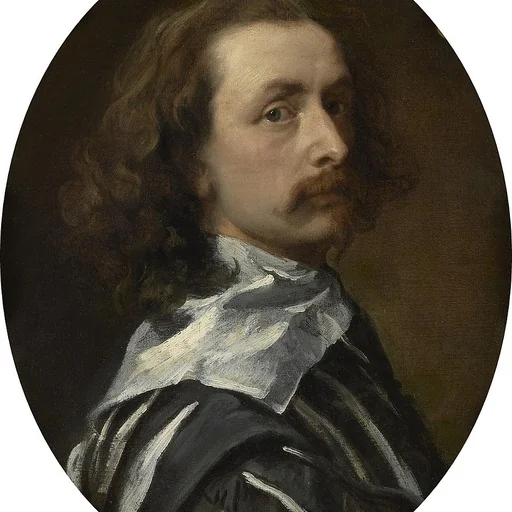
Artist
Sir Anthony van Dyck (; Dutch: Antoon van Dijck; 22 March 1599 – 9 December 1641) was a Flemish Baroque artist, who became the leading court painter in England after success in the Spanish Netherlands and Italy.