Artwork
The Disrobing of Christ
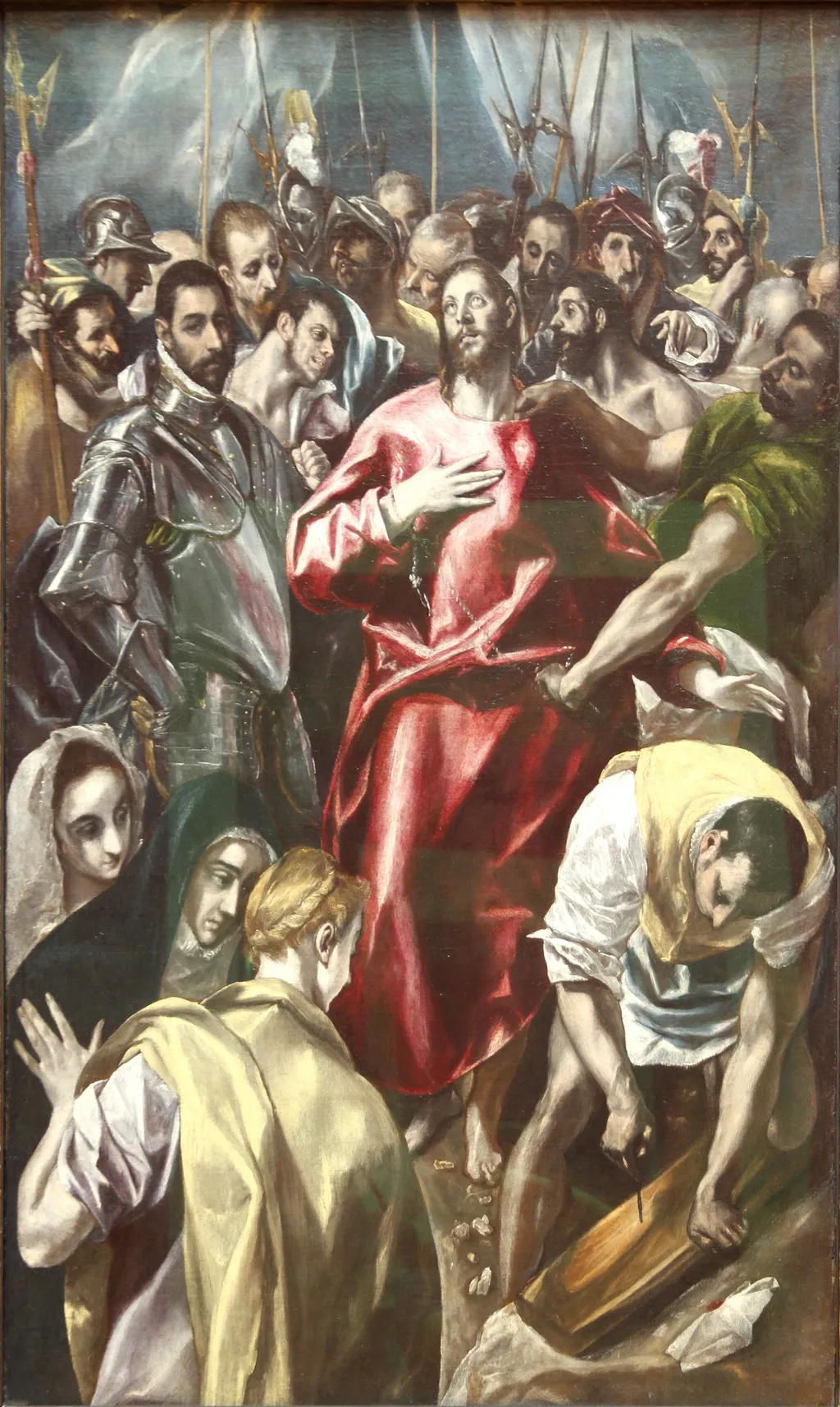
The Disrobing of Christ is an oil painting by the Mannerist artist El Greco. It dates from 1592 and is held in the collection of the Bavarian State Painting Collections.
About this work
Subject & Meaning
The composition condenses the narrative by reducing the number and size of the surrounding heads and weapons compared with the cathedral version.
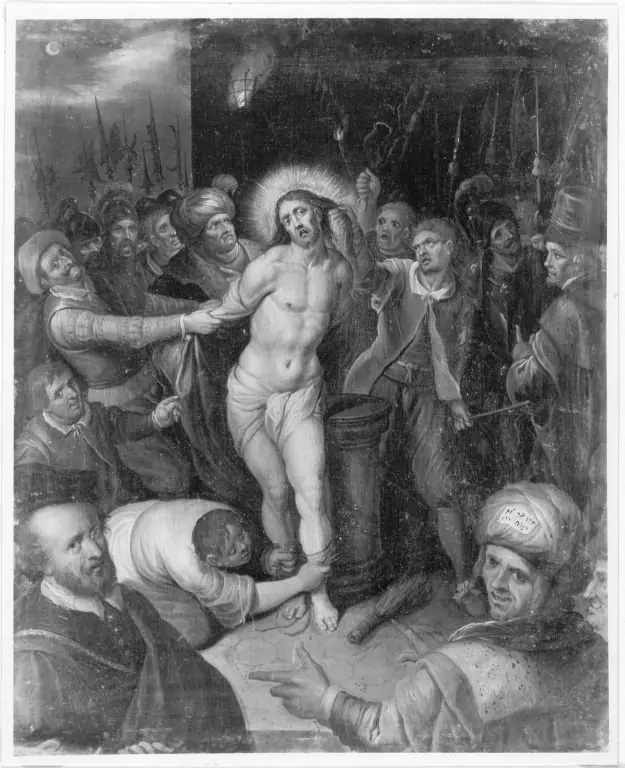
The painting depicts the Disrobing of Christ, the moment when Jesus is stripped of his garments before the Crucifixion. El Greco shows the figure of Christ at the center, surrounded by a crowd that includes executioners with pikes and halberds as well as an enlarged group of the Three Marys, a feature that departs from the doctrinal controversy surrounding the original Toledo prototype. The composition condenses the narrative by reducing the number and size of the surrounding heads and weapons compared with the cathedral version.
A distinctive iconographic detail appears here for the first time: behind one of the executioners on the right, an elderly man turns his head backward, a motif that recurs in El Greco's later treatments of the subject. The work is also known by the alternative title the Parting of Christ's Garments, referring to the soldiers casting lots for his tunic, and is regarded as one of the few autograph versions of the theme by the master, with only limited workshop intervention.
Technique & Style
The Disrobing of Christ is an oil painting on canvas created between 1583 and 1585. The work measures 165 cm in height and 98.8 cm in width and depicts the moment of Christ being stripped of his garments. The painting is housed in the Alte Pinakothek in Munich and is part of the Bavarian State Painting Collections. It was acquired in 1909 from a Parisian art dealer after passing through several private collections in Spain. The composition reduces the scale of figures and surrounding objects compared to the original Toledo Cathedral version, while expanding the group of the Three Maries, a detail noted by scholars as reflecting the artist’s adaptation to doctrinal controversy. A radiograph revealed an underlying signature, and the work is catalogued under number 79 in Harold Wethey’s catalogues raisonné and 24-d in Tiziana Frati’s inventory. Scholars generally agree on its authenticity, with only minor workshop involvement, and identify it as one of the few versions directly attributable to El Greco himself.
History & Provenance
The Disrobing of Christ was painted by El Greco during his early Toledan period, generally dated between 1580 and 1585, with Wethey favoring 1583 as the year of execution.
Commissioned as a variant of the artist’s earlier and larger treatment of the subject for the sacristy of Toledo Cathedral, the Munich version reduces the number of figures and diminishes the scale of weapons to fit its canvas dimensions of 165 cm by 98.8 cm. Radiography revealed traces of a now-lost signature, and the work is catalogued as number 79 in Wethey’s corpus.
Provenance begins with López Cepero y Cañaveral in Seville, followed by successive Seville owners García de Leaniz and Rafael Abreu, then A. González Abreu, who consigned it at London on 24 May 1907. Afterward it entered the Paris art trade and was acquired in 1909 by the Alte Pinakothek, Munich, where it remains.
The painting is held in the Alte Pinakothek, Munich, inventoried as no. 8573.
Its exhibition history includes a London sale on 24 May 1907 (as lot 26) and acquisition in Paris in 1909, after which it entered the Bavarian State Painting Collections. The work has remained in Munich since at least 1910, forming part of the Alte Pinakothek’s holdings.
Context
This Munich version of *The Disrobing of Christ* is recognized as a derivative work created during El Greco's first period in Toledo, serving as a variant of the prototype housed in the Cathedral of Toledo. Art historical analysis, particularly by Harold E. Wethey, classifies it as one of the few surviving versions of this subject to be largely attributed to the master himself, despite minor workshop intervention. The painting is cataloged as number 79 in Wethey's raisonné and number 24-d in Tiziana Frati's catalog. Scholars note that the composition adapts to its smaller dimensions by reducing the size of surrounding figures while expanding the group of the Three Maries, a detail suggesting the artist's disregard for the doctrinal controversies surrounding their presence in the original Toledo altarpiece. Additionally, the work features an early appearance of a specific elderly figure looking backward, a motif that recurs in later versions of the theme.
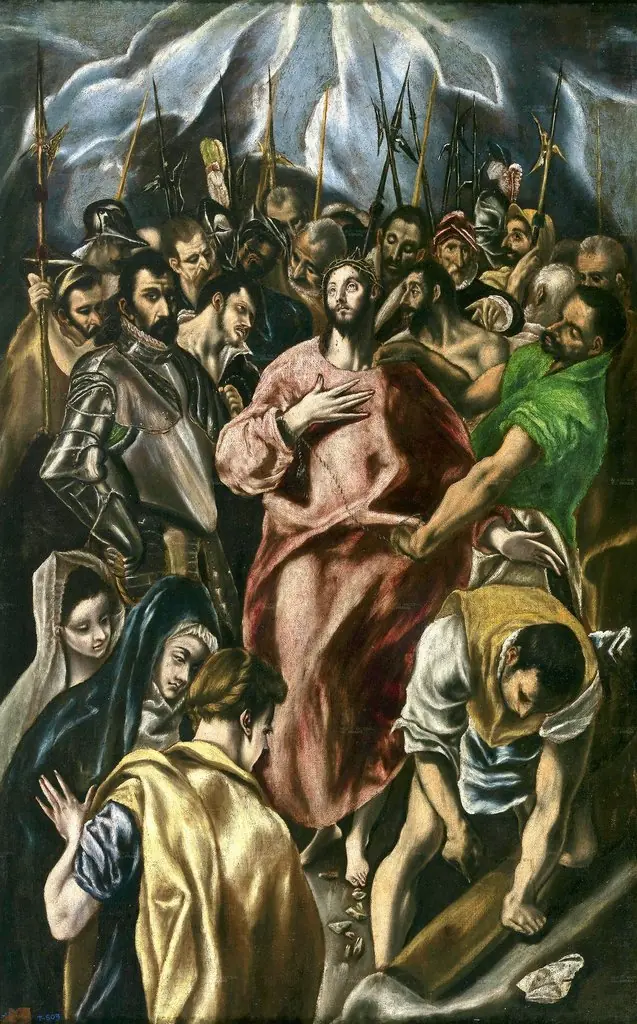
Own this work as a print
Artist & collection
Artist
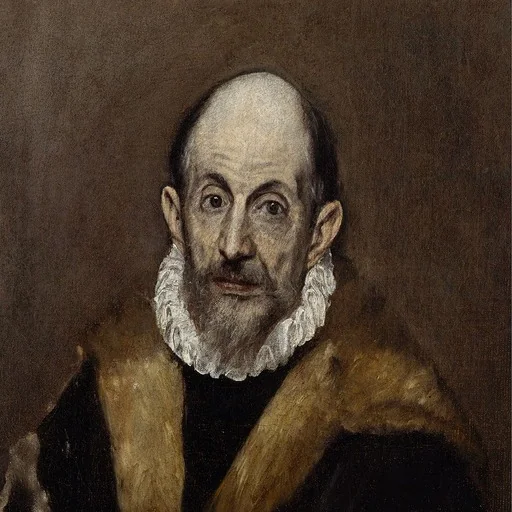
Doménikos Theotokópoulos was born in 1541 in Candia (modern Heraklion), the capital of Venetian-ruled Crete, where he was trained in the post-Byzantine tradition of icon painting.