Artwork
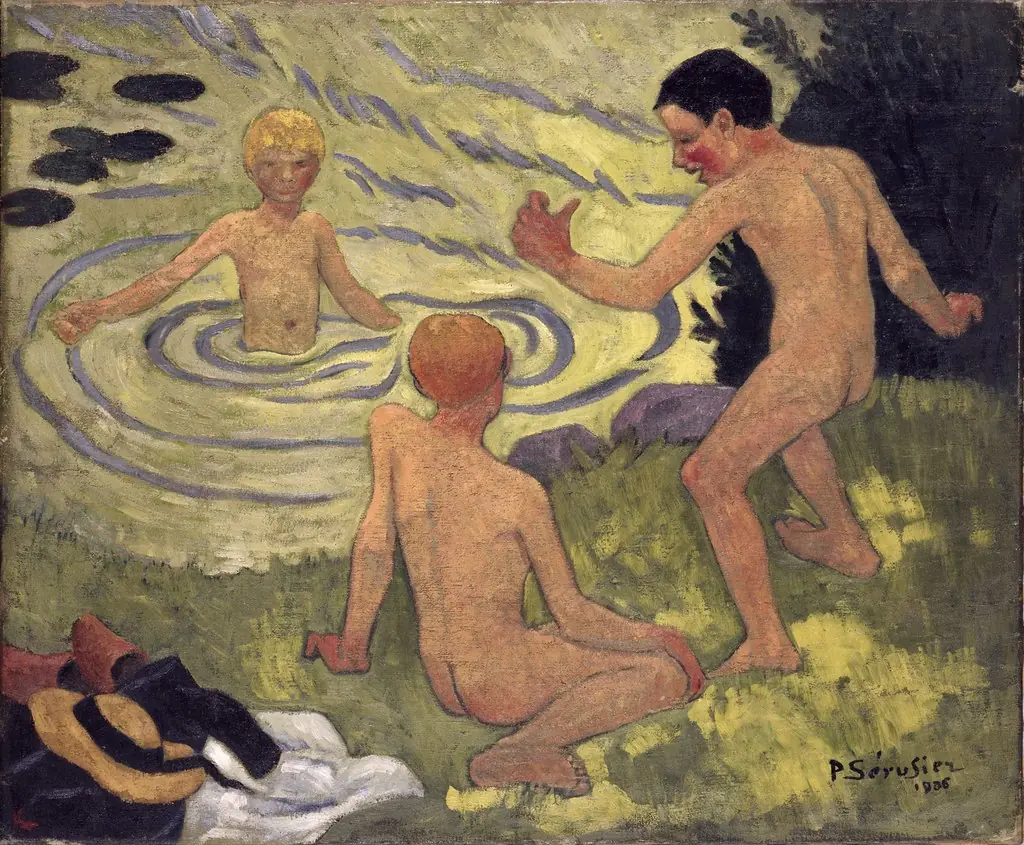
Bathing children
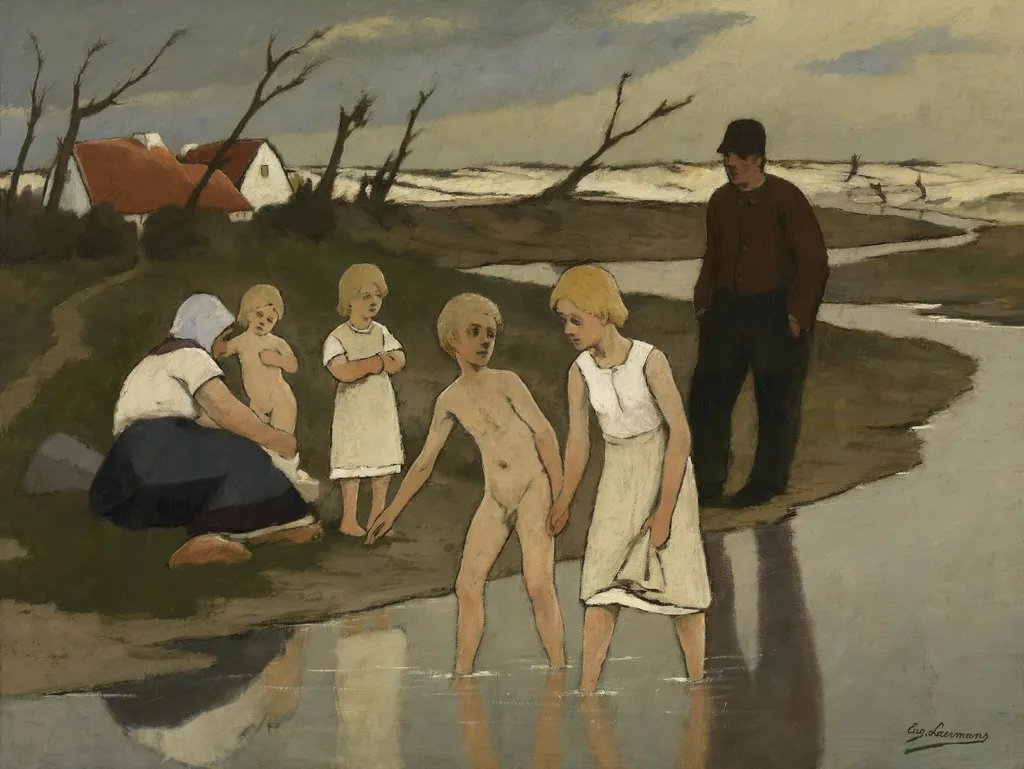
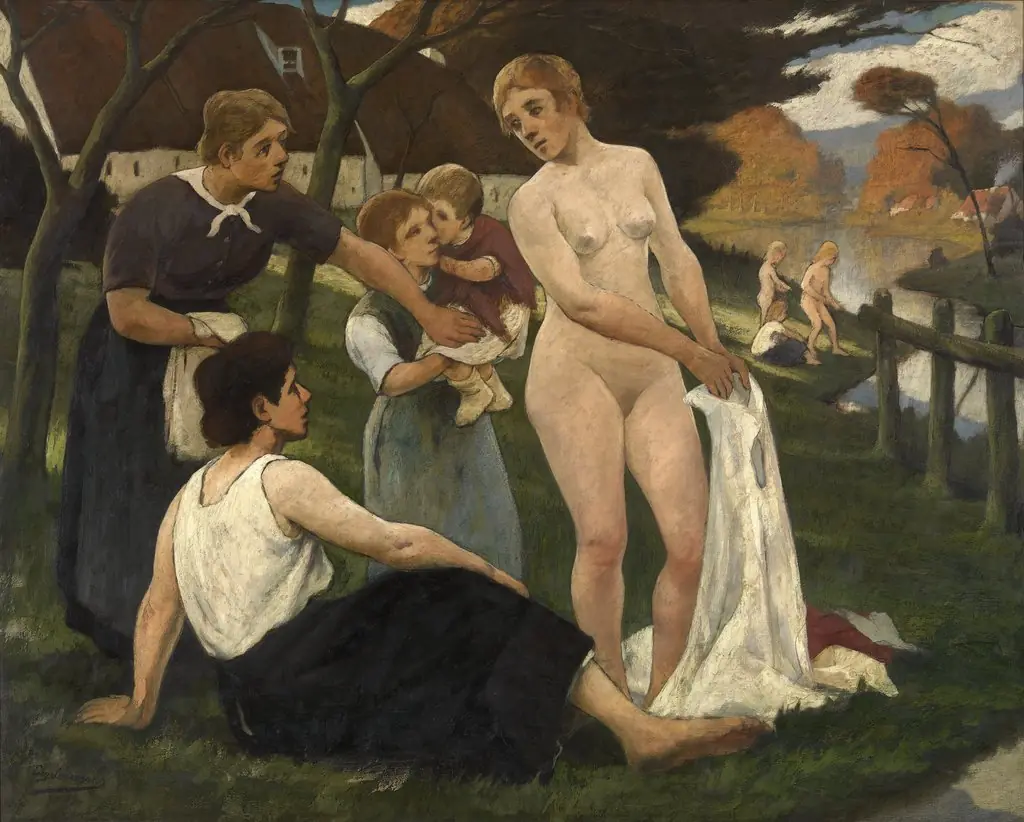
Bathing children is an oil painting by the Symbolist artist Eugène Laermans. It dates from 1908 and is held in the collection of the Royal Museum of Fine Arts Antwerp.
About this work
Overview
A group of children stand in shallow water, while a woman, dressed in dark garments and a white headscarf, kneels beside them.
Painted in 1908 by Eugène Laermans, this oil on canvas depicts a quiet moment of daily life in a rural setting. A group of children stand in shallow water, while a woman, dressed in dark garments and a white headscarf, kneels beside them. The scene unfolds under a soft, diffused light, with trees and a distant house framing the composition. The work is held in the collection of the Royal Museum of Fine Arts Antwerp.
Subject & Meaning
The painting captures an intimate, unidealized moment of childhood and care. The children, partially undressed, are shown in natural, unposed postures, suggesting routine rather than ceremony. The woman’s attentive presence implies domestic labor, not myth or allegory.
The absence of dramatic tension or symbolic elements emphasizes the value placed on ordinary, quiet rituals in rural life.
Technique & Style
Laermans employed muted earth tones and soft transitions between light and shadow, achieved through careful glazing. Brushwork is restrained, avoiding sharp definition to preserve a sense of stillness. The textures of skin, fabric, and water are rendered with subtle variation, enhancing the painting’s tactile realism without drawing attention to technique itself.
History & Provenance
Created in 1908, the painting entered the collection of the Royal Museum of Fine Arts Antwerp shortly after its completion. It remained in Belgium throughout the 20th century, with no documented public exhibitions beyond regional shows. Its acquisition by the museum reflects a broader interest in documenting regional Belgian life during the early modern period.
Context
Laermans worked during a time when Belgian artists increasingly turned to everyday rural scenes, distancing themselves from academic grandeur. This painting aligns with the social realism movement, emphasizing dignity in labor and the quiet rhythms of peasant life. It reflects a cultural shift toward valuing authenticity over idealization in visual storytelling.
Legacy
Though not widely reproduced or studied internationally, the painting remains a representative example of early 20th-century Belgian genre painting. It contributes to the understanding of how regional artists captured domestic life with restraint and empathy, preserving a visual record of pre-industrial routines that were rapidly disappearing.
Own this work as a print
Artist & collection