Artwork
Adoration of the Magi
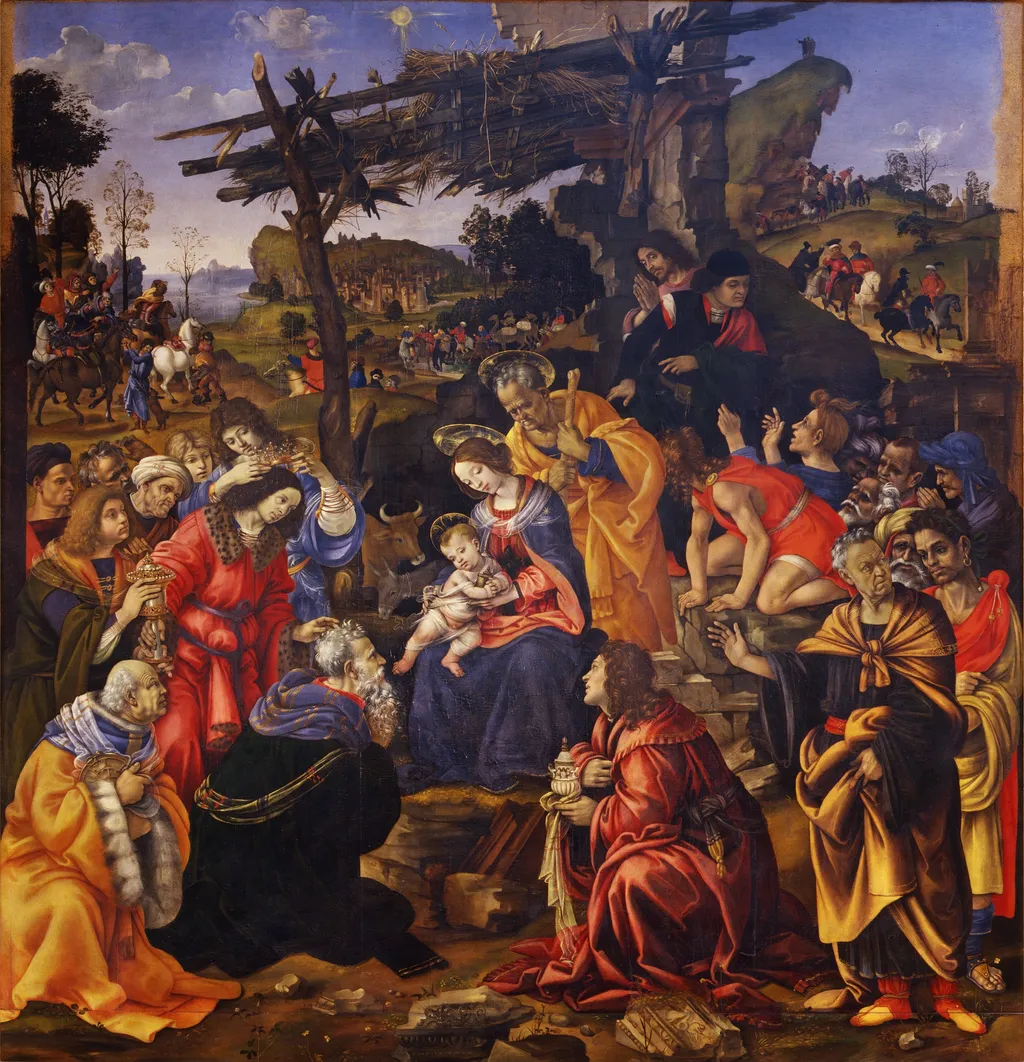
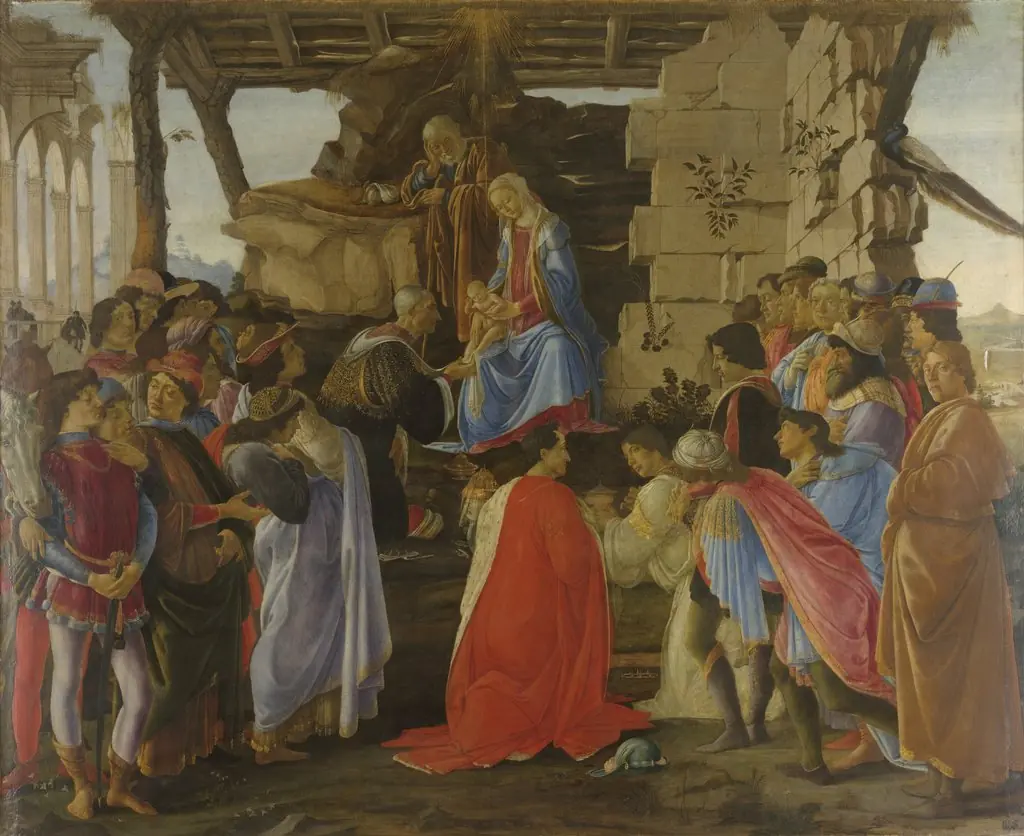
Adoration of the Magi is an oil painting by the Early Renaissance artist Filippino Lippi. It dates from 1496 and is held in the collection of the Uffizi Gallery.
About this work
It shows the Adoration of the Magi in oil, not tempera like the Wikipedia note says, so it's an unusual version.
This is a religious painting from the Renaissance. Filippino Lippi painted it around 1496. It shows the Adoration of the Magi in oil, not tempera like the Wikipedia note says, so it's an unusual version.
Lippi signed and dated it. That was rare for the time. The painting ended up at the Uffizi Gallery in Florence.
It’s a big Bible scene. Want to see another old church painting? Check out Filippino Lippi.
Subject & Meaning
The painting depicts the biblical Adoration of the Magi, centering the Virgin and Christ Child within a triangular composition flanked by foreign dignitaries representing the conversion of pagans. This arrangement reflects Augustinian homilies on the Epiphany, emphasizing Christ's mission to all peoples. The work incorporates specific political symbolism honoring the Medici Popolano line: the eldest Magus holding an astrolabe portraits Pierfrancesco de' Medici, while his sons Lorenzo and Giovanni appear as the remaining kings, with one depicted having his crown removed to signify their renunciation of power under Savonarola.
Set before a stable ruin atop a rocky landscape, the scene includes the Star of Bethlehem and background narratives of the Magi's journey. Architectural fragments and exotic details in the distant cityscape allude to the supersession of heathen traditions by Christianity, blending traditional religious iconography with contemporary Florentine portraiture.
Technique & Style
The Adoration of the Magi is an oil-on-panel painting measuring 258 by 243 centimeters, created by Filippino Lippi in 1496. Executed in tempera grassa on wood, the work was originally commissioned by the Augustinian monks of San Donato in Scopeto to replace Leonardo da Vinci’s unfinished Adoration of the Magi, which had remained incomplete since 1481. The painting was signed and dated on the reverse by the artist, confirming its 1496 execution. It was later acquired by Cardinal Carlo de' Medici in 1529 and entered the Uffizi collection following the Medici family’s bequest in 1666. The composition reflects Filippino Lippi’s late style, marked by meticulous detail and a nervous rhythm in form, influenced by both Botticelli’s earlier Adoration and foreign artistic traditions. The work depicts the Virgin and Child at the center, flanked by Medici family members portrayed as Magi, including Pierfrancesco de' Medici in a fur-lined yellow robe holding an astrolabe. The background landscape features a ruin, a stable, and a distant city, with the Star of Bethlehem shining above. The panel was later mounted on a wooden frame with iron nails and structural reinforcements typical of Quattrocento panel construction. Its surface has been studied for evidence of workshop collaboration, including signs of pentimenti and later additions.
History & Provenance
Filippino Lippi's Adoration of the Magi was commissioned by the Augustinian monks of the monastery of San Donato in Scopeto in Florence as a substitute for an unfinished panel begun by Leonardo da Vinci in 1481. Leonardo had abandoned that earlier commission when he departed for the court of Ludovico Sforza in Milan, leaving only a preparatory sketch. After roughly fifteen years, the canons turned to Filippino, who is believed to have received the new commission in early 1494 and begun painting in November. In place of the Valdensa land previously promised to Leonardo, the monks paid Filippino 300 florins in cash. The work is signed and dated on the reverse: "FILIPPINUS ME PINSIT DE LIPPIS FLORENTINUS ADD XXIX DI MARZO MCCCCLXXXXVI," placing its completion on 29 March 1496.
Following the suppression and destruction of San Donato in Scopeto during the 1529 siege of Florence, the altarpiece passed into the collection of Cardinal Carlo de' Medici. At his death in 1666, it entered the grand-ducal holdings, the nucleus of the present Uffizi Gallery, where it remains.
The *Adoration of the Magi* by Filippino Lippi has been held in the Uffizi Gallery in Florence since 1666, when it entered the grand-ducal collections following the death of Cardinal Carlo de’ Medici, who had acquired it in 1529 after the destruction of the monastery of San Donato in Scopeto during the siege of Florence. The work is inventoried as part of the Uffizi’s core holdings and remains on display there.
Originally commissioned for the high altar of San Donato in Scopeto, the painting was completed in 1496 as a replacement for Leonardo da Vinci’s unfinished version of the same subject. Its accession into the Uffizi collection solidified its status as a key work within the museum’s Renaissance holdings, where it continues to be exhibited as a major example of late 15th-century Florentine art.
Context
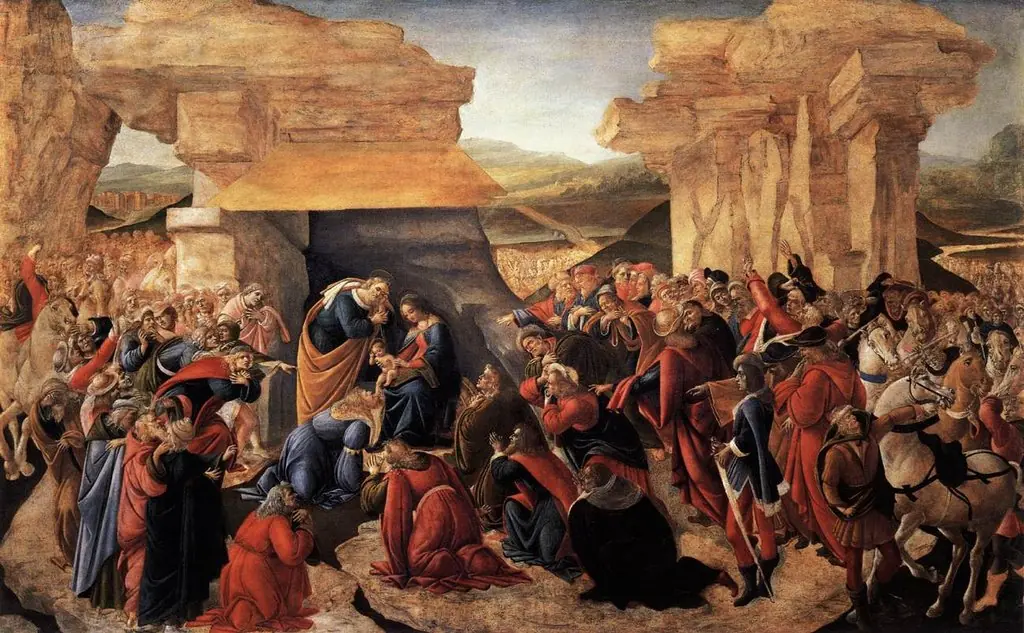
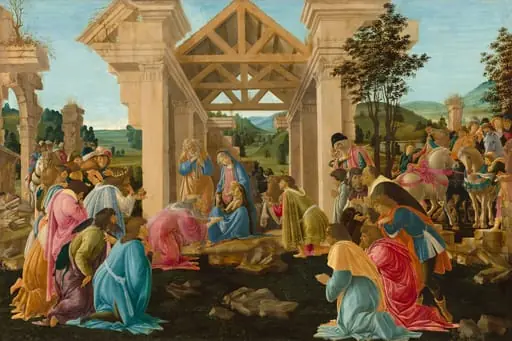
Scholars identify Filippino Lippi’s Adoration of the Magi (1496) as a late-Quattrocento work that synthesizes Florentine tradition with new stylistic impulses, situating it between the High Renaissance and Mannerism. The painting’s layered composition and nervous figural rhythms reflect Lippi’s engagement with northern European art and contemporary debates, aligning it with the cultural climate shaped by Savonarola’s Florence. Its Medici portraits, Pierfrancesco de’ Medici kneeling in yellow fur-lined robes, his sons Lorenzo and Giovanni among the Magi, embed political allegory within a religious subject, a strategy scholars link to the Popolano branch’s post-exile ambitions. The inclusion of these donor figures, alongside Botticelli’s precedent in the Uffizi, underscores Lippi’s dialogue with earlier Florentine masters while advancing a more intricate spatial and psychological treatment of the narrative.
Legacy
Filippino Lippi's *Adoration of the Magi* is recognized as a meticulously prepared work that bridges the late Quattrocento and emerging mannerist tendencies. Scholars note that while its emotional content remains rooted in the 15th century, its formal structure anticipates future artistic developments. The painting explicitly engages with the legacy of Leonardo da Vinci's unfinished commission for the same altar, adopting specific spatial arrangements and figure types while diverging in composition. It also heavily references Sandro Botticelli's earlier treatment of the subject, particularly in its symmetrical disposition of characters and celebratory portrayal of the Medici family.
The work's influence extends to its detailed incorporation of foreign styles, specifically Flemish painting, evident in its luminous rendering and intricate background landscapes. Historically, the panel survived the 1529 destruction of its original church, entering the Medici collection before becoming a cornerstone of the Uffizi Gallery. Although the main panel remains intact, its original predella was dispersed, with sections now held in North Carolina and private collections.
Own this work as a print
Artist & collection

Artist
Filippino Lippi (probably 1457 – 18 April 1504) was an Italian Renaissance painter mostly working in Florence, Italy during the later years of the Early Renaissance and first few years of the High Renaissance.

 Pietà (The Dead Christ Mourned by Nicodemus and Two Angels)
 Tobias and the Angel
 The Adoration of the Child
 The Coronation of the Virgin
 Portrait of a Youth
 The Holy Family with Saint John the Baptist and Saint Margaret
 The Meeting of Joachim and Anne outside the Golden Gate of Jerusalem
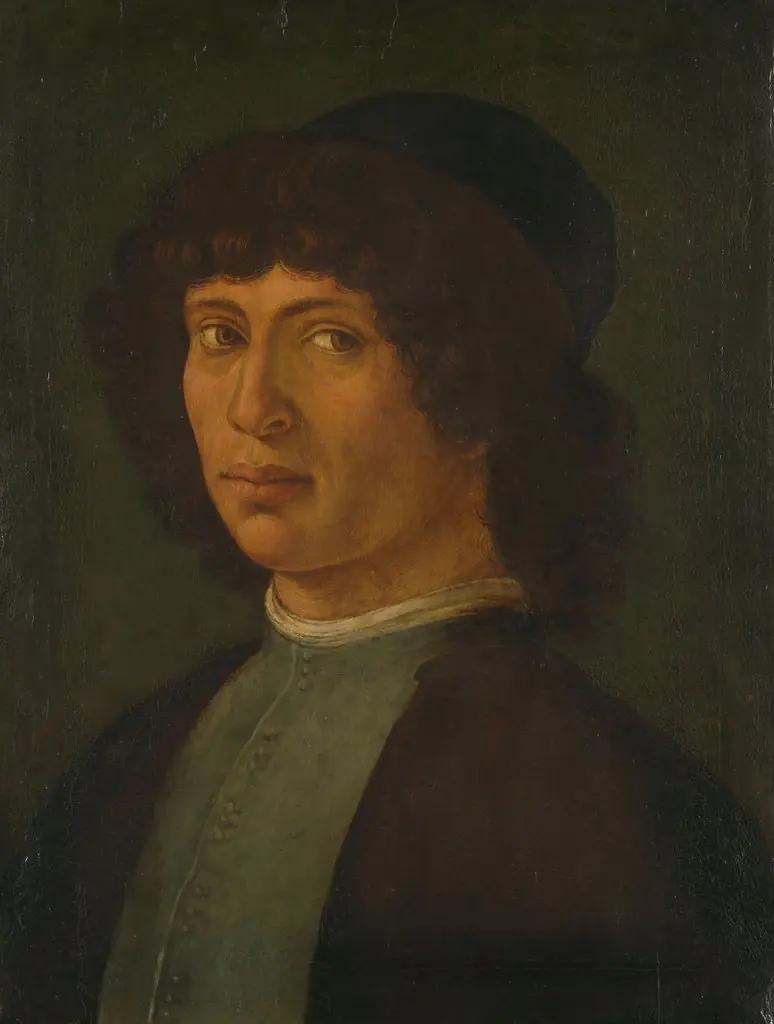 Portrait of a young man