Artwork
Miracle of St. Ambrogio
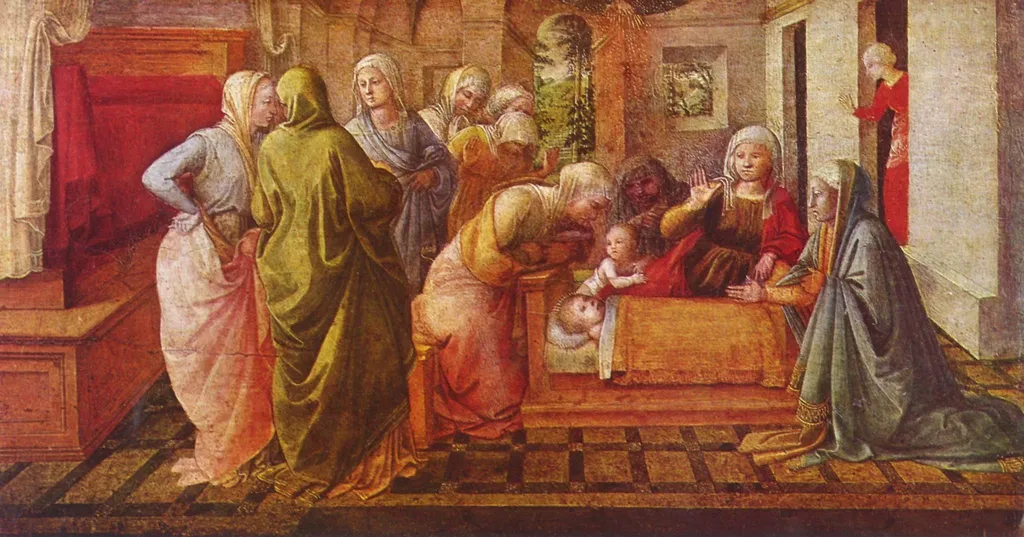
Miracle of St. Ambrogio is a paint painting by the Early Renaissance artist Filippo Lippi. It dates from 1444 and is held in the collection of the Gemäldegalerie Berlin. Miracle of St.
About this work
Overview
Ambrogio is a small tempera painting on panel by the Florentine Renaissance master Fra Filippo Lippi, dated to 1444 and now held in the Gemäldegalerie, Berlin.
The Miracle of St. Ambrogio is a small tempera painting on panel by the Florentine Renaissance master Fra Filippo Lippi, dated to 1444 and now held in the Gemäldegalerie, Berlin. Measuring 28 by 51 centimetres on poplar panel, it is one of the few surviving predella fragments from Lippi's oeuvre, originally forming part of the base of an altarpiece. The work is notable for its sophisticated perspective construction, its densely populated narrative scene, and its significant place in the development of Early Renaissance painting in Florence.
Technique & Style
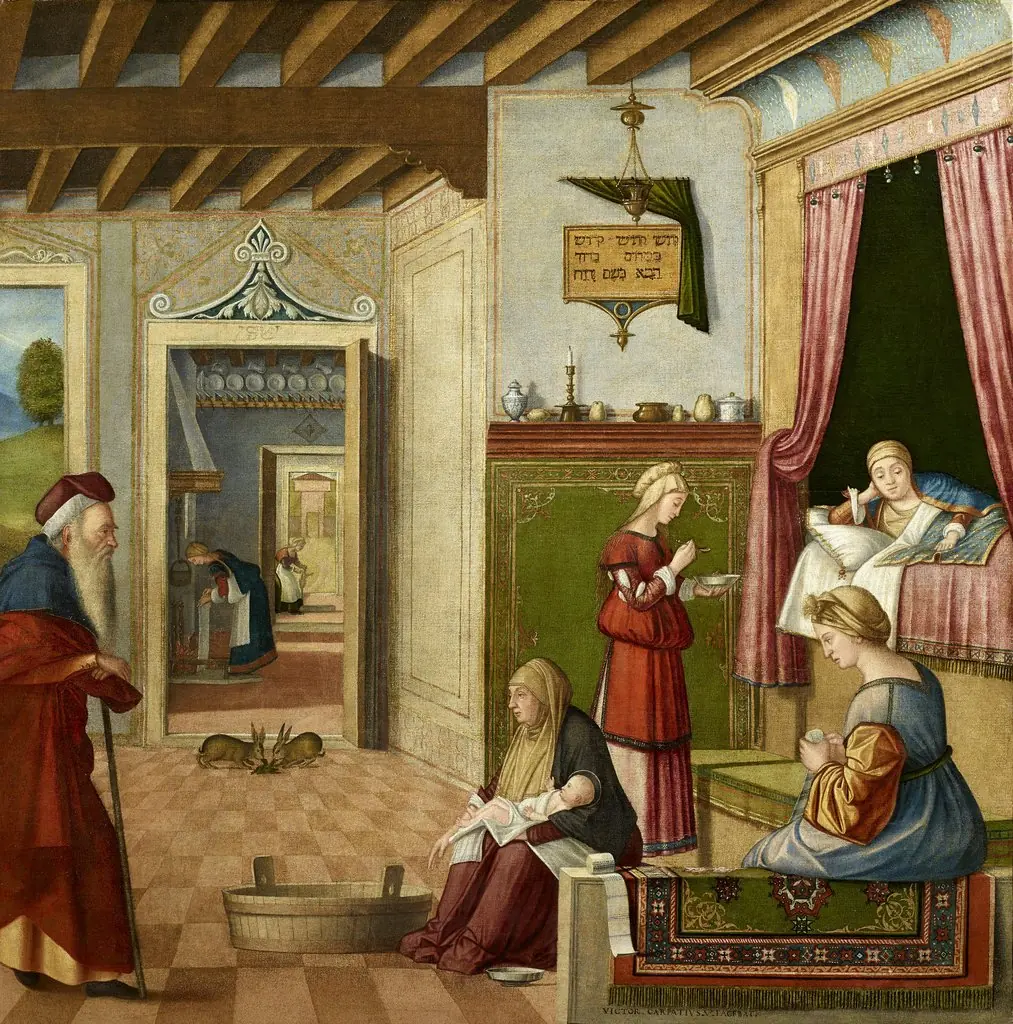
The work is executed in tempera on poplar panel, measuring 28 by 51 centimetres, with the Italian source giving a slightly variant dimension of 28 by 52.5 centimetres. The surface shows visible craquelure and a matte, aged finish. Lippi employs smooth brushwork with careful linear definition of drapery folds and architectural details. The palette consists of warm earth tones, reds, yellows, and muted greens. The perspective construction is particularly noteworthy: the room is rendered with a checkered floor in brown and black tones that underlines the perspectival grid, creating a solid spatial construction more rigorous than that found in the main panel of the altarpiece. The composition employs a wide-angle, foreshortened view indebted to Flemish painting, with an opening window and arch revealing landscape beyond. The artist's attention falls heavily on the monumental quality of the draped figures, whose billowing fabrics seem to possess an independent plastic life. Lippi demonstrates particular skill in rendering textile consistency, modelling drapery through chiaroscuro, and depicting the light, vaporous curtain covering the bed at the left.
History & Provenance
The panel is identified as a fragment of the predella of the Incoronazione Maringhi, the former high altarpiece of the Florentine church of Sant'Ambrogio, now in the Uffizi. The main altarpiece was painted between 1441 and 1447, though the predella was not paid for until 1458. Based on its compositional features, with the action centre on the right and internal framing on the left, the fragment is thought to have occupied the left side of the retable, corresponding to the prominent figure of Saint Ambrose on the left exterior of the main panel. The more solid perspectival construction compared to the altarpiece proper has led scholars to hypothesise that the panel belongs to the final phase ofmtx the commission, around 1447. The painting is now in the collection of the Gemäldegalerie, Berlin, where it is catalogued as number 28.
Context
Filippo Lippi was one of the central figures of the Early Renaissance in Florence, active from the 1430s until his death in 1469. A Carmelite friar from the age of eight, he received his artistic formation in the climate of innovation created by Masaccio and Masolino in the Brancacci Chapel. The Sant'Ambrogio altarpiece commission came at a significant moment in his career, following his 1441 Coronation of the Virgin for the same church's main altar. The predella format, traditionally Jules traditionally narrative episodes from the lives of saints, allowed Lippi to develop his particular gifts for domestic interior scenes and psychologically individuated figures. The influence of Flemish painting on the perspective and landscape elements reflects the broader currents of artistic exchange in mid-15th-century Italy. The work has been discussed in significant scholarly literature, including Schottmuller 1907, Ruda 1993, and the 2005 Berlin exhibition catalogue, where Sibylle Luig contributed the entry.
Legacy
As one of the few surviving predella fragments by Filippo Lippi, the Miracle of St. Ambrogio holds particular importance for understanding the artist's working methods and the original appearance of his altarpieces. Three drapery studies related to this composition have survived, including one in Berlin, attesting to the care with which Lippi prepared these figures. The panel exemplifies the transformation of predella painting in the mid-15th century, as artists moved beyond simple narrative illustration toward complex spatial environments and psychologically engaged figure groups. The attribution to the Incoronazione Maringhi, established on compositional grounds, has helped reconstruct the original appearance of one of Lippi's major altarpieces. The work continues to be studied as a key document of Lippi's engagement with Flemish perspective techniques and his development of the monumental draped figure within small-scale formats.

Artist & collection

Artist
Filippo Lippi (c. 1406 – 8 October 1469), also known as Lippo Lippi, was an Italian Renaissance painter of the Quattrocento (fifteenth century) and a Carmelite priest. He was an early Renaissance master of a painting…

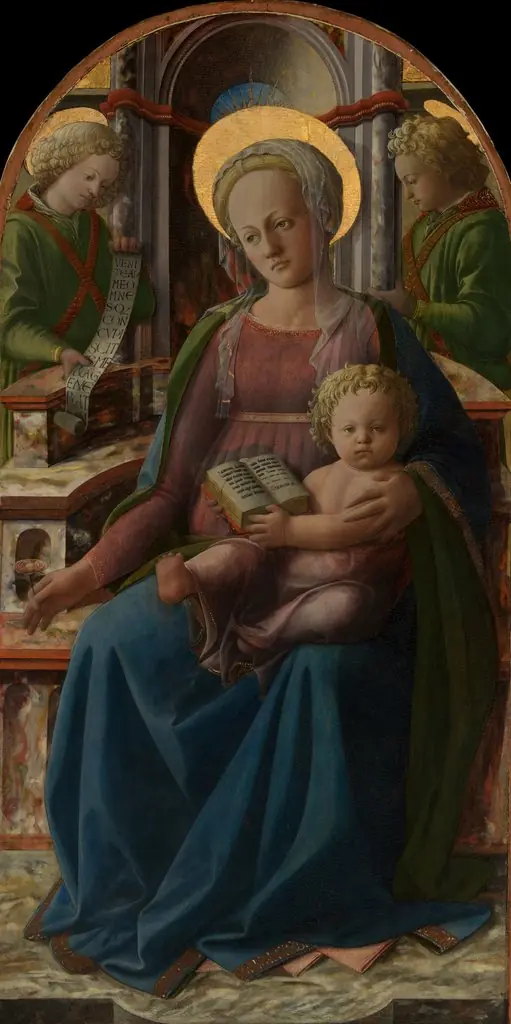 Madonna and Child Enthroned with Two Angels
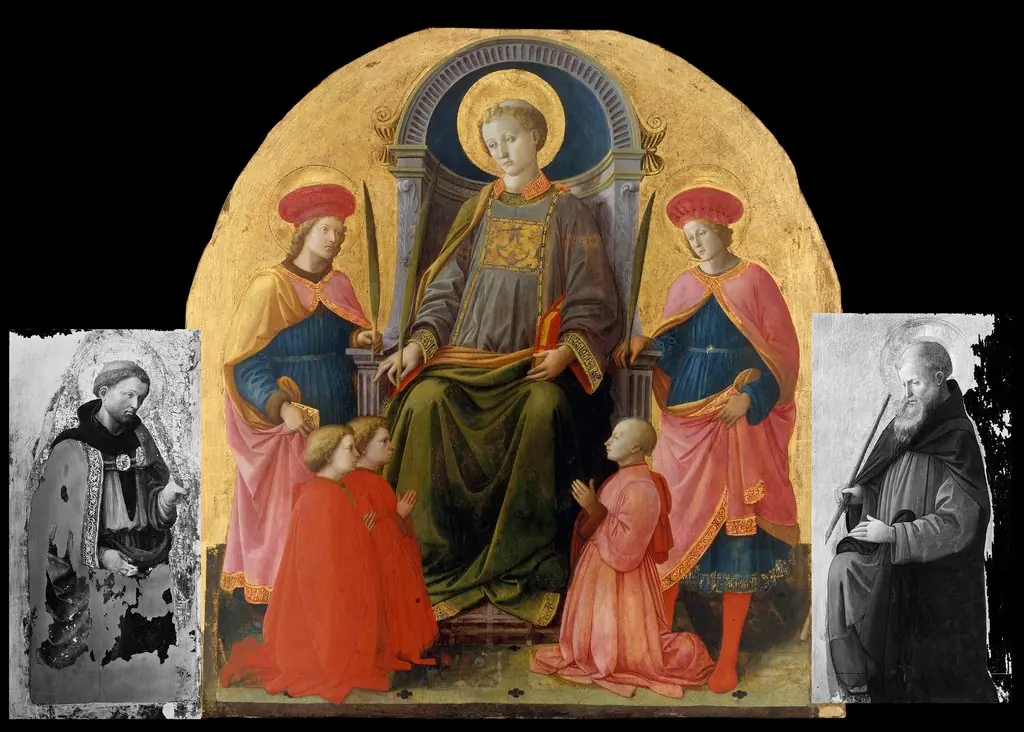 Saint Lawrence Enthroned with Saints and Donors
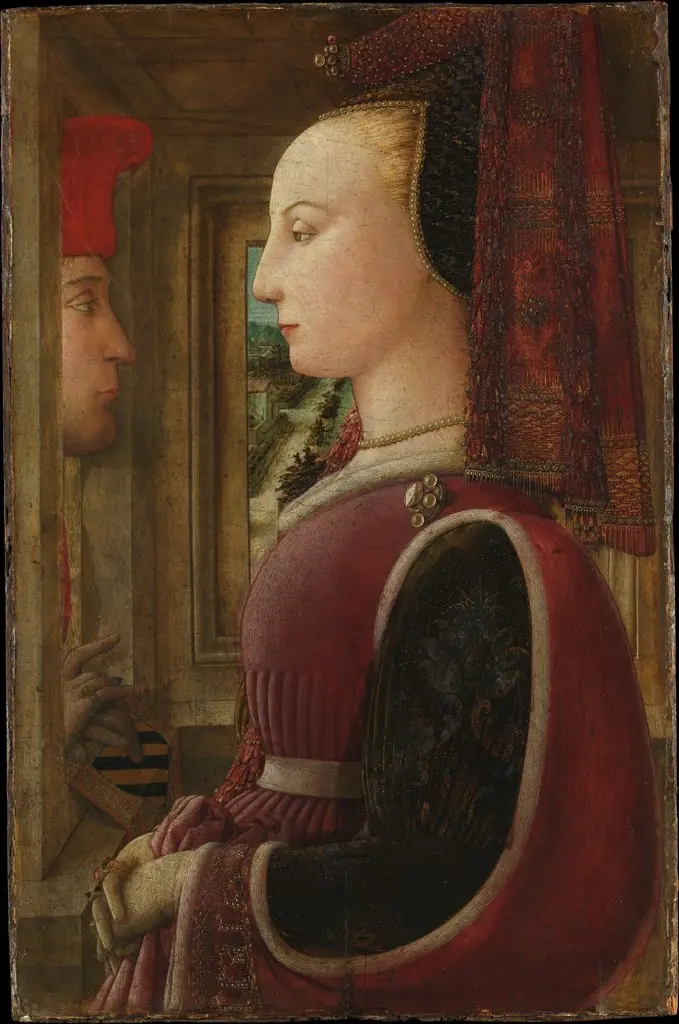 Portrait of a Woman with a Man at a Casement
 Saints Augustine and Francis, a Bishop Saint, and Saint Benedict
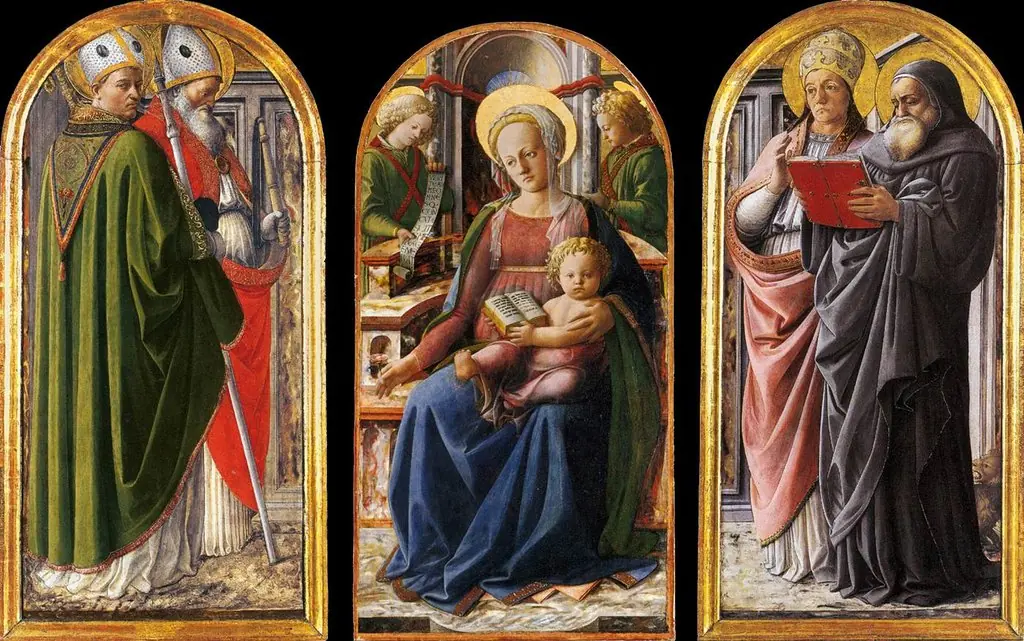 Madonna and Child with Angels and Saints
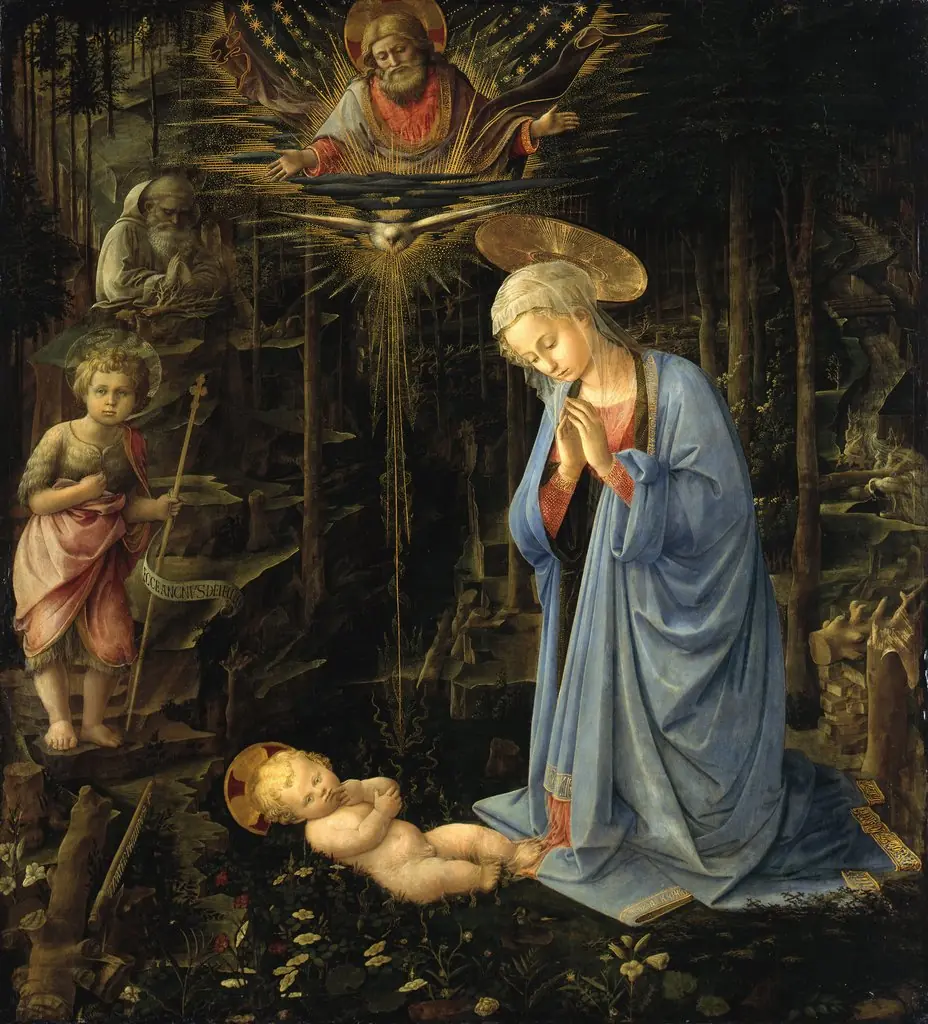 Adoration in the Forest
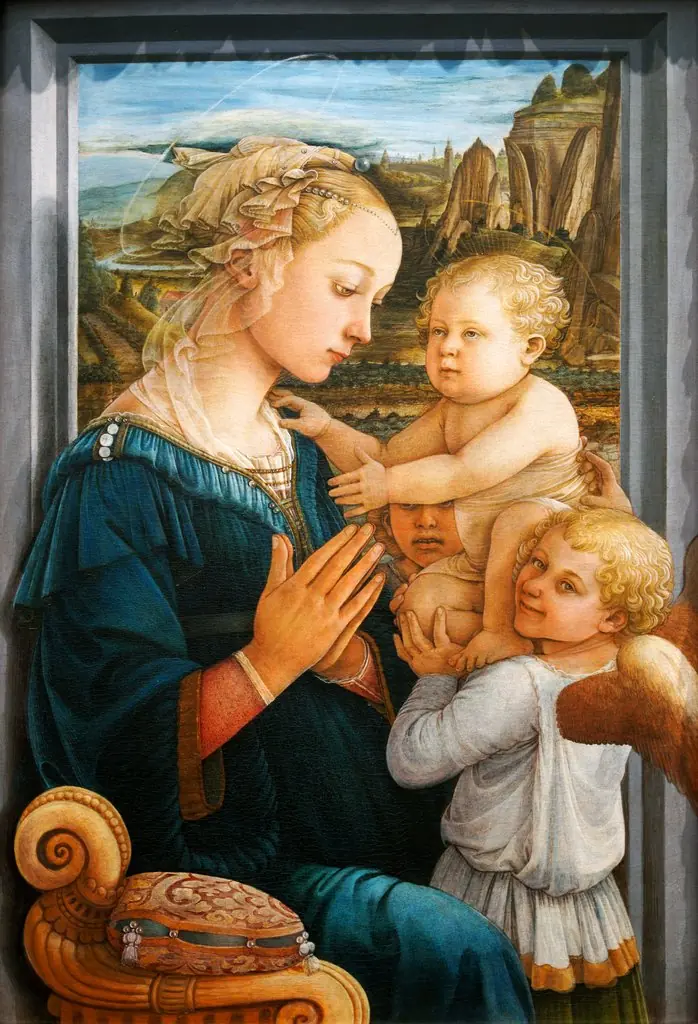 Madonna and Child
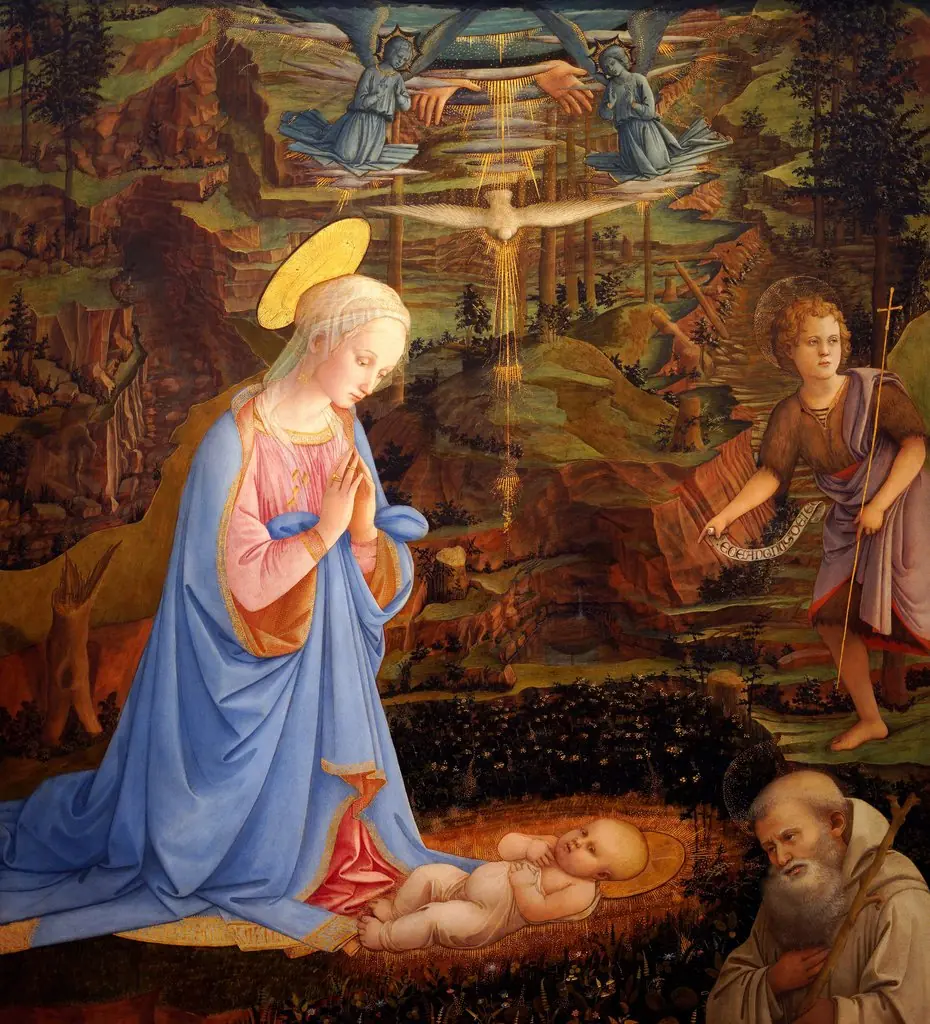 Adoration of Camaldoli