Artwork
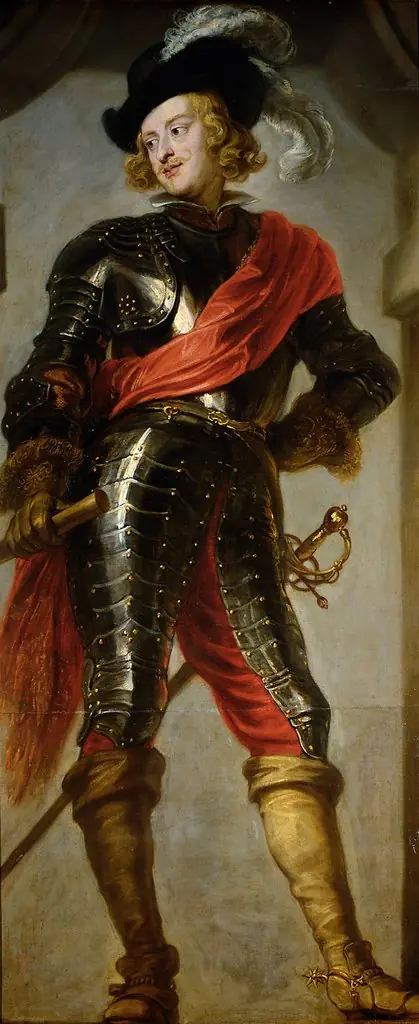
The Apostle Saint James or Saint James the Moor Slayer
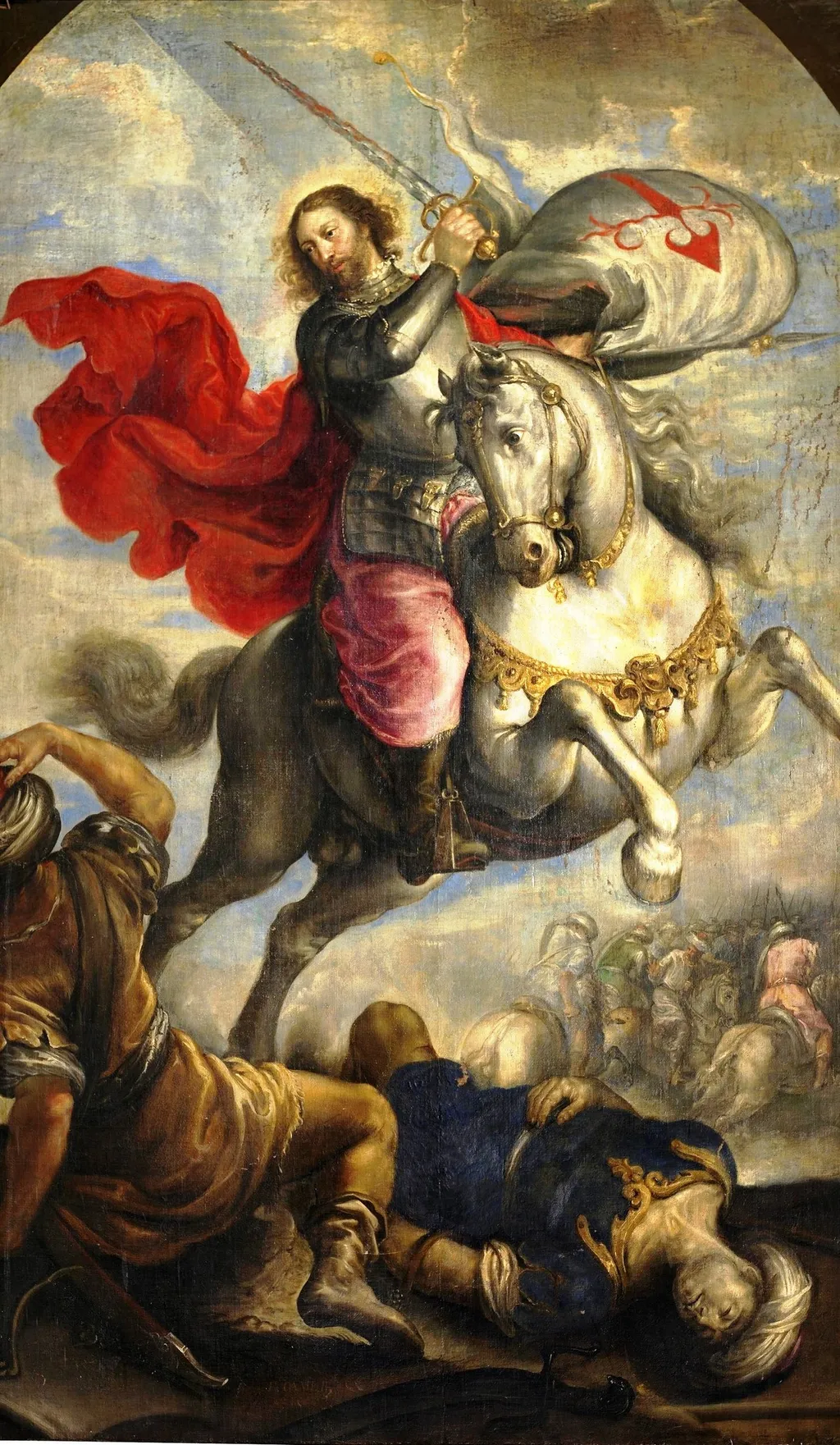
The Apostle Saint James or Saint James the Moor Slayer is an oil painting by the Early Baroque Italian artist Francisco Camilo. It dates from 1649 and is held in the collection of the Museo del Prado.
About this work
Subject & Meaning
The painting depicts Saint James the Elder, also known as Saint James the Moor-slayer, serving as the central figure of this religious composition.
The painting depicts Saint James the Elder, also known as Saint James the Moor-slayer, serving as the central figure of this religious composition. Created by Francisco Camilo in 1649, the work visualizes the apostle in his capacity as a militant protector, a role historically associated with the Reconquista. As a piece of religious art, the subject matter focuses entirely on the veneration of this specific saint.
The iconography aligns with the traditional representation of the apostle as a warrior saint, emphasizing his legacy as the Moor-slayer within the context of Spanish religious devotion.
Technique & Style
Created in 1649 by Francisco Camilo, this religious painting is executed in oil paint on a canvas support. The work presents a large-scale composition, measuring 263 cm in height and 178 cm in width. Visually, the piece depicts Saint James the Moor-slayer, also identified as St. James the Elder, serving as the central subject.
The application of oil media on fabric was characteristic of the artist's approach to monumental religious genres during this period.
History & Provenance
The work was painted in 1649 by Francisco Camilo, as indicated by the artist’s signature date on the canvas. It entered the Museo del Prado’s holdings through the 1872 transfer of the Museo de la Trinidad collection, which had previously acquired it from its original location. The commissioning context is not documented in surviving sources, but the iconography aligns with Counter-Reformation devotional programs emphasizing Santiago Matamoros as a protector of the Spanish monarchy and faith.
The work is held in the Museo del Prado, Madrid, as part of the former holdings of the Museo de la Trinidad. It is inventoried at the Museo del Prado with accession number P004359.
It was included in the exhibition Obras maestras recuperadas held at the Museo del Prado in 1999, where it was presented as a key example of Francisco Camilo’s religious painting from the mid-seventeenth century.
Context
Created in 1649 by Francisco Camilo, The Apostle Saint James or Saint James the Moor Slayer stands as a significant example of mid-seventeenth-century Spanish religious painting. The work depicts Saint James the Elder, a central figure in Spanish iconography known as the Moor-slayer, rendered in oil on canvas. Currently held in the collection of the Museo del Prado, the painting reflects the artist's engagement with Counter-Reformation themes prevalent in Madrid during this period.
Its substantial dimensions, measuring 263 cm in height and 178 cm in width, underscore its intended function as a major devotional image within a religious or courtly setting.
Overview
Created in 1649 by the Madrid‑born painter Francisco Camilo, this oil on canvas portrays the legendary Saint James as a militant figure. Executed during the early Baroque period, the work now belongs to the Museo del Prado’s collection and exemplifies the dramatic religious imagery favored in 17th‑century Spanish art.
Artist & collection
Artist
Francisco Camilo (Madrid 1610–Madrid 1671) was a Spanish painter, the son of an Italian immigrant who had settled in Madrid.




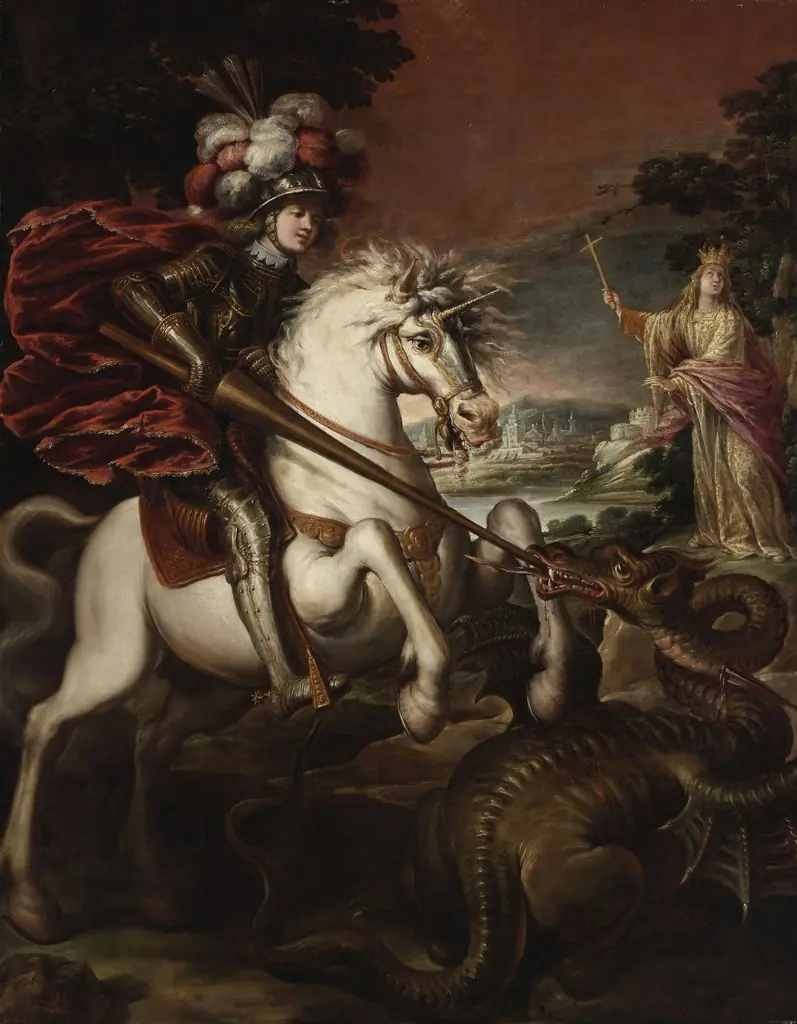
- Saint George Slaying the Dragon
 Saint Martin Dividing His Cloak (triptych, left wing)
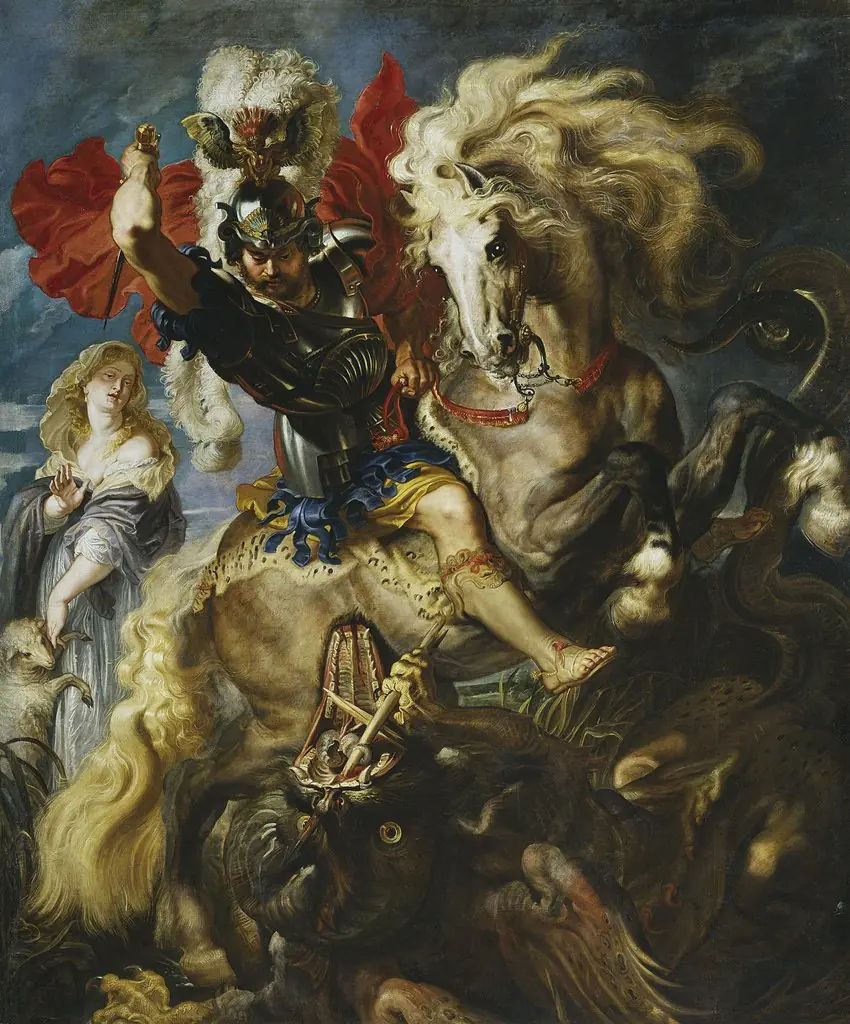 Saint George and the Dragon
 The Conversion of Saint Paul
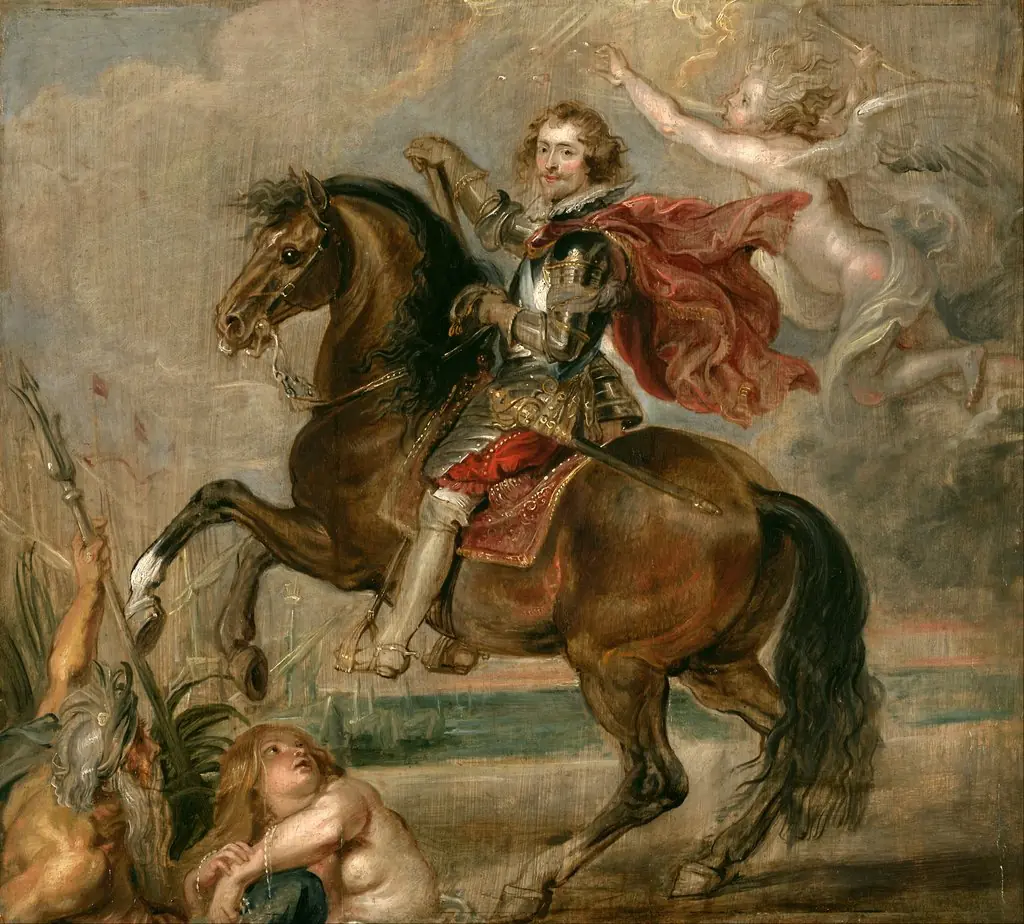 Equestrian Portrait of the Duke of Buckingham
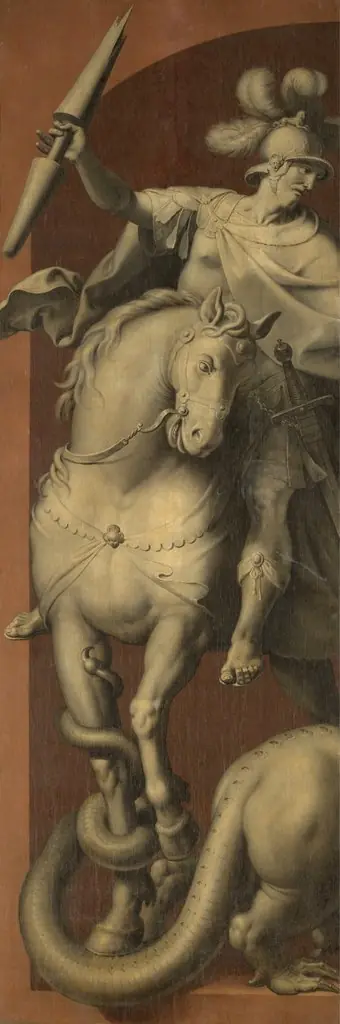 Saint George on Horseback
 The Fall of Phaethon
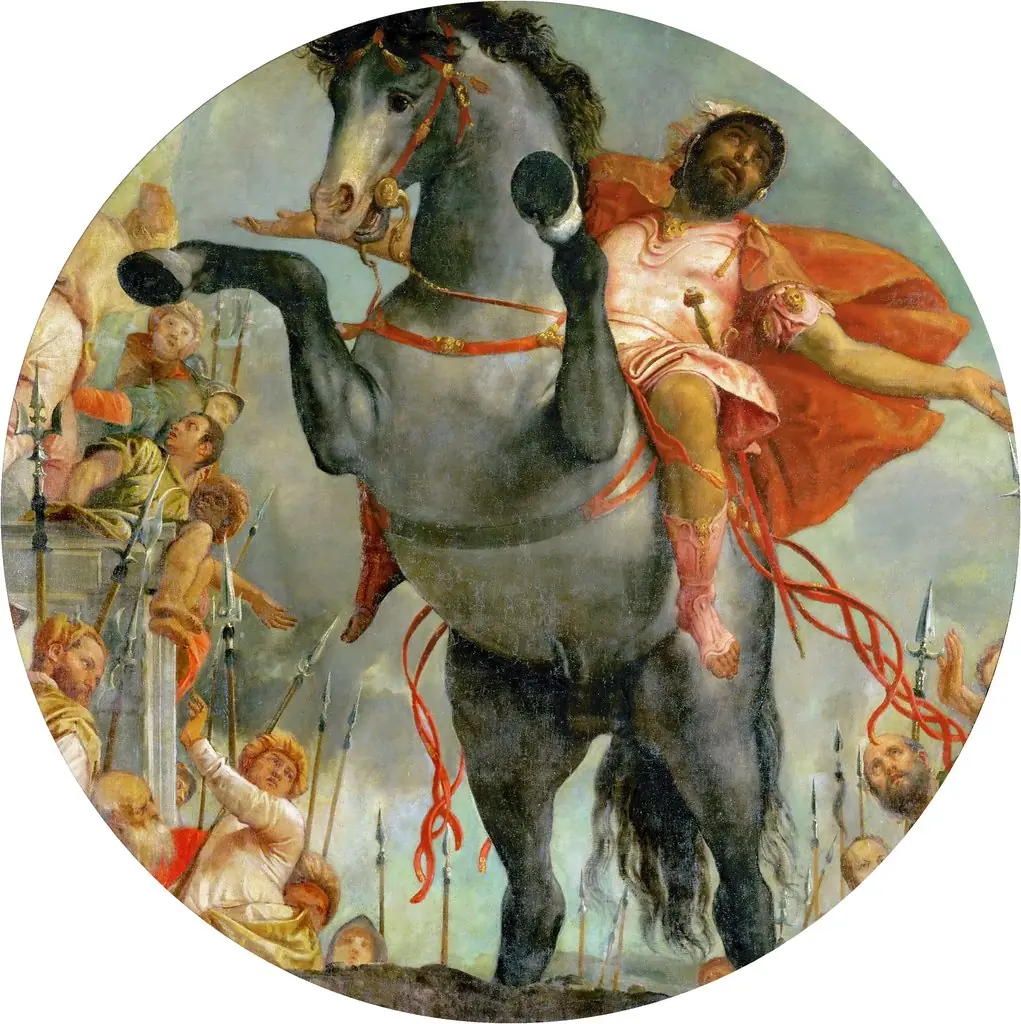 The sacrificial death of Marcus Curtius
 Perseus and Andromeda
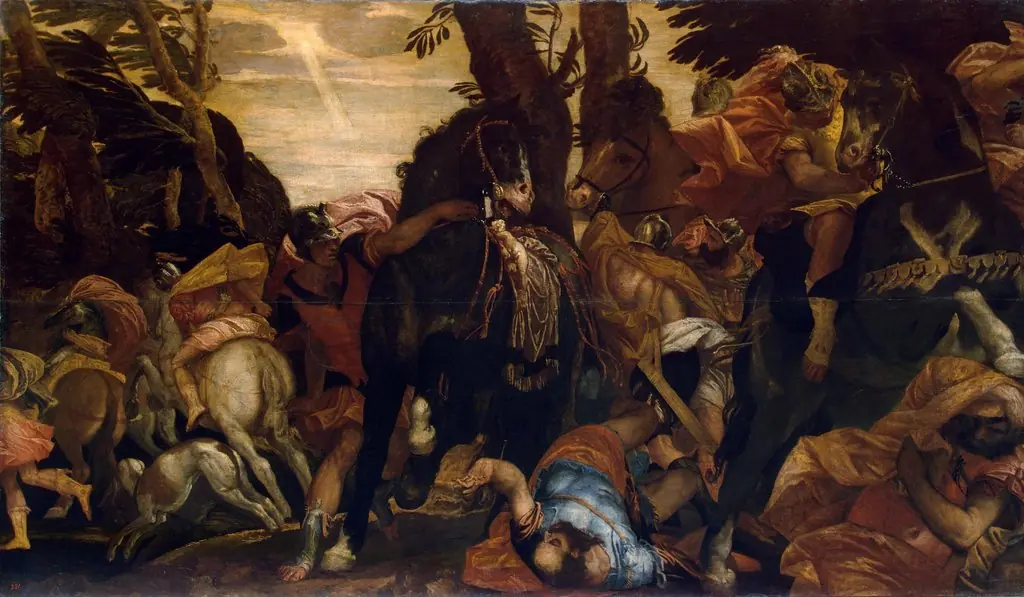 Conversion of Saul
 Cardinal-Infante Ferdinand of Austria
 Saint Martin and the Beggar