Artwork
Willem van Heythuysen posing with a sword
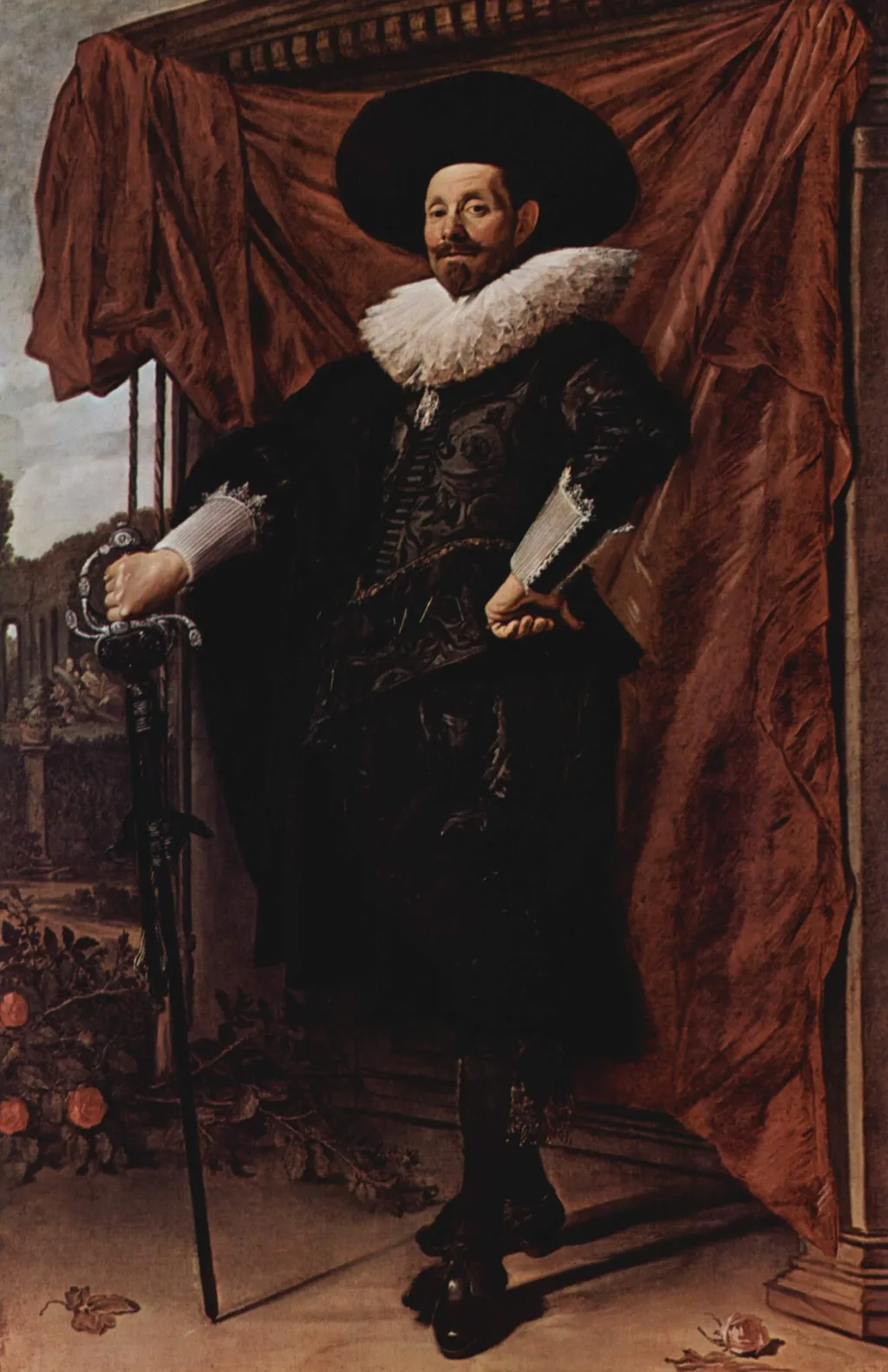
Willem van Heythuysen posing with a sword is an oil painting by the Dutch Golden Age artist Frans Hals. It dates from 1625 and is held in the collection of the Bavarian State Painting Collections.
About this work
Frans Hals painted his portrait of Willem van Heythuysen in oil around 1630. The Haarlem cloth merchant stands with a rapier, looking straight at us. It’s a lively scene, not stiff or formal.
Hals was known for loose, quick brushwork. That style makes the man feel ready to move.
Look up Hals’s other works to see how he brings portraits to life.
Subject & Meaning
His richly trimmed dark blue costume, lace ruff, and broad-brimmed hat underscore both his prosperity and the pride of the Dutch burgher class.
The painting portrays Willem van Heythuysen, a wealthy Haarlem cloth merchant, in a full-length life-size portrait that presents him in the manner of an aristocrat. He stands in a theatrical pose with one foot forward, his left hand pressed to his hip and his right hand gripping the hilt of a rapier whose point rests on the ground, conveying strength, self-confidence, and an almost arrogant bearing. His richly trimmed dark blue costume, lace ruff, and broad-brimmed hat underscore both his prosperity and the pride of the Dutch burgher class.
Symbolic elements enrich the scene with vanitas overtones: roses lying on the ground, a couple in a distant garden, and a draped doorway all evoke the transience of youth, beauty, and worldly wealth. The art historian Hermann Bauer interprets the curtained portal as "the passage to the temple of Mars, closed in Rome during times of peace," suggesting that even the merchant bears civic responsibilities in war and peace. Because Heythuysen never married and is positioned facing left rather than right, the work is not a wedding pendant but rather a romantic self-image of a confirmed bachelor whose luxurious attire hints at the vanity of material success.
Technique & Style
The painting is executed in oil on canvas with dimensions 204.5 × 134.5 cm, typical of Hals's full-length portrait practice.
The composition features a standing figure posed with the left foot advanced and the right drawn back, the right hand gripping a rapier whose point rests on the ground. The sitter's left hand presses to his side, creating a dynamic diagonal that organizes the space. Behind him, a purplish-red drapery partially veils a monumental architectural opening, while to the left a French garden with a distant couple appears under a low horizon. In the foreground, scattered roses signal the transience of beauty.
Hals's handling combines incisive detail in the face and hands with broader, suggestive brushwork in drapery and background, producing a taut contrast between tactile precision and atmospheric looseness. The palette favors rich darks, deep blue satin, black hat, crimson curtain, against the lighter accents of lace collar and stockings, heightening the sitter's self-presentation.
History & Provenance
Frans Hals painted this full-length portrait of Willem van Heythuysen in Haarlem, with creation generally dated to 1625 (sometimes given as 1625–1630). Earlier scholarship had dated the piece to 1635 before it was recognized as having been executed a decade earlier. Early documentation by Adriaan Loosjes in 1789 placed the work in the collection of Gerrit Willem van Oosten de Bruyn.
It later entered the collection of the Princes of Liechtenstein before being acquired by the Alte Pinakothek in Munich in 1969 from the Liechtenstein Gallery in Vaduz. The work is the only known full-length portrait created by Hals.
Now part of the Bavarian State Painting Collections, the painting is catalogued at the Alte Pinakothek under the German title Bildnis des Willem van Heythuysen and has been shown in the exhibition "Frans Hals. Master of the Fleeting Moment." No specific inventory or accession number is provided in the available sources.
Context
Scholars identify this work as Frans Hals's only surviving full-length portrait, noting its unique scale within his oeuvre. Art historians interpret the composition as a definitive statement on the emancipation and self-confidence of the Dutch merchant class, depicting a cloth trader adopting an aristocratic, almost arrogant stance. The painting's theatricality and Flemish influences, particularly the refined rendering of fabrics reminiscent of Peter Paul Rubens, are balanced by Hals's characteristic loose brushwork.
Critical analysis highlights hidden symbolic messages, such as the withered roses and background lovers representing mortality and the transience of wealth, which counterbalance the subject's Calvinist dignity. Debates regarding the precise dating have shifted from a traditional 1635 attribution to circa 1625, aligning it stylistically with other works from that period.
Legacy
The painting inspired later artists; Judith Leyster produced a period copy substituting a walking stick for the rapier, and contemporary artists such as Kehinde Wiley have recreated the pose with a young black man, demonstrating its enduring visual impact.
Scholarship has also shaped its reputation; Slive's 1989 exhibition catalogue corrected the traditional dating from circa 1635 to about 1625, while Claus Grimm linked the background drapery to Hals's portrait of Aletta Hannemans, suggesting a shared workshop context and highlighting the sitter's identity as a wealthy, unmarried cloth merchant.
Overview
This oil painting by Frans Hals, titled Willem van Heythuysen posing with a sword, dates from approximately 1625-1630. It depicts the Haarlem cloth merchant Willem van Heythuysen. The work is a notable example of Dutch Golden Age portraiture and is currently housed in the Alte Pinakothek in Munich.
Own this work as a print
Artist & collection
Artist
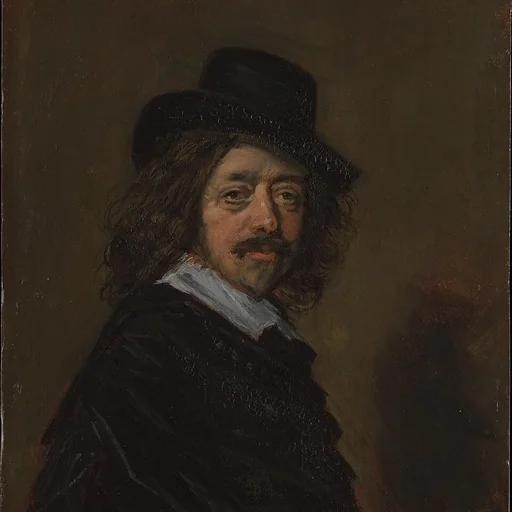
Frans Hals the Elder (UK: US:; Dutch:; c. 1582 – 26 August 1666) was a Dutch Golden Age painter. He lived and worked in Haarlem, a city in which the local authority of the day frowned on religious painting in places of…

 Portrait of Laurens Reael
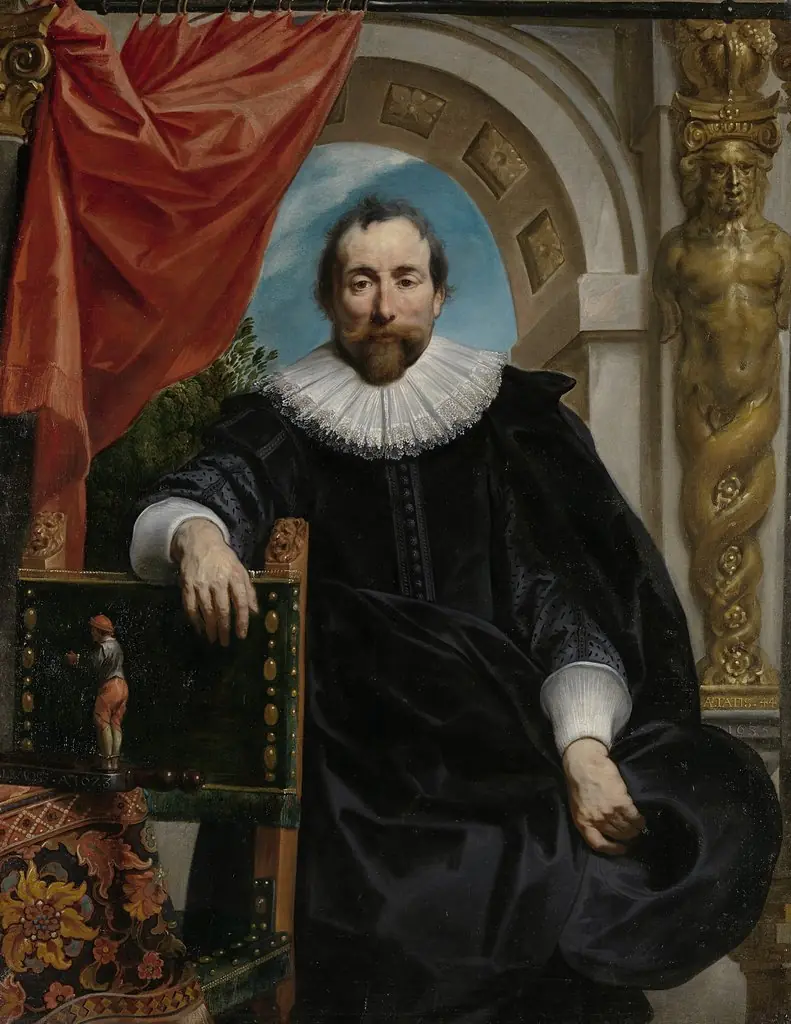 Portrait of Rogier Le Witer (1591-1678), Merchant in Antwerp
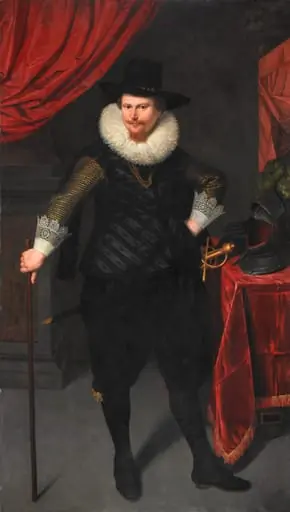 Portrait of Laurens Reael
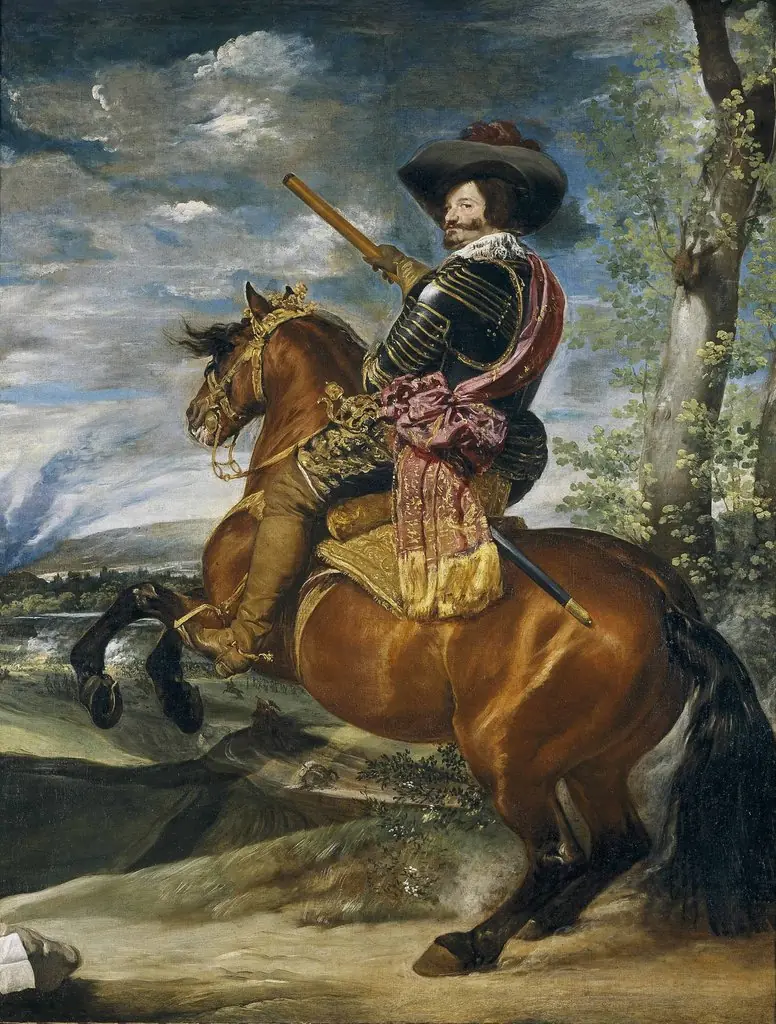 Equestrian Portrait of the Count-Duke of Olivares
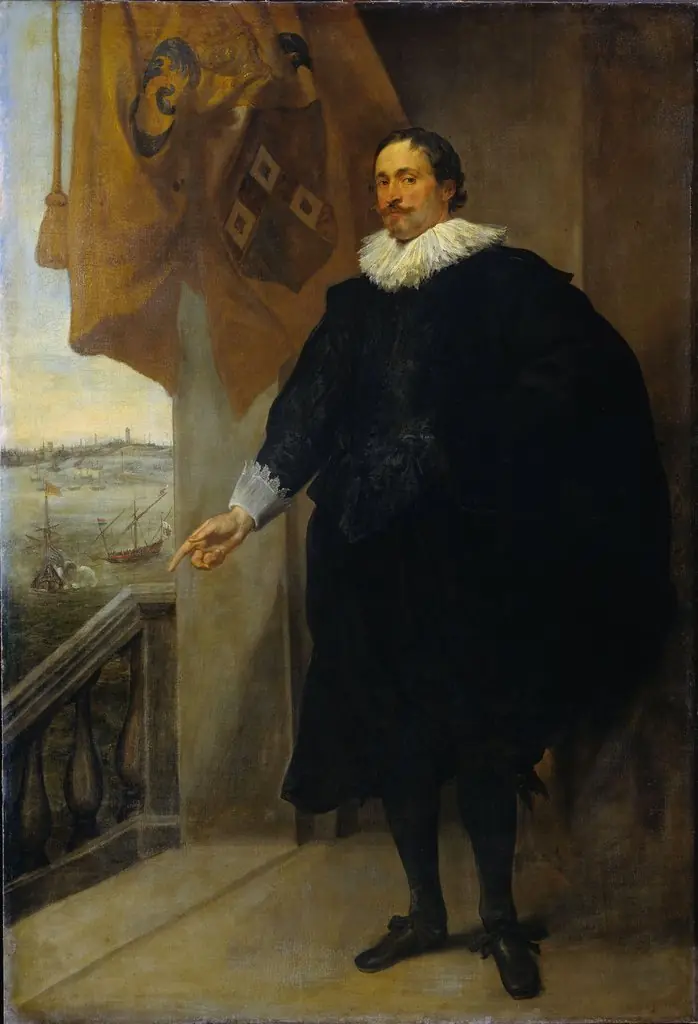 Portrait of Nicolaes van der Borght. Merchant of Antwerp
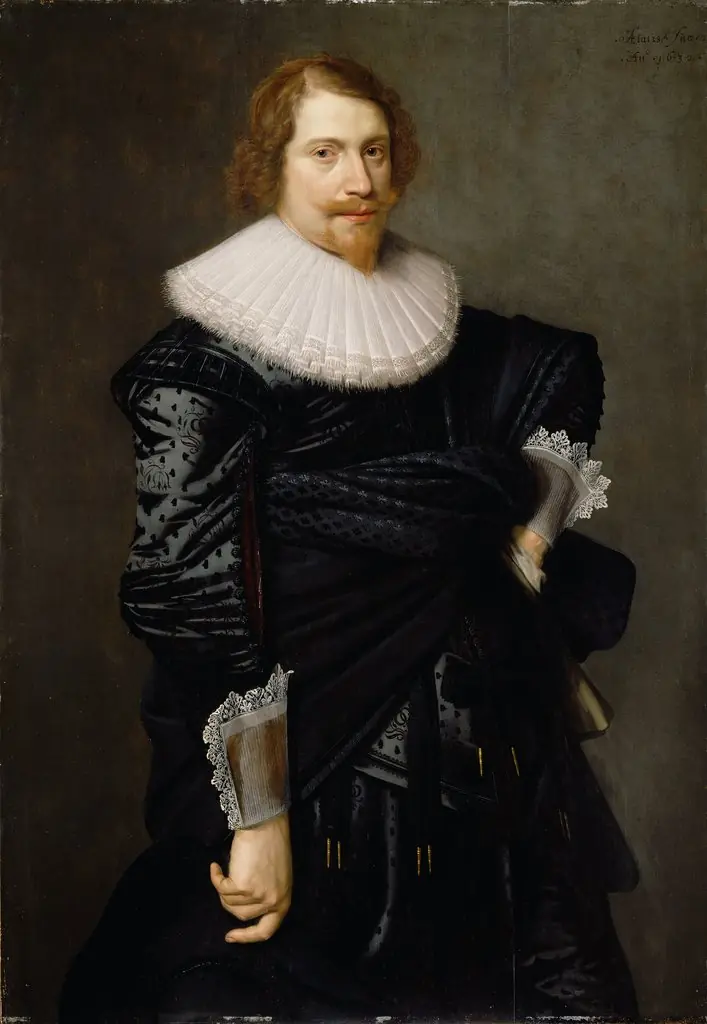 Portrait of a Man
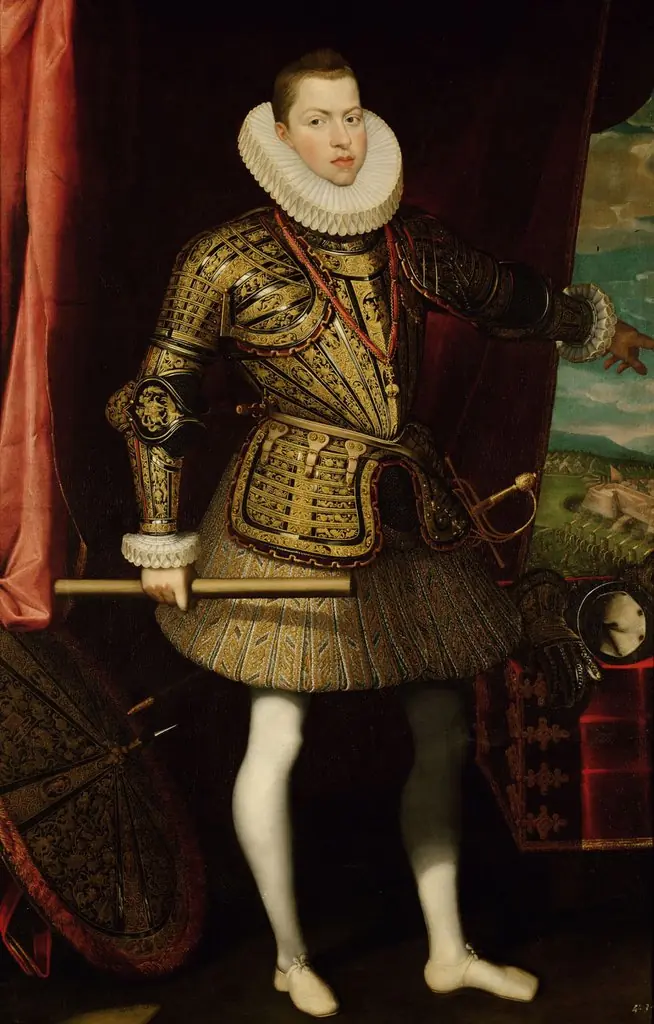 König Philipp III.(1578-1621) von Spanien, Bildnis in ganzer Figur als General der Infanterie (Im Hintergrund: Die Belagerung von Ostende 1601-1604)
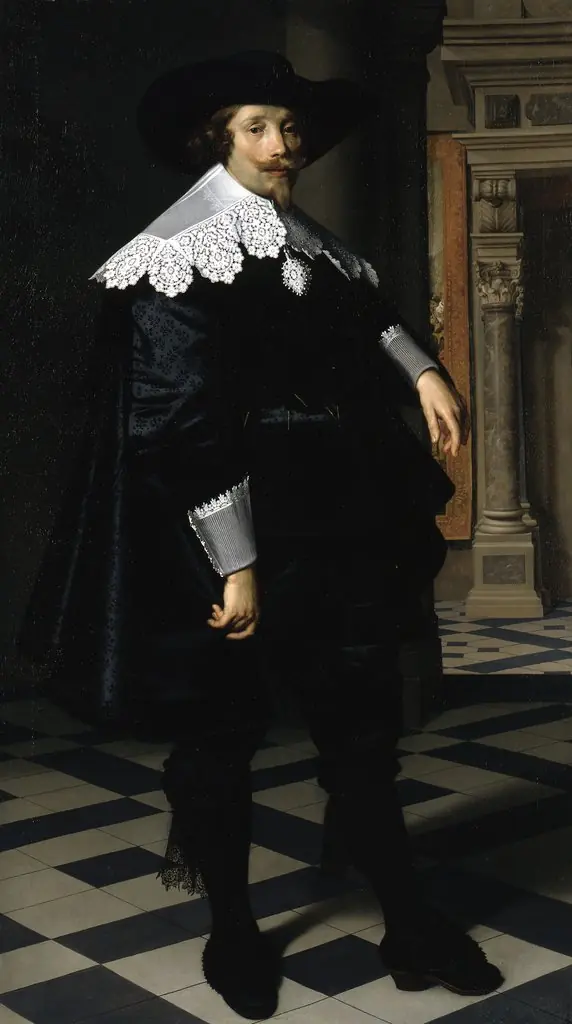 Portrait of Cornelis de Graeff
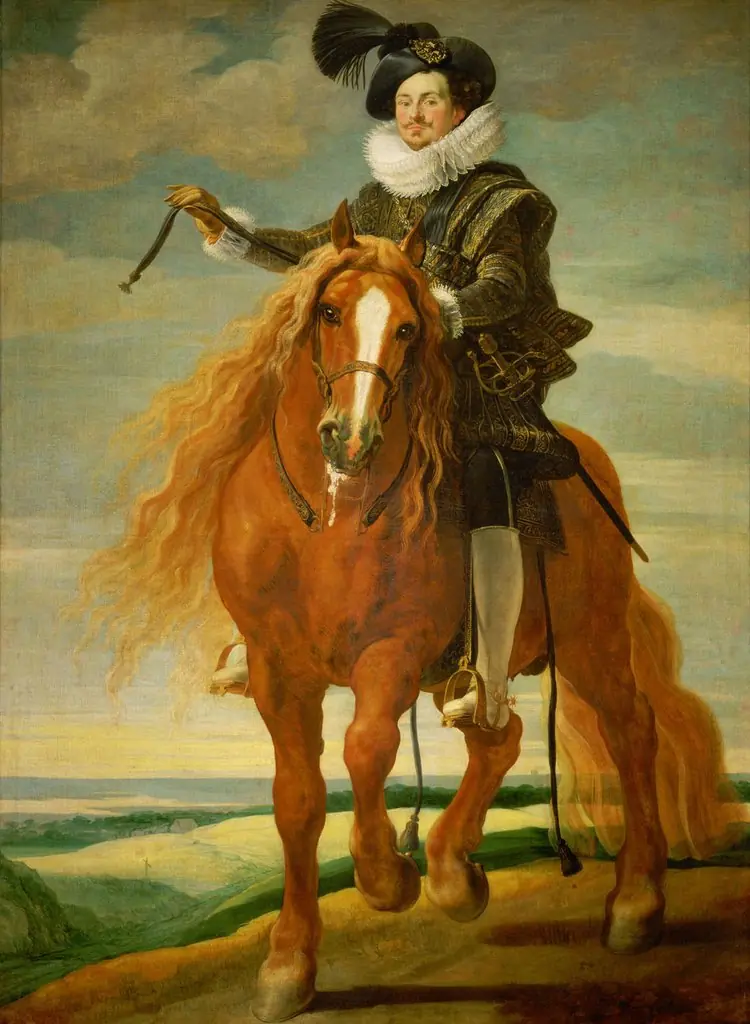 Equestrian portrait of Don Diego Messia Felipe de Guzmán, Marquis of Leganés
 Portrait of a man, possibly Palamedes
 Portrait of Maerten Soolmans
- Portrait of a Dutch Admiral of the Fleet