Artwork
Georgiana, Duchess of Devonshire
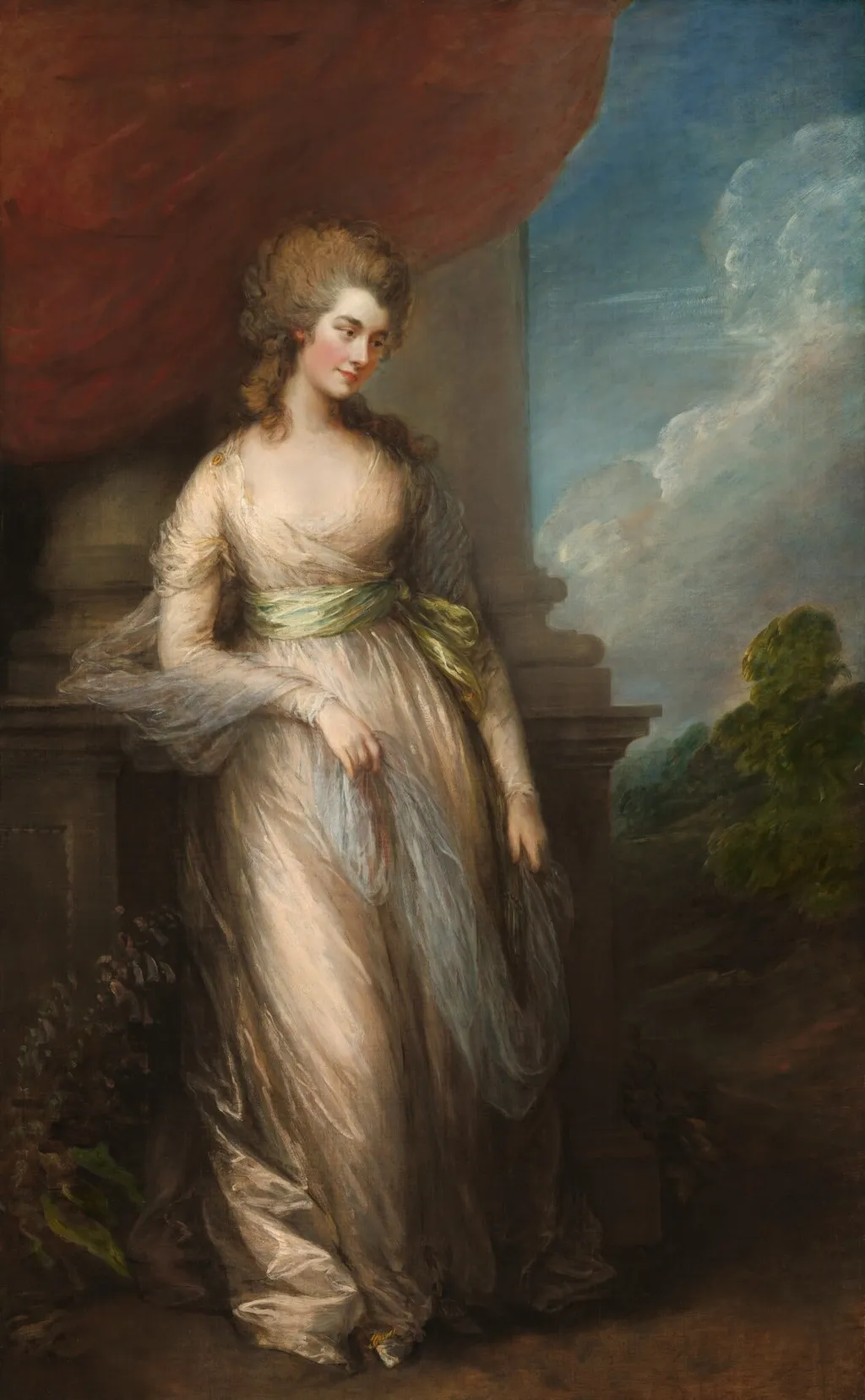
Georgiana, Duchess of Devonshire is an oil painting by the Rococo painting artist Thomas Gainsborough. It dates from 1783 and is held in the collection of the National Gallery of Art.
About this work
Subject & Meaning
Thomas Gainsborough's 1783 oil portrait captures Georgiana Cavendish, Duchess of Devonshire, a prominent aristocratic woman of the English elite.
Thomas Gainsborough's 1783 oil portrait captures Georgiana Cavendish, Duchess of Devonshire, a prominent aristocratic woman of the English elite. The work portrays her as a figure of refinement and social standing, reflecting the status associated with her family, the Cavendishes, and her marriage into the Devonshire lineage. According to the National Gallery of Art's records, the painting was created for her mother, Georgiana, Countess Spencer, and later passed through several generations of the Spencer family before entering the collection of Andrew W. Mellon and being gifted to the National Gallery of Art in 1937.
Technique & Style
Executed in oil on canvas, the portrait measures approximately 235.6 by 146.5 centimeters, a large vertical format suited to Gainsborough's full-length society portraits of the 1780s. Gainsborough's handling in this period is characterized by fluid, feathery brushwork, particularly in the rendering of fabrics and atmospheric backgrounds, with delicate modulation of flesh tones. The medium of oil allowed for the soft blending and layered glazes typical of his mature style, producing the luminous skin and shimmering textiles for which his portraits are noted.
The work is held in the Andrew W. Mellon Collection at the National Gallery of Art in Washington, D.C., and remains classified as a painting in the portrait genre.
History & Provenance
The portrait was commissioned by Georgiana, Countess Spencer, the sitter's mother, and executed by Thomas Gainsborough in 1783. Following its creation, the work remained at Althorp, Northamptonshire, in the Spencer family collection, descending through successive earls until it reached John, 7th Earl Spencer. In 1924, the 7th Earl sold the painting to Duveen Brothers, who resold it to Andrew W. Mellon in April 1925.
Mellon later conveyed the work to The A.W. Mellon Educational and Charitable Trust in December 1934, and it was ultimately gifted to the National Gallery of Art, Washington, D.C., in 1937.
The portrait is currently held in the collection of the National Gallery of Art in Washington, D.C., specifically within the Andrew W. Mellon Collection. Its path to the museum began with a purchase by the Duveen Brothers in 1924 from the Spencer family seat at Althorp. Andrew W. Mellon acquired the work in April 1925, later deeding it to the A.W. Mellon Educational and Charitable Trust in December 1934 before gifting it to the gallery in 1937.
While the painting's ownership history is well-documented, the provided records do not list specific public exhibitions or an inventory accession number.
Legacy
Thomas Gainsborough's Georgiana, Duchess of Devonshire (1783) has endured as a defining portrait of late eighteenth-century British aristocracy, shaping perceptions of both the artist's oeuvre and the sitter's cultural legacy. Acquired by the National Gallery of Art in Washington, D.C., in 1937 as part of the Andrew W. Mellon collection, the painting has become a cornerstone of the institution's holdings, frequently reproduced in exhibitions and scholarly publications on Gainsborough and Georgian portraiture. Its prominence in the Mellon collection, alongside works by Reynolds and Van Dyck, has cemented its status as a masterpiece of British art, often cited for its technical brilliance and psychological depth.
The portrait's influence extends beyond art history, contributing to the romanticized image of Georgiana Cavendish in popular culture, including biographies and film adaptations that reference Gainsborough's depiction as emblematic of her charisma and social influence.
Overview
Thomas Gainsborough's 1783 oil on canvas, Georgiana, Duchess of Devonshire, captures one of England's most prominent social figures of the era. This painting exemplifies the artist's skill as a leading British portraitist of the 18th century, even as he was known for his landscape works. The artwork reflects the Rococo movement through its characteristic light colors and flowing brushwork, presenting the Duchess within a natural setting.
Context
Created in 1783, this portrait emerged during a time when Thomas Gainsborough was highly sought after for commissions from the British elite, despite his personal inclination towards landscape painting. His ability to fuse the elegance of portraiture with the naturalistic elements of landscape made him a favored artist for depicting figures like the Duchess, reflecting the era's taste for refined yet expressive representations of status and beauty.
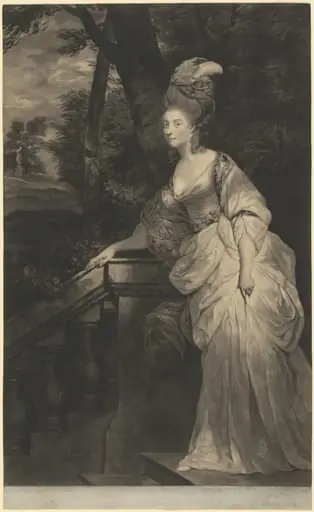
Own this work as a print
Artist & collection

Artist
Thomas Gainsborough (; 14 May 1727 (baptised) – 2 August 1788) was an English painter, draughtsman and printmaker who specialised in portrait and landscape painting.

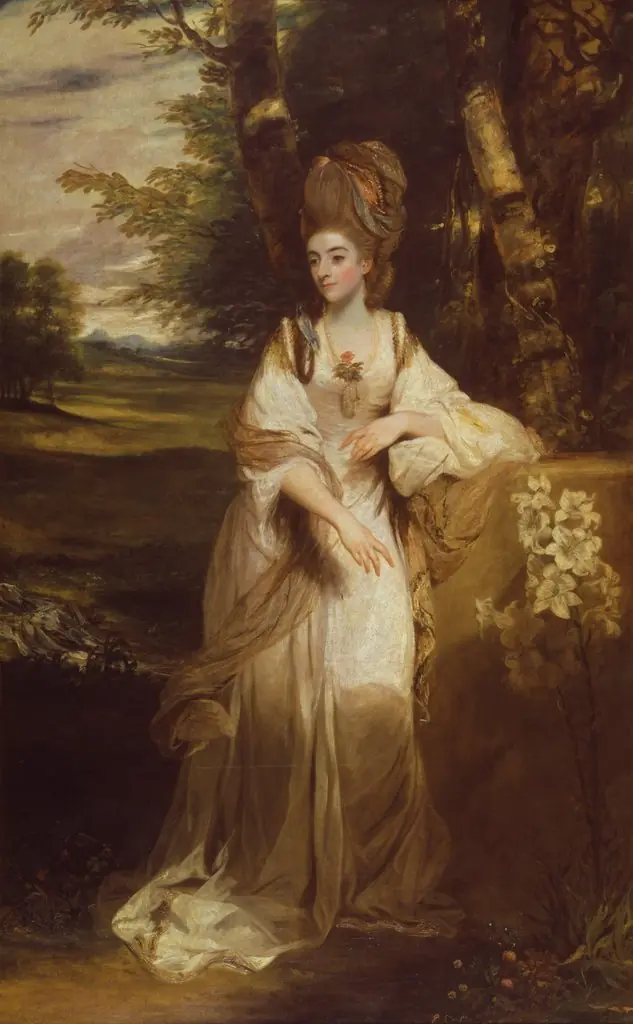 Lady Bampfylde
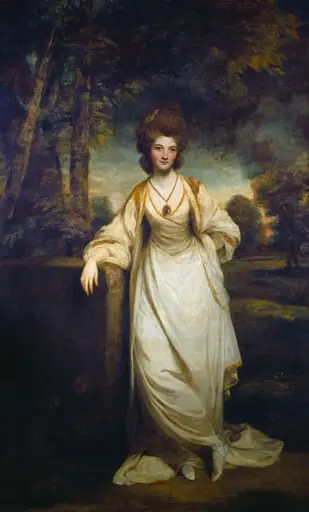 Lady Elizabeth Compton
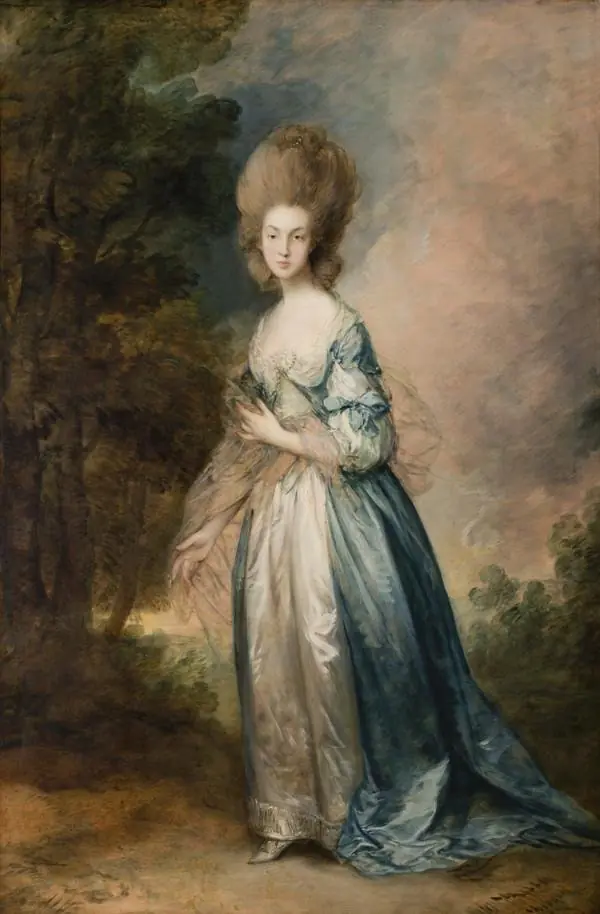 Portrait of Selina Thistlethwayte of Norman Court, full-length in blue and white dress
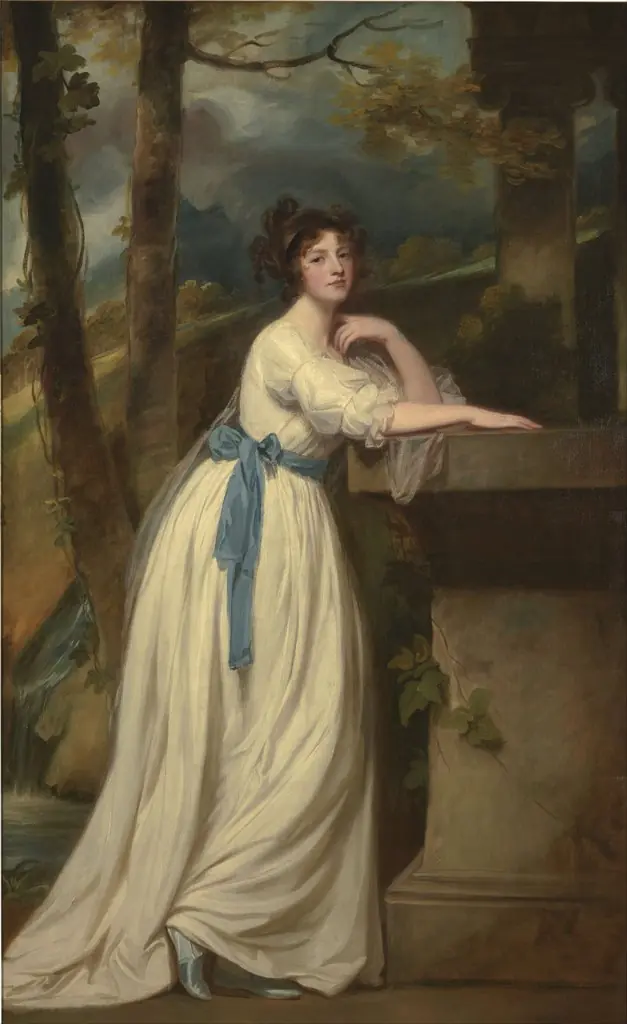 Portrait of Mrs. Andrew Reid
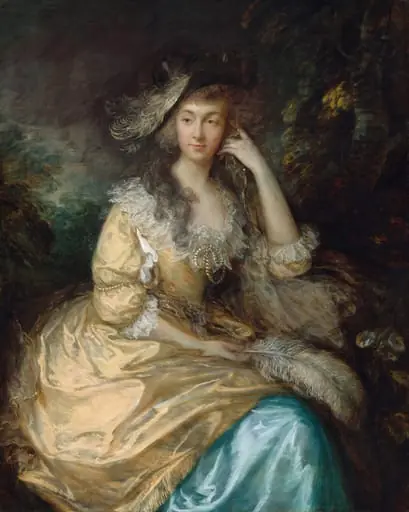 Frances Susanna, Lady de Dunstanville
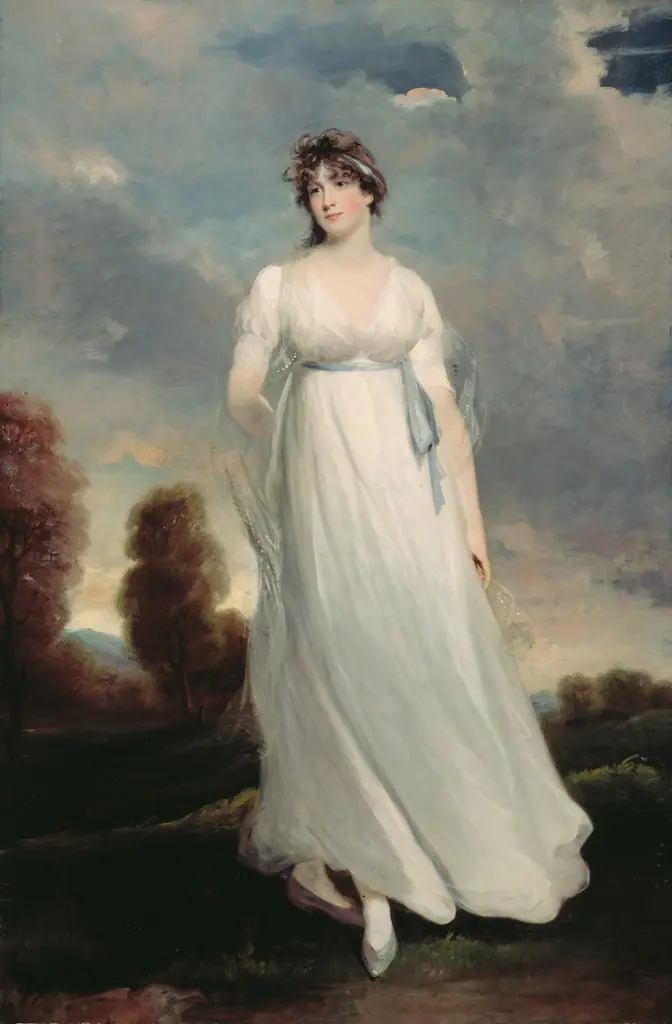 Mrs. Dottin
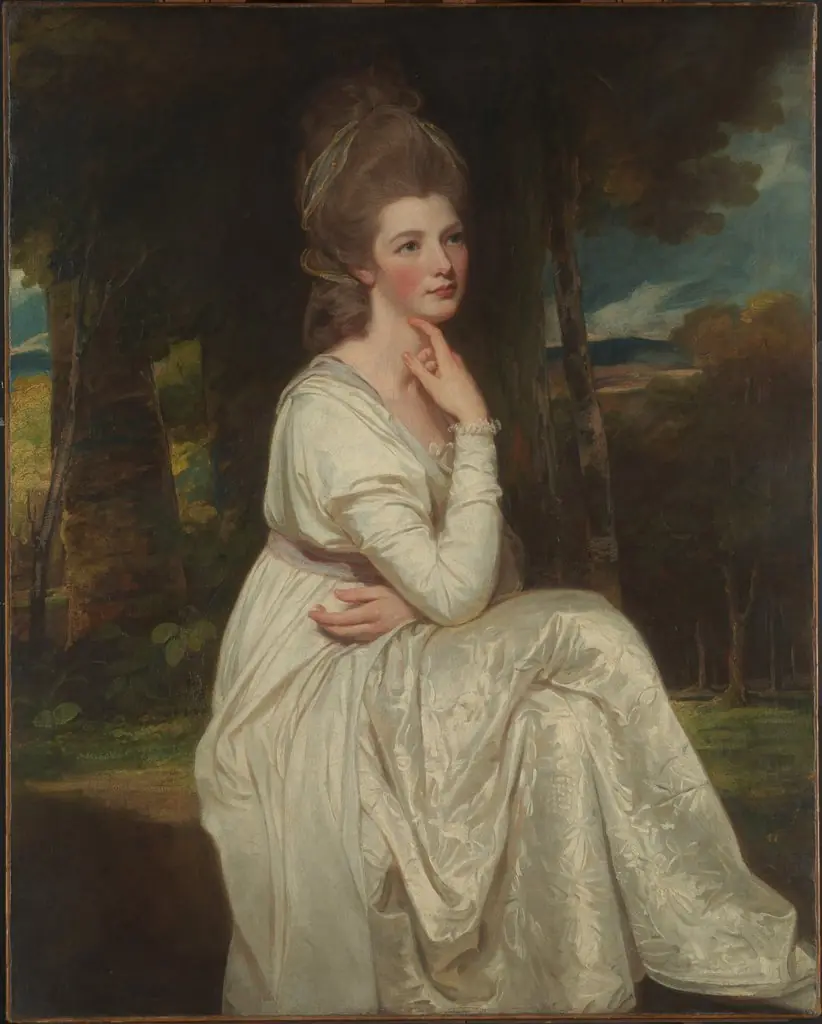 Lady Elizabeth Hamilton (1753–1797), Countess of Derby
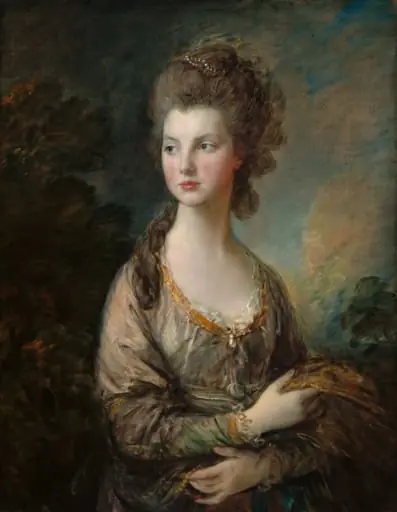
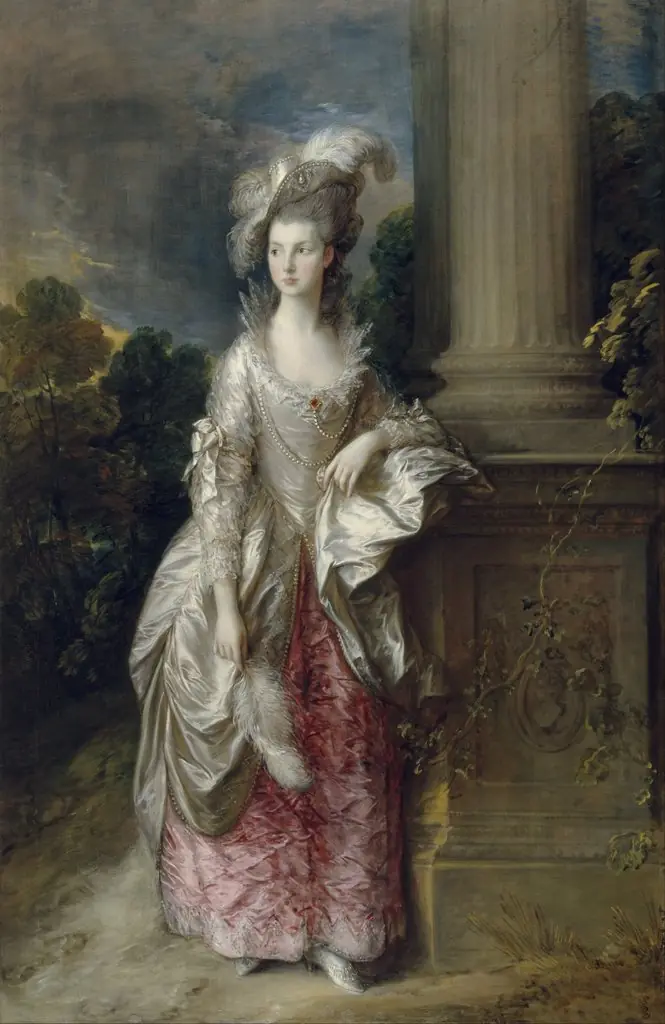 The Honourable Mrs Graham
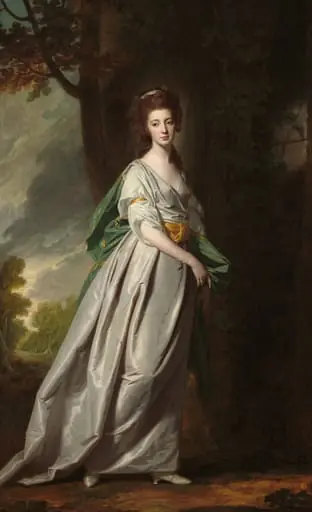 Mrs. Thomas Scott Jackson
- Georgiana (Spencer), Duchess of Devonshire