Artwork
Miss Catherine Tatton
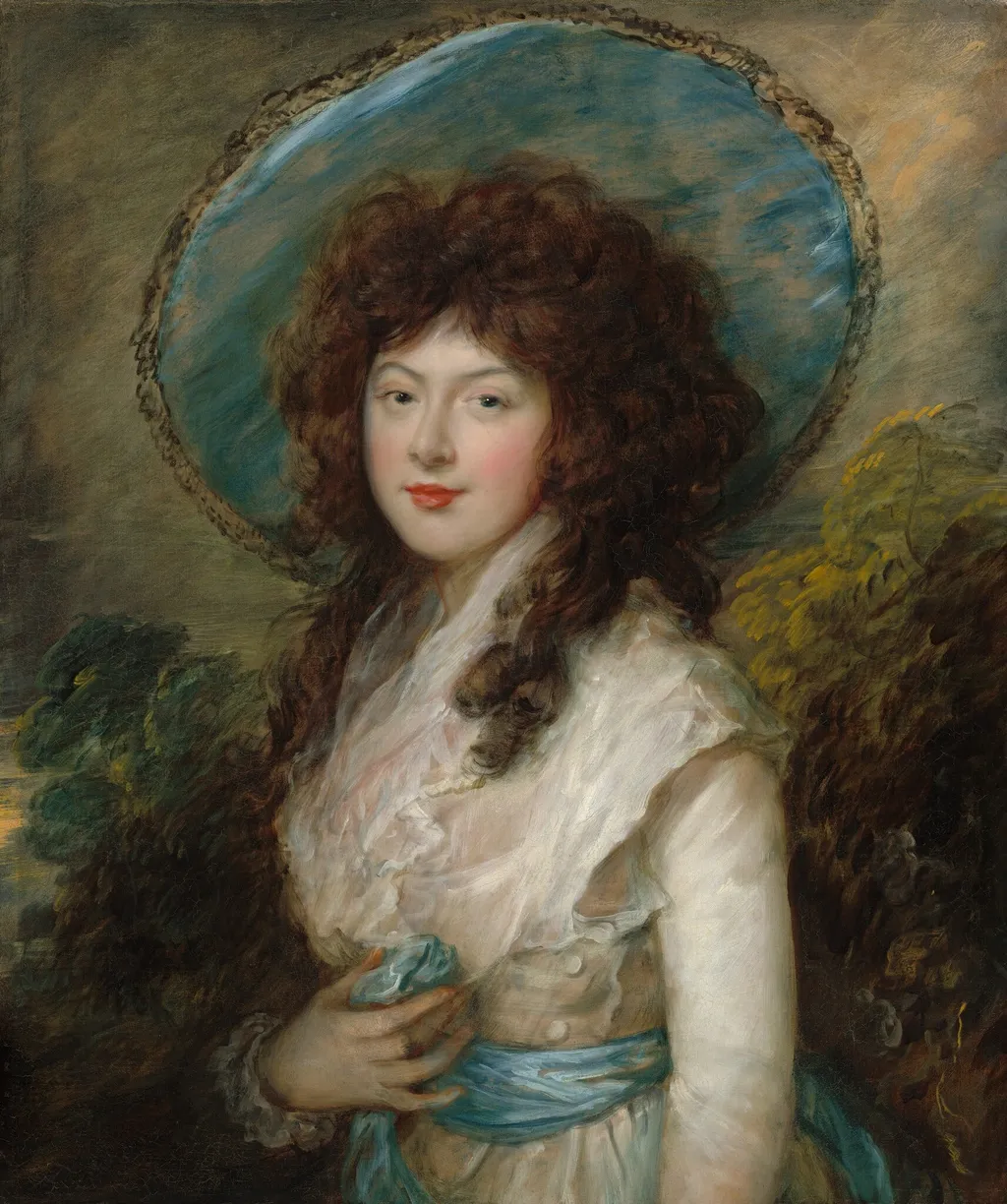
Miss Catherine Tatton is an oil painting by the Rococo painting artist Thomas Gainsborough. It dates from 1786 and is held in the collection of the National Gallery of Art.
About this work
Technique & Style
The painting's formal qualities include a restrained palette, delicate brushwork, and a focus on the sitter's expression, typical of Gainsborough's style.
The work is an oil painting on canvas, created in 1786 as a portrait of Miss Catherine Tatton. Its support is canvas, and the medium consists of oil paint applied in the conventional layered technique of Gainsborough's portrait practice. As a portrait, the composition follows contemporary 18th‑century conventions of characterisation and drapery, emphasizing the sitter's status.
The painting's formal qualities include a restrained palette, delicate brushwork, and a focus on the sitter's expression, typical of Gainsborough's style.
History & Provenance
Thomas Gainsborough painted Miss Catherine Tatton in May 1786 to commemorate her marriage, as recorded in the Reverend William Tatton’s account book and documented in the 1992 National Gallery catalogue. The portrait remained in the Tatton family, passing from the sitter’s father to his son Reverend William Drake‑Brockman, then to his brother Reverend Tatton Drake‑Brockman, and subsequently to Frederick Drake‑Brockman and their nephew Francis Drake‑Brockman. It was likely sold through P. & D. Colnaghi & Co. in 1908 before entering the collection of M. Knoedler and Co., and in 1911 came into the possession of Herbert, 1st Baron Michelham.
The work was later sold by the baron’s estate in 1926, acquired by Duveen Brothers, and purchased by Andrew W. Mellon in 1927, eventually being gifted to the National Gallery of Art in 1937.
Miss Catherine Tatton has been part of the National Gallery of Art in Washington, D.C., since 1937, when it entered as a gift from The A.W. Mellon Educational and Charitable Trust. Andrew W. Mellon had acquired the painting in 1927 through Duveen Brothers, Inc., following its appearance in the 1926 estate sale of Herbert, 1st Baron Michelham, at 20 Arlington Street, London. Earlier, in 1908, the work had been sold by P. & D. Colnaghi & Co. to M. Knoedler and Co., and by 1911 it was recorded at Hellingly, Sussex, in Baron Michelham's collection.
Prior to that, the portrait descended through the sitter's family at Beachborough House, Newington, Hythe, Kent, passing from the Reverend William Drake-Brockman to his brothers Tatton and Frederick Drake-Brockman, and then to his nephew Francis Drake-Brockman, before likely being sold through Colnaghi.
Legacy
The portrait of Miss Catherine Tatton, painted by Thomas Gainsborough in 1786, entered the National Gallery of Art through the 1937 gift of Andrew W. Mellon, who acquired it in 1927. Its well‑documented provenance, from the sitter’s family through several generations of the Drake‑Brockman lineage to major dealers, illustrates the circulation of elite British portraiture in the 19th and early 20th centuries. Scholars cite the work in studies of Gainsborough’s mature portrait style and as a representative example of late‑18th‑century aristocratic representation;.
The painting’s presence in a public collection has contributed to ongoing reassessments of Gainsborough’s legacy and the cultural context of British portraiture.
Overview
This oil on canvas portrait, created by the English painter Thomas Gainsborough in 1786, depicts Miss Catherine Tatton. Gainsborough, a prominent figure in 18th-century British art, was highly regarded for both his portraiture and landscape compositions. This particular work exemplifies his skill in capturing individual likenesses, a genre in which he achieved considerable renown throughout his career.
Subject & Meaning
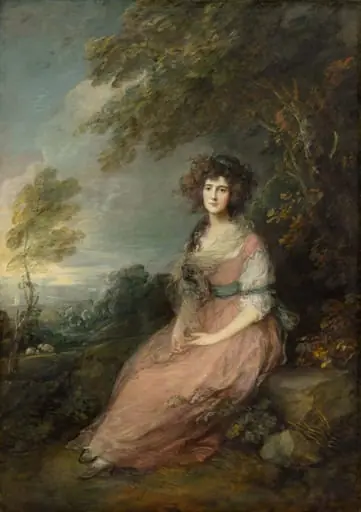
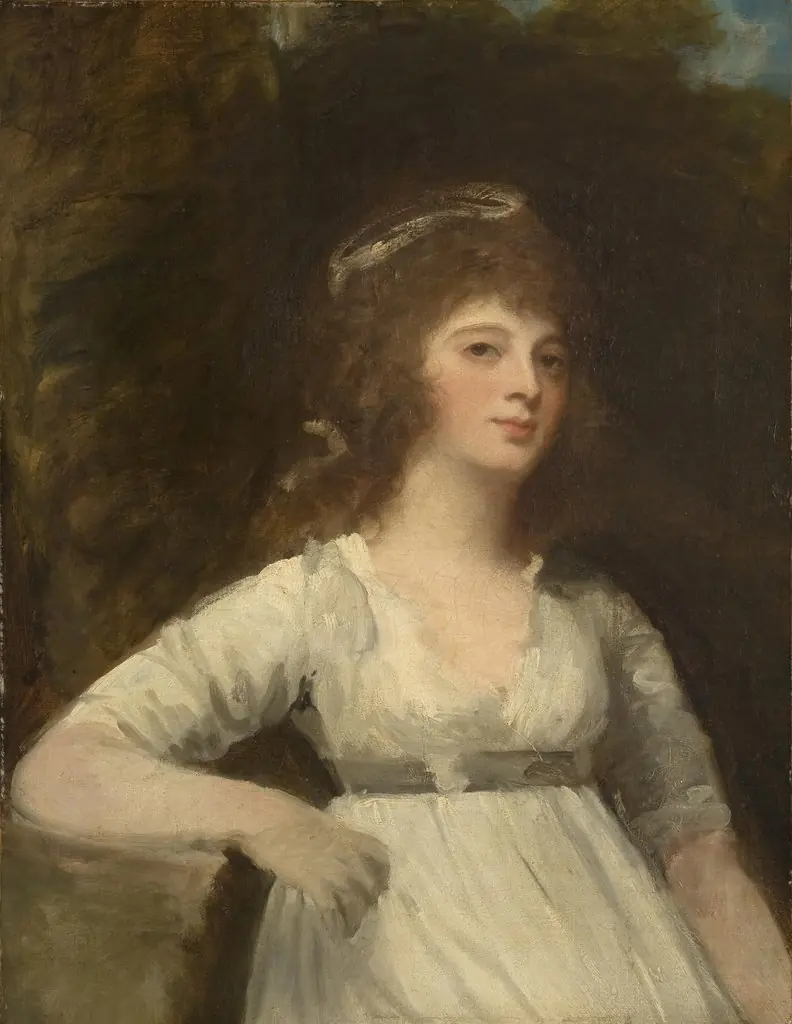
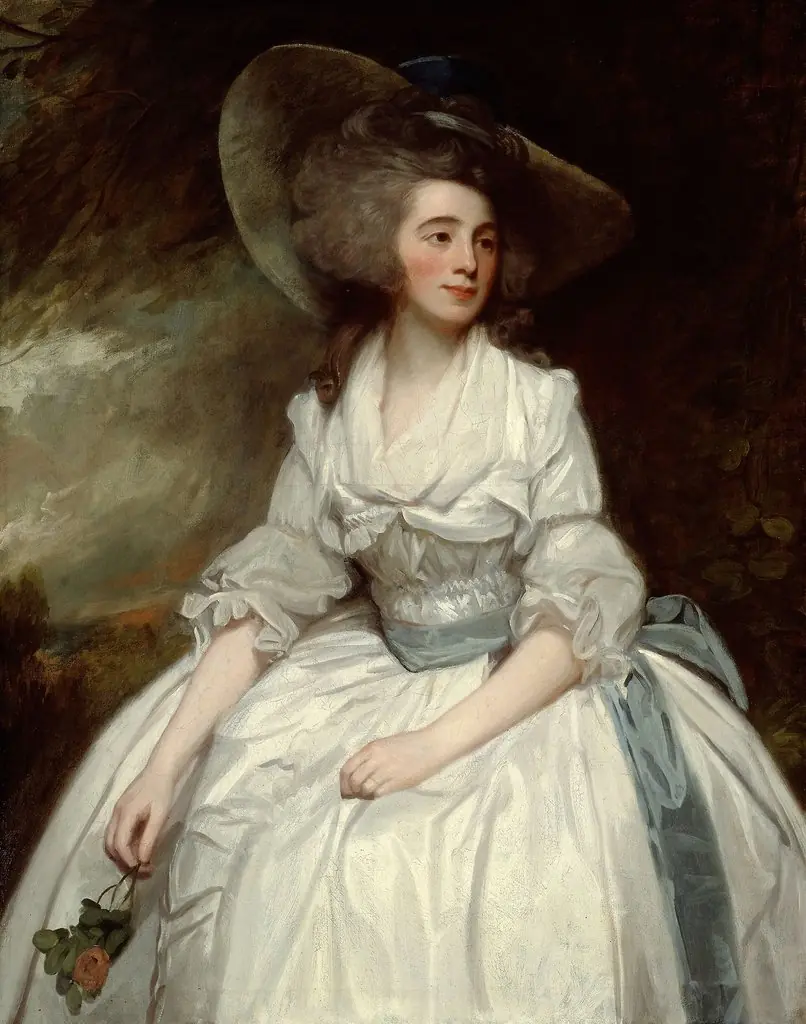
The painting presents a young woman, Miss Catherine Tatton, adorned with a blue hat and a white dress accented by a blue sash. Her long, curly brown hair frames a face turned slightly to the side, her gaze directed calmly and serenely towards the viewer. This direct engagement, combined with her composed demeanor, contributes to an overall impression of quiet elegance and refined presence.
Context
Thomas Gainsborough established himself as one of the preeminent British artists of his era, celebrated for his contributions to both portraiture and landscape painting. Despite his significant success and demand for portraits like that of Miss Catherine Tatton, Gainsborough frequently expressed a personal preference for creating landscapes, often viewing his portrait commissions as a necessary means to pursue his true artistic passion.
Own this work as a print
Artist & collection

Artist
Thomas Gainsborough (; 14 May 1727 (baptised) – 2 August 1788) was an English painter, draughtsman and printmaker who specialised in portrait and landscape painting.