Artwork
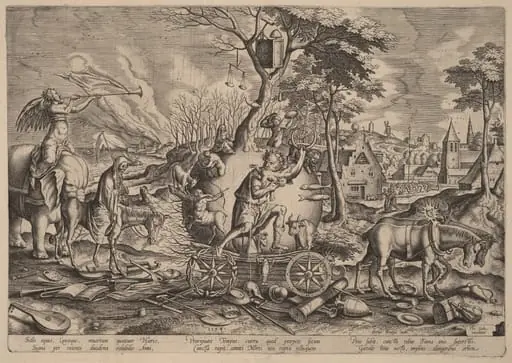
The Triumph of Time
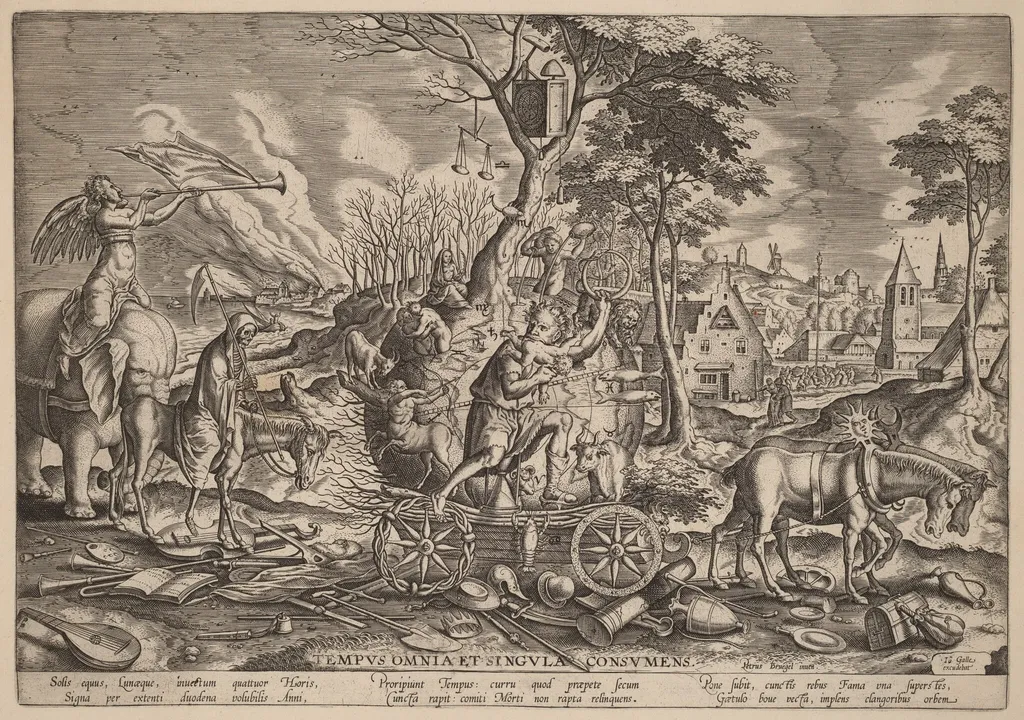
The Triumph of Time is an ink print by the Renaissance artist Philip Galle. It dates from 1574 and is held in the collection of the National Gallery of Art.
- Inscription
- Inscribed:lower center, in image, in plate: TEMPVS OMNIA ET SINGVLA CONSVMENS; lower right center, in image, in plate: Petrus Bruegl inuen.; lower right, on a rock in the corner, in plate: Io Galle / excudebat; lower margin, in plate: Solis equus, Lunaeque, invectum quattuor Horis, / Signa per extenti duodena volubilis Anni, // Proripiunt Tempus: curru quod praepete secum / Cuncta rapit: comiti Morti non rapta relinquens. // Pone subit, cunctis rebus Fama vna superstes, / Gaetulo boue vecta, implens clangoribus orbem. (The horse of the sun and that of the moon rush Time forward; who, borne by the four seasons through the twelve signs of the rotating extensive year, bears off all things with him as he goes on his swift chariot, leaving what he has not seized to his companion Death. Behind them follows Fame, sole survivor of all things, borne on an elephant, filling the world with her trumpet blasts.) [translation by Wouter Bracke from Maarten Bassens and Joris van Grieken, eds., Bruegel in Black and White: The Complete Graphic Works. Brussels: KBR, 2019, p. 251, note 1.]
About this work
Overview
Philip Galle’s 1574 engraving, titled The Triumph of Time, presents a densely populated allegorical scene that visualizes the all‑consuming nature of time. Executed in the print medium for which Galle was renowned, the work combines a multitude of figures and symbols within a compact composition, inviting close examination of its intricate details.
Subject & Meaning
The central motif features a massive tree bearing a clock and a set of scales, surrounded by individuals climbing, hiding, or interacting with the structure, suggesting humanity’s futile attempts to measure or resist temporal forces. A skeletal rider on a horse, a horn‑blowing winged figure, and scattered tools and animals reinforce the theme that time ultimately devours all, regardless of status or power.
Technique & Style
Galle employed the fine line work characteristic of late‑Renaissance engraving, achieving a high level of detail through meticulous incisions on copper. The dense arrangement of miniature elements, tiny buildings, animals, and objects, demonstrates his skill in rendering complex narratives within a single plate, a hallmark of his reproductive and original prints.
History & Provenance
Created by the Dutch publisher and printmaker Philip Galle, who was active in the mid‑16th century, the engraving reflects his dual role as designer and engraver. Galle’s workshop was known for producing both copies of famous paintings and original compositions such as this allegorical piece, which circulated among collectors of printed art in the Netherlands and beyond.
Context
The work belongs to a broader tradition of moralizing allegories popular in Northern European art during the Reformation era, where time was often personified as a relentless force. The inclusion of classical motifs, such as the winged figure and the hourglass, aligns the piece with contemporary emblem books that combined visual symbolism with didactic messages.
Own this work as a print
Artist & collection
Artist
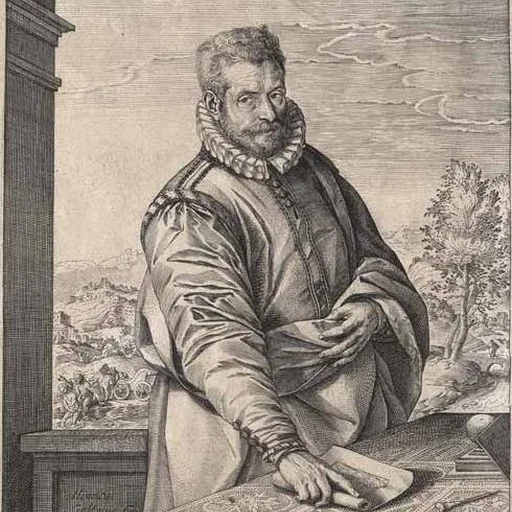
Philip (or Philips) Galle (1537 – March 1612) was a Dutch publisher, best known for publishing old master prints, which he also produced as designer and engraver. He is especially known for his reproductive engravings of paintings.

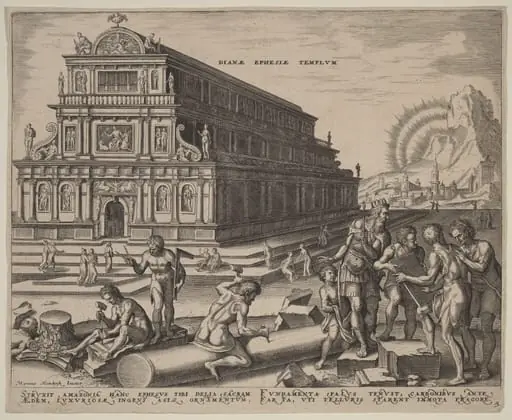 Dianae Ephesiae Templum (The Temple of Diana at Ephesus)
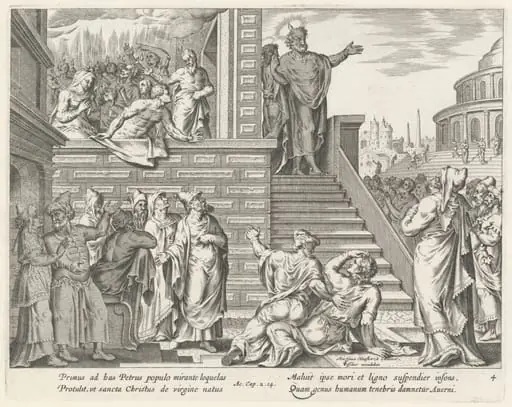 Saint Peter Speaks to the People about Christ
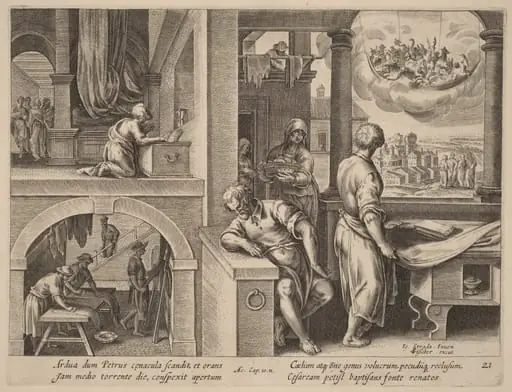 The Vision of Saint Peter
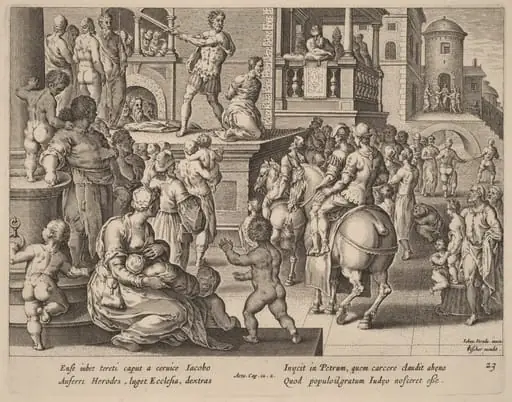 Beheading of Saint James
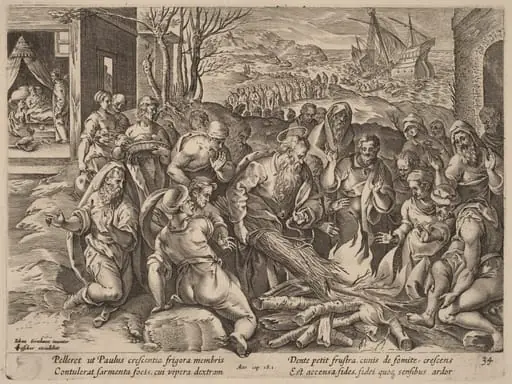 Saint Paul Shipwrecked on the Island of Melita
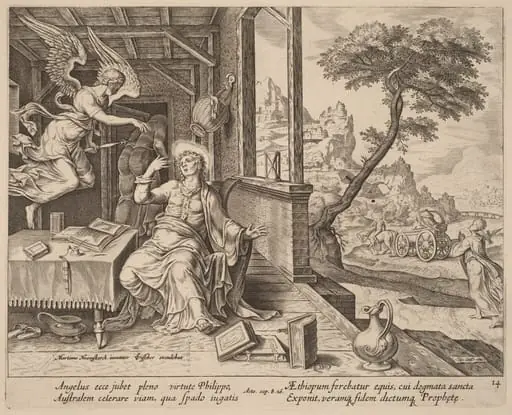 The Angel Orders Saint Philip to Accompany the Ethiopian Eunuch
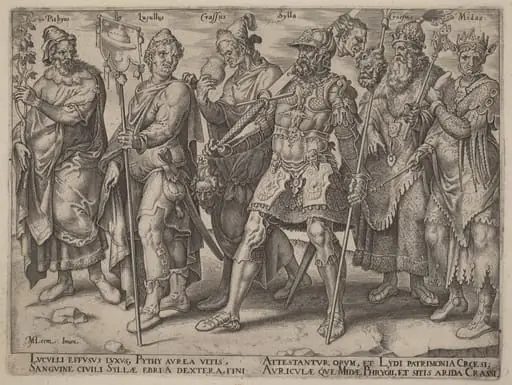 Notorious Examples of Wealth from Antiquity
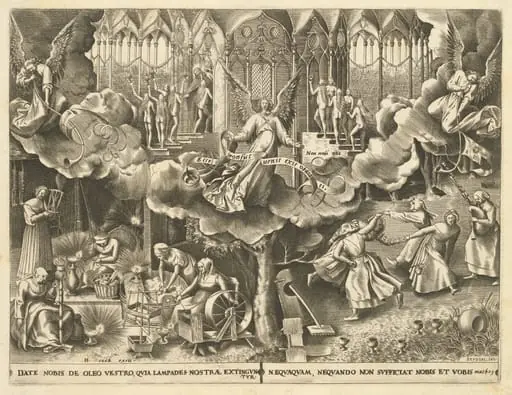 The Parable of the Wise and Foolish Virgins