Artwork
Auti te Pape (Women at the River)
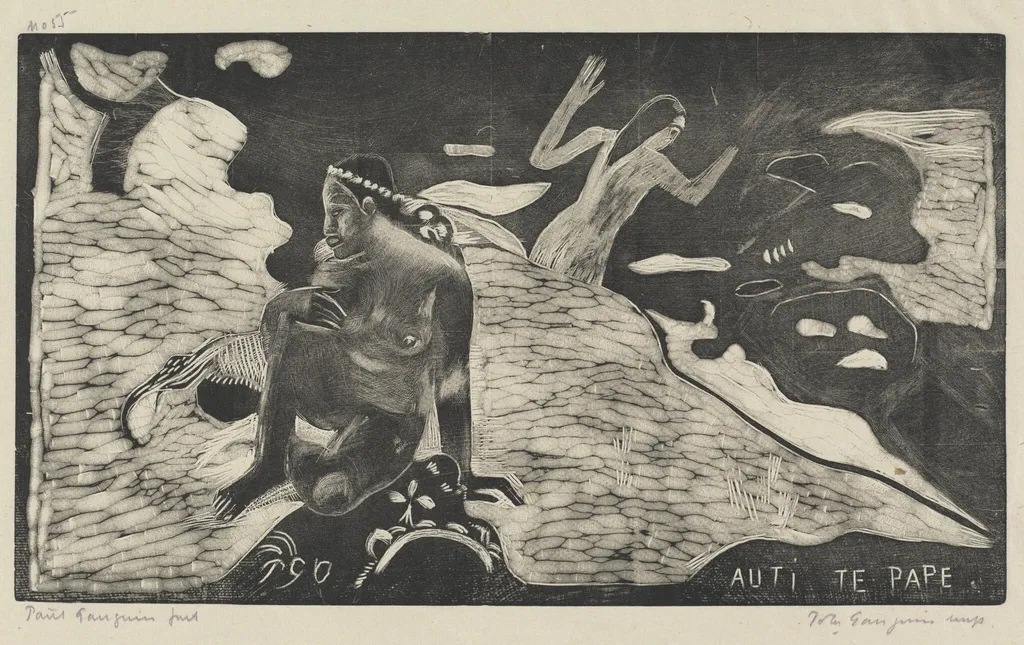
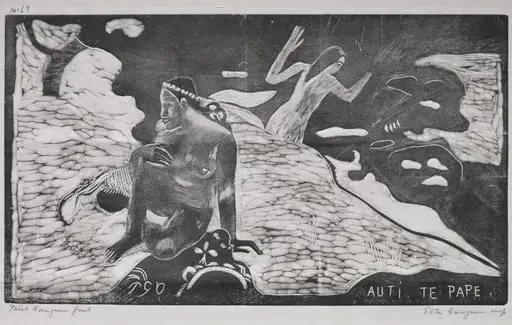
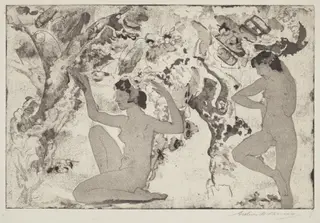
Auti te Pape (Women at the River) is an ink print by the Impressionist artist Paul Gauguin. It dates from 1894 and is held in the collection of the National Gallery of Art.
- Inscription
- Inscribed:recto: in block, in image, at lower left: P G O; in block, in image, at lower right: AUTI TE PAPE; above image, at left, in graphite: no 55; below image, at left, in graphite: Paul Gauguin fait; below image, at right, in graphite: Pola Gauguin imp.; verso: none
- Markings
- Marked:none
About this work
Overview
Auti te Pape (Women at the River) is a woodcut print on China paper created by Paul Gauguin in 1894. The work showcases Gauguin's experimental approach to printmaking and his interest in expressive, non-realistic representation.
Subject & Meaning
The print depicts two women by a river, surrounded by lush vegetation. The serene atmosphere and relaxed postures of the women convey a sense of calm, reflecting Gauguin's fascination with non-Western and rural life.
Technique & Style
Gauguin's use of bold lines and expressive textures gives the image a dynamic quality. The earthy tones and flowing robes of the women contribute to the overall sense of tranquility, characteristic of Gauguin's Post-Impressionist and Symbolist influences.
Own this work as a print
Artist & collection
Artist
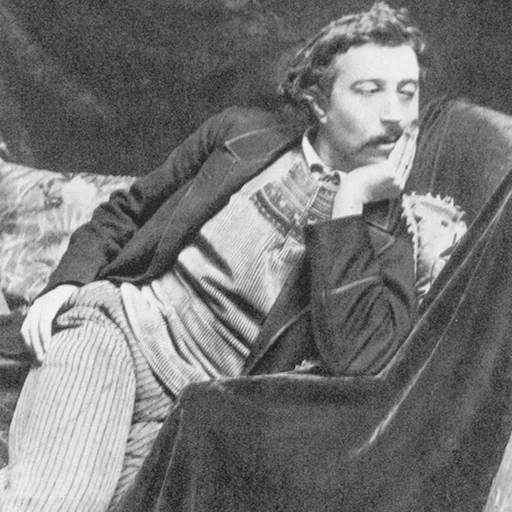
Eugène Henri Paul Gauguin (; French:; 7 June 1848 – 8 May 1903) was a French painter, sculptor, printmaker, ceramist, and writer, whose work has been primarily associated with the Post-Impressionist and Symbolist movements.

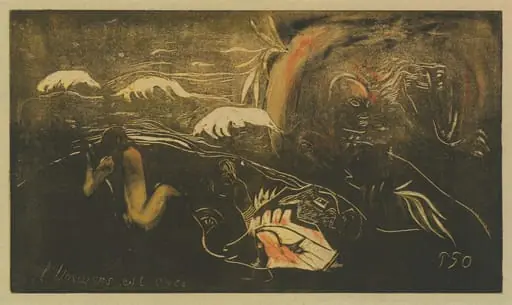 The Universe is Created (L'Univers est créé)
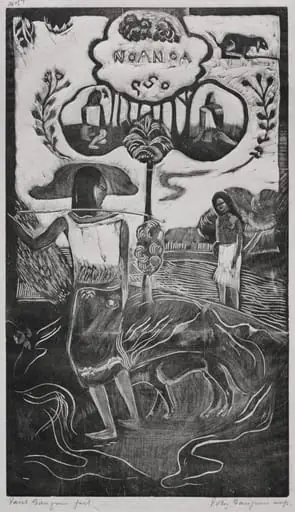 Noa Noa: Noa Noa (Fragrant Scent)
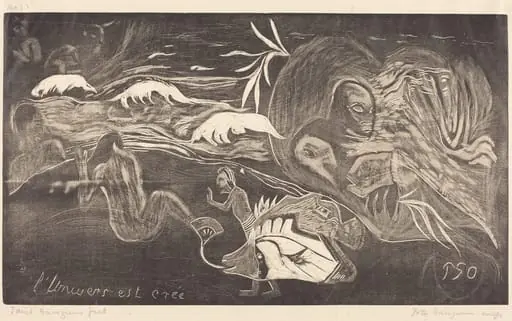 L'Univers est crée (The Creation of the Universe)
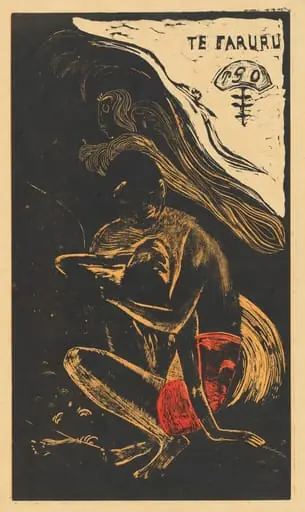 Te Faruru (They are Making Love Here)
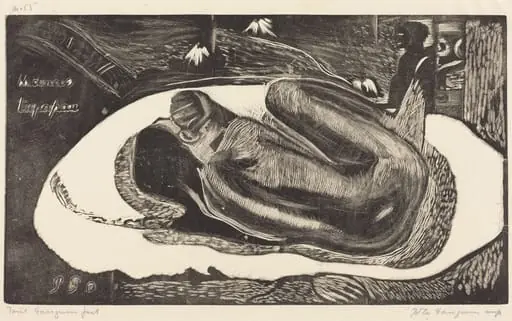 Manao Tupapau (She is Haunted by a Spirit)
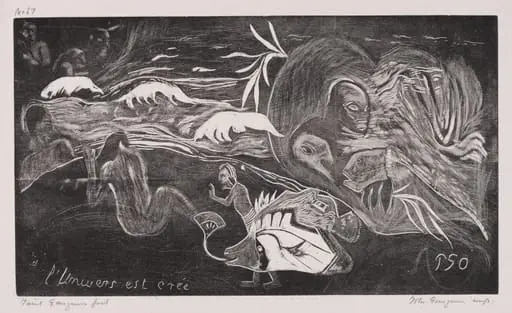 Noa Noa: L'Univers est créé (The Universe is Created)
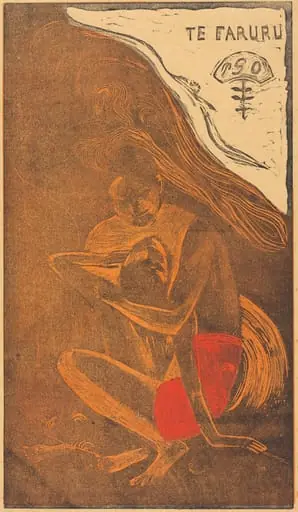 Te Faruru (They are Making Love Here)
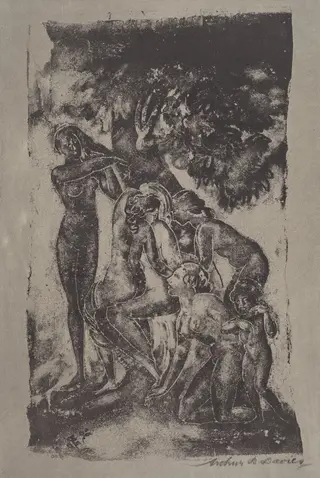 Figures of Earth
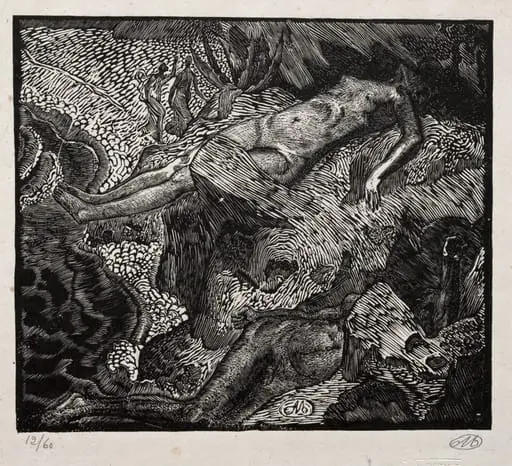 Hero and Leander
 Angled Beauty