Artwork
A Day in June
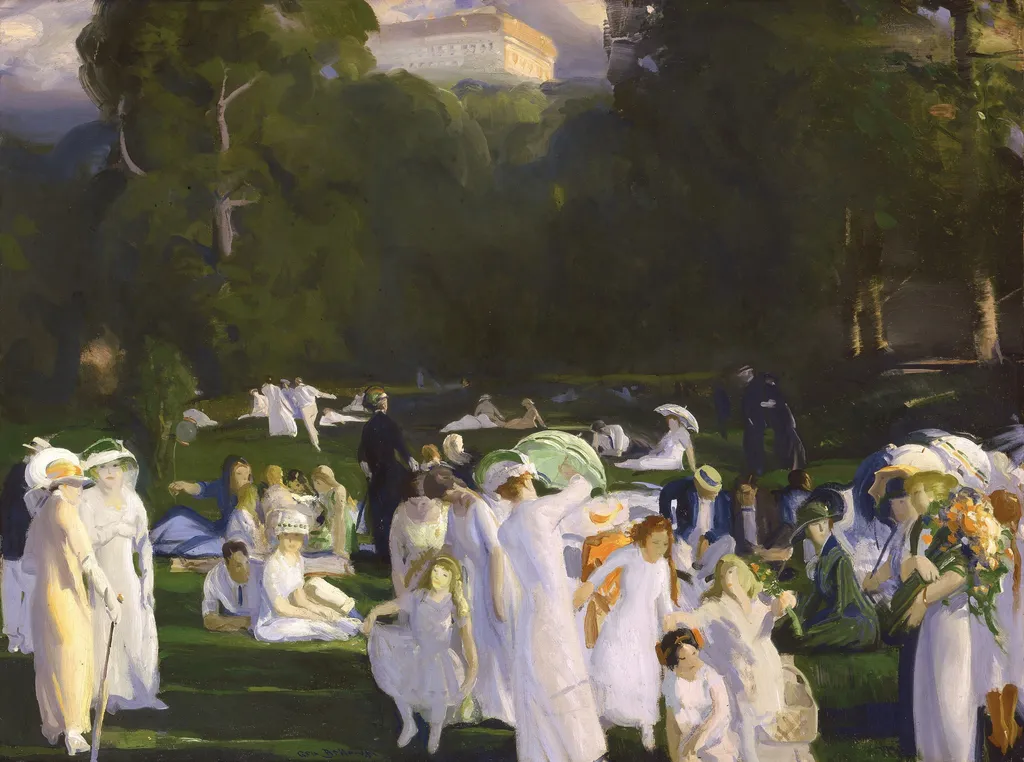
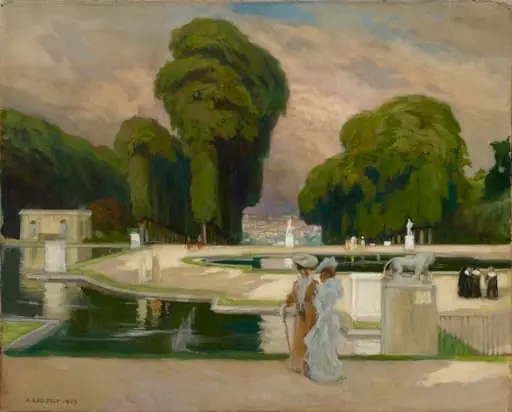
A Day in June is an oil painting by the Ashcan School artist George Bellows. It dates from 1913 and is held in the collection of the Detroit Institute of Arts.
About this work
Overview
Painted in 1913 by George Bellows, A Day in June is an oil-on-canvas work that captures a quiet moment of public leisure in early 20th-century America.
Painted in 1913 by George Bellows, A Day in June is an oil-on-canvas work that captures a quiet moment of public leisure in early 20th-century America. Though Bellows is often associated with gritty urban scenes, this piece shifts focus to a sunlit park, reflecting a broader interest in everyday life. It resides in the Detroit Institute of Arts, part of a body of work that expanded the scope of American realism beyond city streets.
Subject & Meaning
The painting portrays a group of women in white dresses conversing in the foreground, while other figures relax or walk beneath trees in the background. No single narrative dominates; instead, the scene conveys a sense of unforced social ease. The absence of labor or conflict suggests a deliberate focus on respite and communal calm, offering a counterpoint to Bellows’s more turbulent urban subjects.
Technique & Style
Bellows applied oil paint with energetic, visible brushwork, using broad strokes to suggest movement and texture rather than fine detail. Light falls diagonally across the scene, creating subtle contrasts between sunlit grass and shaded undergrowth. The palette favors warm tones, ochres, creams, and soft greens, enhancing the feeling of midday warmth without relying on dramatic chiaroscuro.
History & Provenance
Created during Bellows’s most active period, the painting entered the Detroit Institute of Arts’ collection in the 20th century, likely through acquisition or donation. It has remained in the museum’s holdings since, with no record of significant public exhibition beyond institutional displays. Its provenance reflects the growing institutional interest in Ashcan School works during the early 1900s.
Context
In 1913, American artists were redefining subject matter, moving beyond idealized landscapes to depict ordinary moments in public spaces. Bellows, though linked to the Ashcan School’s focus on urban grit, here aligns with a broader trend of capturing leisure as a subject worthy of serious attention. The painting reflects a cultural shift toward valuing moments of rest amid industrialization.
Legacy
While less known than Bellows’s boxing or tenement scenes, A Day in June illustrates his versatility and willingness to explore quieter facets of American life. It contributes to a fuller understanding of his oeuvre, demonstrating that realism could encompass serenity as well as tension. The work remains a quiet reference point in discussions of early modern American landscape and social painting.
Own this work as a print
Artist & collection

Artist
George Wesley Bellows (August 12 or August 19, 1882 – January 8, 1925) was an American realist painter, known for his bold depictions of urban life in New York City.

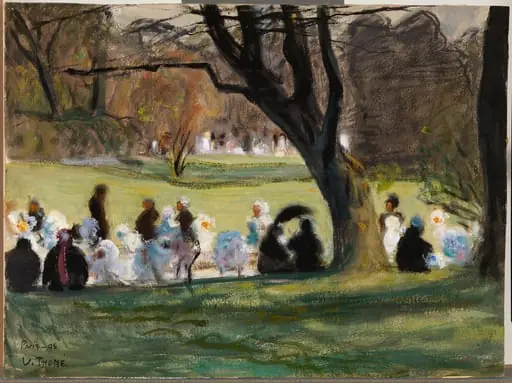 Puistokuva Pariisista
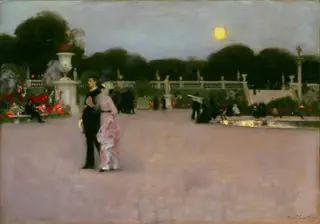 In the Luxembourg Gardens
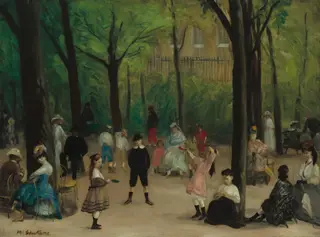 Luxembourg Gardens
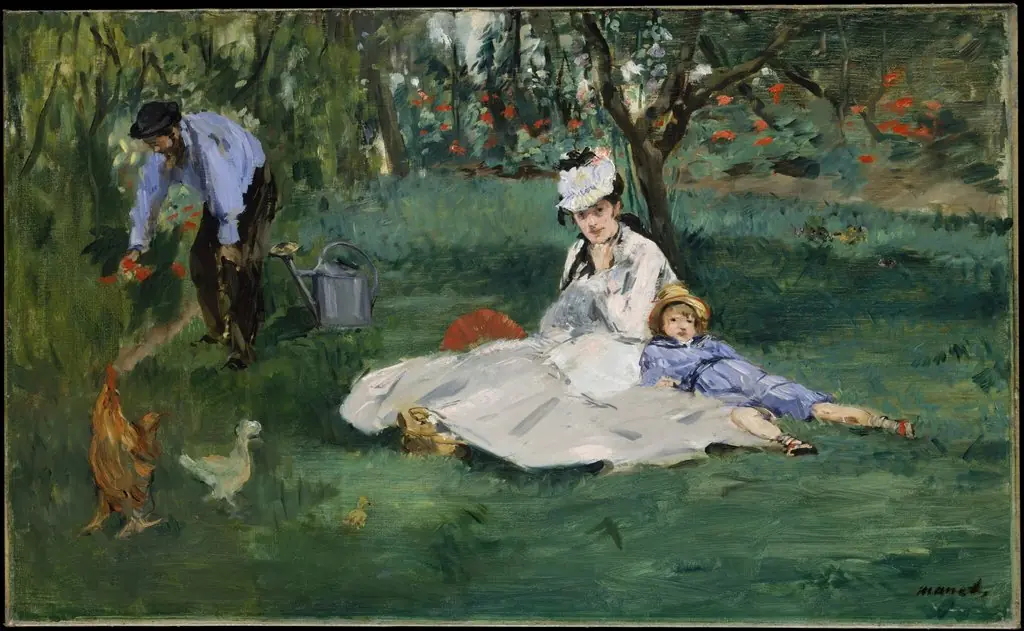 The Monet Family in Their Garden at Argenteuil
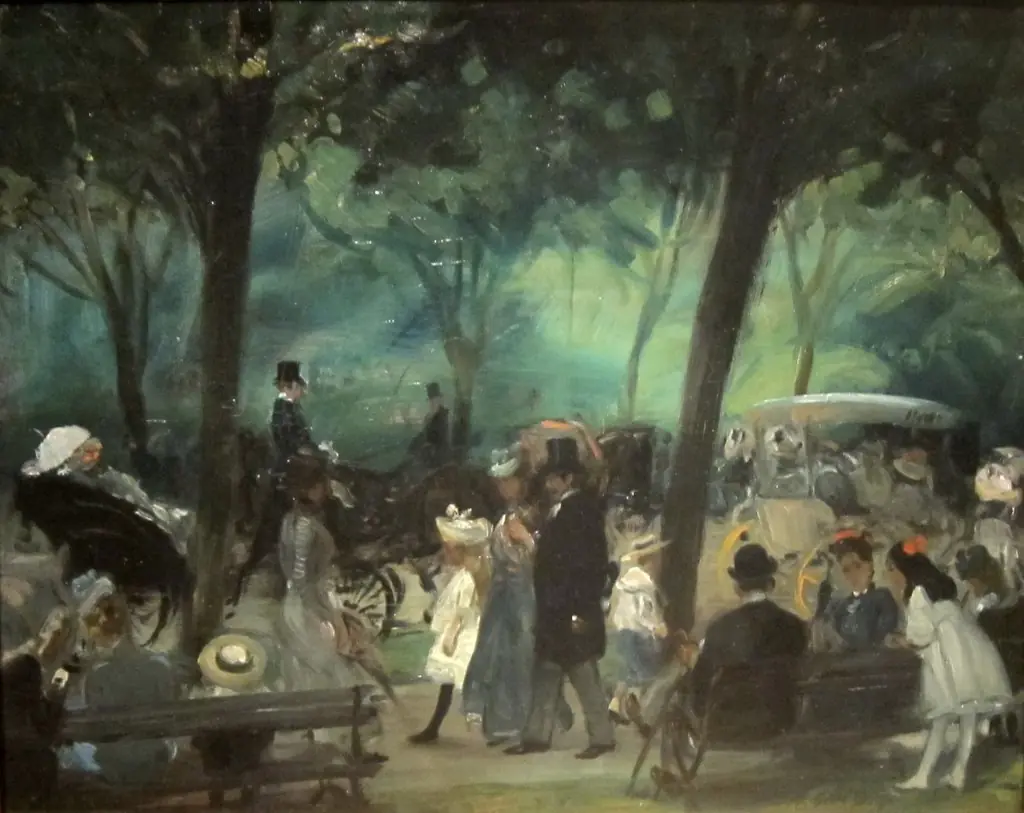 The Drive, Central Park
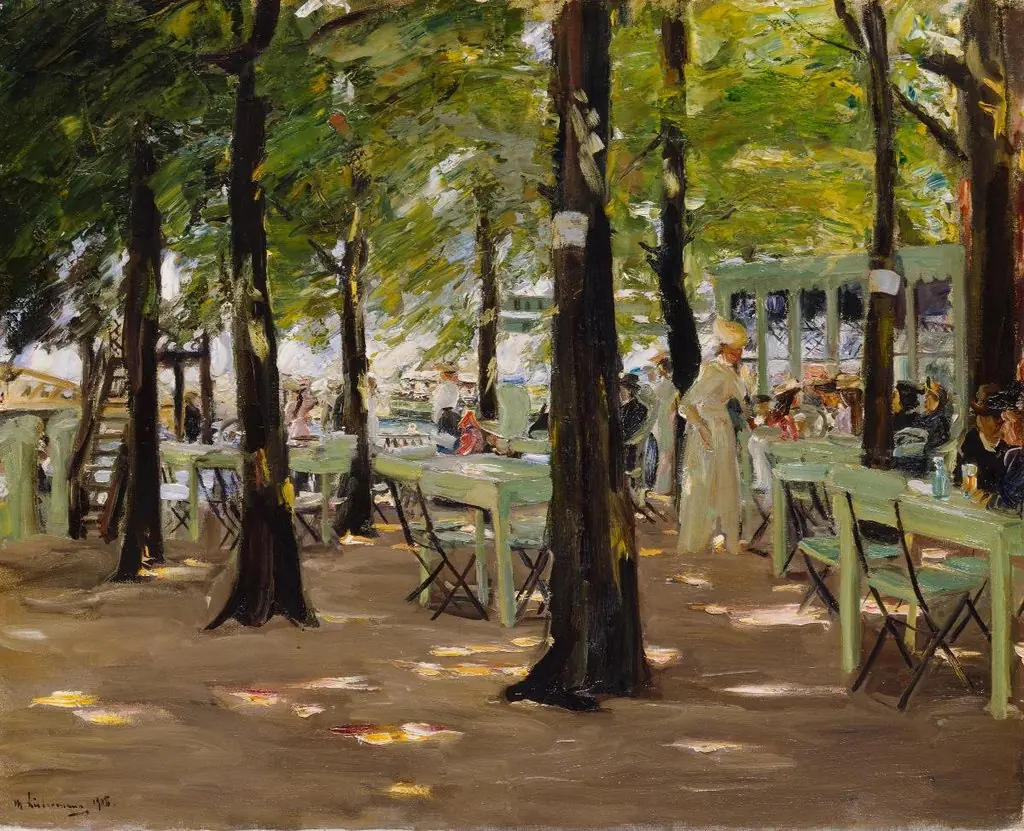 Biergarten «De Oude Vink» bei Leiden
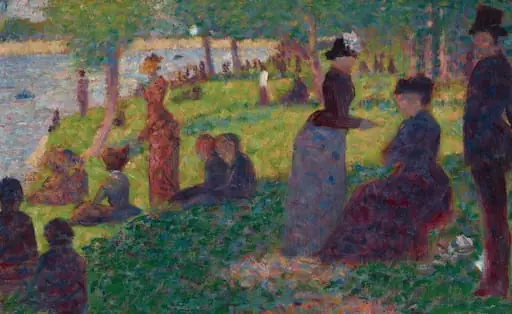 Oil Sketch for "A Sunday on La Grande Jatte — 1884"
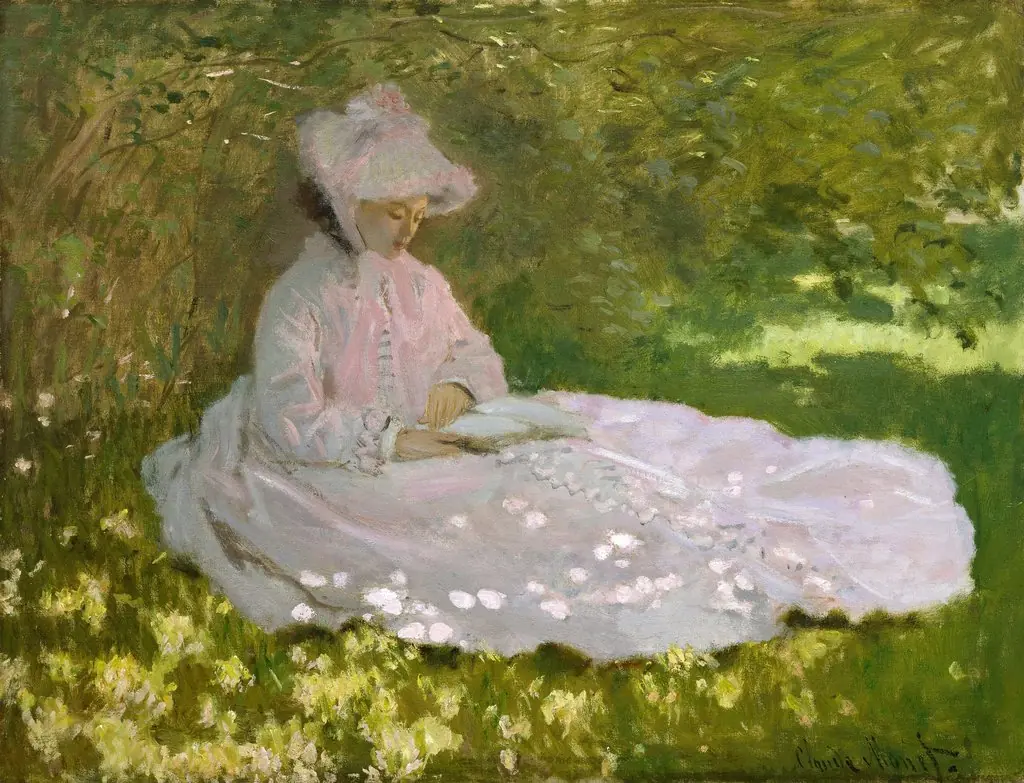 Springtime
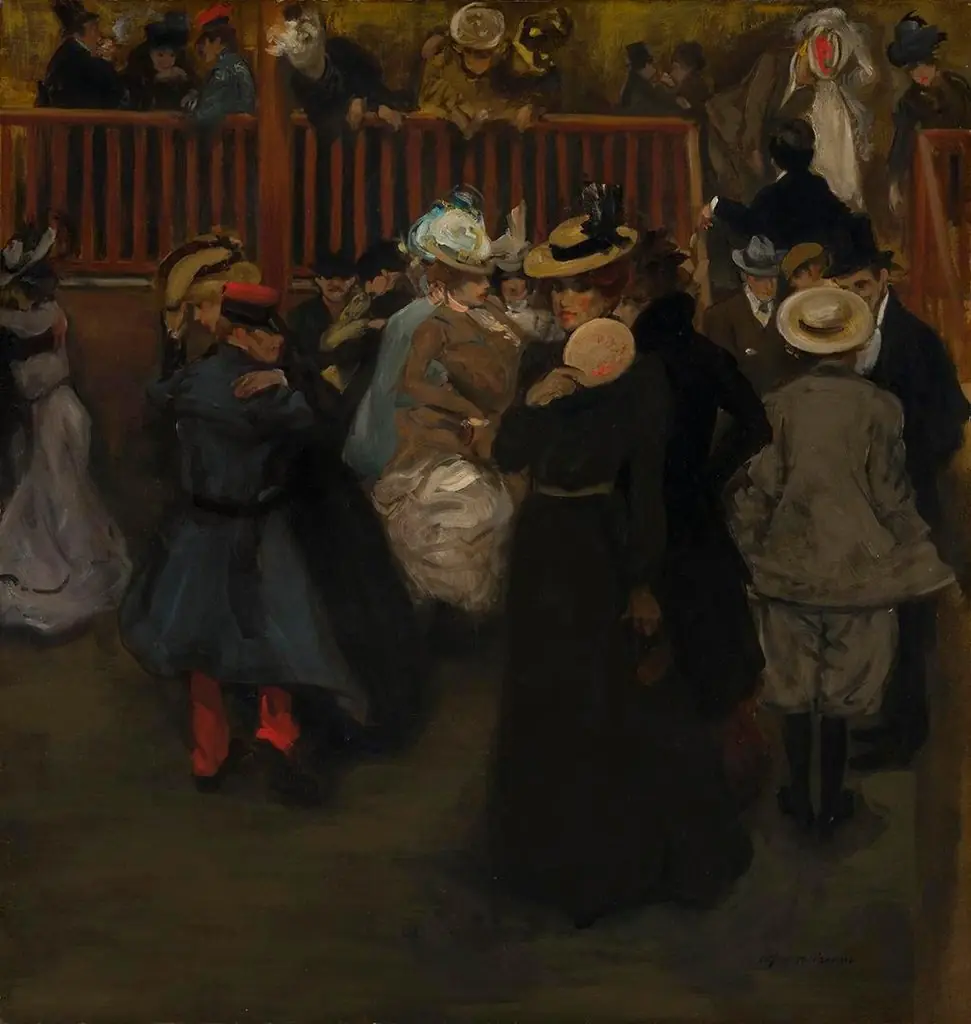 Café Scene
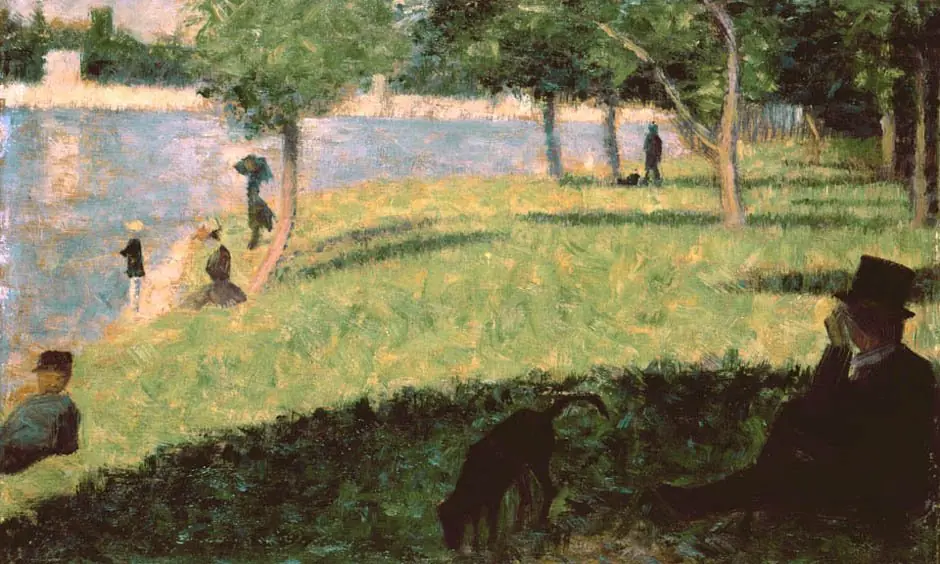 La Grande Jatte (Study VII)
 St. Cloud'in puistosta
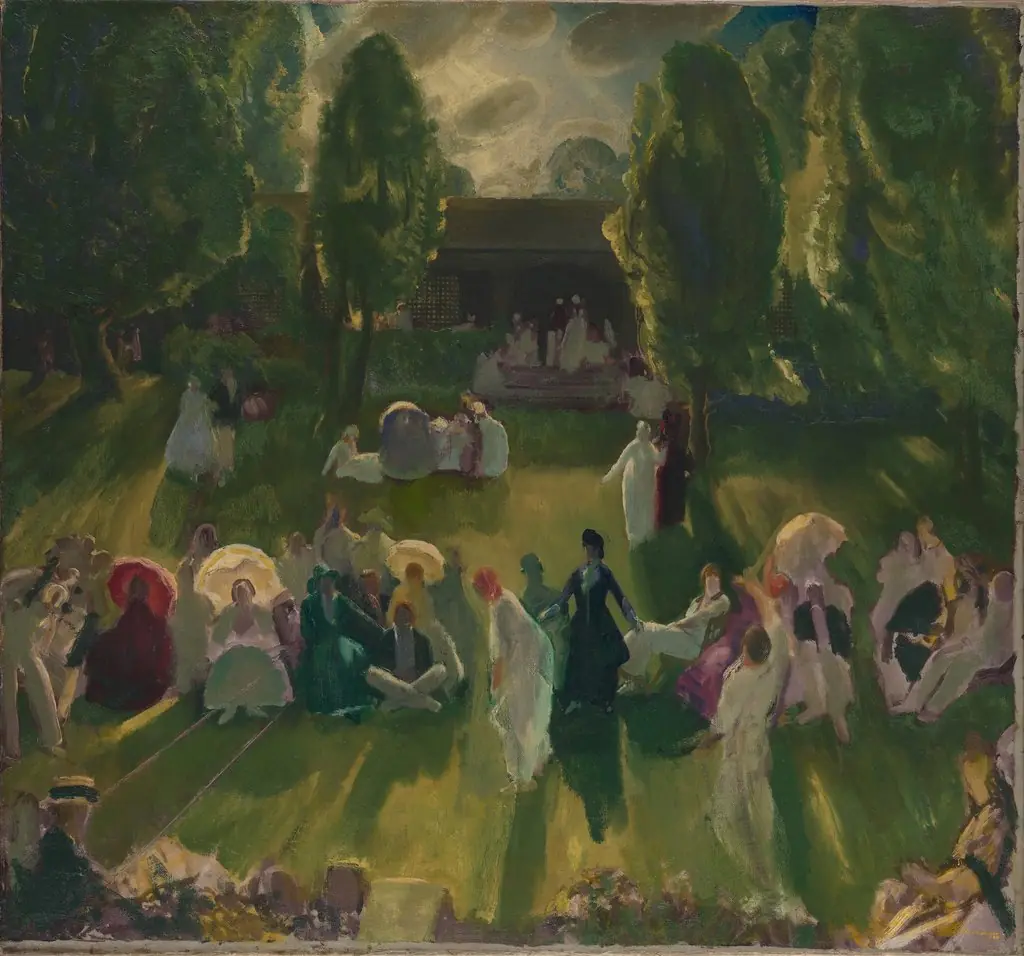
- Tennis at Newport