Artwork
The Blind Hurdy-Gurdy Player
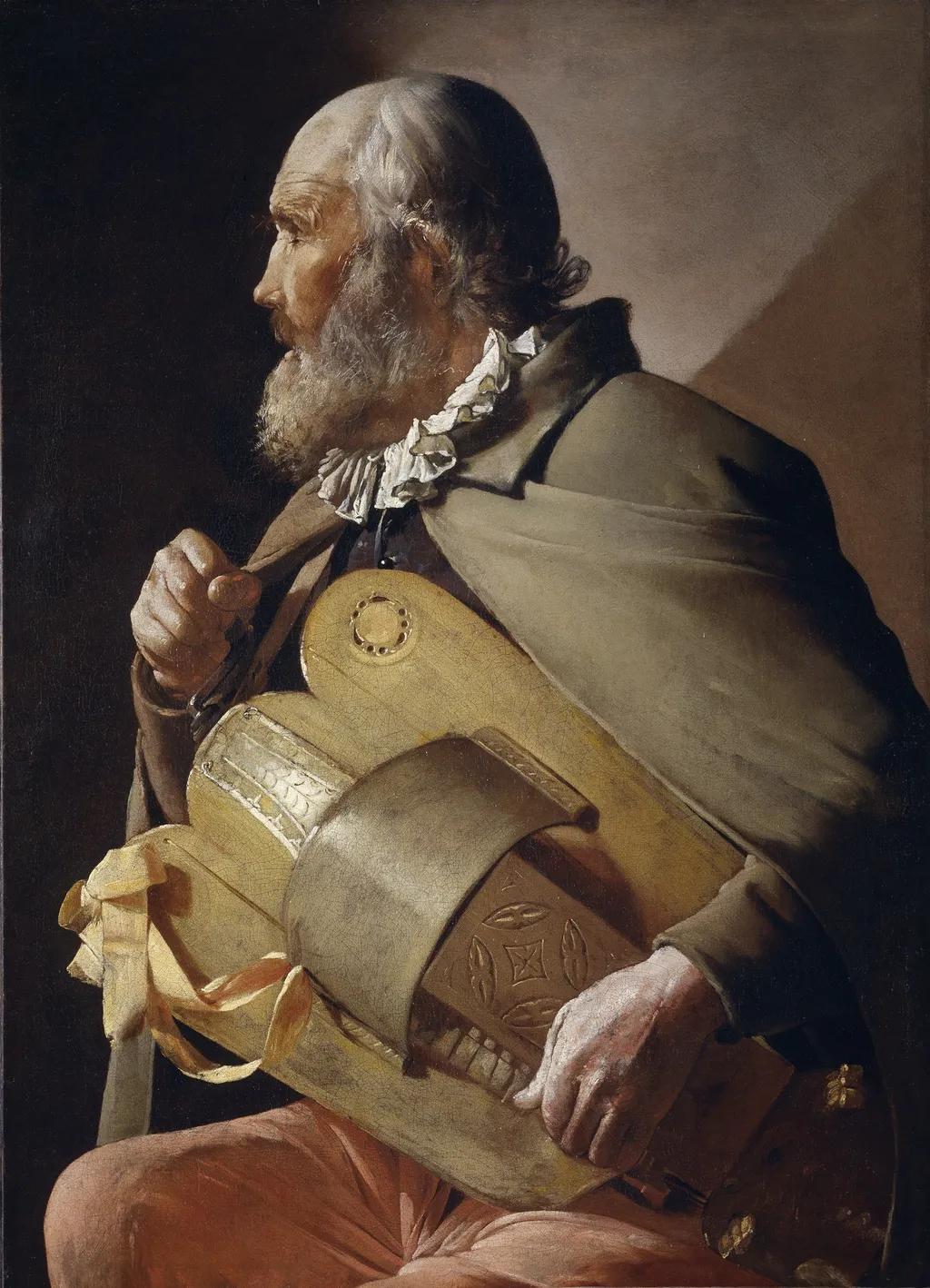
The Blind Hurdy-Gurdy Player is an oil painting by the Caravaggisti artist Georges de La Tour. It dates from 1620 and is held in the collection of the Museo del Prado.
About this work
Overview
The work depicts an elderly, bearded street musician seated with his hurdy‑gurdy, his eyes closed and his hands poised on the instrument.
Georges de La Tour painted The Blind Hurdy‑Gurdy Player in 1620 using oil on canvas. The work depicts an elderly, bearded street musician seated with his hurdy‑gurdy, his eyes closed and his hands poised on the instrument. The composition is dominated by a single light source that illuminates the figure against a deep, shadowed background, creating a dramatic contrast typical of the artist’s style.
Subject & Meaning
The central figure is a blind, itinerant hurdy‑gurdy player, identifiable by his worn brown jacket, red trousers and the cranked stringed instrument resting in his lap. By focusing on a humble, everyday character, La Tour invites contemplation of poverty, music’s role in public life, and the quiet dignity of a man devoted to his craft despite his blindness.
Technique & Style
La Tour employs chiaroscuro, a stark light‑and‑dark contrast that highlights the musician’s face and hands while the surrounding space recedes into darkness. The precise rendering of textures, the beard, fabric folds, and wood of the instrument, demonstrates his meticulous observation. This approach aligns him with the Caravaggisti, who adapted Caravaggio’s dramatic illumination for Northern European subjects.
History & Provenance
Created in the Duchy of Lorraine during La Tour’s early career, the painting entered the Spanish royal collection in the 18th century and is now part of the Museo del Prado’s permanent holdings in Madrid. Its presence in the Prado reflects the museum’s broader commitment to representing Baroque art from across Europe.
Context
The work belongs to a period when La Tour was exploring secular themes alongside his renowned candlelit religious scenes. Lorraine’s position at the crossroads of French and Germanic cultures exposed the artist to diverse artistic currents, fostering his synthesis of Caravaggesque lighting with a distinctly French sensibility toward everyday life.
Own this work as a print
Artist & collection
Artist
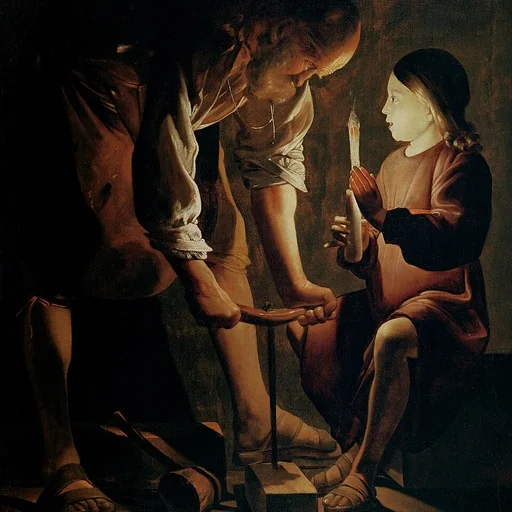
Georges de La Tour (French pronunciation:; 13 March 1593 – 30 January 1652) was a French Baroque painter, who spent most of his working life in the Duchy of Lorraine, which was temporarily absorbed into France between 1641 and 1648.