Artwork
Astronomer
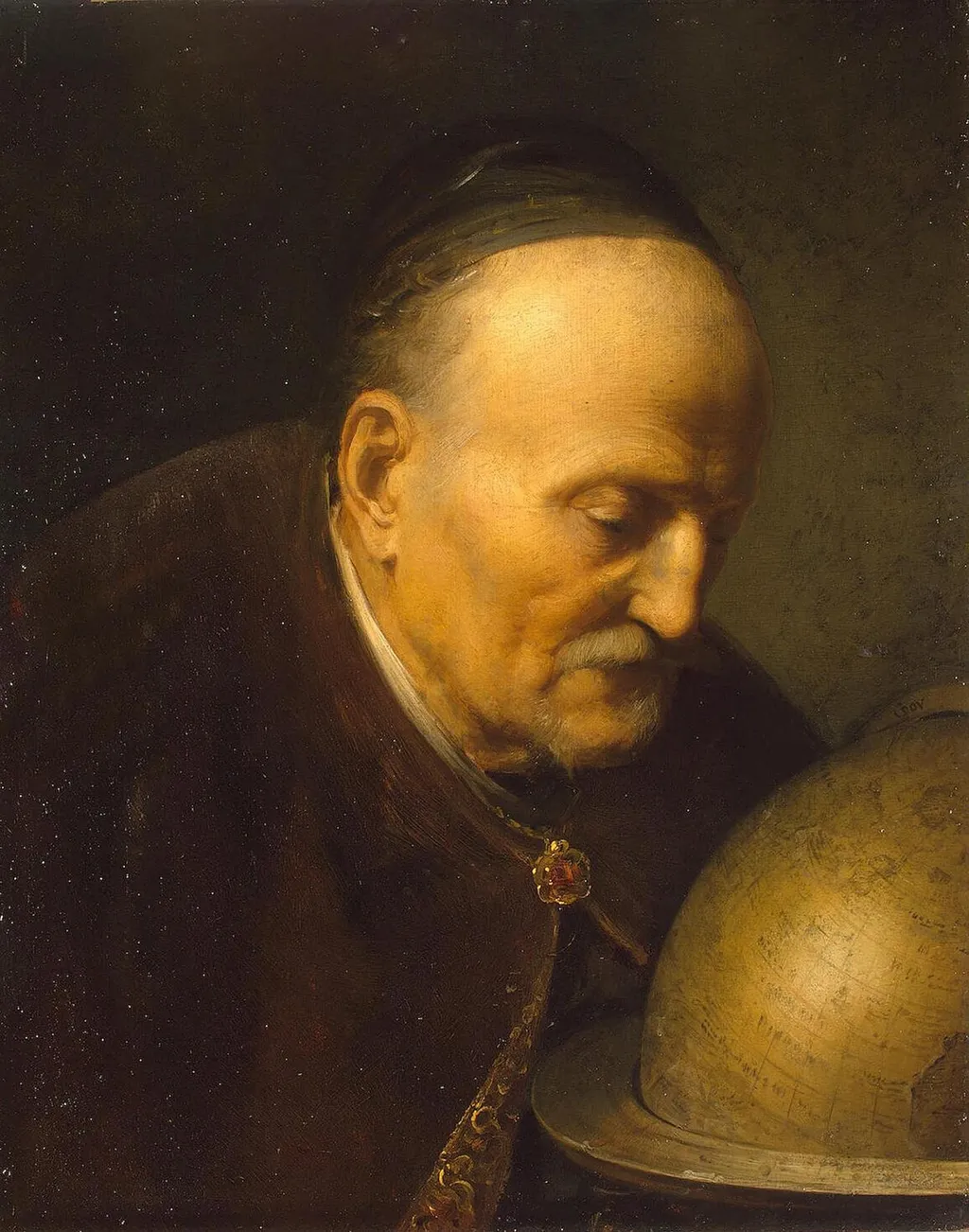
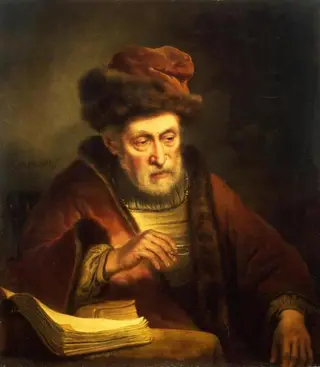
Astronomer is an oil painting by the Dutch Golden Age artist Gerrit Dou. It dates from 1628 and is held in the collection of the Hermitage Museum.
About this work
Overview
The painting is held in the collection of the Hermitage Museum in Saint Petersburg.
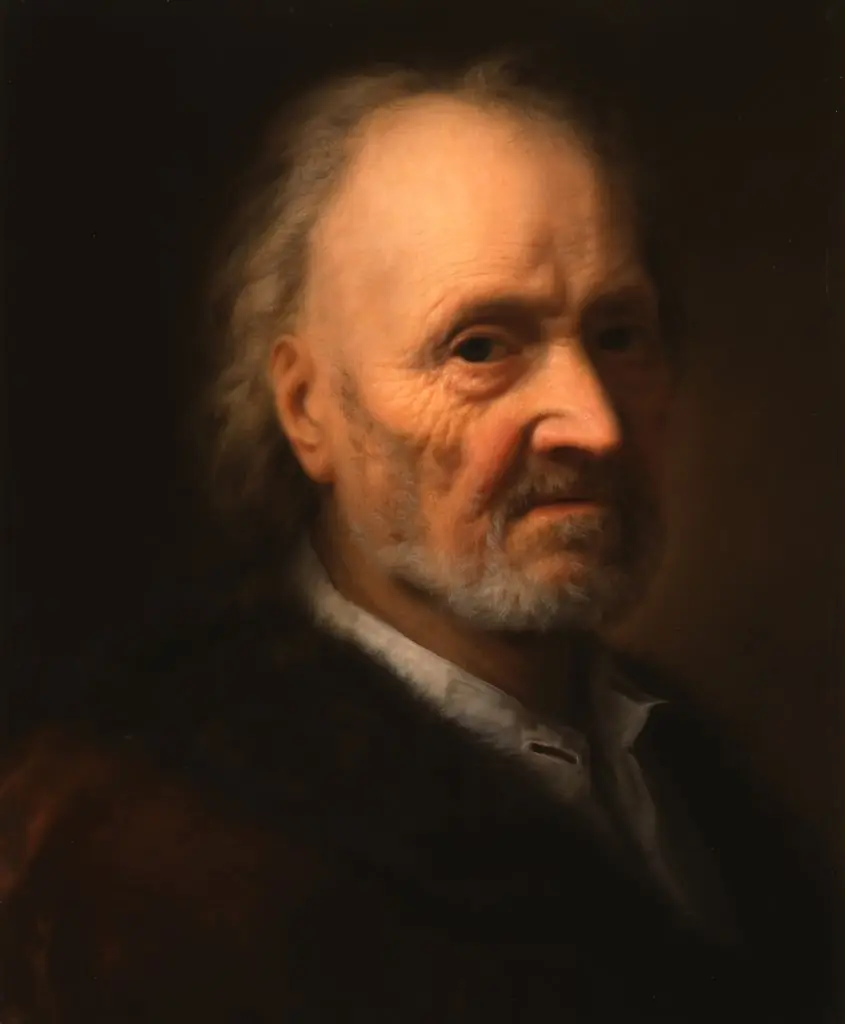
Astronomer is an oil painting on panel by the Dutch Golden Age painter Gerrit Dou, dated to 1628, though some scholars place related versions in the late 1650s or around 1665. Measuring 38.5 by 31 centimeters, the work depicts a bust-length portrait of an older scholar with a balding head, gray mustache and beard, his eyes cast downward in contemplation beside a large terrestrial globe. The painting is held in the collection of the Hermitage Museum in Saint Petersburg. While Dou painted multiple versions of the astronomer theme, this particular early example establishes his foundational role in developing the subject within Dutch art, a theme later taken up by Johannes Vermeer in his own Astronomer of 1668.
Subject & Meaning
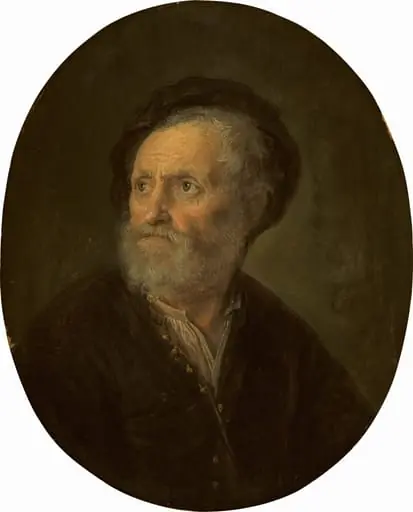
The painting presents an older male scholar in a dark coat with white collar and decorative clasp at his chest, positioned beside a large terrestrial globe showing geographical markings. His downward gaze and posture, leaning slightly toward the globe, suggest absorbed contemplation. The globe serves as the primary attribute identifying his astronomical pursuits, while his absent right hand and the tightly cropped composition focus attention on the intellectual engagement between man and instrument. In the broader context of Dou's treatment of this theme, the astronomer functions as a symbol of scholarly dedication and the pursuit of knowledge, though this early version lacks the candlelight and nocturnal accoutrements, hourglass, decanter, and celestial instruments that Dou would later develop in more complex iterations. The darkness surrounding the figure in this 1628 version creates a more restrained meditationampa atmosphere than the dramatic chiaroscuro of Dou's mature candlelight scenes.
Technique & Style
Executed in oil on panel, the painting demonstrates Dou's characteristic smooth and blended brushwork on the face, with more visible texture in the costume and background. The palette is dominated by deep browns, warm ochres, and muted golds, with strong chiaroscuro illuminating the forehead, nose, and cheek while leaving much of the scene in shadow. The polished finish and careful attention to the modeling of flesh and the reflective surface of the globe reveal Dou's early technical precocity, developed during his apprenticeship with Rembrandt van Rijn in Leiden. The composition's tight cropping, with figure and globe occupying most of the frame against a dark, undefined background, creates an intimate, concentrated focus on the scholar's intellectual engagement. This handling differs from Dou's later, more elaborate technique in works like Astronomer by Candlelight, where groin-vaulted ceilings, refined flame effects, and intricate still-life elements demonstrate his evolution toward ever more complex compositions.
History & Provenance
The painting's creation in 1628 places it early in Dou's career, when he was approximately fifteen years old and still working in Rembrandt's Leiden studio. The work entered the collection of the Hermitage Museum, where it remains today, though specific details of its provenance and accession remain unrecorded in the available sources. Dou would return to the astronomer theme repeatedly throughout his career, executing at least three versions before Vermeer's famous Astronomer of 1668. These later versions, particularly the one dated to circa 1665 and now at the J. Paul Getty Museum in Los Angeles, show significant development in composition and lighting. The Liechtenstein Museum in Vienna holds another version, dated after 1665, measuring 38 by 28 centimeters. The existence of multiple versions complicates straightforward dating, with the Hermitage painting representing the earliest known treatment of a subject that Dou would refine over decades.
Context
Gerrit Dou occupied a central position in Dutch art of the seventeenth century, training with Rembrandt before the latter's departure from Leiden around 1631-32, then spending his entire subsequent career in his native city. The astronomer theme emerged from Dou's earlier representations of scholars in their studies, gaining particular relevance from the foundation of Leiden University in 1575, which stimulated local interest in intellectual subjects. Dou's development of this theme preceded and influenced Vermeer's treatment, establishing a pictorial tradition within Dutch genre painting. The astronomer subject also resonated with contemporary views of science: in the seventeenth century, astronomers were regarded variously with suspicion or as serious men of science engaged in worthy endeavor. Dou's portrayal tended toward the latter, emphasizing scholarly dedication. His technique would form the basis for the Leiden school of fijnschilders, or fine painters, with pupils including Gabriel Metsu and Godfried Schalcken, whose highly finished pictures dominated Dutch taste for nearly two centuries. Dou's controlling position in Leiden has sometimes been obscured by modern critical preference for less influential painters, though his importance as a teacher and technical innovator remains undisputed.
Legacy
Dou's Astronomer and its subsequent variants established a durable model for depicting scholarly contemplation in Dutch painting. The theme's influence extended most directly to Vermeer, whose Astronomer of 1668 represents the most celebrated adaptation. Dou's broader legacy lies in his technical refinement and the Leiden school of fine painting that he inaugurated, which persisted through the van Mieris dynasty and other followers who maintained allegiance to perfectly polished surfaces and minute detail. This very dominance eventually contributed to a critical reassessment: the twentieth century's diminished respect for minute detail as an aesthetic value led to Dou's removal from the pedestal on which earlier centuries had placed him. Nevertheless, specific works like his Lady at the Virginals have been proposed as sources for Vermeer's later treatments, and his Astronomer series remains essential to understanding how Dutch genre painting negotiated the representation of intellectual life. The multiple versions and their complex dating history continue to engage scholars, while the subject's afterlife in popular reproduction and museum display, including at the Hermitage, testifies to its persistent capacity to evoke contemplation and scholarly identity.
Own this work as a print
Artist & collection
Artist
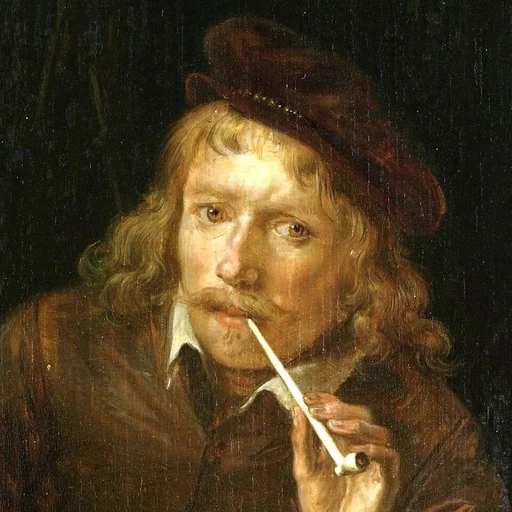
Gerrit Dou (pronounced; 7 April 1613 – 9 February 1675), also known as Gerard Douw or Dow, was a Dutch Golden Age painter, whose small, highly polished paintings are typical of the Leiden fijnschilders.