Artwork
The Patron Saints of the Crotta Family
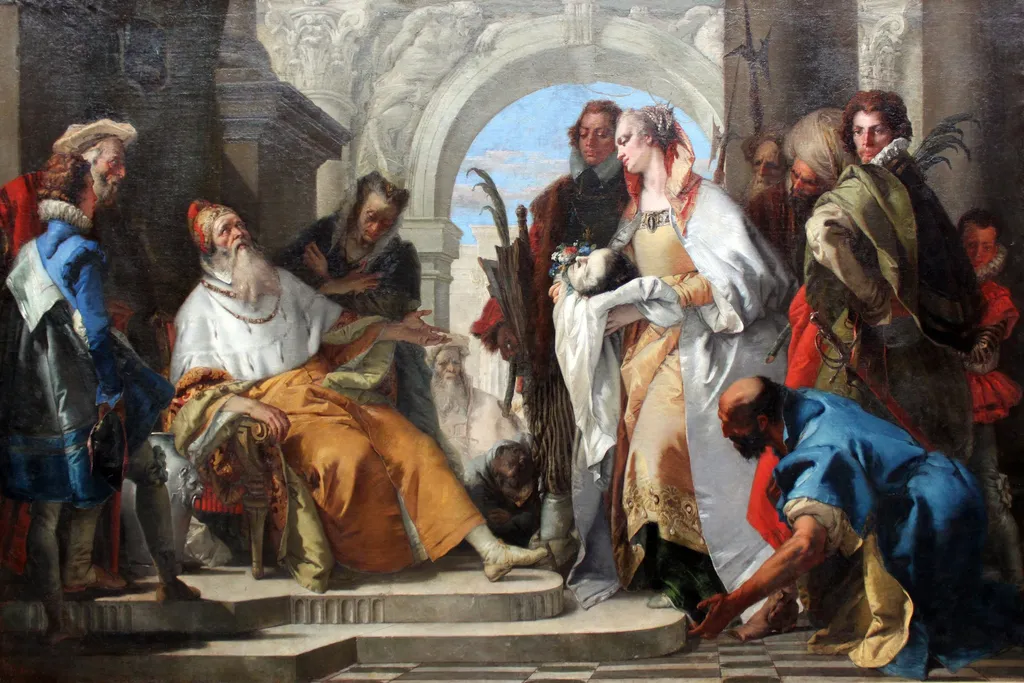
The Patron Saints of the Crotta Family is an oil painting by the Early Baroque Italian artist Giovanni Battista Tiepolo. It dates from 1441 and is held in the collection of the Städel Museum.
About this work
Subject & Meaning
Accompanied by the martyrs Firmus and Rusticus, Grata displays the severed head of Alexander of Bergamo to her pagan father.
The painting illustrates the legend of Saint Grata, presented as an ancestor of the Crotta family. Accompanied by the martyrs Firmus and Rusticus, Grata displays the severed head of Alexander of Bergamo to her pagan father. The scene captures a specific miracle where flowers bloom from the wound instead of blood, a sight that convinces her father to convert to Christianity and spread the faith in Bergamo.
Beyond its religious narrative, the work functions as a tool for social advancement. The Crotta family, originally from Bergamo but residing in Venice, commissioned the piece to elevate their status within Venetian society by emphasizing their noble lineage and connection to these holy figures.
History & Provenance
The Patron Saints of the Crotta Family was commissioned by the Crotta family, Bergamese transplants to Venice, to enhance their social standing in Venetian society through a display of piety and lineage. The painting is dated to 1750 by the artist’s inscription and stylistic analysis. It was created by Giovanni Battista Tiepolo, not Giovanni Domenico Tiepolo as sometimes misattributed, and depicts the legend of Saint Grata presenting the decapitated head of Saint Alexander of Bergamo to her father, with the martyrs Firmus and Rusticus, a scene that converts her father to Christianity.
The work entered the collection of the Städel Museum in Frankfurt, where it remains in the museum’s holdings. The painting’s provenance prior to the 20th century is not documented in the provided sources.
The painting is held in the Städel Museum in Frankfurt, Germany, where it forms part of the museum's collection. The work is catalogued at the Städel under inventory reference Städel Museum, Frankfurt.
No exhibition history beyond its presence in the Städel collection is documented in the available sources.
Context
The Patron Saints of the Crotta Family is attributed in most sources to Giovanni Battista Tiepolo, though one reference assigns it to his son Giovanni Domenico Tiepolo, reflecting ongoing uncertainty about authorship within the Tiepolo workshop tradition. The work was produced in 1750 as an oil painting, and its subject, the legend of St. Grata and the martyrs Firmus and Rusticus presenting the head of Alexander of Bergamo, was chosen by the Crotta family, Bergamese transplants to Venice, to bolster their Venetian social standing. The painting is now held in the Städel Museum in Frankfurt, where it is classified as a religious history painting.
The commission exemplifies how eighteenth-century Venetian families used commissions of sacred narratives tied to ancestral or regional legends as instruments of social positioning, a practice well documented in Tiepolo patronage studies.
Overview
The Patron Saints of the Crotta Family is an oil painting created by Giovanni Domenico Tiepolo in 1750. The work illustrates a pivotal moment in the legend of St. Grata, linking her narrative to the Crotta family's ancestry.
Technique & Style
Executed in oil paint, the work features detailed, expressive figures set against a backdrop of arches, columns, and a distant blue sky. The palette includes prominent yellows, blues, and reds, with intricate textile rendering and solemn, grandiose atmosphere.
Legacy
While specific lasting impacts on art history are not prominently documented, the painting remains a notable example of Tiepolo's oeuvre and the artistic patronage practices of Venetian noble families during the period.
Own this work as a print
Artist & collection

Artist
Giovanni Battista Tiepolo, also known as Giambattista Tiepolo, was an Italian painter and printmaker from the Republic of Venice who painted in the Rococo style, considered an important member of the 18th-century Venetian school.


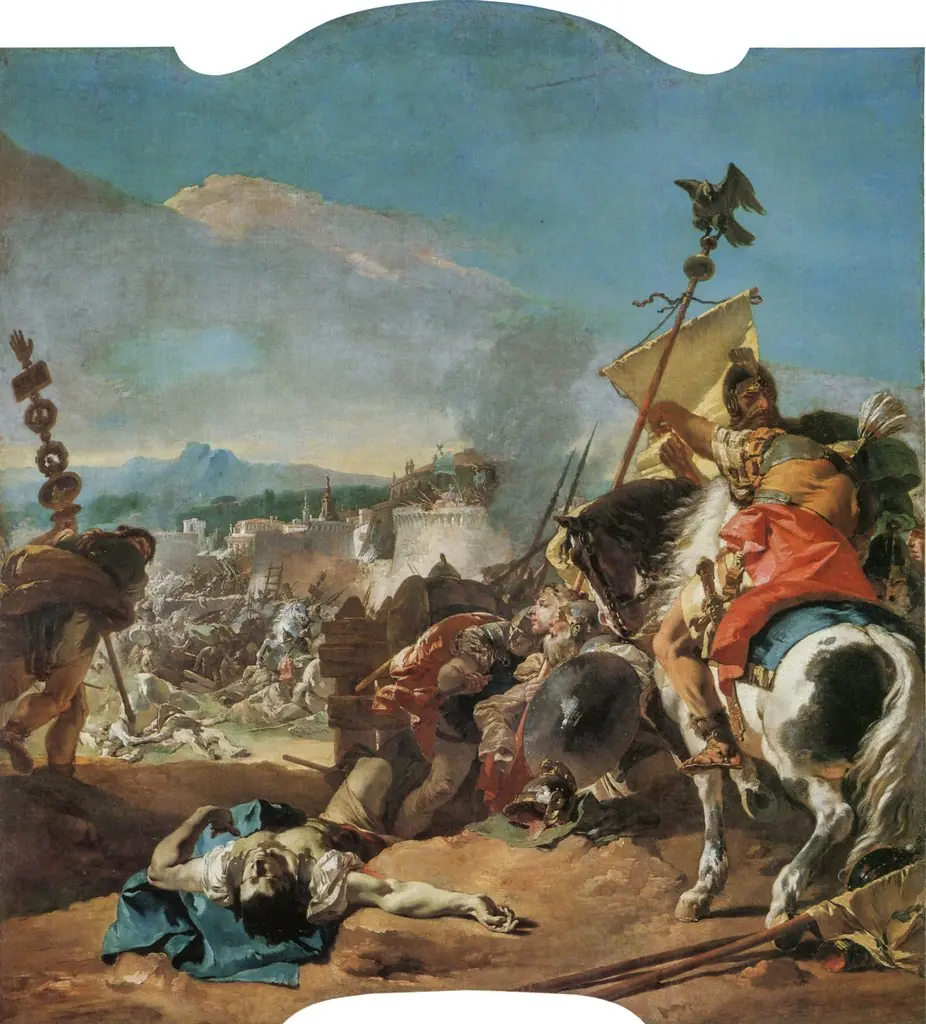
- Continence of Scipio
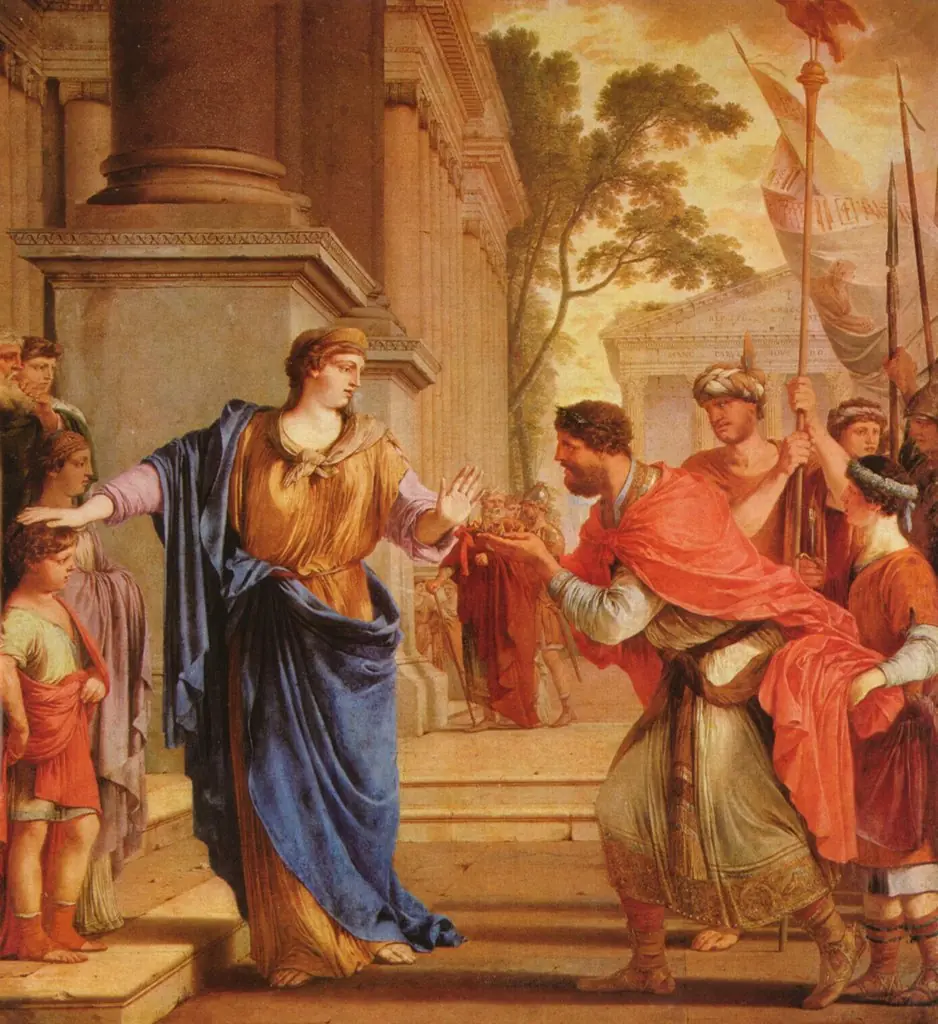 Cornelia rejects the crown of the Ptolemies
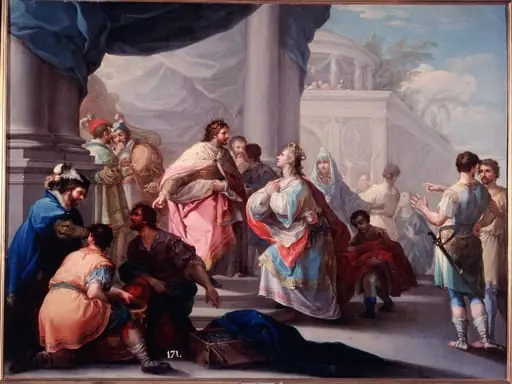 The Empress Marta de Constantinople before Alfonso X. Ramón Bayeu and Subías
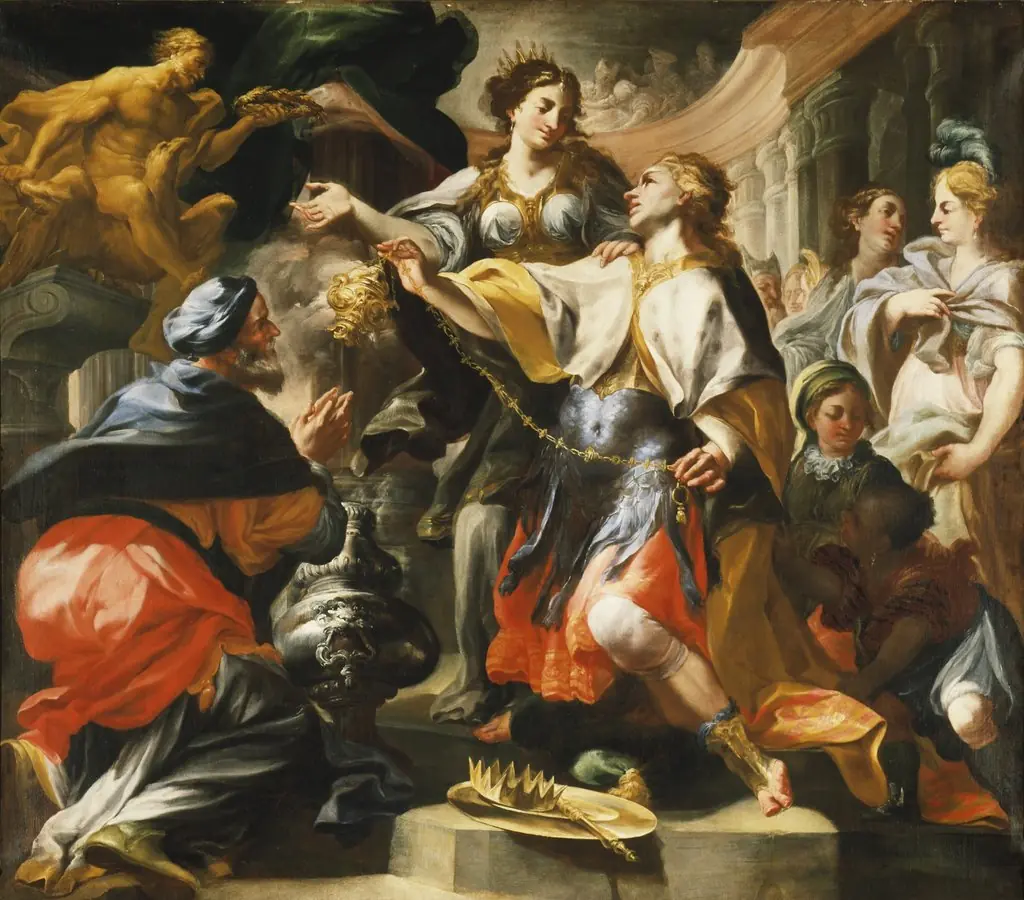 Solomon Worshiping a Pagan God
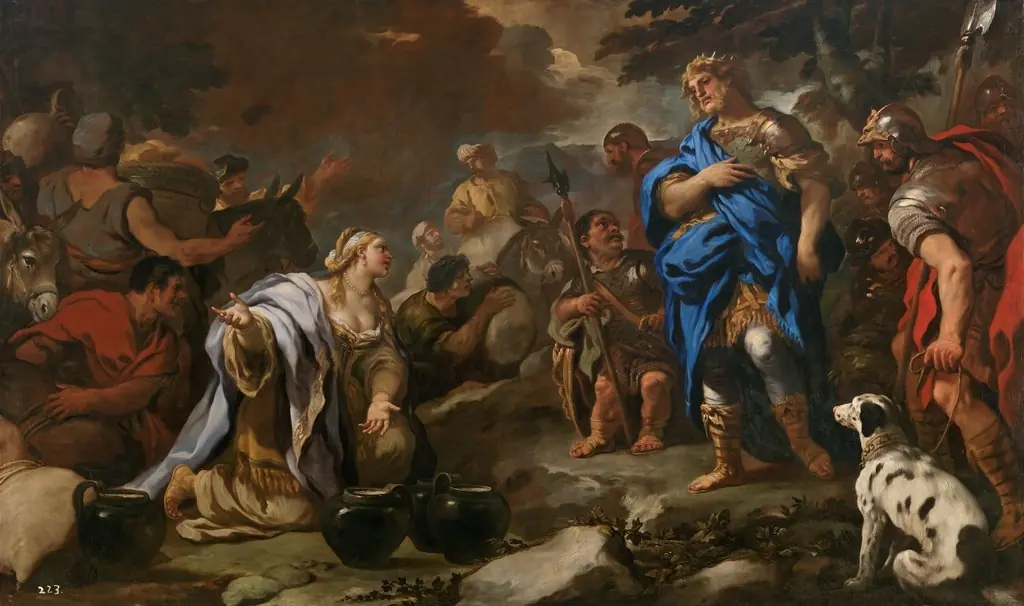 La prudente Abigail
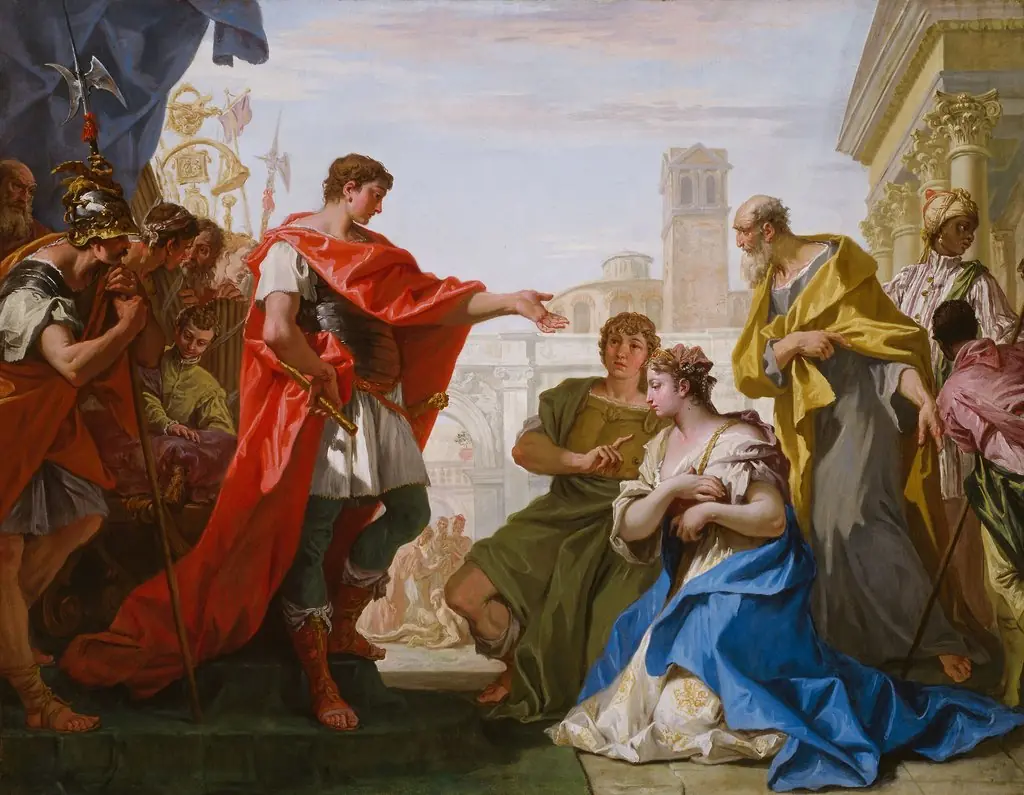 The Continence of Scipio
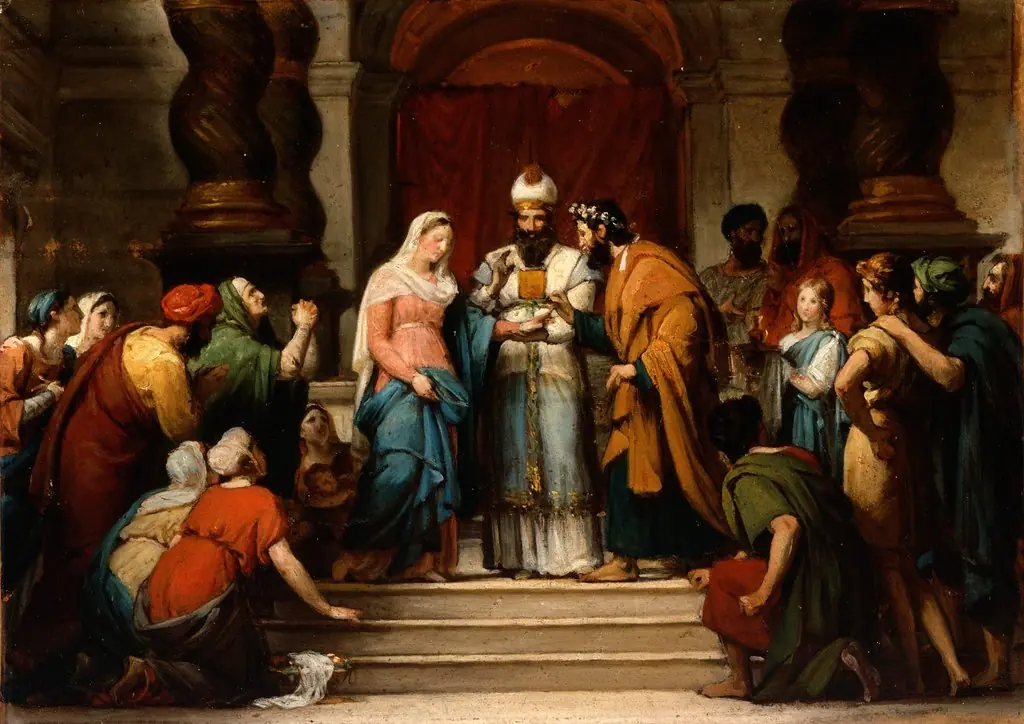 The Marriage of the Virgin
 The Continence of Scipio
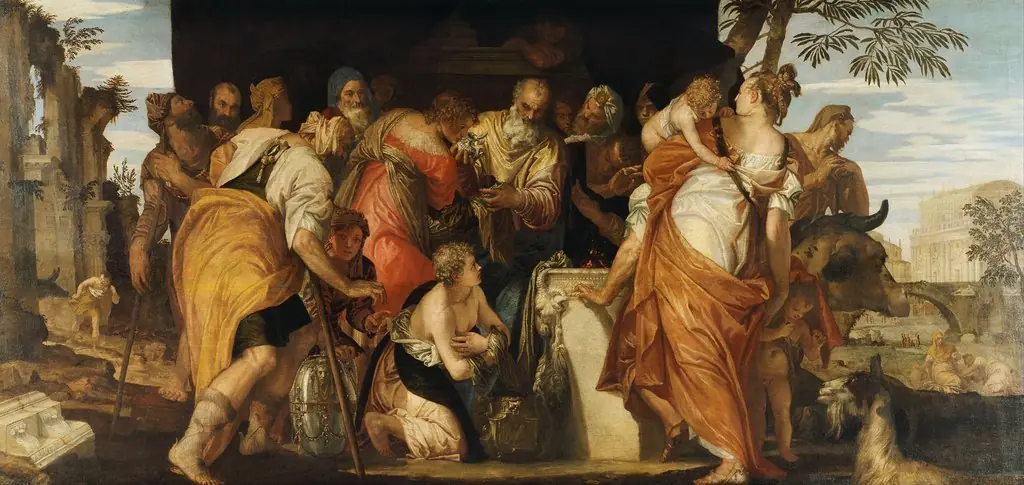 The Anointing of David
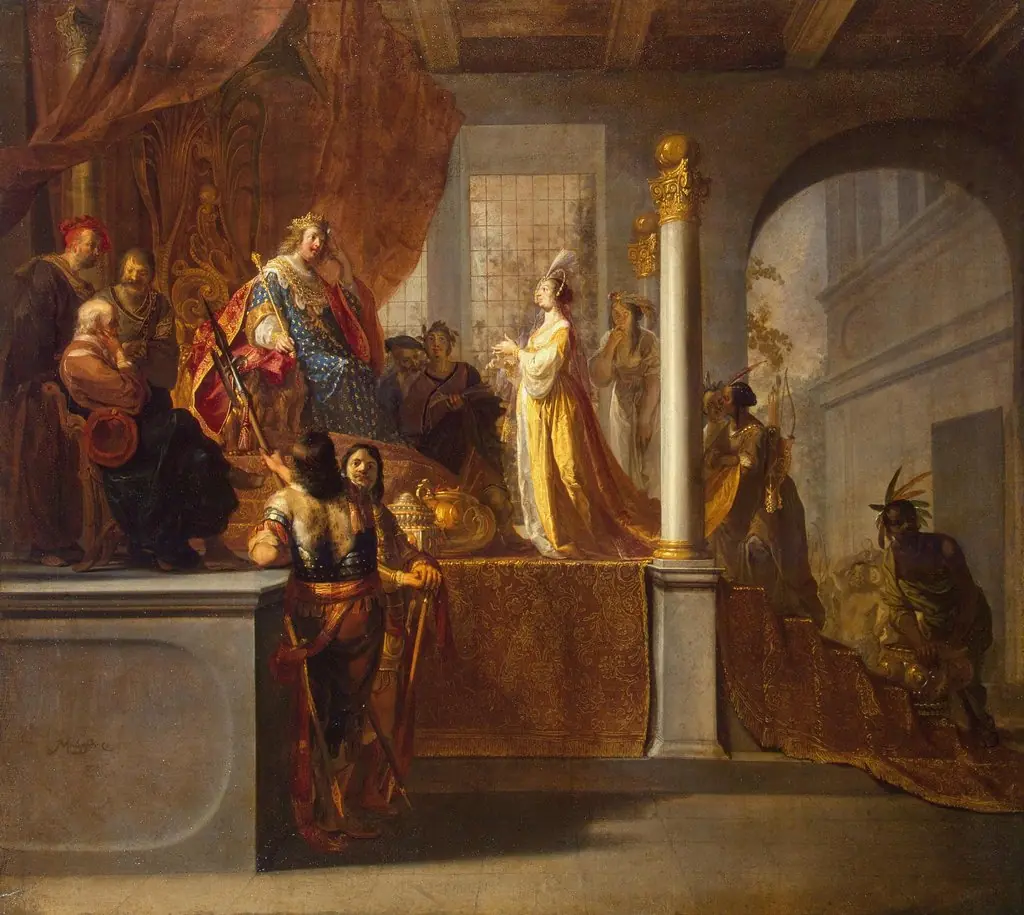 Queen of Sheba before Solomon
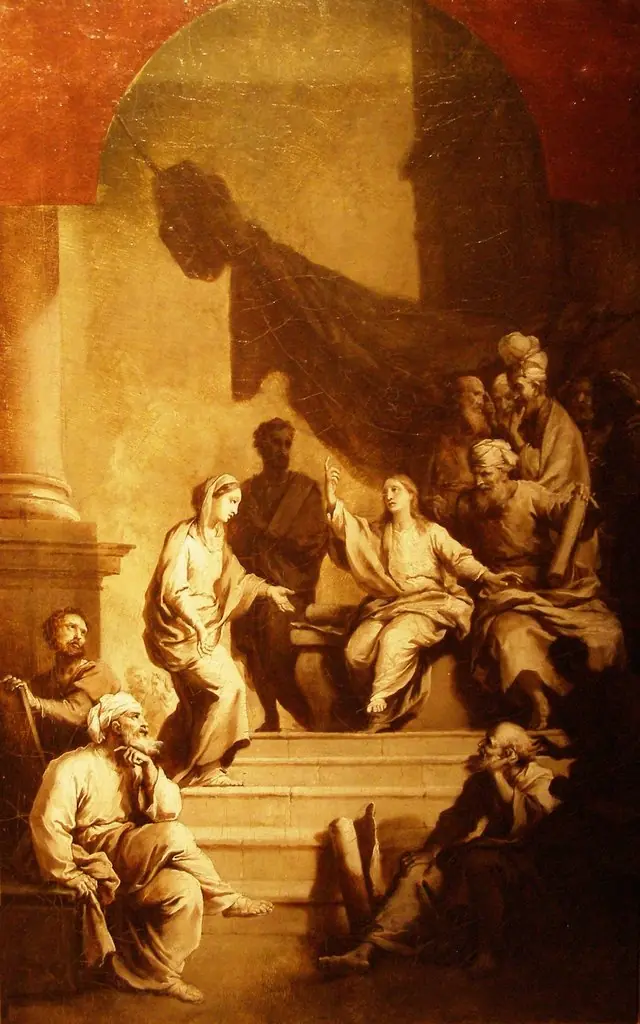 Twelve-year-old Jesus teaching in the Temple.
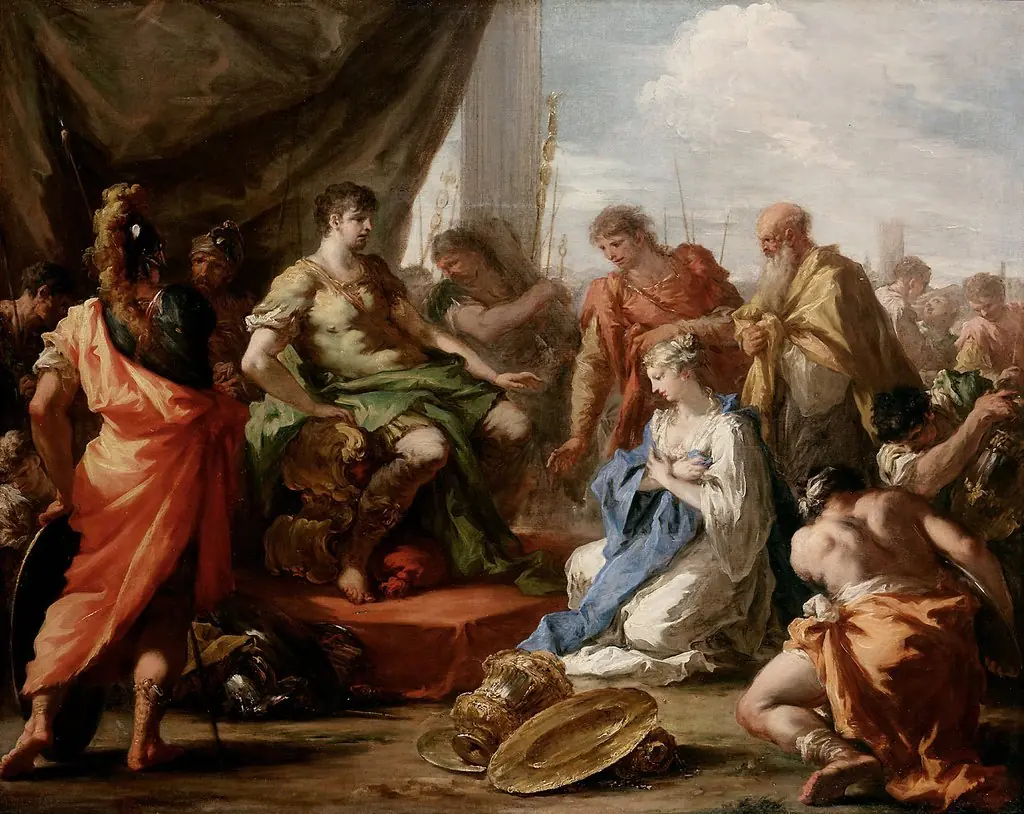 Enthaltsamkeit des Scipio