Artwork
The Vision of Saint Paschal Baylon
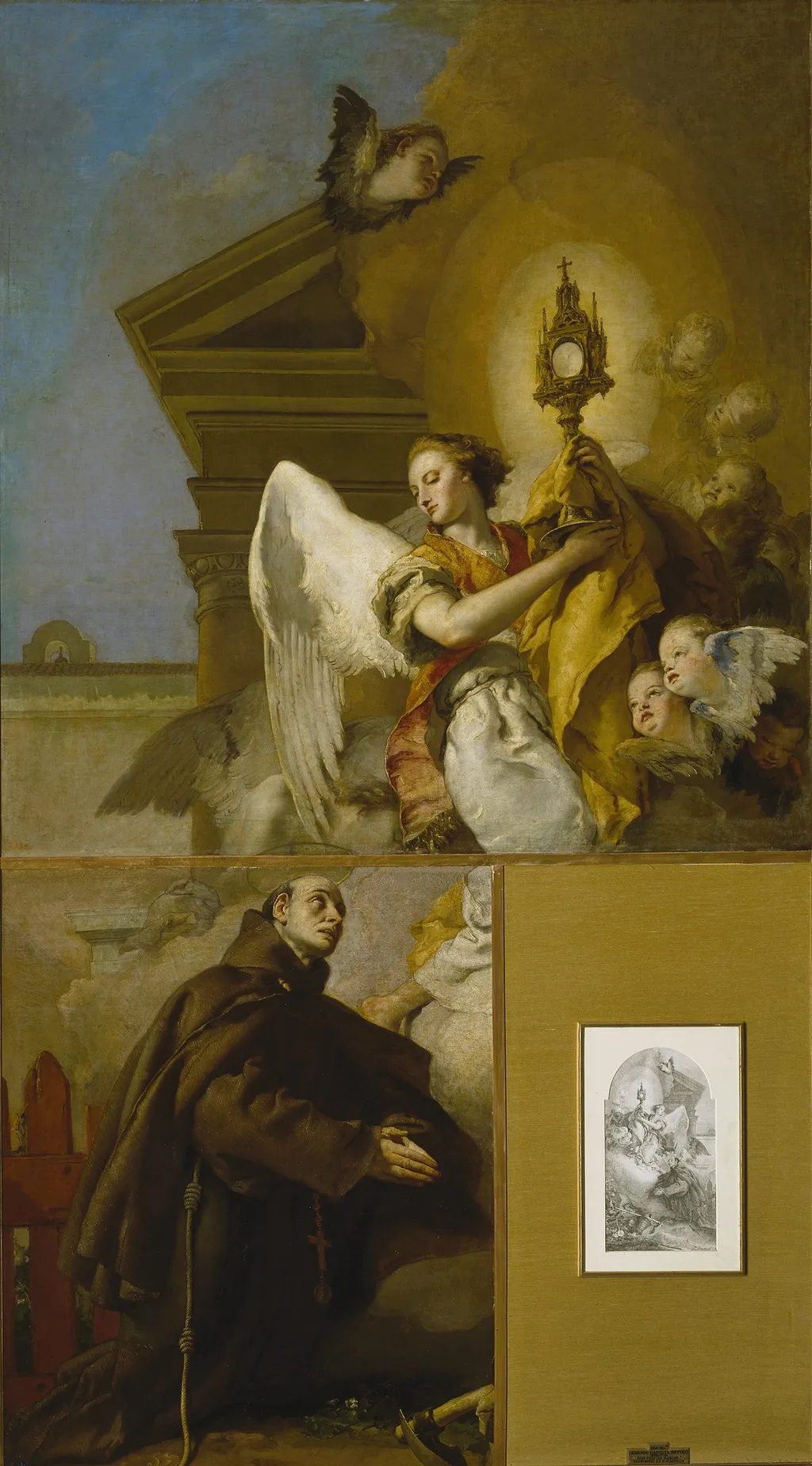
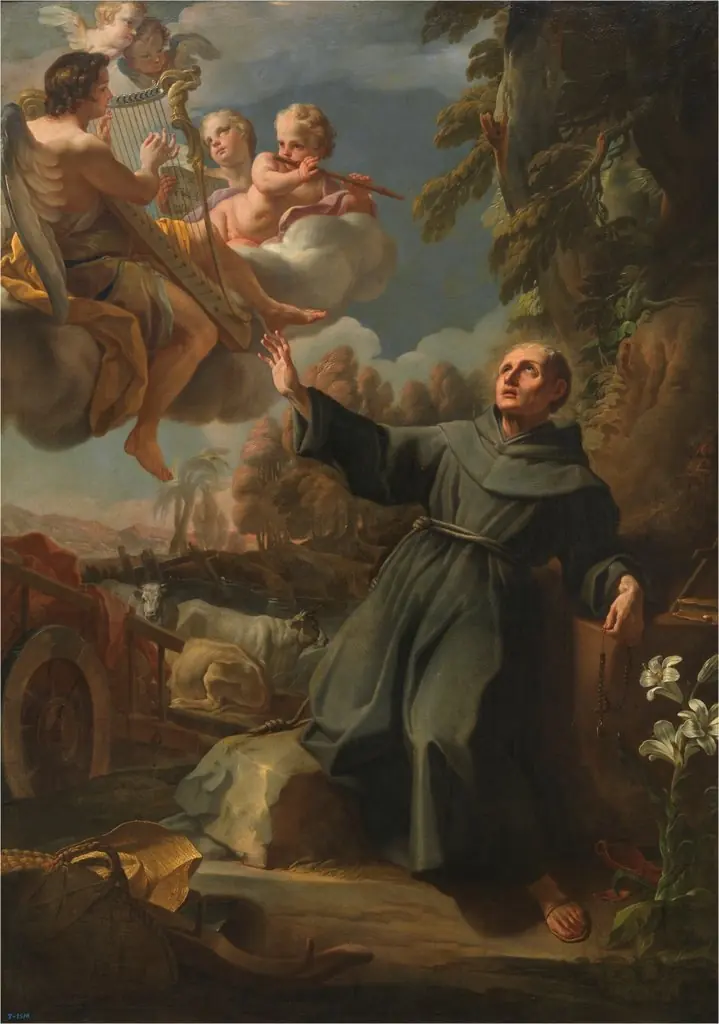
The Vision of Saint Paschal Baylon is an oil painting by the Rococo painting artist Giovanni Battista Tiepolo. It dates from 1767 and is held in the collection of the Museo del Prado.
About this work
Subject & Meaning
The iconography emphasizes the saint's spiritual encounter, aligning with the broader tradition of depicting Paschal Baylon in moments of divine rapture.
The painting depicts Paschal Baylon, a 16th-century Spanish Franciscan lay brother and mystic who was canonized in 1690. The work portrays a vision experienced by the saint, a subject that recurs throughout devotional imagery of Paschal Baylon, who was traditionally associated with Eucharistic devotion and mystical contemplation. Tiepolo's large-scale canvas, measuring 340 by 180 centimeters, treats the subject as a religious vision scene, situating the Franciscan holy figure within a sacred apparition.
The Vision of Saint Paschal Baylon was created in 1767 and is held in the collection of the Museo del Prado in Madrid, where it stands as an example of late Baroque religious painting centered on mystical revelation rather than narrative action.
The iconography emphasizes the saint's spiritual encounter, aligning with the broader tradition of depicting Paschal Baylon in moments of divine rapture. As a Franciscan tertiary, his visionary experiences were central to his hagiography, and Tiepolo's composition reflects this contemplative focus.
Technique & Style
Executed in 1767, The Vision of Saint Paschal Baylon is an oil painting on canvas by Giovanni Battista Tiepolo. The work measures 340 cm in height and 180 cm in width, indicating a large-scale composition typical of the artist's religious commissions. As a piece of religious art, it depicts the saint Paschal Baylon within a formal structure defined by these substantial dimensions and the fluid potential of the oil medium.
History & Provenance
The Vision of Saint Paschal Baylon was painted by Giovanni Battista Tiepolo in 1767, as indicated by its inception date in institutional records. The work is catalogued as an oil on canvas with dimensions of 340 cm in height and 180 cm in width. It is presently held in the collection of the Museo del Prado in Madrid, where it is listed as part of the museum’s religious art holdings.
Giovanni Battista Tiepolo's oil painting The Vision of Saint Paschal Baylon, created in 1767, is currently held in the collection of the Museo del Prado in Madrid. The work is executed on canvas and measures 340 cm in height by 180 cm in width. While the source confirms the painting's location within the Museo del Prado, it does not provide a specific inventory or accession number for the piece. Additionally, the available documentation does not record any specific exhibition history for this work.
Overview
Giovanni Battista Tiepolo’s oil on canvas, dated 1767, portrays the mystical experience of Saint Paschal Baylon. The composition is divided into two registers: an upper realm where an angel presents a golden object to a robed figure, and a lower realm showing a monk in a brown habit kneeling in prayer. The work is part of the collection of the Museo del Prado in Madrid.
Context
The depiction aligns with Counter‑Reformation efforts to promote saints as models of piety. Paschal Baylon, a Spanish Franciscan known for his humility, was canonised in 1690, and his visions were popular subjects for devotional imagery, especially in Spain, where the painting would have resonated with contemporary religious sentiment.
Artist & collection

Artist
Giovanni Battista Tiepolo, also known as Giambattista Tiepolo, was an Italian painter and printmaker from the Republic of Venice who painted in the Rococo style, considered an important member of the 18th-century Venetian school.


 The Vision of the Blessed Sebastián Aparicio
 The Vision of the Blessed Hermann Joseph
 Madonna and Child with Three Saints
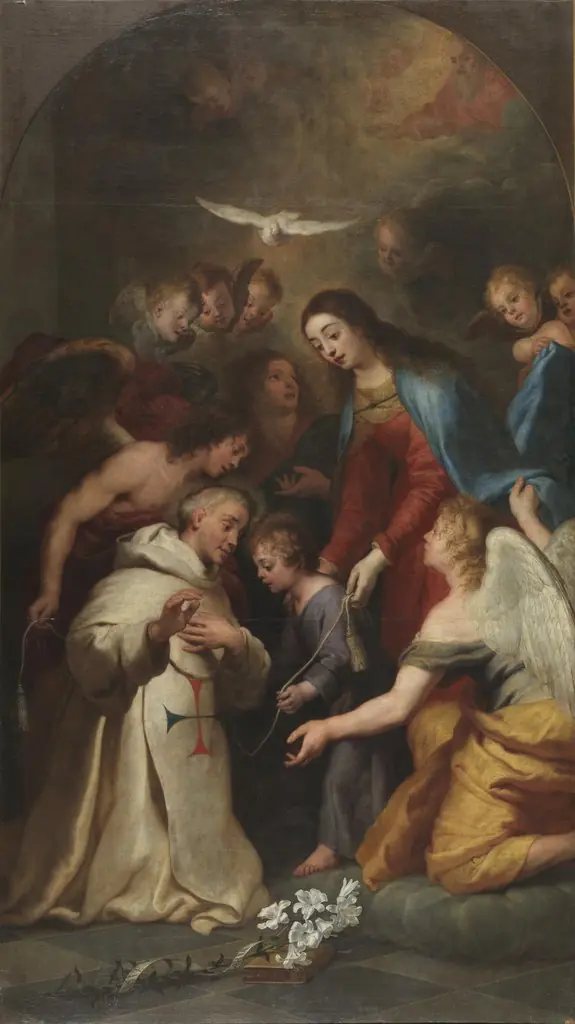 La Aparición de la Virgen a Simón de Rojas
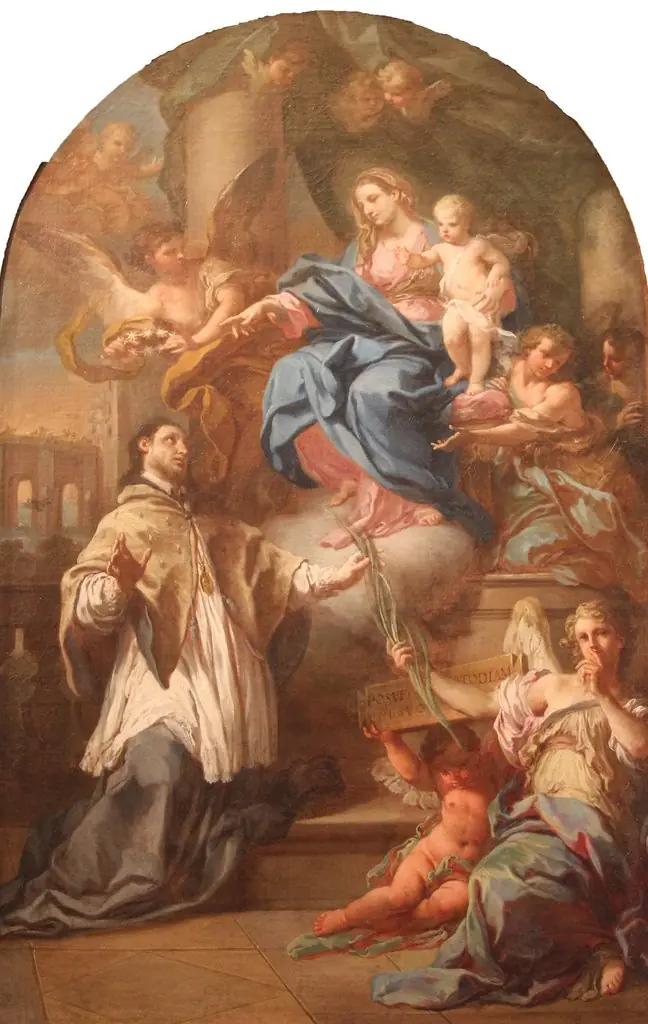 Madonna and Child with Saint John of Nepomuk
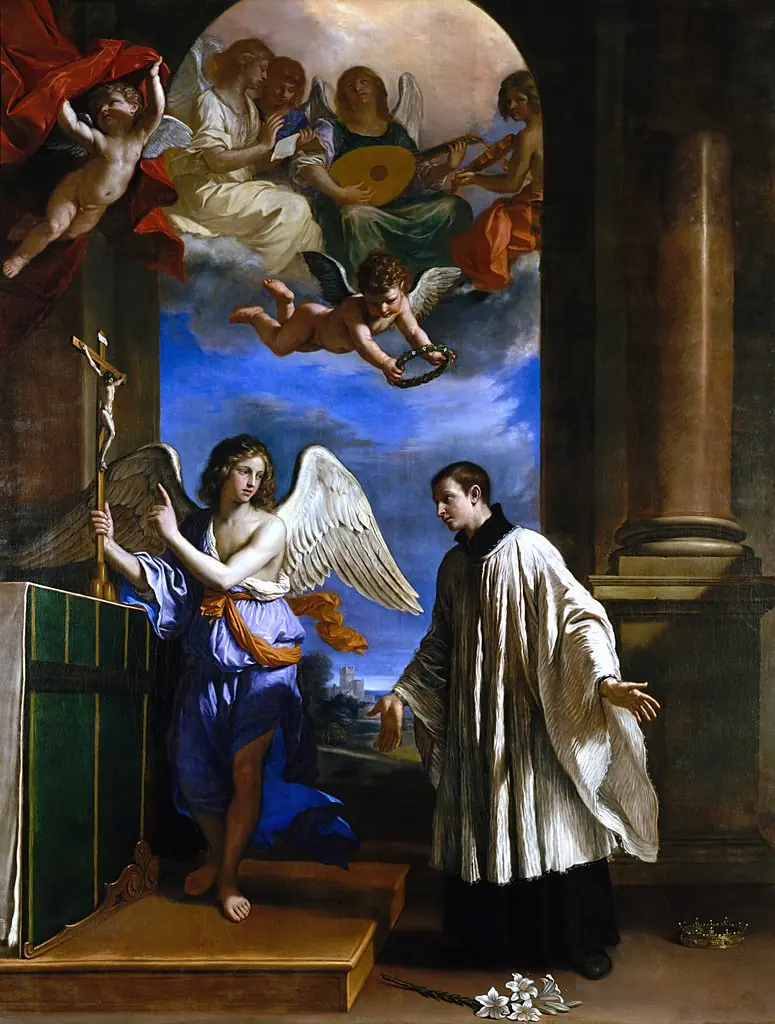 The Vocation of Saint Aloysius (Luigi) Gonzaga
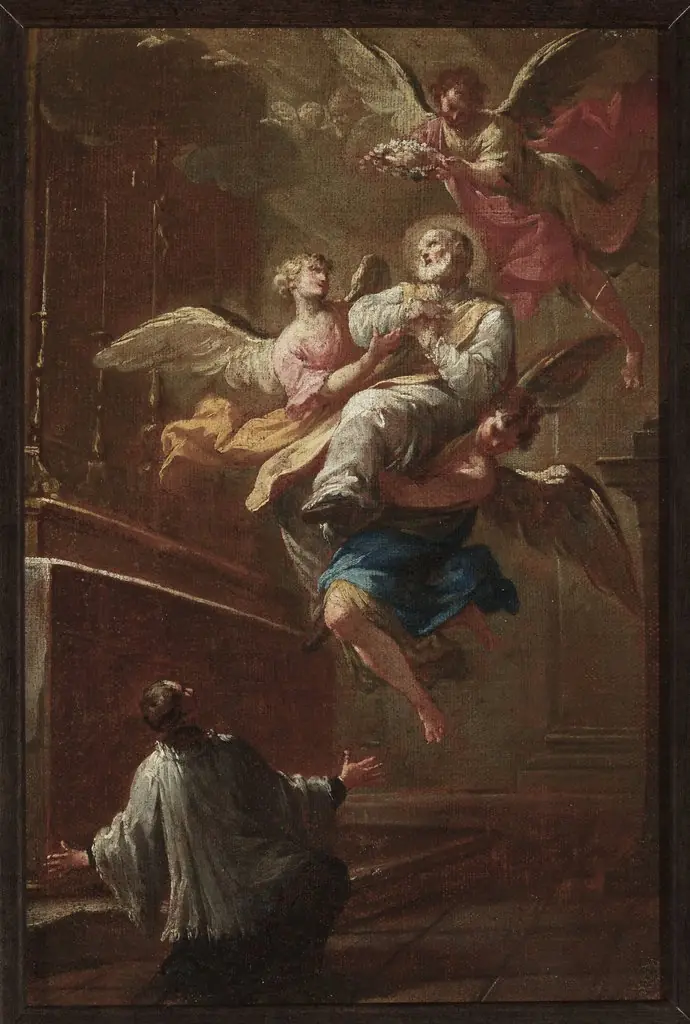 Saint elevated to heaven
 Madonna and Child with Saints Francis and Dominic and Angels
 San Pedro de Alcántara confesando a Santa Teresa
 Virgin and Child with Saints Dominic and Hyacinth