Artwork
The Marquesa de Pontejos
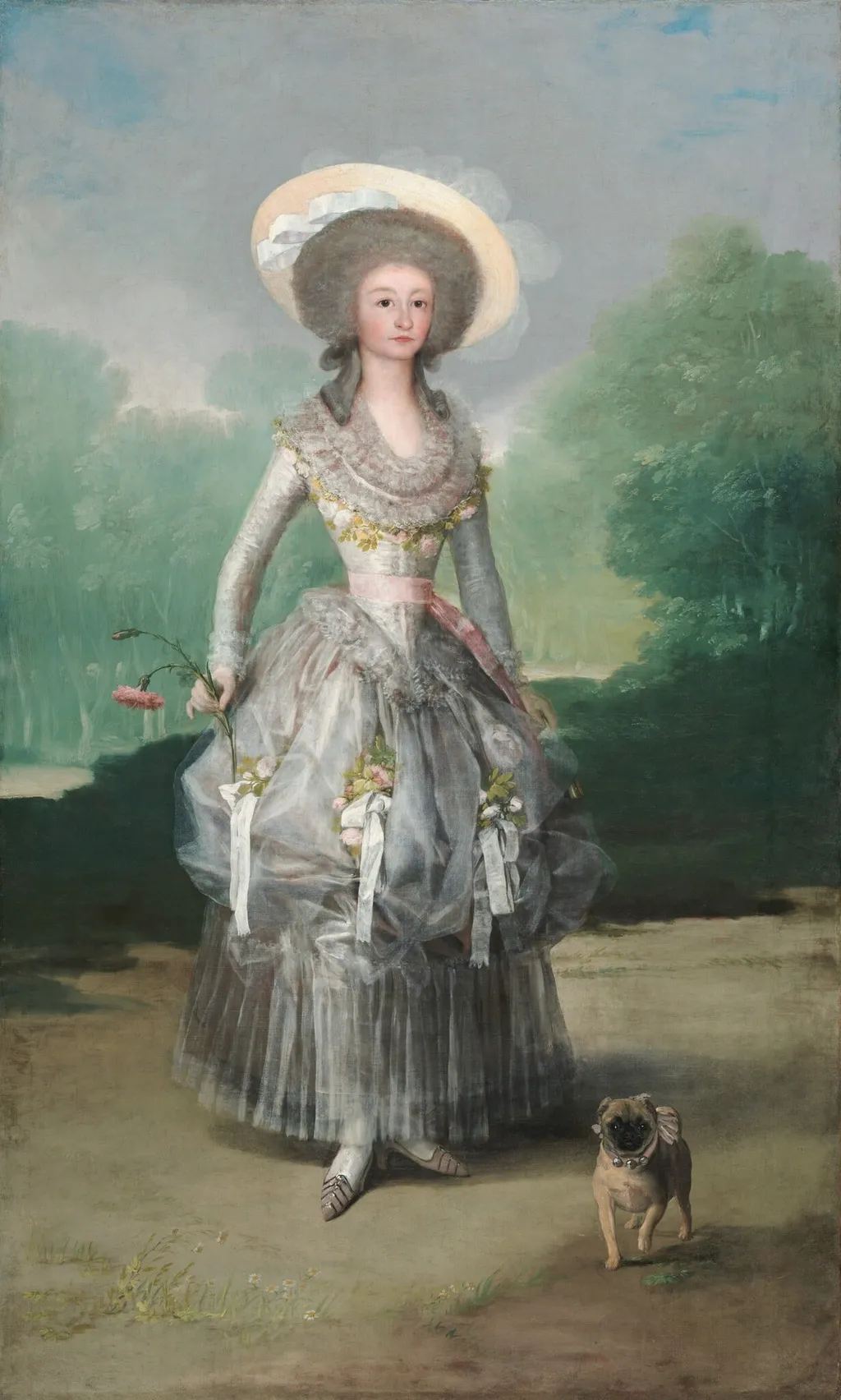
The Marquesa de Pontejos is an oil painting by the Rococo painting artist Francisco de Goya. It dates from 1786 and is held in the collection of the National Gallery of Art.
About this work
Subject & Meaning
The iconography combines Spanish and French decorative motifs to convey status and refined taste.
The painting portrays María Ana de Pontejos y Sandoval, Marchioness of Pontejos, as a youthful aristocrat posed as a shepherdess in a park, wearing a rose-embroidered gown and a round hat crowned with feathers, and holding a pink carnation that symbolizes marital love; a small pug with a pink ribbon and bells sits at her side, representing fidelity and courtly luxury. The composition reflects 18th-century French Rococo fashion influences, the ceremonial nature of the commission following her marriage, and Goya's role as court painter, combining delicate landscape background with meticulous rendering of the figure. The iconography combines Spanish and French decorative motifs to convey status and refined taste.
Technique & Style
The Marquesa de Pontejos is an oil on canvas measuring 210.3 × 127 cm, executed by Francisco de Goya in 1786. The portrait demonstrates Goya's command of contrasting painterly techniques: the figure is carefully built up in meticulous glazes, while the background landscape is rendered with loose, fleeting brushwork. The sitter is shown life-size in a Rococo-inspired "shepherdess" costume, with a tightly fitted gown decorated with rose appliqués, a pink sash at the waist, and a sheer overskirt that reveals the legs beneath.
She holds a pink carnation, an emblem of love and marriage. Her powdered coiffure is crowned by a round hat whose feathers dissolve into the sky. The palette of greys, pinks, greens, and whites is set against a softly graded park landscape, recalling the tonalities of Goya's tapestry cartoons such as El pelele.
The composition's tapestry-like stasis is offset by the small pug dog, painted with decisive precision and arbitrary highlights of light, wearing a pink ribbon with bells. Stylistically, the work shows the influence of English portraiture, particularly Thomas Gainsborough, and reflects the French court fashions popularized by Marie-Antoinette.
History & Provenance
The Marquesa de Pontejos was painted by Francisco de Goya in 1786, shortly after the 24-year-old María Ana de Pontejos y Sandoval married the brother of Count Floridablanca, then Spain's ambassador to Portugal. The portrait was a commission to commemorate the marriage. That same year, Goya was named court painter to Charles III of Spain.
The painting descended through the sitter's family at the Casa Pontejos and Palacio Miraflores in Madrid, passing to her third husband Joaquín Pérez Vizcaíno y Moles, then to his son-in-law the Marqués de Miraflores by 1867, and successively to his granddaughter Genoveva de Sanmiego y Pando and her son Manuel Alvarez de Toledo. In July 1931 it was sold through Anna Schoellkopf and M. Knoedler & Co. to Andrew W. Mellon, who deeded it in December 1934 to the A. W. Mellon Educational and Charitable Trust, which gifted it to the National Gallery of Art in 1937.
The painting is held in the collection of the National Gallery of Art in Washington, D.C., having entered the institution as a gift in 1937 from the A. W. Mellon Educational and Charitable Trust.
Context
Painted in 1786, the same year Goya was appointed court painter to Charles III of Spain, the portrait belongs to a series of aristocratic commissions in the same mode, including the 1789 Family of the Duke of Osuna (Museo del Prado, Madrid). Stylistically, the work reflects Rococo fashion popularized by Marie-Antoinette at Versailles, while Goya's handling of glazes and loose background brushwork has been compared to the English portraiture of Thomas Gainsborough. The painting's palette and tonal layering also recall Goya's contemporary tapestry cartoons for the Spanish court, such as El Pelele.
Scholarship treating the portrait includes José Gudiol's monograph Goya (1977) and Walter Cook's study "Spanish Paintings in the National Gallery of Art II: Portraits by Goya" (Gazette des Beaux-Arts, 1945).
Overview
Francisco de Goya
The Marquesa de Pontejos, painted by Francisco de Goya around 1786, is an oil on canvas portrait. It depicts María Ana de Pontejos y Sandoval, the Marchioness of Pontejos, in a style characteristic of late 18th-century Spanish Rococo portraiture. The artwork reflects the refined elegance and attention to detail typical of the period, capturing the subject's social standing through her elaborate attire and formal presentation.
Own this work as a print
Artist & collection
Artist
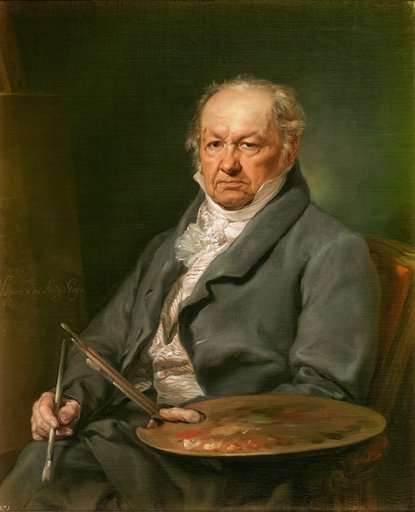
Francisco José de Goya y Lucientes was a Spanish romantic painter and printmaker.

 Madame Louise of France
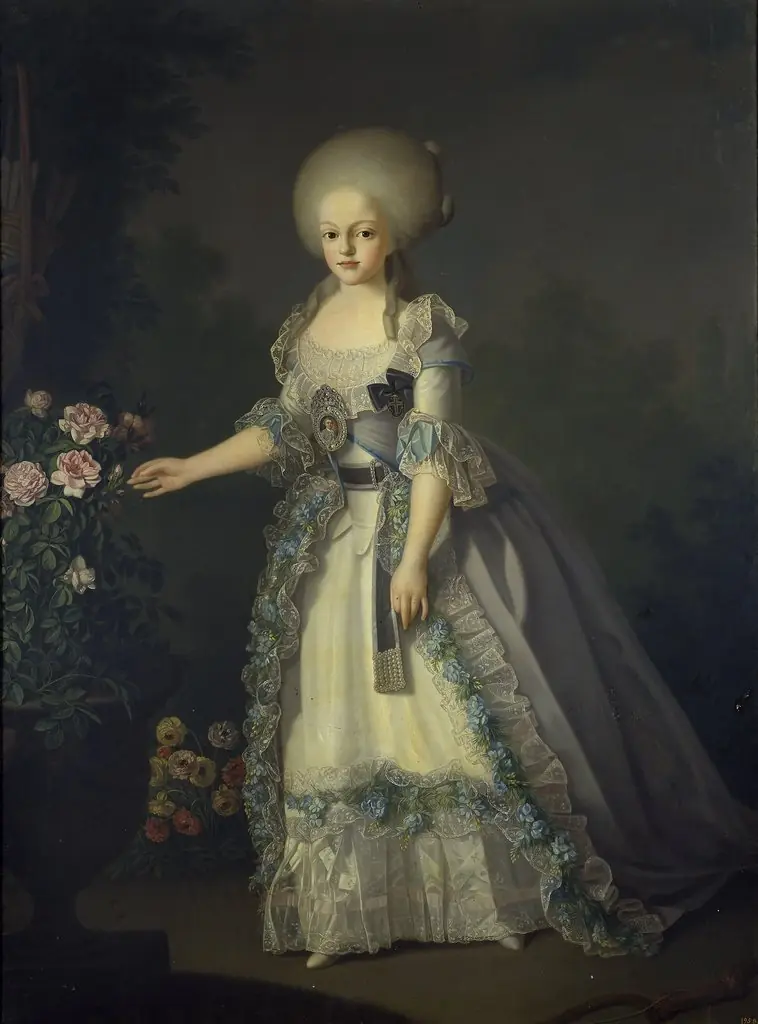 Carlota Joaquina infanta de España reina de Portugal
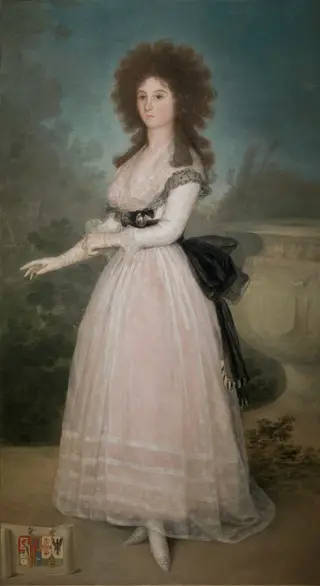 Tadea Arias de Enríquez
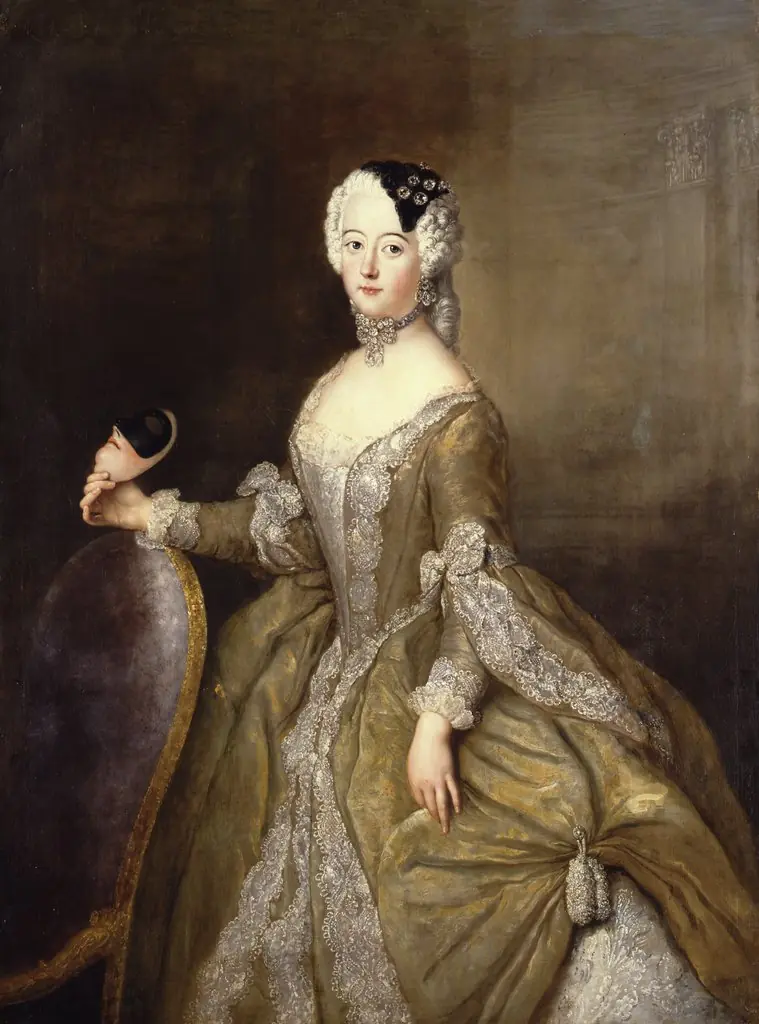 Princess Luise Ulrike of Prussia (1720-1782)
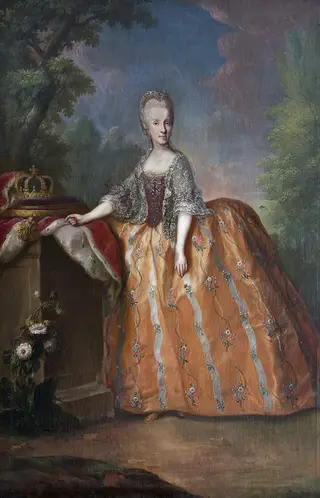 Maria Luisa of Spain, Holy Roman Empress
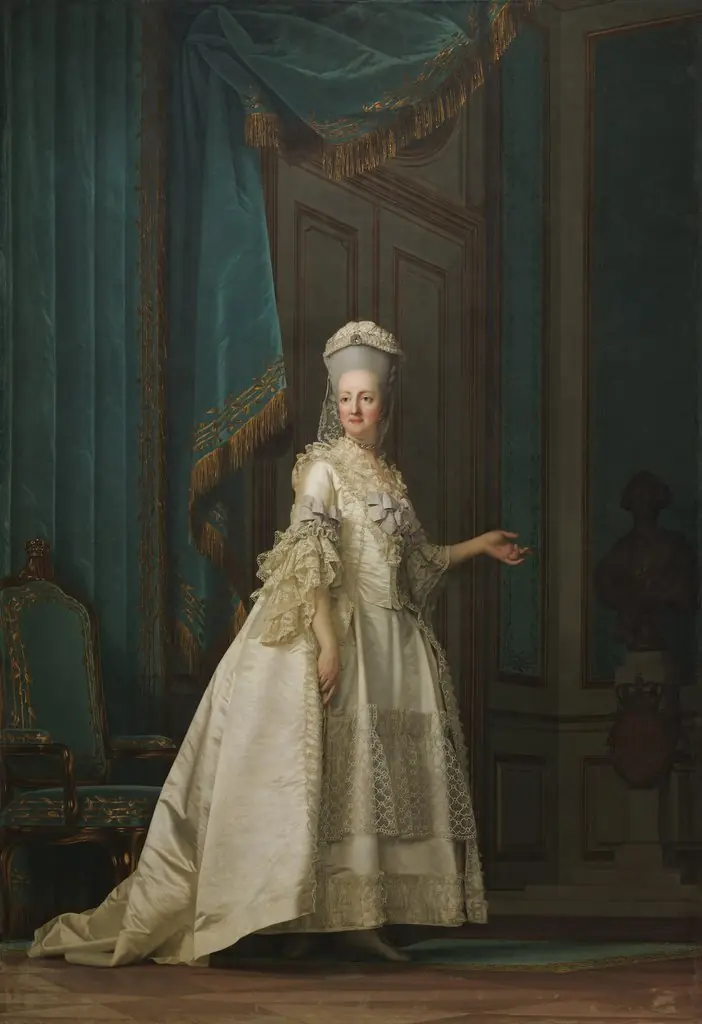 The Queen Dowager Juliane Marie
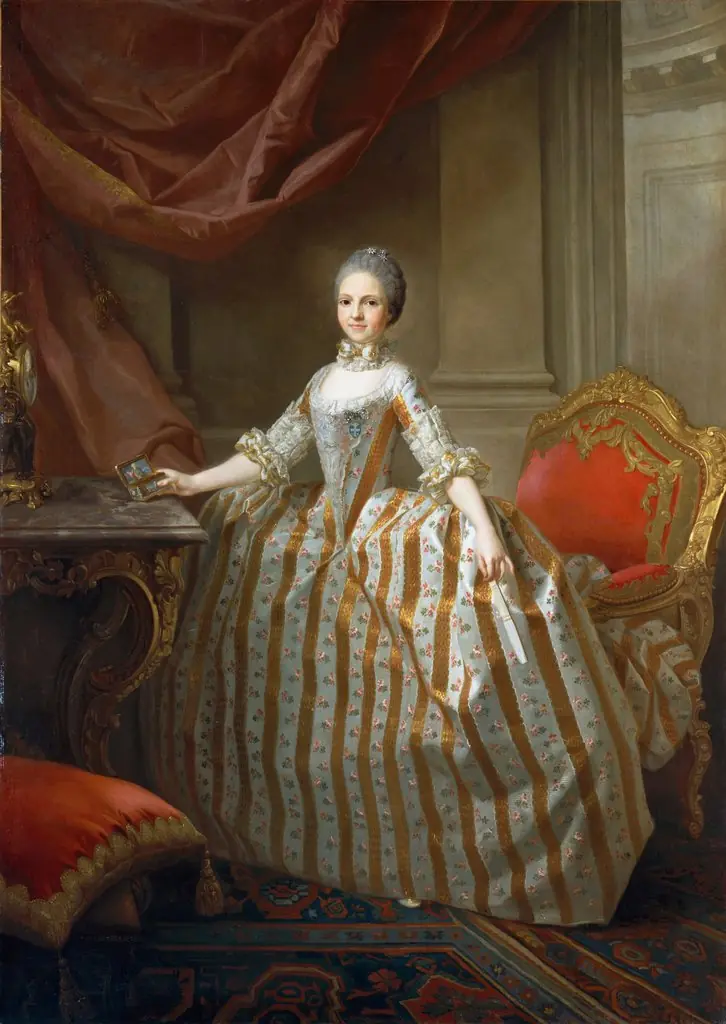 Maria Luisa of Parma (1751–1819), Later Queen of Spain
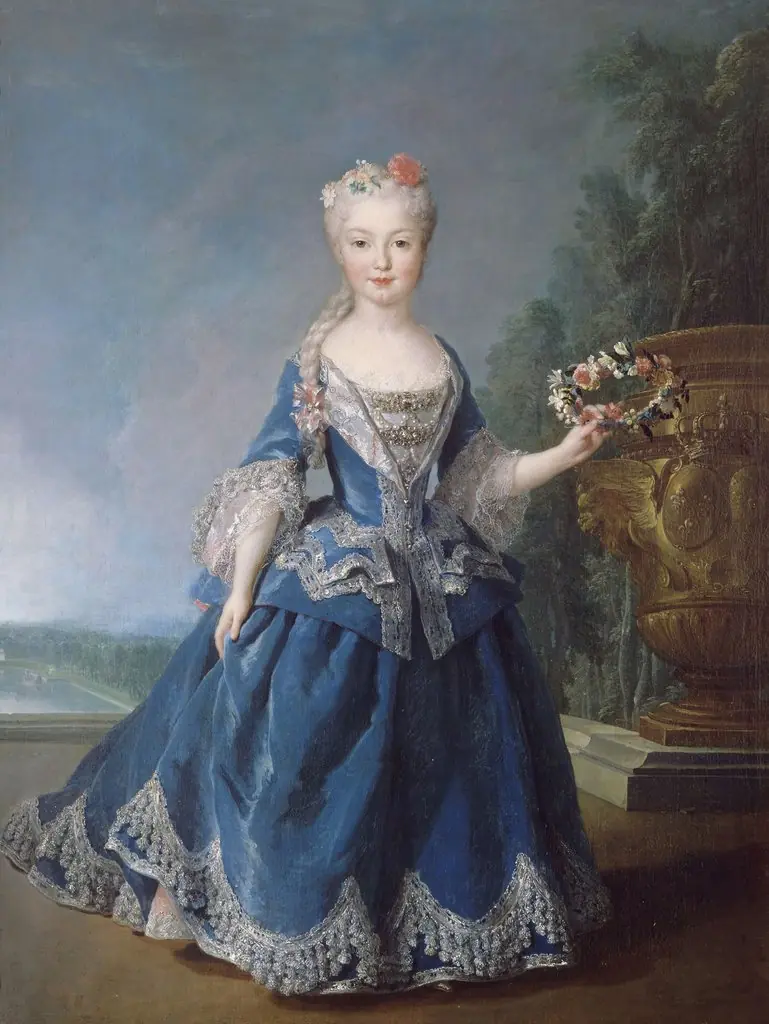 Portrait of Mariana Victoria of Spain (1718-1781)
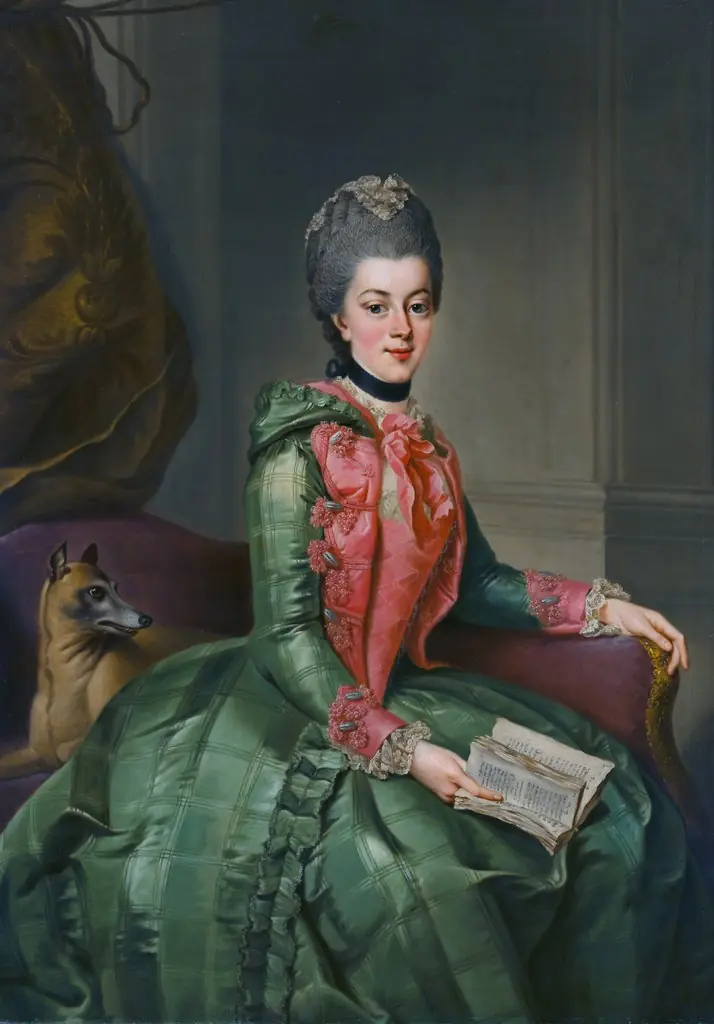 Portrait of Princess Frederika Sophia Wilhelmina (1751-1820
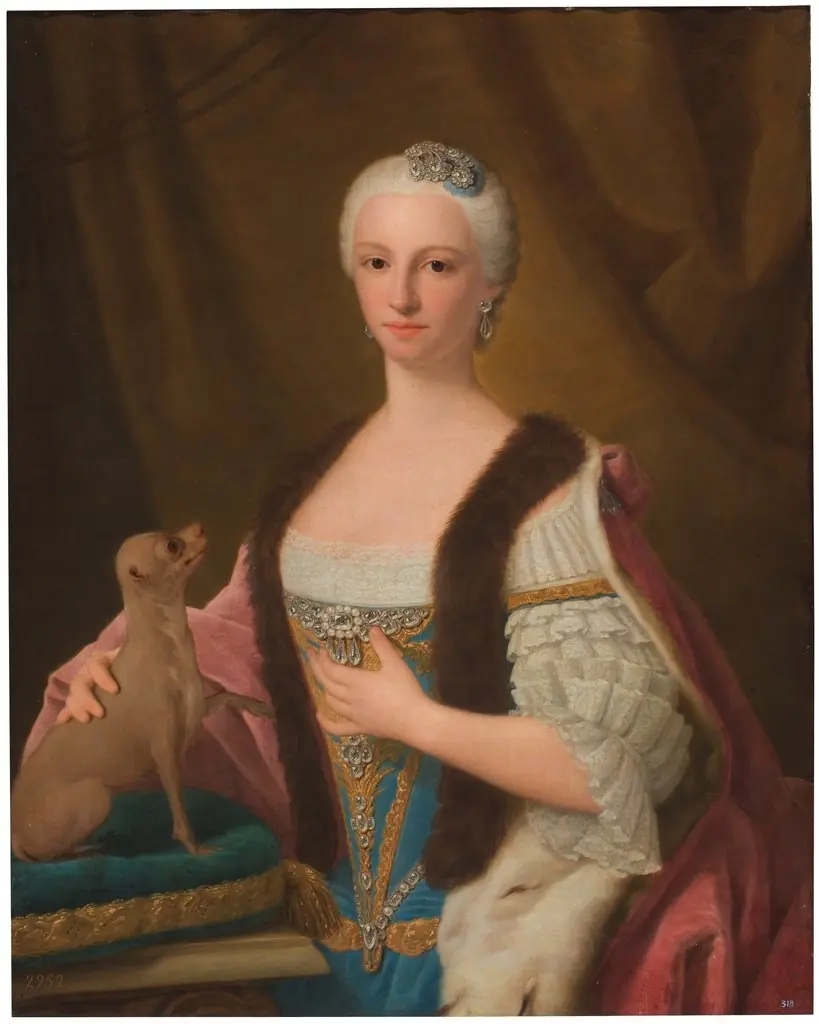 María Antonia Fernanda de España esposa de Vittorio Amadeo III
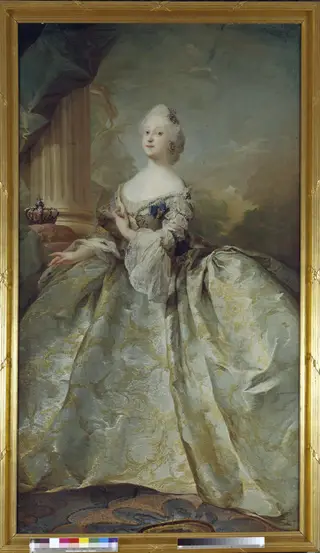 Portræt af Louise, Frederik V's første dronning
- Madame du Barry