Artwork
Martyrdom of St Catherine
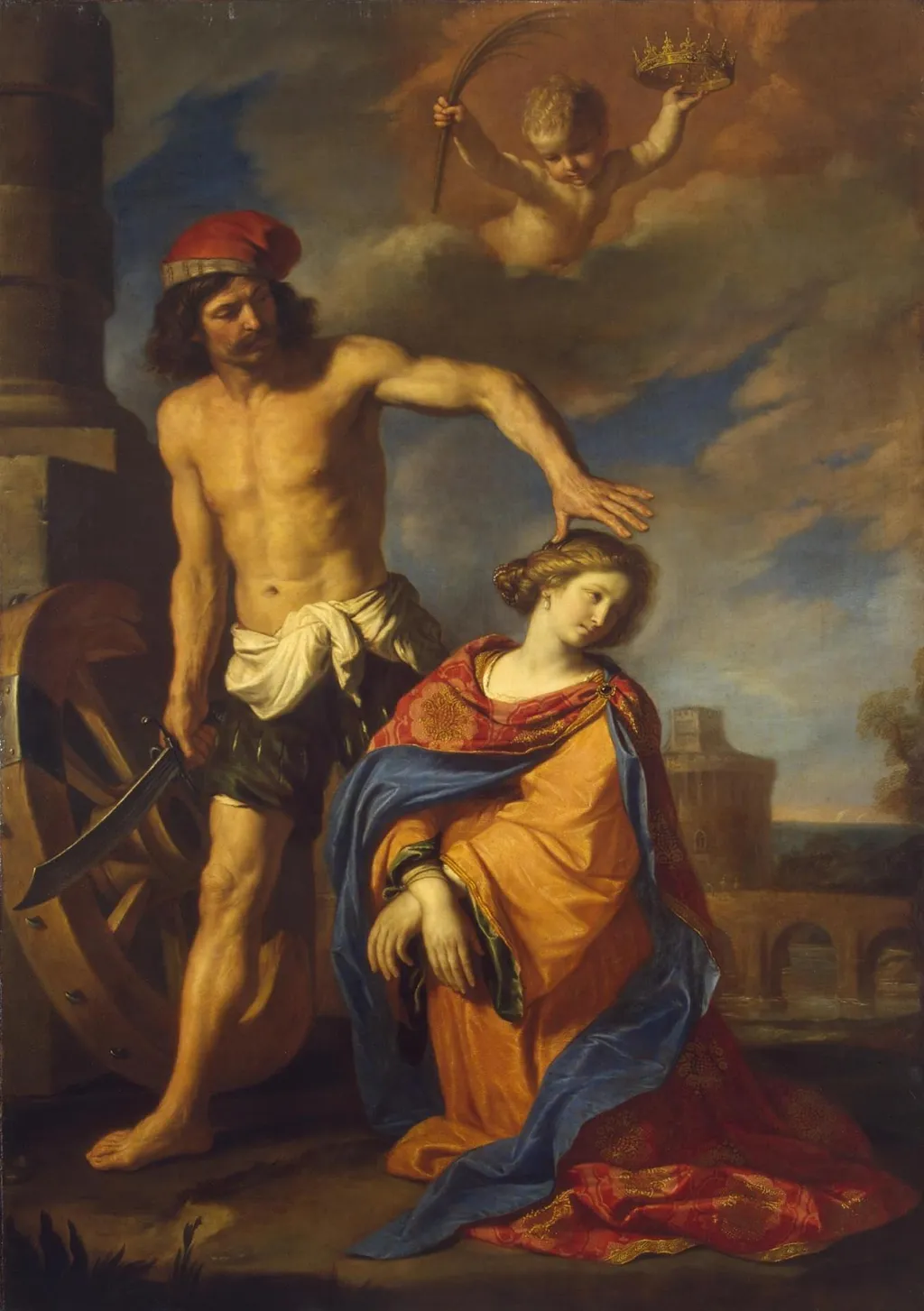
Martyrdom of St Catherine is an oil painting by the Early Baroque Italian artist Guercino. It dates from 1653 and is held in the collection of the Hermitage Museum.
About this work
Overview
The Martyrdom of St Catherine is a religious painting by the Italian Baroque artist Guercino (Giovanni Francesco Barbieri), completed in 1653.
The Martyrdom of St Catherine is a religious painting by the Italian Baroque artist Guercino (Giovanni Francesco Barbieri), completed in 1653. Executed in oil on canvas, the work measures 222.5 by 159 centimeters. The city of Cento commissioned the painting to present as a gift to Cardinal Alderano Cibo, the papal legate in Ferrara. The canvas remained in Ferrara for an extended period before passing through various European collections. It is currently housed in the State Hermitage Museum in Saint Petersburg, Russia, where it has been since 1850. The painting is considered one of the masterpieces of Guercino's late period, exemplifying the blend of dramatic tension and classical restraint that characterized his mature style.
Subject & Meaning
The painting illustrates the execution of Catherine of Alexandria, an episode derived from the Golden Legend by Jacques de Voragine. Catherine kneels in the foreground, her hands bound, in serene acceptance of her fate. Beside her, a half-naked executioner grasps her hair with his left hand while raising a large sword in his right, preparing to behead her. To the left behind the executioner stands a large spiked wheel, the instrument of her originally intended martyrdom, which was miraculously destroyed by an angel. This divine intervention is represented by a winged putto emerging from turbulent clouds above, holding a crown in his left hand and a palm frond in his right. According to the Golden Legend, both the crown and the palm branch are traditional attributes of Catherine, symbolizing her sanctity, martyrdom, and impending entrance into heaven.
Technique & Style
Guercino executed the work in oil on canvas with smooth, polished brushwork, paying careful attention to the textures of skin, silk, and metal. The composition is structured along a diagonal axis from the executioner's raised arm down to the kneeling saint, stabilized by vertical architectural elements at the edges. The palette centers on warm oranges, reds, and golds set against cooler blues and gray-browns. Strong directional light illuminates the figures from the upper left, casting deep shadows and modeling the muscular anatomy of the executioner and the rich fabrics of Catherine's orange and blue drapery. This handling of light and shadow reflects Guercino's evolution from his early tenebrist influences toward the softer lighting, richer color palettes, and greater classical balance that defined his later career in the 1650s, blending lingering dramatic tension with a more harmonious approach.
History & Provenance
Two preparatory drawings for the painting are known. The first, in a private collection in London, corresponds compositionally to the final canvas with some changes and features a separate study of the executioner on its reverse. The Museum of Fine Arts in Boston holds a second drawing that replicates the London version, bearing an indication that Francesco Bartolozzi made an engraving from it, though no prints of this engraving are known to survive. After remaining in Ferrara for a long time, the painting's whereabouts became unknown for a considerable period. It resurfaced in the first half of the nineteenth century in London, in the possession of the merchant G. Farrer. William II of the Netherlands acquired it from Farrer, and it remained in his collection until Nicholas I of Russia purchased it at the posthumous sale of the Dutch king's art collection in The Hague in 1850. The painting entered the Hermitage Museum that same year, receiving the accession number GE-26.
Context
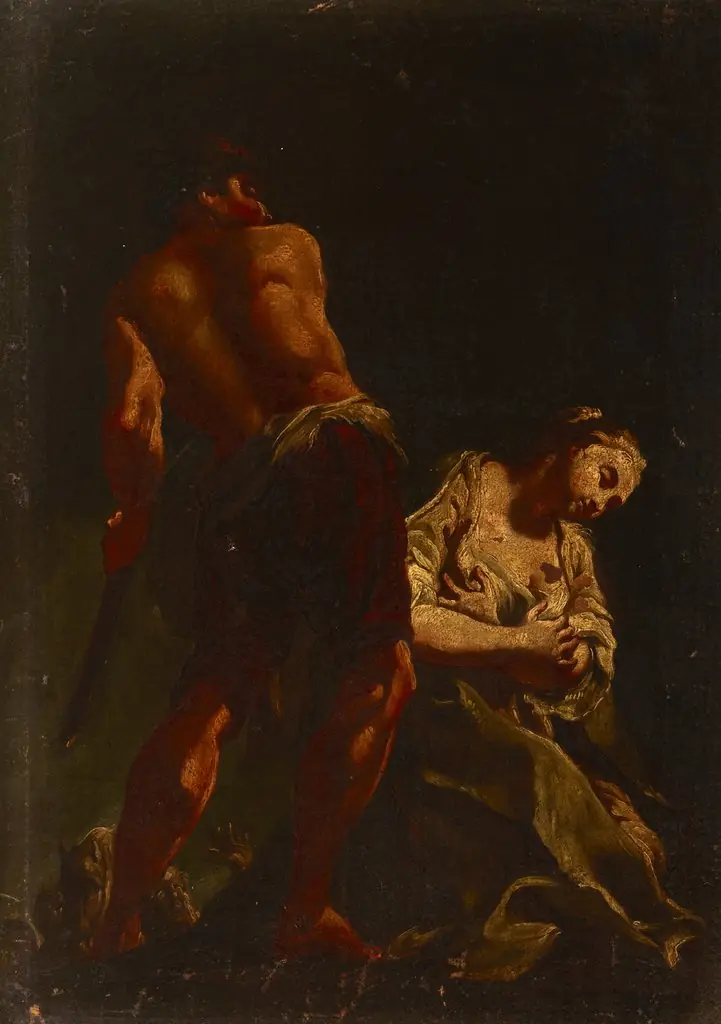
By 1653, Guercino was a leading figure of the Bolognese school, having settled permanently in Bologna in 1642 following the death of Guido Reni. His style had evolved significantly from the exuberant tenebrism of his youth, which was heavily influenced by Caravaggio and Ludovico Carracci, toward a classicism emulating the emotional restraint of Reni and Domenichino. The Martyrdom of St Catherine captures this transition, retaining the dramatic pathos expected in Counter-Reformation iconography while adopting the serene, equilibrated forms and softer lighting of his mature phase. Guercino maintained a highly productive workshop, and a small copy of this painting by Ercole Gennari, who was married to Guercino's sister Lucia, exists in the Sanctuary of San Francesco in Monteluco. This copy was likely produced within Guercino's workshop, reflecting the close ties he maintained with the Gennari family, the relatives of his former teacher Benedetto Gennari the Elder.
Legacy
The Martyrdom of St Catherine stands as a significant example of seventeenth-century Bolognese art's contribution to Counter-Reformation devotional imagery. Its journey from a diplomatic gift for a papal legate to a prized piece in the collections of European royalty, and ultimately the State Hermitage Museum, underscores its enduring aesthetic and historical value. The survival of preparatory drawings and the documented copy by Ercole Gennari provide valuable insight into Guercino's working process and the operations of his studio. The painting's significance also lies in its visual encapsulation of the artist's stylistic evolution, marking a pivotal point where early Baroque intensity meets mature classical restraint, a synthesis that would influence the broader trajectory of Emilian painting.
Own this work as a print
Artist & collection
Artist
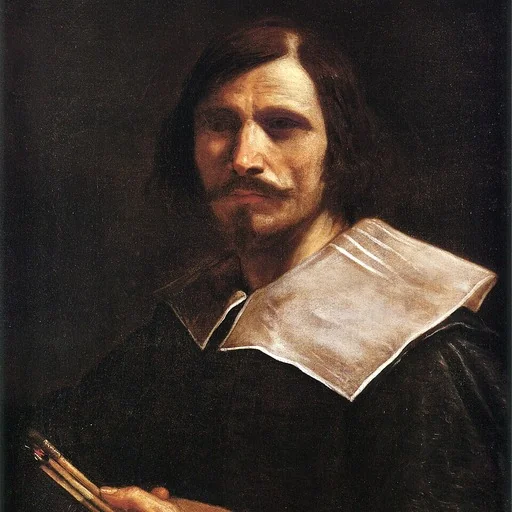
Giovanni Francesco Barbieri (8 February 1591 – 22 December 1666), better known as (il) Guercino (Italian pronunciation: ), was an Italian Baroque painter and draftsman from Cento in the Emilia region, who was active in Rome and Bologna.

 Oedipus and Antigone
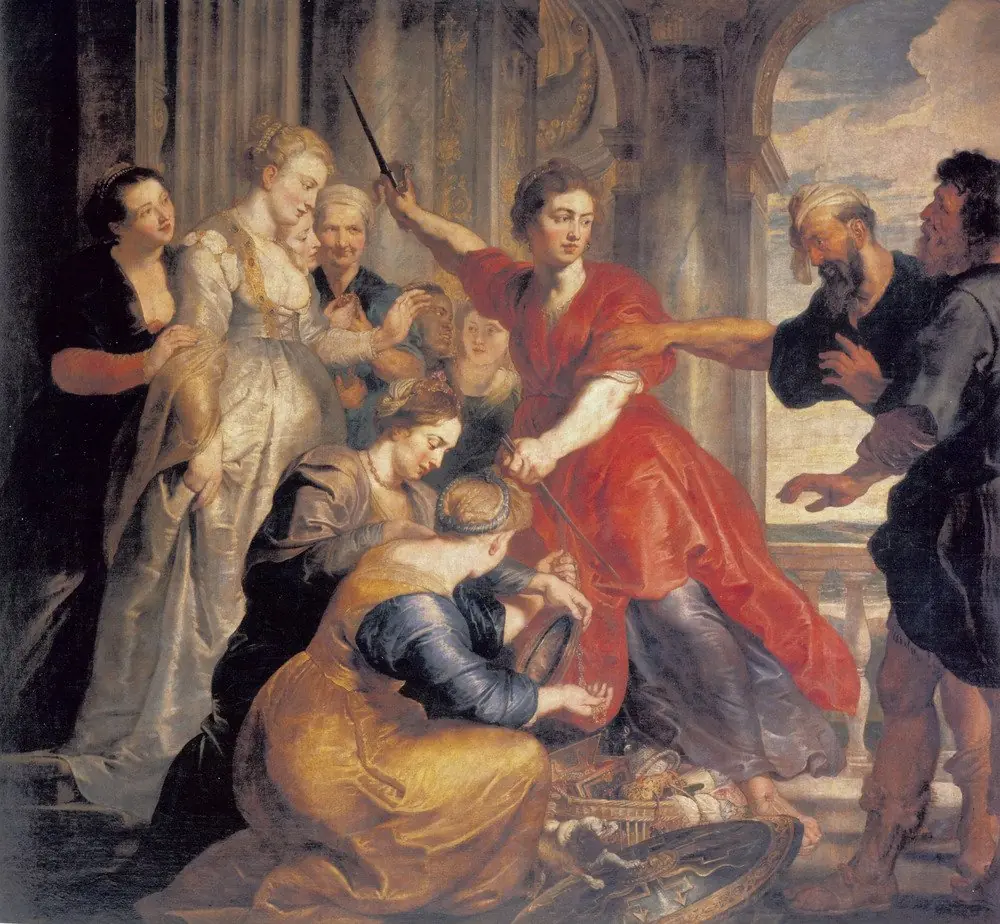 Achilles discovered by Ulysses and Diomedes
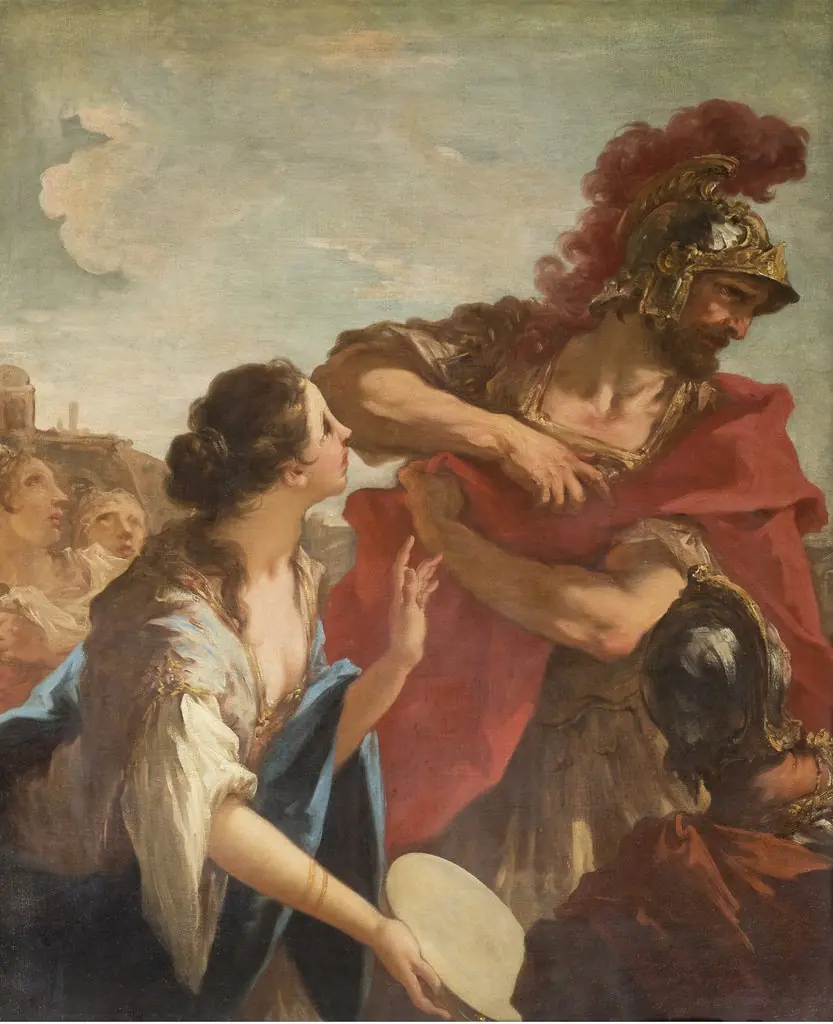 Jephthah returning from Battle is greeted by his Daughter
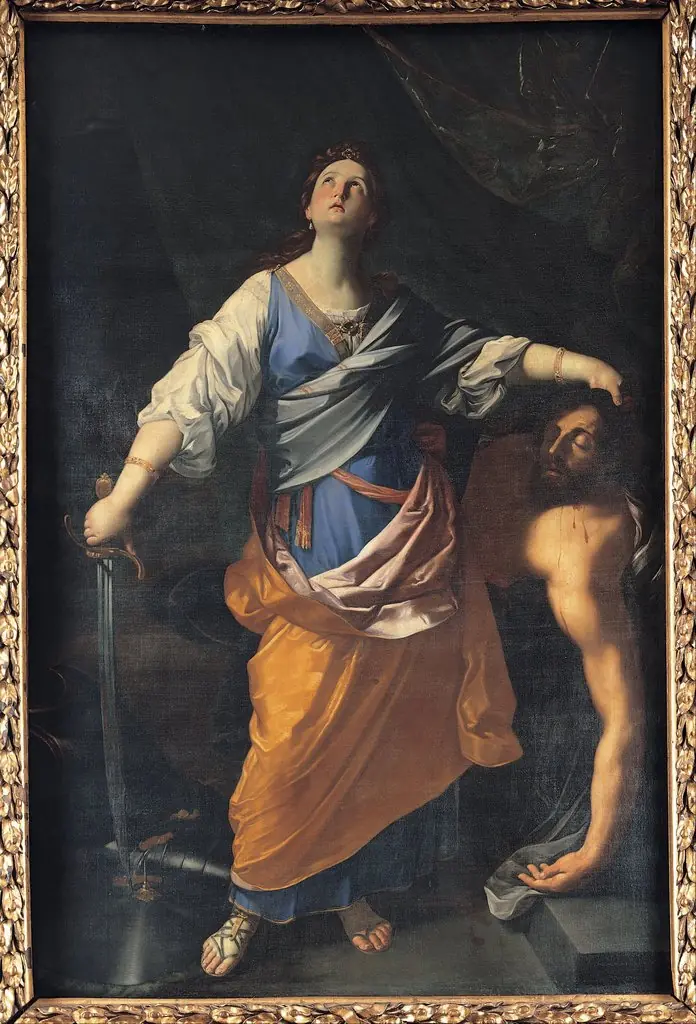 Judith
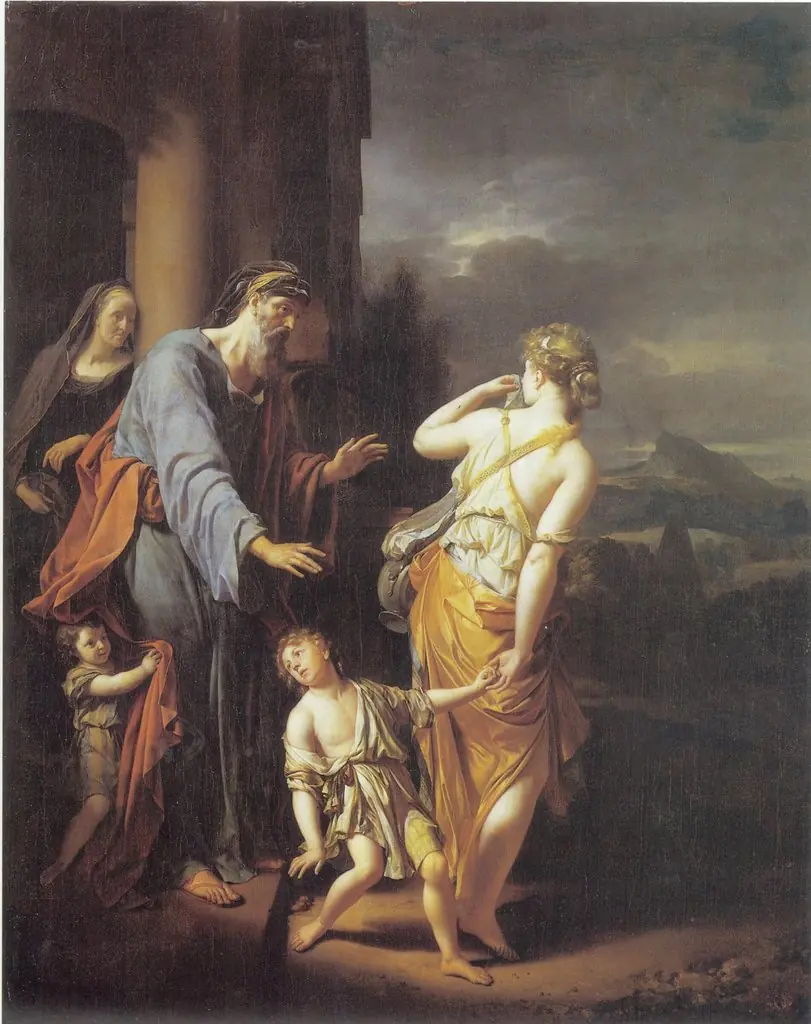 The Banishment of Hagar
 Alexander the Great and Roxana
 Predatory attack
 Magnanimity of Scipio
 Scenă de cruciadă
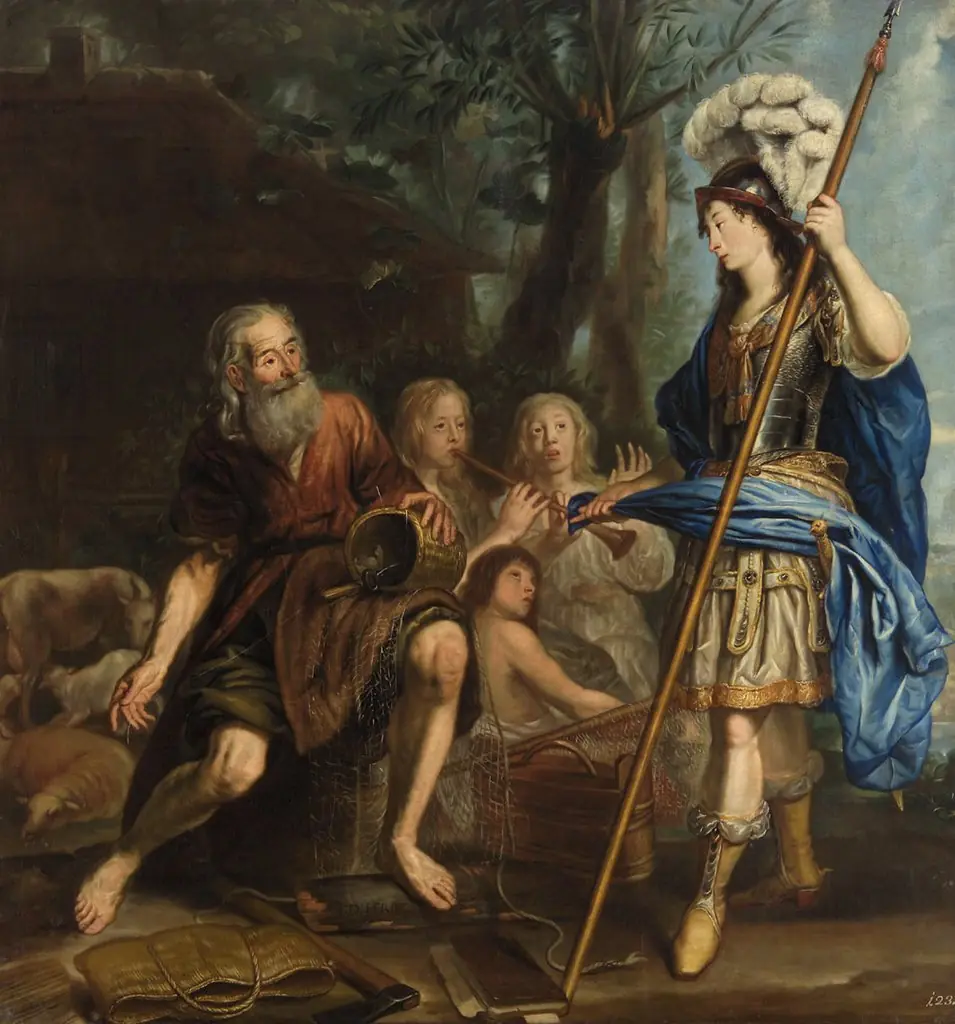 Erminia and the shepherds
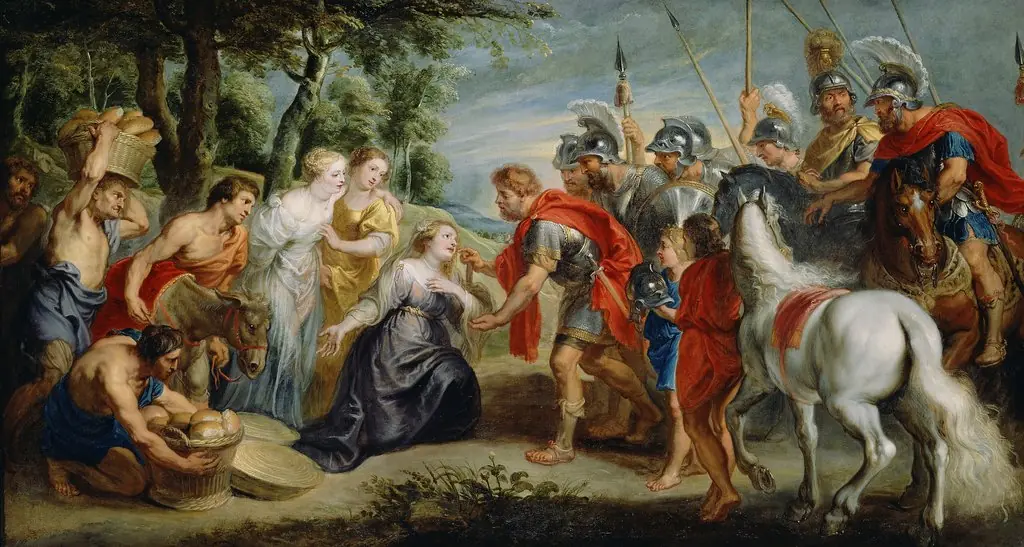 David Meeting Abigail
- Martyrdom of the Saint Woman